Loading NuWatt Energy...

We use your location to provide localized solar offers and incentives.
We serve MA, NH, CT, RI, ME, VT, NJ, PA, and TX
Loading NuWatt Energy...
NuWatt designs, installs, and manages solar, battery, heat pump, and EV charger systems across 9 states. One company, one warranty, one point of contact.
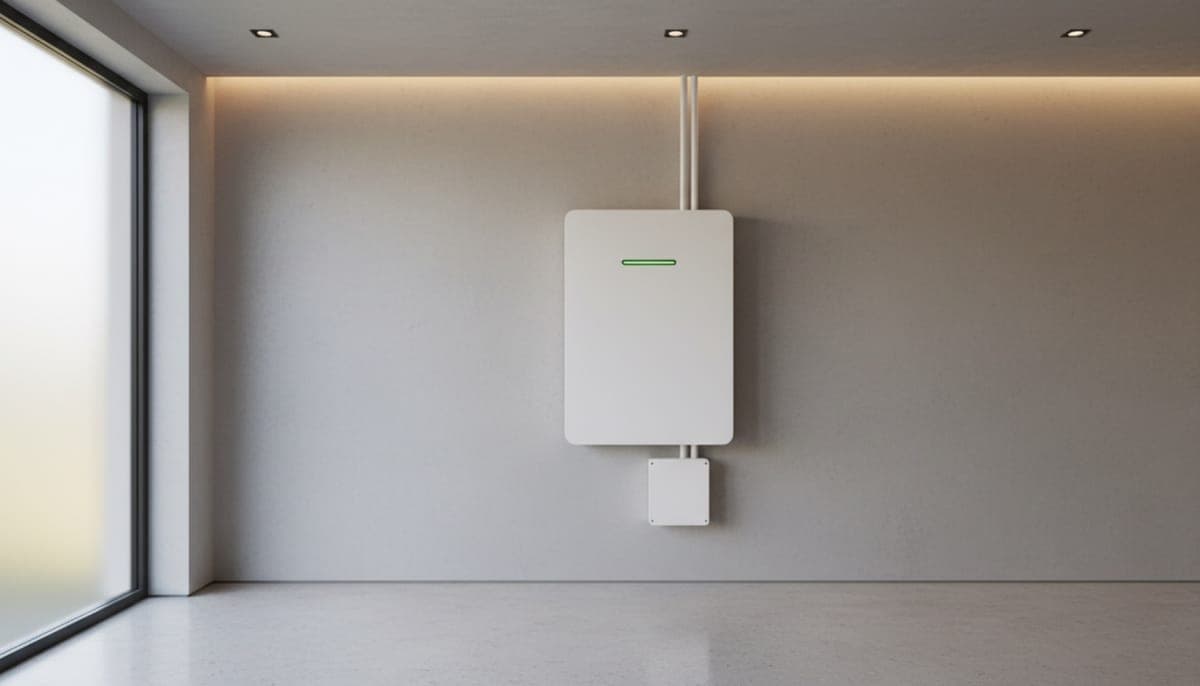
Get a Free QuoteA single Tesla Powerwall 3 averages about $13,473 installedin 2026 (typically $12,000–$16,200), or roughly $998 per usable kWh. Below: a free cost calculator, multi-unit pricing, the expired federal credit and what offsets remain, plus full specs, warranty, and ConnectedSolutions revenue.
$13,473
Avg Installed
~$998
Per Usable kWh
13.5 kWh
Capacity
11.5 kW
Peak Power
A single Tesla Powerwall 3 costs about $13,473 installedin 2026 (typical range $12,000–$16,200, roughly $998 per usable kWh), including the battery, Backup Gateway, electrical work, and permits. The 30% federal residential battery credit (Section 25D) expired December 31, 2025, so a cash or loan buyer pays the full installed cost — the only remaining offsets are Tesla's $500-per-unit Next Million rebate (max $1,000 per address) and state/utility programs. At 13.5 kWh and 97.5% round-trip efficiency with an integrated inverter, one unit handles essential backup for 24–48 hours, and ConnectedSolutions participants in MA and RI can earn $1,125–$1,375 per summer (5 kW at $225–$275/kW); new Connecticut customers enroll in Energy Storage Solutions (ESS) instead.
A single Powerwall 3 averages about $13,473 installednationally in 2026, with a typical range of $12,000–$16,200 depending on backup scope, panel upgrades, and regional labor. That works out to roughly $998 per usable kWh. Each unit delivers 13.5 kWh of usable storage and 11.5 kW continuous output with the inverter built in.
$13,473
Average single unit, installed
Typical range $12,000–$16,200
~$998
Per usable kWh
Range $889–$1,200/kWh
13.5 kWh
Usable per unit
11.5 kW continuous, inverter built in
| Configuration | Usable Storage | Installed Cost (2026) |
|---|---|---|
| 1 Powerwall 3 | 13.5 kWh | $12,000 – $16,200 |
| 2 units | 27 kWh | $20,000 – $26,000 |
| 3 units | 40.5 kWh | $29,000 – $37,000 |
| 4 units (max) | 54 kWh | $38,000 – $48,000 |
Integrated solar inverter
Adds 13.5 kWh; shares the primary inverter
Required for whole-home / backup control
Whole-home versus partial (essential-circuits) backup, whether your home needs a 200 A main-panel upgrade, local permitting fees, and regional labor rates are the biggest swing factors. Homes that only back up essential circuits sit near the low end; whole-home backup with a panel upgrade pushes toward the top.
Installed-cost figures reflect 2026 national market data from EnergySage ($13,473 average / ~$998 per usable kWh) and SolarReviews, cross-checked against NuWatt project records. Multi-unit and component ranges are market estimates; your exact price depends on your home and is confirmed in a site quote.
Adjust the number of units and your backup scope to estimate your 2026 installed cost, including Tesla's Next Million rebate. The tool uses verified market data and is honest about the expired federal credit — it does not subtract a 30% credit that no longer exists.
2026 installed-cost estimate from verified market data — adjust for your home.
13.5 kWh usable · 11.5 kW continuous
Estimated installed cost (2026)
$12,000 – $16,200
≈ $889–$1,200per usable kWh · includes battery, Backup Gateway, install & permitting
No 30% federal credit in 2026.The residential Clean Energy Credit (Section 25D) expired December 31, 2025. A cash or loan buyer pays the full installed cost — older pages that still subtract a “30% credit” are out of date. In 2026, offsets come from Tesla's Next Million rebate and state/utility programs (or the commercial ITC via a lease/PPA, not the homeowner).
Estimates use 2026 market installed-cost data (EnergySage, SolarReviews); your exact price depends on your panel, backup scope, and site. Rebate terms set by Tesla and subject to change.
The Powerwall 3 represents a major upgrade over the Powerwall 2. Key improvements include a 97.5% round-trip efficiency (up from 90%), an integrated hybrid inverter, and lithium iron phosphate (LFP) chemistry for longer cycle life.
| Specification | Value |
|---|---|
| Usable Capacity | 13.5 kWh |
| Peak Power Output | 11.5 kW |
| Continuous Power | 5 kW |
| Round-Trip Efficiency | 97.5% |
| Dimensions | 43.25" x 24" x 7.6" |
| Weight | 287 lbs |
| Operating Temperature | -4°F to 122°F |
| Mounting | Floor or wall |
| Inverter | Integrated (hybrid) |
| AC Coupling | Yes (works with existing solar) |
| Scalability | Up to 4 units |
| Communication | Wi-Fi, Ethernet, cellular |
The 11.5 kW peak output handles short surge loads like an AC compressor starting up. However, the continuous rating is 5 kW, which limits how many large appliances you can run simultaneously from a single unit. Running a central AC (3.5 kW) and electric dryer (5 kW) at the same time exceeds the continuous limit. For whole-home backup, plan on 2-3 Powerwalls.
This is where most Powerwall pricing pages are out of date. The 30% federal residential battery credit is gone for 2026 — here is exactly what a buyer can and cannot count on.
The residential Clean Energy Credit (Section 25D) ended on December 31, 2025 under the One Big Beautiful Bill Act, per the IRS OBBB FAQ. A cash or loan buyer who purchases a Powerwall 3 in 2026 pays the full installed cost— there is no 30% federal credit to subtract. Any page that still nets out a “30% credit” on a purchased 2026 battery is showing a stale, lower number than you will actually pay.
$500/unit
Max $1,000 per address, paid as a Visa reward card. Order by June 30, 2026through a Tesla Certified Installer and install/register by Dec 31, 2026. Time-limited — confirm it is still open when you order.
Varies
Demand-response and storage incentives like MA & RI ConnectedSolutions and CT Energy Storage Solutions pay you to dispatch stored energy. See the ConnectedSolutions revenue section below.
Lease/PPA only
The commercial Section 48E ITC is claimed by a third-party owner under a lease or PPA, not by a homeowner who buys the battery. Ask your installer whether a lease structure is available.
Section 25D expiration per the IRS One Big Beautiful Bill Act FAQ. Tesla rebate terms are set by Tesla and subject to change — verify the current order/install deadlines before you commit.
The Powerwall 3 is fully compatible with utility demand response programs in Massachusetts, Rhode Island, and Connecticut. In Massachusetts and Rhode Island that program is ConnectedSolutions; in Connecticut, new customers enroll in Energy Storage Solutions (ESS) because ConnectedSolutions closed to new residential enrollment in December 2023. Utilities pay you to dispatch stored energy during summer peak demand events (June through September). The figures below assume 5 kW of dispatchable capacity, matching the Powerwall 3 continuous power rating.
| Utility | Summer Rate | Summer Revenue (5 kW) |
|---|---|---|
| Eversource (MA) — ConnectedSolutions | $275/kW | ~$1,375/summer |
| National Grid (MA) — ConnectedSolutions | $275/kW | ~$1,375/summer |
| RI Energy — ConnectedSolutions | $225/kW | ~$1,125/summer |
| Eversource (CT) / United Illuminating — Energy Storage Solutions (ESS) | $300/kW per year | ~$1,500/yr (new customers) |
MA and RI revenue figures are the ConnectedSolutions summer-season rate multiplied by 5 kW of dispatchable capacity (rate per kW x 5 kW). ConnectedSolutions is summer-only (June through September), so the seasonal figure is the annual ConnectedSolutions revenue. Connecticut works differently: ConnectedSolutions paused new residential enrollment in December 2023 (legacy enrollees keep $225/kW through 2027), and new Connecticut battery customers enroll instead in Energy Storage Solutions (ESS). ESS pays an annualperformance incentive of $300/kW per year standard ($450/kW underserved, $550/kW income-eligible) for the average kW your battery discharges during dispatch events — about $1,500 per year for a 5 kW battery at the standard rate, paid each year of the program term — plusa separate upfront enrollment incentive (paid per kWh of capacity through your contractor). The ESS figure above is therefore a per-year performance amount, not a single summer payment. Actual revenue varies by dispatch frequency and battery state of charge. Neither program's dispatches void the Tesla warranty.
At $1,125-$1,375 per summer (5 kW at $225-$275/kW), a single Powerwall 3 can generate $11,250-$13,750 in ConnectedSolutions revenue over 10 years. Against a typical installed cost of $12,000-$16,200, that demand-response revenue alone can offset roughly 70-115% of the battery cost, before accounting for backup power value and daily bill savings.
Integrated inverter eliminates the need for a separate component, lowering total install cost
Industry-leading 97.5% round-trip efficiency means less energy lost during charge/discharge cycles
11.5 kW peak output handles high-draw appliances like central AC and electric dryers
Storm Watch automatically pre-charges the battery before severe weather arrives
Excellent Tesla app with real-time energy flow, usage history, and grid status
VPP-compatible for utility demand-response revenue (5 kW): ConnectedSolutions in MA & RI ($1,125-$1,375/summer), Energy Storage Solutions in CT (~$1,500/yr performance incentive + upfront incentive)
Sleek, compact form factor at only 7.6 inches deep
Works with any solar panel brand (not locked to Tesla solar)
Continuous output is only 5 kW, which may not support multiple large appliances simultaneously
No federal tax credit for standalone battery installs (Section 25D expired Dec 2025)
Tesla Certified Installer network limits installation options in some areas
Wait times can stretch 4-8 weeks depending on demand and regional availability
Backup Gateway 3 required for whole-home backup adds ~$900-$1,200 to the total cost
Limited to 4 stacked units (54 kWh max), while competitors like Enphase scale further
Tesla offers a 10-year warranty on the Powerwall 3 with a 70% capacity retention guarantee. Here is what the warranty covers and what it does not.
The Powerwall 3 competes against three other popular home batteries. Here is a side-by-side comparison of the specs that matter most.
| Spec | Powerwall 3Best All-Around | LG RESU Prime | Enphase IQ 5P | Generac PWRcell |
|---|---|---|---|---|
| Usable Capacity | 13.5 kWh | 16 kWh | 5 kWh/unit | 9-18 kWh |
| Continuous Power | 5 kW | 7 kW | 3.84 kW/unit | 9 kW |
| Peak Power | 11.5 kW | 11 kW | 7.68 kW/unit | 12 kW |
| Round-Trip Efficiency | 97.5% | 94.5% | 96% | 96.5% |
| Warranty | 10 yr / 70% | 10 yr / 60% | 15 yr / 70% | 10 yr / 70% |
| Integrated Inverter | Yes | No | Yes (micro) | Yes |
| Price (installed) | $12K-16.2K | $9,000-13K | $6,000-8K ea | $10K-18K |
| DR Program Ready | Yes | Limited | Yes | Limited |
The Powerwall 3 is excellent for many situations, but not every homeowner needs one. Here is our honest recommendation.
NuWatt is a Tesla Certified Installer. We provide transparent pricing, handle all permits, and optimize your system for ConnectedSolutions revenue. Serving MA, CT, RI, NH, ME, VT, NJ, PA, and TX.