Loading NuWatt Energy...

We use your location to provide localized solar offers and incentives.
We serve MA, NH, CT, RI, ME, VT, NJ, PA, and TX
Loading NuWatt Energy...
NuWatt designs, installs, and manages solar, battery, heat pump, and EV charger systems across 9 states. One company, one warranty, one point of contact.
Get a Free Quote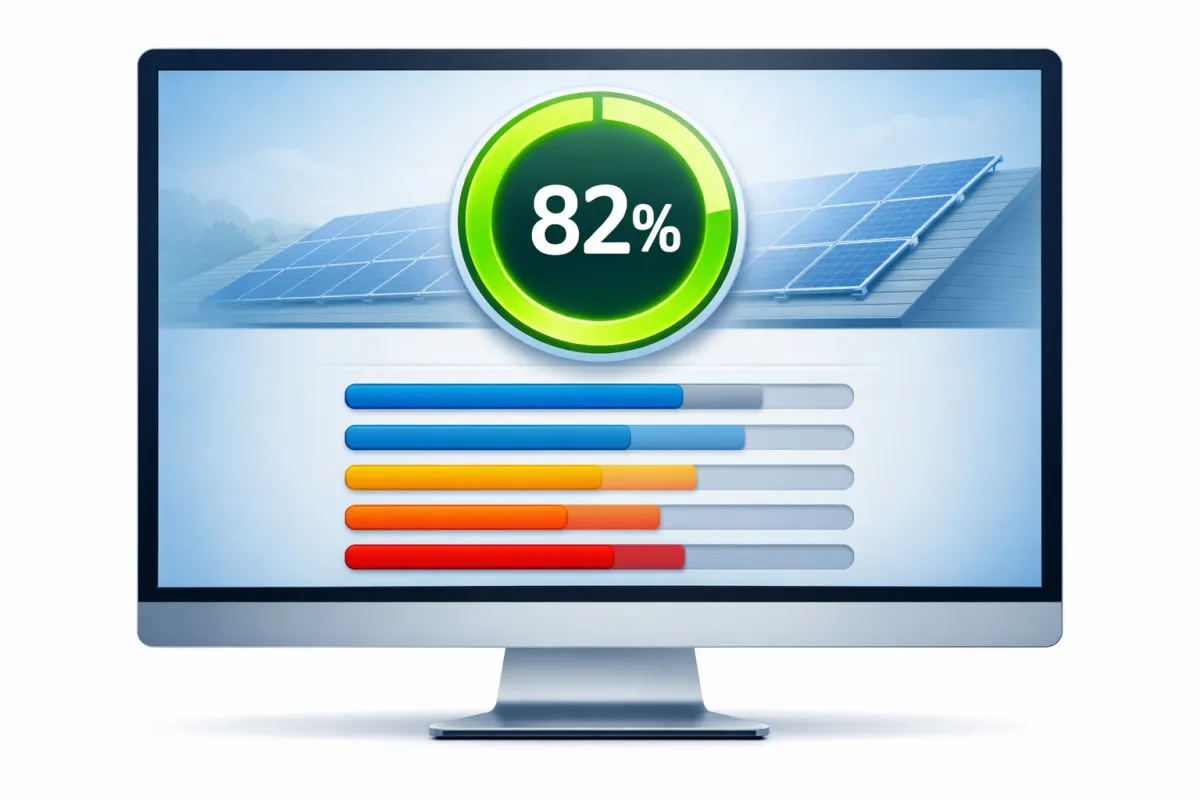
Most solar companies give you a number and expect you to trust it. NuWatt separates the data used in a preliminary estimate from the property and project facts that still need verification.
Most solar estimates are treated as a single magic number. But they are built from multiple data sources, each with varying quality. A small error in one input can cascade into thousands of dollars of difference in your expected costs and savings.
A national or statewide average can differ materially from the serving utility, rate class, and current tariff. That difference changes modeled savings and payback.
Many sites still show a 30% residential federal tax credit. Section 25D expired December 31, 2025, so cash and loan estimates should not include it.
Assuming ideal orientation, pitch, or shade instead of using available property data can materially overstate production and savings.
This educational model scores five data-quality dimensions to show why one polished estimate can be better supported than another. The weights are explanatory, not a warranty of final-price accuracy.

Your roof's size, pitch, orientation, and available area determine how many panels fit and how much sun they catch.
Satellite verified
We've confirmed your roof dimensions and orientation using high-resolution satellite imagery.
Address provided
We have your address but haven't verified the roof via satellite. Dimensions may be approximate.
Estimated from home size
We're using your home's square footage and bedroom count to estimate roof area.
No property data
We're using regional averages for roof size and orientation.
Shading from trees, buildings, and roof obstructions can materially change solar production. The quality and recency of shade evidence matters.
On-site analysis
A professional measured shading at your property with specialized equipment.
Satellite analysis
We analyzed shade patterns from aerial imagery and sun-path modeling.
Self-reported
You indicated your shade level (some, moderate, heavy). This is a rough approximation.
No shade data
We're assuming full sun exposure, which may overestimate production.
Your actual electricity consumption determines the right system size. More accurate usage data means a better-sized system.
Bill uploaded & parsed
The bill provides utility, account context, billed kWh, and charges for the covered period, subject to successful parsing.
12-month history
You provided a full year of usage data, capturing seasonal variation.
Monthly bill amount
We estimated kWh from your dollar amount using your utility's rate schedule.
Estimated from home size
We used regional averages based on your home size and occupant count.
Your electric rate determines how much each kWh of solar production saves you. The exact rate directly affects ROI calculations.
Exact rate plan identified
We know your utility and specific rate plan, including time-of-use tiers if applicable.
Utility identified
We know your utility but are using their standard residential rate.
Utility not identified
Savings should remain a broad planning range until the serving utility and applicable rate are identified.
Different panels, inverters, and batteries have different costs, warranties, and performance characteristics.
Specific equipment selected
You've chosen exact panel model, inverter type, and any batteries.
Equipment tier selected
You've chosen a tier (value, standard, or premium) but not specific models.
Default equipment
We're using our most common equipment package as a baseline.
Adjust the data-quality levels below to see how an illustrative confidence score changes. The exercise explains input quality; it does not predict a guaranteed error margin or final price.
Quick Presets
Adjust Individual Factors
Good Confidence
Several core inputs are supported. Providing more data can reduce reliance on assumptions.
Address provided (no satellite)
Satellite shade analysis
Monthly bill amount provided
Utility identified, standard rate
Equipment tier selected
Improve Your Estimate
A useful estimate separates measured or sourced inputs from assumptions and makes the remaining site-verification work explicit.
Time-sensitive utility, incentive, equipment, and pricing inputs are maintained with source and review context.
The estimate identifies the serving utility and applicable rate context instead of relying on a national average.
Section 25D expired. We will never inflate your savings with tax credits that no longer exist.
When you provide your address, we verify your roof dimensions and orientation with satellite imagery.
We show you exactly where our estimate might be off and how to fix it, rather than hiding behind a single number.
We track construction deadlines, incentive expirations, and rate changes so your estimate reflects time-sensitive factors.
Here is what each confidence range means for your estimate and what to expect.
High Confidence
Most modeled inputs are supported by property, usage, utility, and equipment evidence. Site facts still need confirmation.
Recommendation
Proceed to site-specific proposal review
Good Confidence
Several core inputs are supported, but one or more material assumptions could still change the result.
Recommendation
Upload a bill or verify address
Moderate
Several key inputs are estimated. Use the result for screening, not a purchase decision.
Recommendation
Provide more data before deciding
Low Confidence
This is a ballpark figure only. Major inputs are missing or assumed.
Recommendation
Not ready for a commitment
No responsible online estimator can promise one accuracy percentage for every property. Available aerial data can support preliminary layout and production modeling, while roof condition, structure, electrical scope, access, and some shading conditions still require site verification. Treat the online result as a planning estimate until those items are confirmed.
A dollar-only bill can be converted to an approximate kWh value only after the utility and applicable rate are identified. Twelve months of kWh history is better because it captures seasonal use and reduces reliance on assumptions. It still does not verify future load changes such as an EV, heat pump, or home addition.
Aerial imagery and modeled sun paths can identify roof planes and many surrounding obstructions, but imagery quality and recency vary. An on-site review can confirm vegetation, roof obstructions, setbacks, and conditions that are unclear or outdated in the available imagery.
Yes. Module dimensions and wattage affect panel count and DC system size, while inverter architecture, temperature behavior, clipping, degradation assumptions, and storage configuration affect modeled production and economics. Final modeling should use the equipment named in the proposal rather than a generic package.
NuWatt maintains versioned utility, incentive, equipment, and pricing inputs and audits time-sensitive facts against utility or program sources. Because programs and tariffs can change between reviews, every estimate remains dated and final eligibility must be confirmed for the project.
You can improve the underlying estimate by confirming the address, providing annual kWh history or a recent bill, identifying the utility and rate plan, selecting actual equipment, and completing a site review. Better inputs can change system size, production, cost, and savings—not just a display score.
No. A confidence indicator describes the quality of available inputs; it does not replace a site survey, structural and electrical review, final production model, utility and permitting review, equipment schedule, written scope, financing disclosures, or contract review.
Start with your address and average electric bill. Review the preliminary roof design, system size, production, and savings range before deciding whether to save the estimate.