
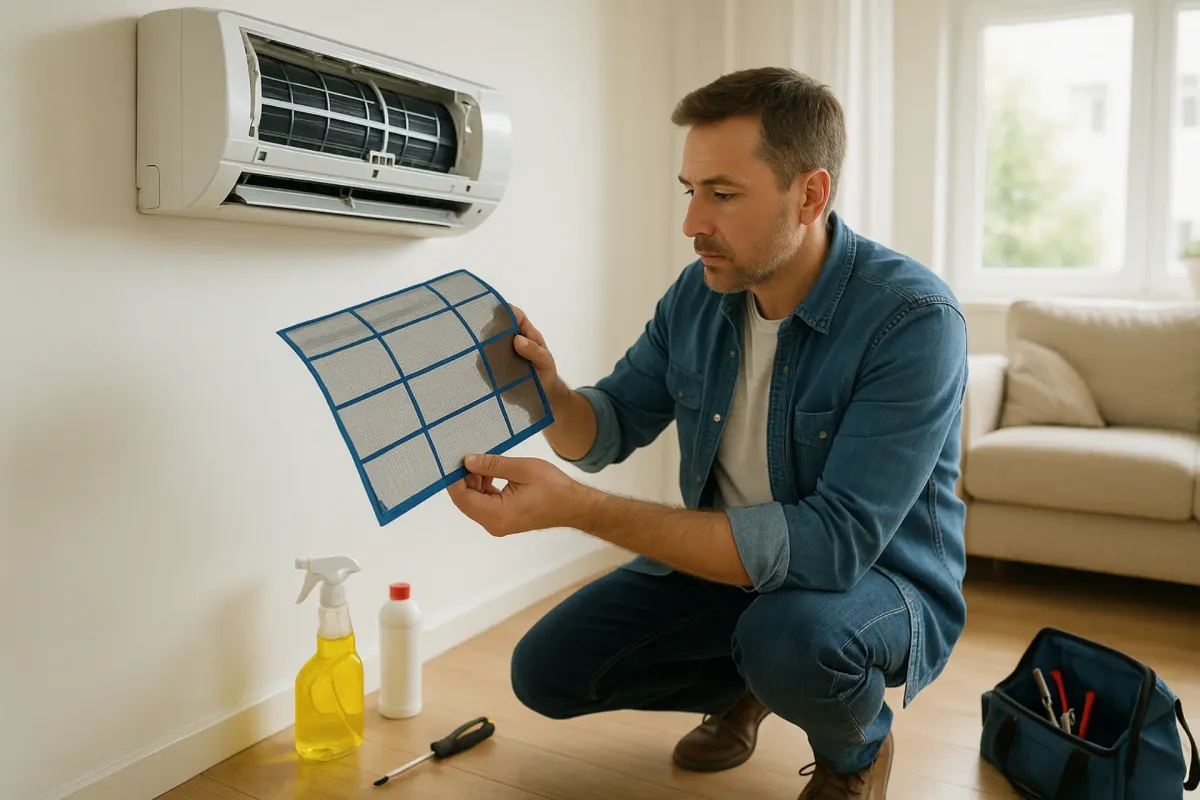

Heat pumps need minimal maintenance: clean filters monthly, clear debris from the outdoor unit seasonally, and schedule professional service annually. This calendar covers every task by month for New England's climate.
Home Electrification Experts — Full-Service Design to Install, 9 States
Tasks Per Year
~30
most are 5-min checks
Annual Cost
$150–$400
maintenance contract
Efficiency Loss
5-10%/yr
without maintenance
Savings
$55–$300/yr
from proper care
Why Heat Pump Maintenance Matters in New England
A heat pump in New England works harder than the same unit in North Carolina. Our systems run in heating mode from October through April — seven months — pushing through sub-zero nights, ice storms, and nor'easters. Then they flip to cooling for the humid summer months. That's year-round operation in demanding conditions, and it means maintenance is not optional.
A well-maintained heat pump operates at 95-100% of its rated efficiency for 15-20 years. A neglected unit loses 5-10% efficiency per year due to dirty coils, clogged filters, and degraded refrigerant charge. On a system that costs $1,100/year to run in Massachusetts, that's $55-$110 in wasted electricity per year — and the efficiency loss compounds. After three years of neglect, you're paying $150-$300 more per year than you should be. After five years, you're looking at potential compressor failure: a $2,500-$4,000 repair that proper maintenance would have prevented.
The maintenance calendar below is designed specifically for the New England climate cycle. Homeowners in Massachusetts, Connecticut, New Hampshire, Vermont, Maine, and Rhode Island should follow this month-by-month guide.
Month-by-Month Maintenance Schedule
Winter (Dec–Feb): Snow & Ice Management
Spring (Mar–May): Deep Cleaning & Professional Service
Summer (Jun–Aug): Filter Changes & Drainage
Fall (Sep–Nov): Heating Mode Prep
DIY Maintenance Tasks: What You Can Do Yourself
Most routine heat pump maintenance is straightforward and requires no special tools. Here's the detail on each DIY task:
Filter Cleaning/Replacement (Every 4-6 Weeks)
Single most important task. Dirty filters restrict airflow, reducing efficiency 5-15%. Mini-split filters are washable — rinse under warm water, dry completely, reinstall. Ducted systems use disposable MERV 8-11 filters ($5-$15). Set a recurring calendar reminder.
Outdoor Coil Cleaning (Spring and Fall)
Coil collects dirt, pollen, cottonwood, leaves. Twice yearly — April and September — spray with garden hose at gentle pressure. Spray inside-out to push debris away from fins. Never use pressure washer (bends fins).
Condensate Drain Maintenance
Indoor unit (cooling mode) and outdoor unit (heating defrost) produce water. Clogged drains cause flooding. Check monthly during cooling. Flush with white vinegar every 3 months to prevent algae. Verify outdoor drain pan isn't creating ice dams.
Snow and Ice Management (Nov–Mar)
Keep 2 ft clearance around outdoor unit. After storms, gently brush snow away — never bang on coils. System defrost handles coil ice automatically. If ice doesn't clear within a few hours, call for service. Never aim snow blower at unit.
What Professional Annual Service Includes
Once a year — ideally in April (post-winter) or October (pre-winter) — have a certified HVAC technician perform a comprehensive service visit. Here's what that includes and why each step matters:
- Refrigerant pressure and charge check — The technician connects gauges to the service ports and measures suction and discharge pressures. Low refrigerant means there's a leak that needs repair. Running with low charge reduces capacity and can kill the compressor. A proper charge check takes 15-20 minutes.
- Electrical connection inspection — Loose connections cause arcing, which generates heat and can start fires. The tech tightens all terminal connections, checks contactor condition, and measures amp draw on the compressor to verify it's within spec.
- Deep coil cleaning (indoor and outdoor) — Beyond what you can do with a garden hose. The tech may use a commercial coil cleaner and straighten any bent fins with a fin comb.
- Condensate drain cleaning — Full flush of all drain lines and pans. They'll check for mold or algae growth in the pan and treat with antimicrobial tablets if needed.
- Thermostat calibration verification — Checking that the temperature reading on the thermostat matches actual room temperature. A 2-3 degree offset means the system is over- or under-conditioning your home.
- Airflow and temperature split measurement — The tech measures the temperature difference between the supply and return air. In heating mode, a healthy split is 15-25°F. Significantly lower indicates reduced capacity. In cooling mode, expect 14-22°F.
- Defrost board and sensor check — For cold-climate systems, verifying that the defrost board is triggering cycles correctly and the outdoor temperature sensor is reading accurately. Faulty defrost is the #1 cold-weather performance issue we see.
Annual Maintenance Contract Costs
Most HVAC companies in New England offer annual maintenance contracts. Here's what to expect:
Basic (1 visit)
$150–$200
One comprehensive tune-up, basic filter cleaning
Standard (2 visits)
$200–$300
Spring + fall tune-ups, priority scheduling
Premium (2 visits + discount)
$250–$400
Two tune-ups, 15% off repairs, priority emergency service, parts discount
For a typical 2-3 zone mini-split system in Massachusetts, expect to pay $175-$250 for a single maintenance visit without a contract. A contract saves you $50-$75/year and guarantees priority scheduling — worth it during a January cold snap when every HVAC tech in the state is booked for three weeks.
Warranty Requires Maintenance Records
Most manufacturer warranties (Mitsubishi, Daikin, Fujitsu) require annual professional maintenance to remain valid. If your compressor fails at year 7 and you can't show maintenance records, that $3,500 warranty claim gets denied. Keep your receipts.
What Happens When You Skip Maintenance
We see the consequences of deferred maintenance every week. Here's the real cost progression:
1 year
Dirty filters reduce airflow 10-15%. Efficiency drops 5-8%. System runs longer to maintain temps.
+$55–$90/yr
2-3 years
Coils covered in grime. Refrigerant may be low from undetected micro-leak. Defrost cycles less effective.
+$150–$300/yr
3-5 years
Compressor running hot due to low charge and dirty coils. Electrical connections loosening. Condensate drain blocked.
+$300–$500/yr + water damage risk
5+ years
Compressor failure likely. Full system replacement may be needed 5-8 years early. Warranty voided.
$3,500–$6,000 repair or $12,000+ replacement
A $200/year maintenance contract prevents $3,500+ in repairs. Over 15 years, that's $3,000 in maintenance costs versus $5,000-$12,000 in premature failure costs. The math is not close.
Winter-Specific Tips for New England
New England winters are the ultimate test for heat pump systems. These region-specific maintenance tips will keep your system running efficiently through January cold snaps and March ice storms:
- Mount the outdoor unit on a stand 12-18 inches above ground — This keeps it above the snow line in most storms. In northern New Hampshire, Vermont, and Maine where snow depths regularly exceed 2 feet, consider 24-inch stands. The stand also improves drainage during defrost cycles.
- Install a snow guard or shelf above the unit — Roof avalanches onto the outdoor unit can bend fan blades, crush the cabinet, and block airflow. A $50-$100 snow deflector mounted above the unit prevents this. Essential if the unit sits under a roof edge.
- Never pile snow against the outdoor unit — When shoveling the walkway or driveway, don't push snow banks up against the heat pump. The unit needs unrestricted airflow to function. A snow wall around the unit is like putting a plastic bag over your head while running on a treadmill.
- Never direct a snow blower toward the unit — Packed snow and ice in the coil fins is one of the most common winter service calls we see. It takes a tech and a steamer to fix. Point the chute away from the unit.
- Clear ice from the top of the unit — gently — Use a broom or your hand to brush off snow and light ice. Never chip or pry ice off the coil fins with a tool. The aluminum fins are fragile, and damaged fins reduce heat transfer permanently. If the coil is iced over and not clearing on its own, call for service — the defrost board may have failed.
- Keep the drain path clear of ice — The outdoor unit produces water during defrost. If the drain pan or ground below ices over, water can back up into the unit. Occasionally pour warm (not boiling) water on iced-over drain paths during extended cold stretches.
- Check refrigerant lines for frost in extreme cold — Some frost on the large suction line is normal in heating mode. Heavy ice buildup on both lines, or frost on the liquid line, indicates a problem — low charge, restriction, or failed metering device. Call for service.
Pro Tip: The Post-Storm Checklist
After any significant snow or ice event, take 5 minutes to walk outside and check three things: (1) Is the outdoor unit visible and clear of snow? (2) Is the fan spinning? (3) Is there unusual noise or vibration? If all three pass, you're good. This 5-minute habit prevents 90% of winter emergency calls.
Ready to Get a Heat Pump Quote?
Get a free, no-obligation quote from NuWatt Energy. We handle design, permits, and installation.
Frequently Asked Questions
How often do heat pump filters need cleaning?▼
Do heat pumps need annual service?▼
Continue Reading
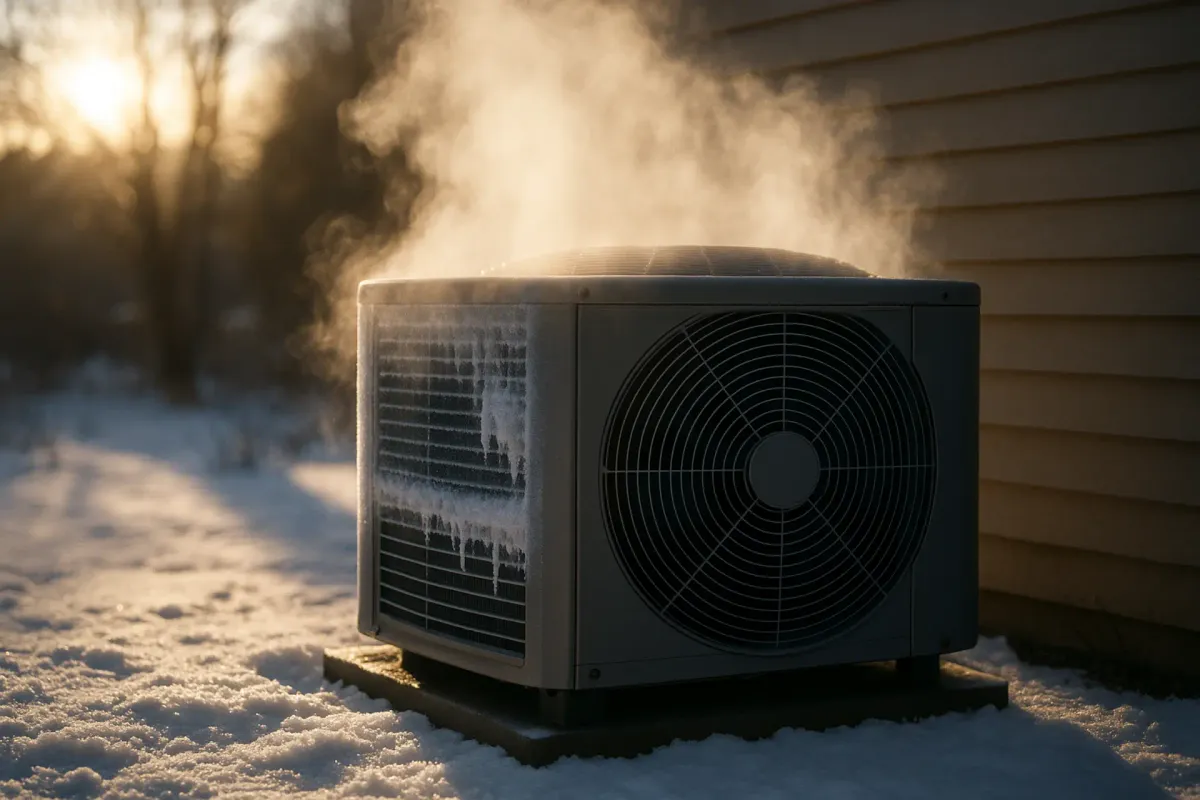
Heat Pump Defrost Cycle vs Actual Problem: Troubleshooting Guide
A normal defrost cycle runs for 1-10 minutes every 30-90 minutes when frost builds up on the outdoor unit. If your unit defrosts constantly, runs for more than 15 minutes, or never defrosts, that's a real problem.
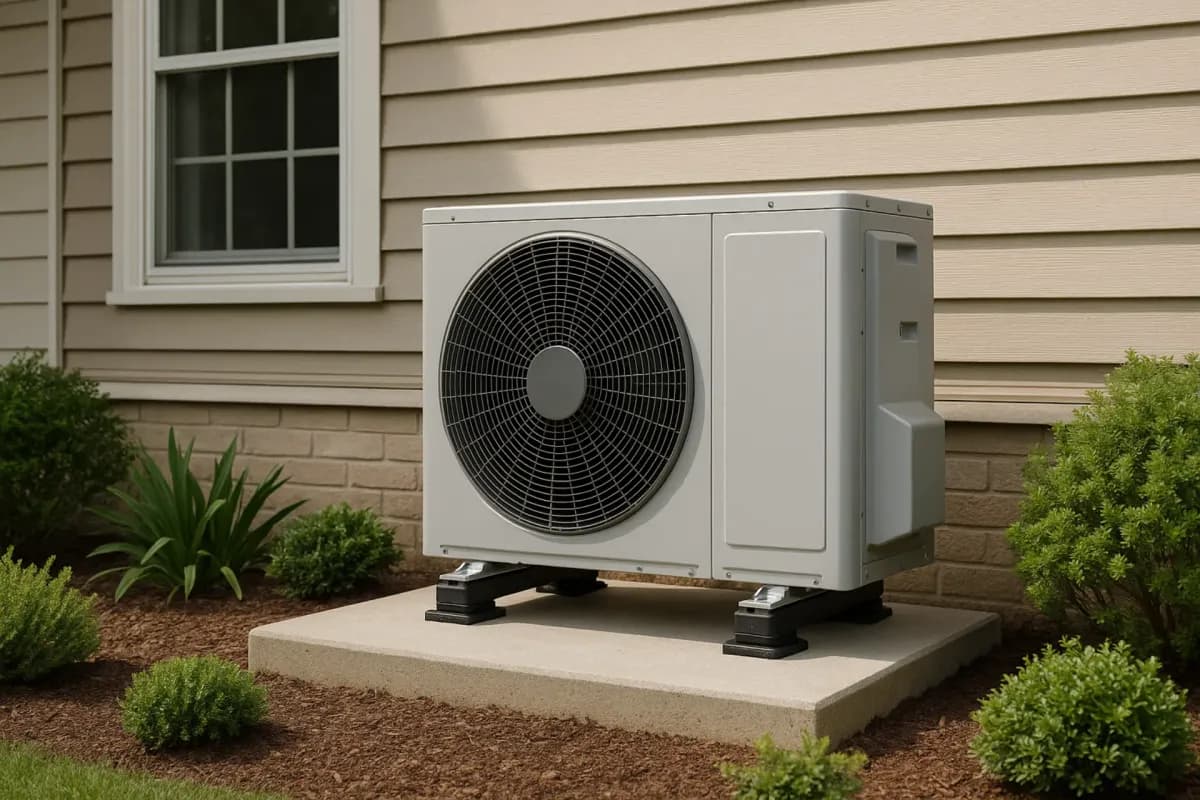
Heat Pump Noise: What's Normal, What's Not, and How to Fix It
A modern heat pump runs at 40-55 dB outdoors and 19-28 dB indoors — quieter than a refrigerator. If you hear grinding, rattling, or screaming, that's not normal and needs attention.
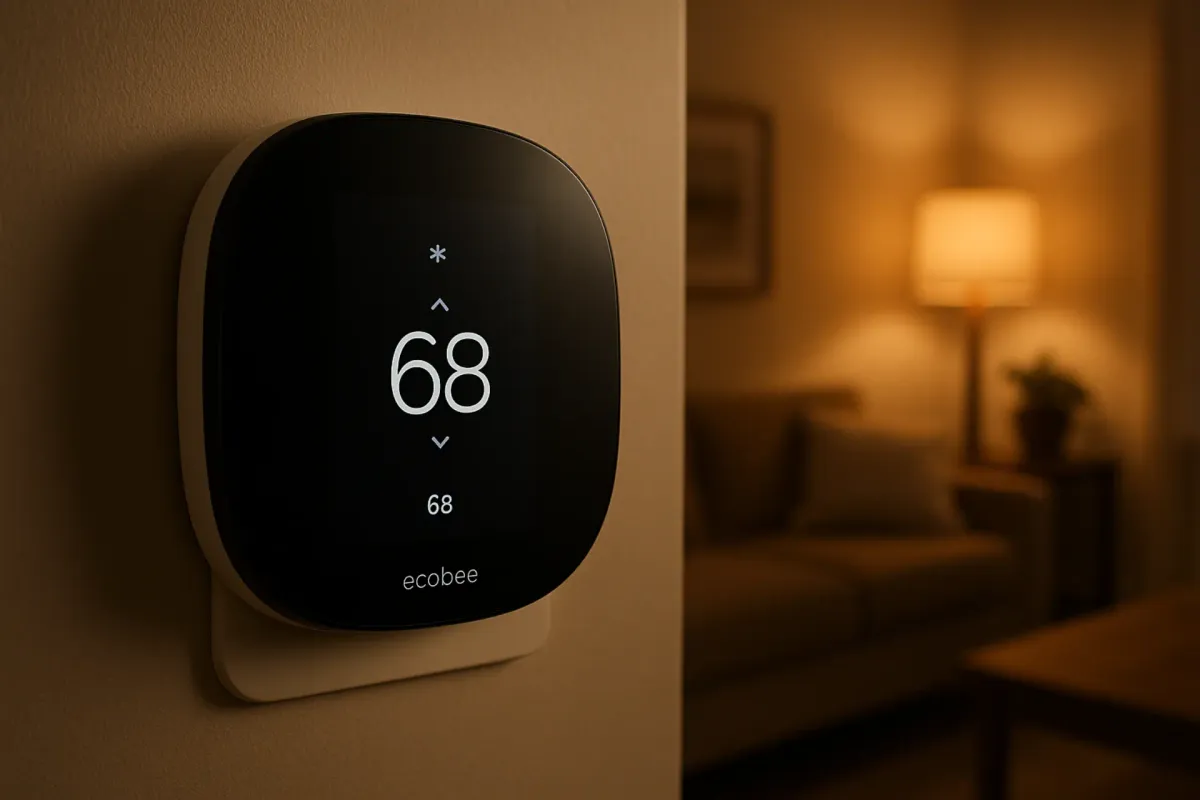
Best Heat Pump Thermostat Settings: 68°F Steady
Set your heat pump thermostat to 68°F and leave it there. Unlike furnaces, heat pumps lose efficiency with large setbacks. A 5°F setback that saves money with a furnace can actually cost more with a heat pump by triggering backup heat.