Loading NuWatt Energy...

We use your location to provide localized solar offers and incentives.
We serve MA, NH, CT, RI, ME, VT, NJ, PA, and TX
Loading NuWatt Energy...
NuWatt designs, installs, and manages solar, battery, heat pump, and EV charger systems across 9 states. One company, one warranty, one point of contact.
Get a Free Quote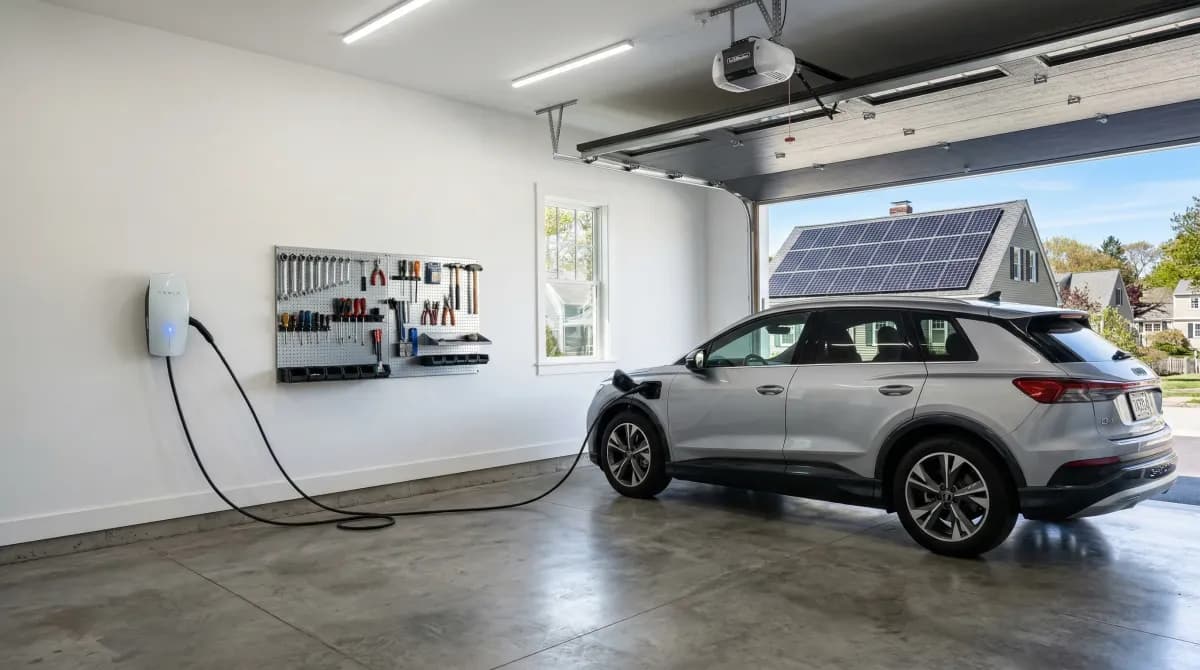
Pair the right Level 2 charger with your solar panels and charge your EV for near $0. Plus stack the Mass Save $300 charger rebate (up to $800 with managed charging) and off-peak EV rates. Note: the federal Section 30C home-charger credit expired June 30, 2026.
The best EV charger for a Massachusetts solar home in 2026 is the Tesla Universal Wall Connector ($595, 48A/11.5kW). It works with all EVs (not just Tesla) and delivers the fastest residential charge speed at the lowest price per kW. Pair it with solar panels and stack the Mass Save $300 charger rebate (up to $800 with managed charging) plus off-peak EV rates.
Federal Section 30C credit expired June 30, 2026
The federal Section 30C residential EV-charger credit (up to $1,000) is no longer available to homeowners, and Section 25D (solar ITC) expired December 31, 2025. Massachusetts homeowners can still cut home-charging costs with the Mass Save $300 charger rebate (up to $800 with the managed-charging bonus), off-peak/time-of-use EV rates, and pairing the charger with solar.
A typical EV adds 3,000-4,500 kWh of electricity demand per year. At Eversource rates ($0.38/kWh), that is $1,129-$1,693 per year in added electric bills. Solar panels offset this to near $0 through net metering, effectively giving you free fuel for life.
$1,129-$1,693
per year at Eversource rates
~$0
net metering offsets EV usage
$28,225-$42,325
vs. grid-powered EV charging
The math is simple: your solar panels produce electricity during the day, your EV charges at night, and net metering bridges the gap. Massachusetts net metering credits your daytime solar production against your nighttime EV charging at full retail rate. You are effectively turning sunlight into miles.
Bonus: The Mass Save $300 charger rebate — up to $800 with the managed-charging bonus — offsets much of your charger purchase and installation, making the charger itself nearly free when paired with solar savings.
The federal Section 30C residential EV-charger credit (30% of equipment and installation, up to $1,000 for a home) expired June 30, 2026 and is no longer available to homeowners. Section 25D (residential solar ITC) expired earlier, on December 31, 2025. The good news: Massachusetts still has strong state and utility incentives that cut the cost of home charging. Here is what to use instead:
Up to $800
$300 charger rebate + up to $500 managed-charging bonus
Near $0 fuel
Time-of-use EV rates and net-metered solar charging
Mass Save $300 charger rebate.Available on qualifying Level 2 smart chargers through your utility’s Mass Save program.
Up to $500 managed-charging bonus. Enroll your charger in the managed-charging program to earn up to $500 more — up to $800 in total Mass Save incentives.
Off-peak EV / time-of-use rates + solar. Charge overnight on discounted EV rates and offset the cost with net-metered rooftop solar for near $0 fuel.
Note for businesses: the federal Section 30C credit for commercialcharging property (up to $100,000 per charging unit) is separate from the expired residential credit. If you’re installing chargers for a business or fleet, check current commercial eligibility with a tax advisor.
We evaluated chargers on charge speed, solar integration, weather durability, smart features, and value. All picks are Level 2 (240V) and available for purchase and installation in Massachusetts.
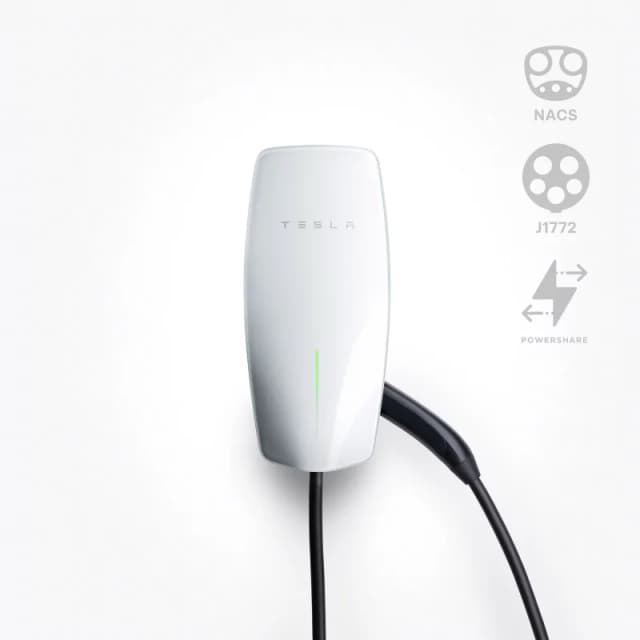
$595 | 48A / 11.5 kW | NEMA 3R | 4 years warranty
Fastest charging for most EVs at the lowest price per kW delivered. Works with ALL EVs via universal NACS/J1772 dual connector.
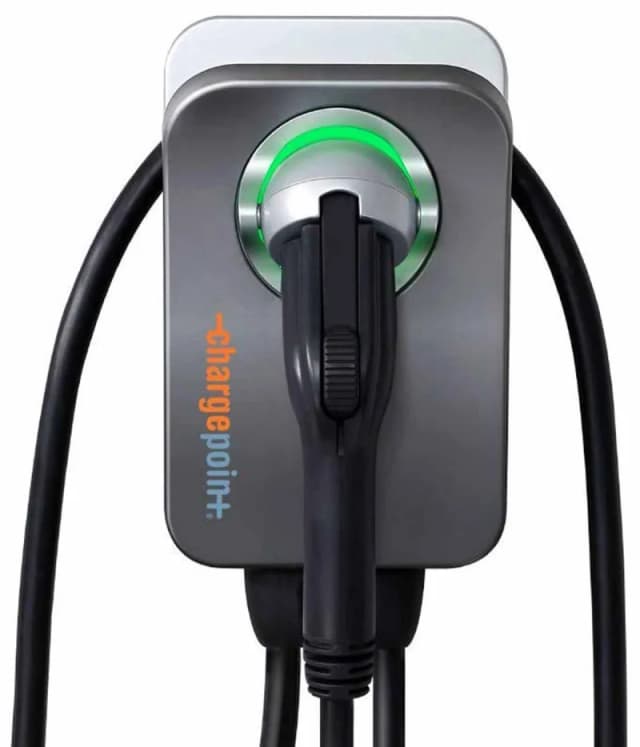
$699 | 50A / 12 kW | NEMA 3R | 3 years warranty
Best app for TOU rate optimization with solar. Schedule charging for off-peak hours or when your solar is producing. Utility rate integration shows exact cost per charge.
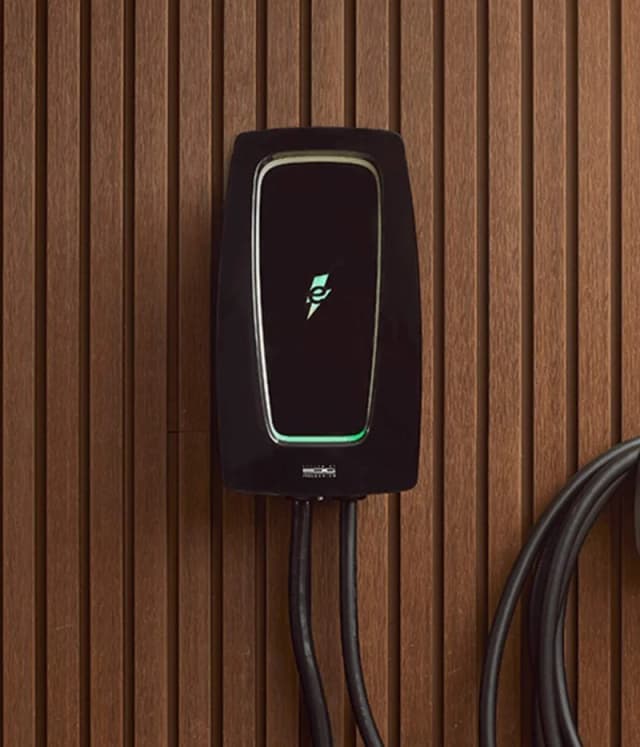
$449 | 48A / 11.5 kW | NEMA 3R | 3 years warranty
Cheapest smart charger with real solar monitoring integration. Pair with the Emporia Vue energy monitor ($35) to see exactly how much solar energy is powering your car.
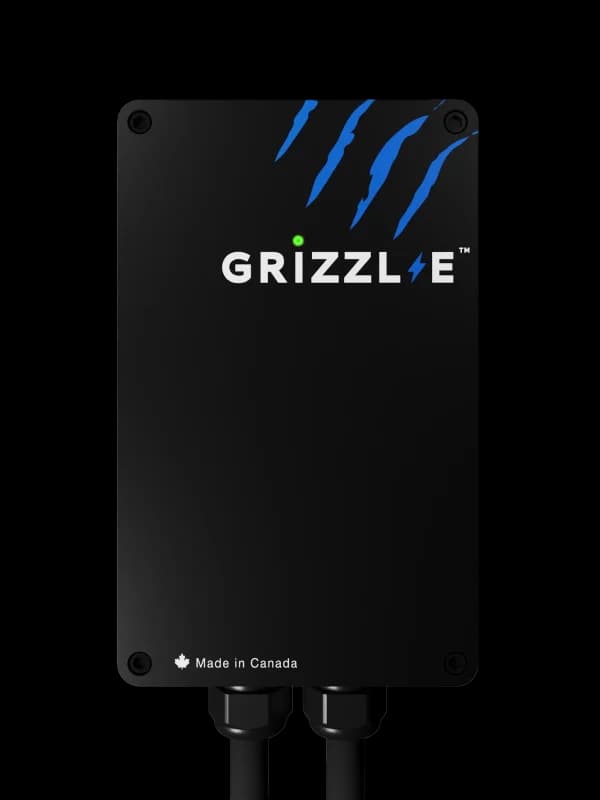
$459 | 40A / 9.6 kW | NEMA 4 (IP67 equivalent) | 3 years warranty
Built for New England weather. NEMA 4 rated for outdoor installation — rain, snow, ice, salt air. No WiFi dependency means it works even when your internet is down.
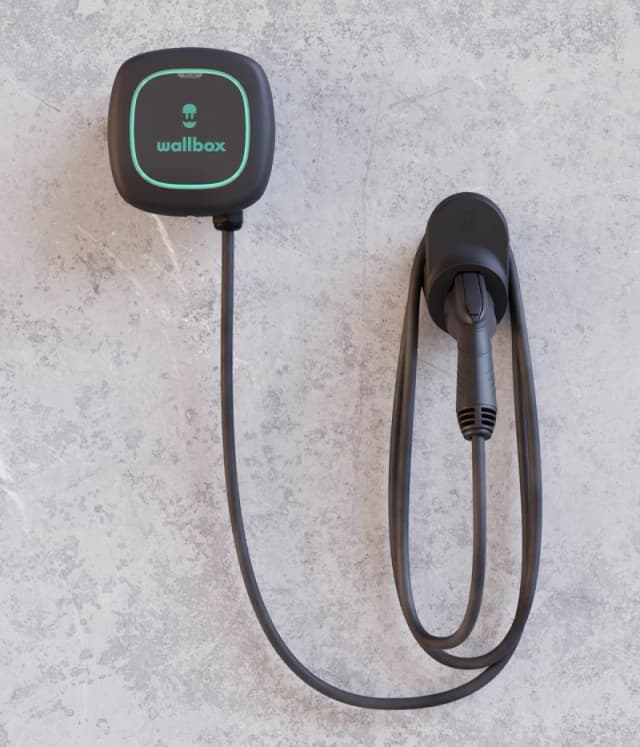
$649 | 48A / 11.5 kW | NEMA 3R | 3 years (2 + 1 with registration) warranty
Smallest Level 2 charger on the market — fits in tight garage spaces and narrow wall mounting positions. Power Boost feature dynamically manages load to avoid panel overloads.
| Charger | Price | Amps | kW | Smart Features | NEMA | Warranty |
|---|---|---|---|---|---|---|
| Tesla Universal Wall Connector | $595 | 48A | 11.5 kW | 4 features | NEMA 3R | 4 years |
| ChargePoint Home Flex | $699 | 50A | 12 kW | 5 features | NEMA 3R | 3 years |
| Emporia Smart Level 2 | $449 | 48A | 11.5 kW | 5 features | NEMA 3R | 3 years |
| Grizzl-E Classic | $459 | 40A | 9.6 kW | None | NEMA 4 (IP67 equivalent) | 3 years |
| Wallbox Pulsar Plus | $649 | 48A | 11.5 kW | 5 features | NEMA 3R | 3 years (2 + 1 with registration) |
Prices are MSRP as of March 2026. Installation costs are separate and vary by electrical setup. All chargers require a dedicated 240V circuit.
Rule of thumb: Add 8-10 solar panels (3.5-4.4 kW) to your system for every 12,000 miles of annual EV driving. Here is the math:
Annual miles: 12,000 (MA average)
EV efficiency: ~3.5 miles/kWh (typical sedan) = ~3,430 kWh/year
Solar production in MA: ~1,200 kWh per kW installed per year
Solar needed: 3,430 kWh / 1,200 kWh per kW = ~2.9 kW (7 panels at 440W)
Conservative recommendation: Add 8-10 panels (3.5-4.4 kW) to account for charging losses (~10%), seasonal variation, and heavier driving months. An SUV or truck (2.5-3.0 mi/kWh) needs 10-12 panels.
Costs assume Hyundai 440W panels at $2.85/W installed. Silfab 440W at $2.92/W or REC 460W at $3.11/W will be slightly higher. See our MA solar panel comparison for details.
All Level 2 chargers need a 240V circuit with a dedicated breaker. A 48A charger requires a 60A breaker. Installation cost ranges from $300 (existing outlet near panel) to $1,500+ (new circuit with long wire run).
Adding a 48A EV charger to a home with solar, heat pump, and electric appliances can push older panels past capacity. If your home has a 100A or 150A panel, budget $2,000-$4,000 for a 200A upgrade. Smart panels (Span, Lumin) can dynamically manage loads for $500-$1,500 less than a full panel upgrade.
If mounting outdoors, choose a charger rated NEMA 4 or higher (Grizzl-E Classic). Massachusetts winters with ice, snow, and salt air can damage chargers rated only NEMA 3R. Garage installations are fine with any charger on this list.
Massachusetts requires an electrical permit for EV charger installation (240V hardwired circuits). Your licensed electrician handles the permit application. Typical permit fee: $50-$150. Inspection within 1-2 weeks of installation.
Mass Save offers $300 off a qualified Level 2 charger through Eversource, National Grid, Unitil, and Cape Light Compact. Enrolling in the managed charging program can earn an additional $500 — up to $800 in total Mass Save incentives on your installation. (The federal Section 30C home-charger credit expired June 30, 2026 and is no longer available.)
We design solar systems sized for your home and your EV. Stack the Mass Save $300 charger rebate (up to $800 with managed charging) and off-peak EV rates. Start with our free solar assessment.
No commitment. 2-minute assessment. Instant estimate.