Loading NuWatt Energy...

We use your location to provide localized solar offers and incentives.
We serve MA, NH, CT, RI, ME, VT, NJ, PA, and TX
Loading NuWatt Energy...
NuWatt designs, installs, and manages solar, battery, heat pump, and EV charger systems across 9 states. One company, one warranty, one point of contact.
Get a Free QuoteOversizing is the number one heat pump installation mistake in Massachusetts. It causes short cycling, high humidity, uneven temperatures, higher bills, and 30 to 50 percent shorter compressor life. Here is how to spot it, how to verify your sizing, and what to do if the unit is already installed wrong.
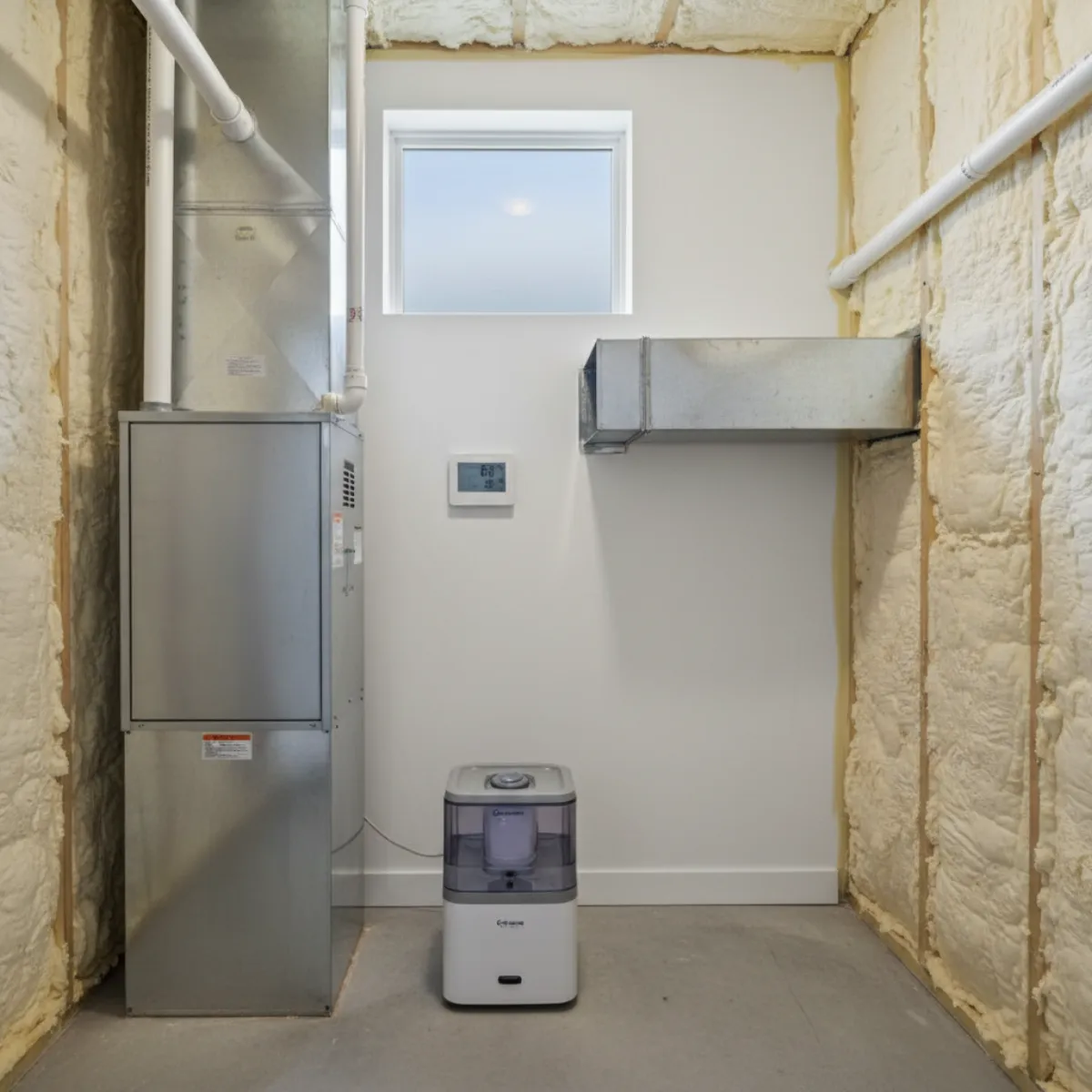
A heat pump is oversized when its capacity at your MA design temperature exceeds your Manual J heat loss by more than 25 percent. Oversized systems short cycle (5 to 10 minute runs, 4+ starts/hr), fail to dehumidify in summer, heat unevenly, and wear out compressors 30 to 50 percent faster. The cure: either replace with a properly sized variable-speed unit ($8,000 to $15,000 in MA), add zoning ($1,500 to $4,000), or at minimum widen thermostat deadbands. Do not oversize on purpose for cold weather: cold-climate HPs are designed to maintain capacity down to 5 F.
If you check two or more of these, your unit is likely oversized.
Unit turns on for 5 to 10 minutes, hits thermostat setpoint, shuts off for 10+ minutes, then repeats. A properly sized system runs 15 to 30 minute cycles in shoulder seasons and often runs continuously on design days.
Dehumidification happens when the coil is cold and air passes over it for sustained periods. Short cycles remove sensible heat but not latent heat. MA summers feel muggy and sticky even though the thermostat reads 72 F.
Blast-then-coast cycles over-heat or over-cool the thermostat zone while upstairs or back rooms barely get any air movement. Runtime is too short to equalize the envelope.
Oversized single-stage units run at poor COP because they cannot ramp down. Part-load efficiency is 20 to 40 percent worse than a right-sized variable-speed unit on the same load.
Each compressor start is wear. A short-cycling unit at 6 starts/hr racks up 2x to 3x the start events of a properly sized unit that runs in longer loops. Expect to replace in 10 to 12 years instead of 15 to 20.
Spring and fall shoulder weeks are when oversizing hurts most. Low load + big unit = constant cycling. The house never "settles" into steady temperature.
Oversizing is not malice. It is the path of least resistance for everyone except the homeowner.
Fast to quote, consistently wrong for MA older housing stock. Cuts the sales cycle from three days to one, but commits the homeowner to a 15+ year asset sized badly.
The oil boiler was oversized by 50 to 150 percent. Matching the new heat pump to boiler BTU nameplate doubles the original mistake.
"I want to make sure it keeps up" and "my neighbor got a 4-ton" are common requests. Installers accommodate rather than educate, despite Manual J showing 2.5 tons.
If the unit struggles during a polar vortex, the installer gets a 7am phone call. Solution: oversize so it never struggles even at -10 F, at the cost of daily short cycling the other 3,500 heating hours.
Without a load calc, the installer cannot know proper size. Default is whatever is in the truck plus a safety margin. The Mass Save Whole Home rebate is supposed to prevent this but gets missed on Partial tier jobs.
Some installers get paid more on bigger systems. A 5-ton install grosses $20K+ while a 2.5-ton install grosses $10K. Misaligned incentives.
Real dollar impact for an average MA home with a 50 percent oversized unit.
Five steps, doable before or after installation.
Not a verbal "we did a load calc". The actual multi-page PDF with room-by-room heat loss, ACH50, design temp, and R-values.
For MA: capacity at 5 F (Boston near-design) and -5 F (Worcester/Pittsfield). From the NEEP CCHP directory, not the nameplate.
If NEEP capacity at 5 F exceeds Manual J heat loss at 5 F by more than 25 percent, the unit is oversized. Ideal range: capacity 100 to 115 percent of design-day load.
In the first week, track cycles per hour during shoulder season. 1 to 2 cycles/hr is healthy; 4+ cycles/hr signals oversizing (or bad controls).
Properly sized cooling holds 45 to 55 percent RH. Oversized systems often run 60 to 70 percent RH even at setpoint, especially in July and August.
Not all heat pumps suffer oversizing equally. Modulating inverters are more forgiving, but they are not a license to skip Manual J.
| Compressor type | Oversizing tolerance | Detail |
|---|---|---|
| Single-stage (on/off) | Very low | Short cycles immediately if oversized. Worst match for oversizing. Older models and lower-tier current models. |
| Two-stage | Low | Can run at 60 to 70 percent on low stage, then ramp to 100 percent. Reduces cycling somewhat but still hits the same wall if oversizing is 50+ percent. |
| Variable-speed inverter (modulating) | Moderate | Can run at 25 to 100 percent smoothly. Handles 25 to 40 percent oversizing acceptably (though still not ideal). Why premium models like Mitsubishi Hyper-Heat feel forgiving even when mis-sized. |
From cheapest to most comprehensive fix.
When to choose: Severe oversizing (2x+) on a single-stage unit with significant symptoms. Still the best long-term fix but expensive.
Mass Save rebates are available if you never claimed on the old unit, but the rebate is typically one-per-home, so check before relying on it.
When to choose: Moderate oversizing on a ducted system. Splitting into two or three zones spreads runtime across different areas, lengthening effective cycle times.
Requires a variable-speed capable air handler for best result. Does not cure short cycling if the unit is wildly oversized.
When to choose: Almost never a retrofit option on existing equipment. Listed here so you can rule it out and know your real choices are replace or mitigate.
Inverter tech comes integrated; it is not a bolt-on.
When to choose: Mild oversizing. Widen the deadband from 1 F to 2 F, enable longer minimum run times, and lock out auxiliary resistance heat above your real balance point.
Band-aid, not a cure. Recovers 10 to 20 percent of comfort and efficiency lost to oversizing.
When to choose: Counterintuitive but works in reverse: if you air-leaked, the real load is closer to what the oversized unit delivers. Tightening further does not help this direction.
Skip this as a "fix" for oversizing. It is a good thing to do for other reasons, but it makes the oversizing worse, not better.
Three quick checks. First, count cycles per hour during 40 to 55 F outdoor temps: more than 3 to 4 cycles/hr is a red flag. Second, check summer indoor humidity: if it is above 60 percent at setpoint, the unit is not running long enough to dehumidify. Third, compare your Manual J heat loss to the installer-spec capacity at 5 F: if capacity exceeds load by more than 25 percent, the unit is oversized.
Short cycling is when the heat pump runs for only 5 to 10 minutes per cycle and starts 4+ times per hour. Each compressor start draws high current and causes mechanical wear. Short cycles also prevent the system from reaching steady-state efficiency (the first few minutes of runtime have poor COP). Over 15 years, short cycling reduces compressor life by 30 to 50 percent and raises electricity consumption 15 to 30 percent.
Dehumidification requires sustained runtime with cold coil temperatures. Moisture condenses on the coil when air passes over it for 15+ minutes. Oversized systems hit the thermostat set point in 5 to 10 minutes, so the coil never gets cold enough long enough to wring moisture out of the air. Result: 65 to 75 percent indoor RH in MA summers even though the thermostat reads a comfortable temperature.
Partially. Modulating inverters (Mitsubishi Hyper-Heat, Fujitsu XLTH, Daikin Fit) can throttle down to 25 to 30 percent capacity, which absorbs mild oversizing (up to about 40 percent over the correct size). But they cannot hide gross oversizing (2x+). You still get poor humidity control and accelerated wear. Inverter technology is more forgiving, not a license to oversize.
In 2026 MA pricing, removing an oversized system and installing a properly sized variable-speed unit typically costs $8,000 to $15,000 depending on ductwork changes, size, and whether you need to replace lineset/air handler. You may qualify for a second Mass Save rebate only if you did not claim it on the original install; many homeowners have to eat the full cost.
No. This is the most common and most expensive misconception. Cold-climate heat pumps are specifically engineered to maintain 80 to 90 percent of rated capacity down to 5 F and 60 to 75 percent at -13 F. If you size correctly for Manual J design load at your town 99 percent temperature, the cold-climate unit still covers it, even on cold nights. Oversizing for cold weather means chronic oversizing for the 95 percent of hours above design temp.
No. "Bigger is safer" is a heuristic that reduces callback risk for the installer while transferring all the cost (short cycling, wear, bills, humidity) to you. A right-sized system backed by Manual J math is safer AND cheaper AND more comfortable over a 15-year lifespan. If an installer defaults to oversizing, shop elsewhere.
Somewhat. Splitting a ducted system into 2 or 3 zones spreads the load so the unit runs longer satisfying one zone at a time. Works best when paired with a variable-speed air handler. Zoning a wildly oversized unit does not cure short cycling, but it helps moderate oversizing (20 to 40 percent over). Expect $1,500 to $4,000 for a zoning retrofit.
Yes, and it is common. Homeowners install a 1.5-ton head in a 12x14 bedroom when 0.75 ton would do. Result: room overshoots setpoint by 4 F, unit short cycles, humidity spikes. Mitsubishi and Fujitsu sell "micro" heads down to 6,000 BTU/hr exactly to address this. Size for the room, not for future use.
Sometimes. Mass Save rebates are typically one-per-home for the same system type, but exceptions exist if the original was installed pre-2018 or never claimed a rebate. Call the Mass Save program administrator (Eversource or National Grid depending on your utility) before investing. Do not assume you can stack rebates on a re-install.
The load calc that prevents oversizing in the first place.
Why chasing a lower balance point does not mean bigger.
Step-by-step sizing methodology for MA homes.
Full list of MA install pitfalls beyond sizing.
The main summer symptom of oversizing, explained.
Why fuel-switching from oil invites oversizing.
We run a fresh Manual J, pull NEEP CCHP datasheets for your unit, and tell you honestly whether you are oversized, undersized, or on target.
NABCEP-certified • Mass Save participating contractor • Serving MA since 2008