
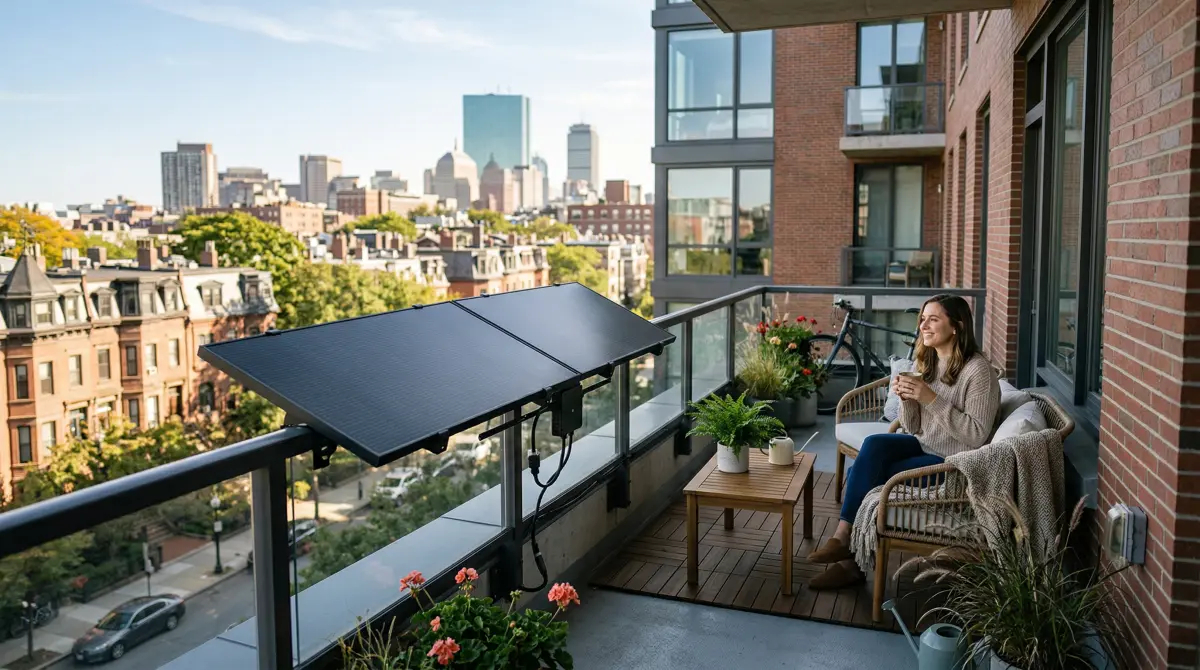
Plug-in solar is one of the most promising renter-friendly energy categories of 2026, but it is still a rules-sensitive market. Product safety, property permission, and utility rules all matter.
Best User
Renters + condos
where rooftop ownership is out of reach
Core Rule
Do not assume legal
check product, property, and utility rules
System Size
Small by design
this is bill relief, not full-home offset
Nearest Alternative
Community solar
especially when balcony kits are not allowed
Quick answer: plug-in solar is real, but the rules are not simple yet
Plug-in solar, balcony solar, and portable solar kits are one of the most interesting residential energy stories of 2026. They promise a way for renters, condo owners, and small-space homeowners to produce a little of their own electricity without a full rooftop installation. The catch is that U.S. rules are still maturing. You should never assume a kit sold online is automatically approved for your apartment, condo balcony, or utility territory.
The safest mental model is this: plug-in solar is a policy-moving category, not a universally frictionless product category. Before buying one, you need to clear three filters: product safety, building permission, and utility / interconnection compatibility.
How plug-in balcony solar works
Small module set
Most systems are intentionally small and aimed at offsetting a slice of apartment or condo load, not replacing a full rooftop system.
Microinverter / plug pathway
The defining feature is that the kit is designed to make energy available through a plug-connected architecture rather than a conventional roof tie-in.
Optional battery pairing
Some shoppers pair plug-in kits with portable batteries or power stations rather than relying on direct daily offset alone.
The three checks every shopper should do first
1. Product and safety check
Look for clear U.S. certification and anti-islanding / automatic shutoff claims appropriate to the device class. If the seller is vague about listing, certification, or supported installation conditions, slow down.
2. Property permission check
Landlords, condo boards, and HOAs can still control what hangs off balconies, railings, façades, or window lines. “Portable” does not mean automatically allowed.
3. Utility and code check
Even where legislation is moving, utility and local-code treatment can still lag. That is why a state-level news headline is not the same thing as a green light for your exact building and outlet setup.
2026 Northeast state snapshots
New Jersey
Most explicit 2026 enabling language in the region
New Jersey Senate Bill 688 defines “balcony solar panel systems” and would direct state code guidance for these plug-in devices. That is promising, but it is still not the same as a fully mature consumer pathway today.
Connecticut
Active 2026 policy discussion
Connecticut House Bill 5340 testimony explicitly discusses a plug-in solar framework and reduced barriers for small portable systems. That means the state is moving, but buyers should still treat current approval as local-rule dependent.
Rhode Island
Portable-device legislation on the table
Rhode Island Senate Bill 2658 addresses portable solar generation devices. It signals momentum, but like New Jersey and Connecticut, it does not mean every landlord, condo board, utility, or inspector is already set up for plug-and-play solar.
Important reality check
Legislative momentum is not the same thing as instant market readiness. A portable kit can still be a bad fit if your landlord objects, your balcony is shaded, your property rules prohibit visible devices, or your utility guidance is not ready for the exact configuration you want.
When plug-in solar makes sense economically
Plug-in solar is best viewed as partial bill relief. The value is strongest for residents who are locked out of rooftop ownership but still want some direct on-site generation. If your real goal is full-home decarbonization, deep bill offset, or battery-backed resilience, a balcony kit is probably not enough by itself.
That is why many shoppers should compare balcony solar against community solar subscriptions, portable battery setups, or a landlord / condo-led shared-solar project. The right answer is often less about the kit itself and more about which energy path your housing situation actually allows.
Best-fit use cases
Strong fit
- • Renters or condo owners with real sun exposure and a cooperative property owner.
- • Shoppers who understand this is a small-system bill-offset tool.
- • Residents in states where policy momentum is clearly moving toward plug-in frameworks.
Weak fit
- • Buildings with strict appearance or safety rules.
- • Shaded balconies and poor orientation.
- • Shoppers expecting rooftop-solar-scale savings from a tiny kit.
Need Help Finding the Best Solar Path for a Rental, Condo, or Small Space?
NuWatt can help you compare balcony solar, community solar, and other realistic options for your housing setup.
Bottom line
Plug-in solar deserves attention because it opens the conversation to people traditional rooftop solar often excludes. But in 2026, it is still a rules-sensitive category. The winners here will be shoppers who verify the product, the property, and the utility path before they buy.