Loading NuWatt Energy...

We use your location to provide localized solar offers and incentives.
We serve MA, NH, CT, RI, ME, VT, NJ, PA, and TX
Loading NuWatt Energy...
NuWatt designs, installs, and manages solar, battery, heat pump, and EV charger systems across 9 states. One company, one warranty, one point of contact.
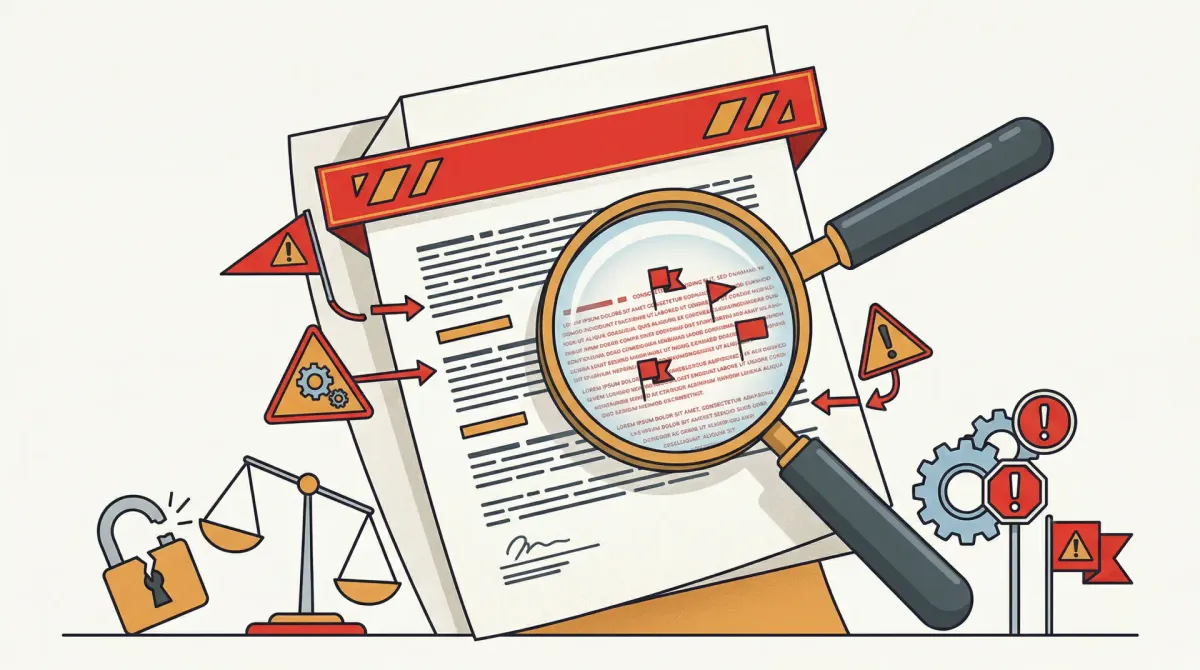
Get a Free QuoteNot all solar deals are created equal. With the residential tax credit gone and solar companies scrambling for revenue, predatory leases, deceptive PPAs, and hidden dealer fees are surging. This guide exposes the nine most common predatory contract tactics and shows you what ethical solar financing actually looks like.
The solar industry changed fundamentally on December 31, 2025. When the Section 25D residential solar Investment Tax Credit (ITC) expired under the One Big Beautiful Bill Act (signed July 4, 2025), homeowners lost the 30% federal tax credit that had driven the rooftop solar boom for nearly two decades.
But here is what most homeowners do not realize: Section 48/48E — the commercial ITC — is still available for third-party-owned systems that begin construction before July 4, 2026. This means leasing companies and PPA providers can still capture a 30% federal tax credit. Homeowners who buy with cash or a loan get nothing.
This asymmetry has created a perfect storm for predatory behavior. Solar companies that previously sold systems for cash are now pivoting aggressively to leases and PPAs — because that is where the tax credit money is. Door-to-door sales teams have surged. “Free solar” pitches are everywhere. The US Treasury Department felt compelled to issue a consumer awareness page warning homeowners about deceptive solar sales practices.
340%
Increase in solar consumer complaints (FTC, 2025 vs 2023)
$0
Federal tax credit for homeowners buying solar (25D expired)
25 yrs
Average predatory lease lock-in period with no ownership
If you encounter any of these in a solar proposal, stop the conversation and walk away. Each one is a proven indicator of a contract designed to benefit the company at your expense.
Your monthly payment is guaranteed to increase every year. A $130/month lease payment becomes $163 by year 10 and $239 by year 25. Over the full contract, you pay $52,000+ for a system worth $30,000. The company claims "utility rates will rise faster" but they are gambling with YOUR money.
You make payments for a quarter century and own nothing at the end. The panels on your roof belong to the leasing company. After paying $50,000-$65,000 over 25 years, you either sign a new lease, buy the aged system at "fair market value," or pay to have it removed.
Solar loan companies allow installers to charge "dealer fees" of 20-30% that get rolled into your loan principal. A $32,000 system becomes a $38,400-$41,600 loan. You never see the fee on any invoice — it is baked into the total. This is the solar industry's dirtiest secret.
Door-to-door salespeople still claim "the government is covering 30% of your solar" in 2026. This is flat-out misleading. The Section 25D residential solar tax credit expired December 31, 2025. Homeowners who buy with cash or a loan get $0 in federal tax credits. The Section 48 ITC exists for third-party owners (leasing/PPA companies) — not you.
Legitimate solar companies perform a roof assessment, shade analysis, and electrical inspection before giving a price. If a company quotes you a system price from a satellite image alone — or worse, over the phone — that is a major red flag. Inaccurate system sizing leads to underperformance and surprise costs.
High-pressure sales tactics are the hallmark of predatory operators. Phrases like "this pricing is only available today," "the rebate expires at midnight," or "I need your signature before I leave" should end the conversation immediately. Legitimate solar pricing does not expire in 24 hours.
Many solar leases and PPAs include punishing early termination fees — often the remaining value of the contract. A homeowner 5 years into a 25-year lease may face a $10,000-$20,000 fee to exit. Some contracts calculate the fee based on "remaining expected production value," making it even higher.
When you sell your home, the buyer must agree to assume your solar lease. Many buyers refuse — they do not want a 20-year payment obligation they did not choose. Real estate agents report that solar leases can delay closings by 30-60 days or kill deals entirely. Some contracts require the seller to pay the buyout if the buyer refuses.
A predatory contract will lack specific warranty details: What happens if a panel fails? Who pays for the service call? What is the guaranteed production? Is there a degradation guarantee? Vague language like "reasonable performance" or "industry-standard warranty" means you have no enforceable protection.
These are anonymized accounts from news reports, consumer complaint databases, and online communities. They represent thousands of similar experiences happening across the country right now.
When Sunnova filed for bankruptcy in early 2025, tens of thousands of homeowners became "solar orphans." Their monitoring systems went dark. Warranty claims went unanswered. Panels degraded with no one to service them. Homeowners still owed payments on systems no one would maintain. Class-action lawsuits are ongoing, but most homeowners will never recover their losses.
Source: Multiple news reports, 2025-2026
A retired couple in their 70s signed a 25-year solar lease after a door-to-door salesman promised "free solar." Five years later, they needed to sell their home and move to assisted living. The lease buyout: $28,500. The buyer refused to assume the lease. The home sat on the market for 8 months. They ultimately paid $18,000 in negotiated termination fees from their savings.
Source: Consumer complaint, anonymized
After their solar company was acquired and the new owner stopped servicing residential accounts, a Massachusetts homeowner was left paying $175/month for a system producing 40% of its original output. Four of twelve panels had failed. The lease required them to continue payments regardless of production. The company's phone number led to an automated message about "service disruptions."
Source: Reddit solar community, anonymized
A Texas homeowner accepted a job transfer and needed to sell quickly. Three qualified buyers walked away after seeing the 22-year remaining solar lease obligation — $160/month with a 2.9% escalator. The fourth buyer demanded a $15,000 price reduction to compensate. The homeowner lost more on the sale than they ever saved on electricity.
Source: Real estate agent report, anonymized
Even homeowners who avoid leases and PPAs can fall victim to hidden costs. The solar loan industry has a dirty secret called dealer fees — and most homeowners never know they are paying them.
A solar company installs a system with a true cost of $32,000.
The loan company allows the installer to add a 25% dealer fee ($8,000) to the loan principal.
Your loan is now $40,000 — but the contract only shows the total financed amount. The $8,000 fee is never itemized.
You pay interest on the full $40,000 for 15-25 years. At 7% APR, that $8,000 fee costs you over $13,000 with interest.
Pro tip: Ask every solar company for both their cash price and their financed price. If the financed price is significantly higher (more than the cost of interest), dealer fees are hidden in the loan. Walk away from any company that cannot explain the difference.
Use this checklist when evaluating any solar proposal. Every item should be a non-negotiable minimum standard — not a premium feature.
If any solar company cannot meet every item on this list, they are not offering you a fair deal.
Propel is a hybrid solar financing model designed to deliver the benefits of third-party ownership without the predatory terms. Here is how it works — and why it passes every item on the ethical checklist above.

The price you see is the price you pay. No hidden origination charges, no inflated loan balance.
Your monthly payment is locked in from day one and never increases. No 2-3% annual adjustment, ever.
Prepaid Energy Services Agreement (years 1-5) transitions to a 25-year loan through Concert Finance. Pre-set buyout price at year 5.
Third-party ownership during years 1-5 captures the Section 48 ITC (30%). That savings is passed directly to you through reduced monthly costs.
FEOC-qualified panels manufactured in the USA. Not the cheapest option on the market — the best value.
Professional monitoring and maintenance included for years 1-5 at no additional cost. Production guarantee included.
If you sell your home, the Propel agreement transfers to the buyer without penalty. No lease assumption horror stories.
Accessible credit requirements. Excellent credit (660+) qualifies at 7.79% APR, good credit at 9.79%.
Currently available in Maine and Texas — expanding to additional states. Even if Propel is not yet available in your state, use the features above as your benchmark when evaluating any solar financing offer.
| Feature | Predatory Lease | Propel | Cash Purchase |
|---|---|---|---|
| Upfront cost | $0 | $0 | Full system cost |
| Monthly payment | Starts low, escalates 2-3%/yr | Fixed — never increases | $0 |
| Total paid over 25 years | $52,000-$65,000 | ~$44,000 (loan paid off) | $28,000-$35,000 once |
| Ownership | Never — company owns it all 25 years | Year 5 — you own outright | Day 1 |
| Federal tax benefit | Company keeps 48 ITC (30%) | 48 ITC (30%) baked into lower payment | $0 (25D expired) |
| Dealer fees | N/A (lease) | 0% | N/A |
| Panels | Company's cheapest option | Silfab 440W (American-made, FEOC) | Homeowner's choice |
| Maintenance | Company responsible (if solvent) | Free monitoring + maintenance years 1-5 | Homeowner responsibility |
| Home sale impact | Buyer must assume lease (many refuse) | Transferable — no penalty | Adds value, no strings |
| Early exit | $5,000-$15,000+ termination fee | Pre-set buyout schedule | N/A — you own it |
| Performance guarantee | Vague or missing | Written production guarantee | Panel manufacturer warranty |
| Credit requirement | Varies (often 600+) | 660+ FICO | None |
Follow these five steps before signing any solar contract. Knowledge is your best defense against predatory sales tactics.
Never sign with the first company that knocks on your door. Get at least three written quotes from different installers. Compare total cost, equipment specifications, warranty terms, and financing options side by side. A legitimate company will welcome the comparison.
Take the contract home. Read it overnight. Look specifically for escalator clauses (any mention of "annual increase," "rate adjustment," or "CPI indexing"), early termination fees, transfer requirements, and the buyout schedule. If a salesperson pressures you not to take the contract home, walk away immediately.
Ask every solar company: "Does this loan include dealer fees? What percentage?" Demand a written breakdown showing the equipment cost, labor cost, permitting cost, and any fees. If the total financed amount is more than 10% above the cash price, dealer fees are likely baked in.
Search for the company on the Better Business Bureau, your state Attorney General's consumer complaint database, and Google Reviews. Check if they have been involved in bankruptcies, acquisitions, or name changes. A company that has changed names twice in five years is waving a red flag. Ask: "Will your company still be here in 10 years?"
File a complaint with your state Attorney General if you encounter deceptive sales practices. Contact your state consumer protection office before signing any contract over $10,000. Many states have a "cooling off" period that allows you to cancel a door-to-door sale within 3 business days.
If you have experienced deceptive solar sales practices, file a complaint with your state Attorney General. These offices investigate consumer fraud and can take action against companies engaged in predatory behavior.
Important: 3-Day Cooling Off Rule. Under the FTC’s Cooling Off Rule, you have the right to cancel a door-to-door sale of $25 or more within 3 business days. The seller must give you a cancellation form at the time of sale. If they did not, your cancellation period may be extended. Send your cancellation notice via certified mail.
A predatory solar contract is a lease, PPA, or loan agreement that uses deceptive terms to benefit the solar company at the homeowner's expense. Common characteristics include 2-3% annual payment escalators, 25-year contracts with no ownership, hidden dealer fees of 20-30%, punishing early termination fees, and misleading claims about government incentives. These contracts often target elderly homeowners and those unfamiliar with solar economics.
No. Solar leases and PPAs are legitimate financing structures that can benefit homeowners who cannot afford to buy. The key is the terms. A fair lease or PPA should have fixed payments (no escalator), a clear buyout schedule, reasonable termination terms, and transparent pricing. The problem is that many of the largest residential solar companies use escalator clauses and high-pressure door-to-door sales that cross the line into predatory territory.
Dealer fees (also called "origination fees" or "channel partner fees") are charges of 20-30% that solar loan companies allow installers to add to the loan principal. On a $32,000 system, a 25% dealer fee means you actually borrow $40,000 — but the extra $8,000 is never itemized on your contract. The installer gets the fee as compensation for originating the loan. You pay interest on it for the life of the loan.
No. The Section 25D residential solar tax credit expired December 31, 2025 under the OBBBA (signed July 4, 2025). Homeowners who purchase solar with cash or a loan receive $0 in federal tax credits. However, the Section 48/48E commercial ITC (30%) is still available for third-party-owned systems where a financing company owns the panels during the initial period. This is how programs like Propel can still deliver lower payments — the financing company captures the ITC and passes the savings to you through reduced monthly costs.
Start with the Better Business Bureau (bbb.org) to check their rating and complaints. Search your state Attorney General consumer complaint database. Read Google Reviews and look for patterns in negative feedback. Verify their NABCEP certification. Check how long they have been in business under their current name. Ask for references from installations they completed 3+ years ago. A legitimate company will have no problem providing this information.
First, check if you are within your state's "cooling off" period (typically 3 business days for door-to-door sales). If so, send a written cancellation immediately via certified mail. If past the cooling off period, consult a consumer protection attorney — many offer free consultations. File a complaint with your state Attorney General. Document all communications. Check if the contract has a mandatory arbitration clause, which may limit your legal options but does not prevent you from filing regulatory complaints.
Propel is a hybrid solar financing model that combines a Prepaid Energy Services Agreement (years 1-5) with a 25-year loan through Concert Finance. During years 1-5, a third-party entity owns the system and captures the Section 48 ITC (30%), which is baked into your lower monthly payment. At year 5, you buy out the system at a pre-set price and own it outright. Unlike a solar lease, Propel has $0 dealer fees, fixed payments with no escalator, American-made Silfab 440W panels, and free maintenance during the initial period. It requires 660+ FICO and is currently available in Maine and Texas.
With a 2.9% annual escalator — a common rate — a $130/month starting payment grows to $163/month by year 10, $210/month by year 20, and $239/month by year 25. Over the full 25-year term, you pay approximately $52,000-$55,000 total — and still own nothing. By comparison, a $35,000 cash purchase pays for itself in 8-12 years and generates free electricity for 15+ additional years. A fixed-payment program like Propel costs roughly $44,000 total with ownership at year 5.
How Propel works: $0 down, ownership by year 5, no hidden fees.
Head-to-head comparison of Propel hybrid financing versus traditional solar loans.
Why your solar lease payment goes up every year and what it really costs.
The complete guide to solar scams targeting homeowners this year.
With the ITC dead, is solar still worth it? An honest assessment.
See your solar options with clear pricing and no hidden fees.
No hidden dealer fees. No escalator clauses. No pressure to sign today. Just honest pricing from a company that has been installing solar since 2008.