
Loading NuWatt Energy...
We use your location to provide localized solar offers and incentives.
We serve MA, NH, CT, RI, ME, VT, NJ, PA, and TX
Loading NuWatt Energy...
NuWatt designs, installs, and manages solar, battery, heat pump, and EV charger systems across 9 states. One company, one warranty, one point of contact.
Get a Free Quote
Section 25D expired December 31, 2025 — $0 for homeowners. But Massachusetts is not like other states. Your electricity costs $0.28–$0.32/kWh and rising 3–5% per year. That is the real reason solar works here. Not subsidies.

Federal Residential Solar Tax Credit (Section 25D): EXPIRED
The One Big Beautiful Bill Act (OBBBA) eliminated Section 25D effective December 31, 2025. Homeowners who buy solar with cash or a loan receive $0 in federal tax credits. Section 48/48E (commercial ITC for PPA/lease) remains active until July 4, 2026.
No sugar-coating. Here is exactly what an 8 kW solar system costs in Massachusetts in 2026, what you earn from it, and when it pays for itself. We use 8 kW because that is the median system size for a household with a $200–$250 monthly electric bill.
The federal residential tax credit (Section 25D) is $0. Gone. But Massachusetts state incentives, high electricity rates, and optional battery revenue change the equation dramatically.
National Grid customers pay $0.32/kWh — 13% more than Eversource. That higher rate means more value per kWh your panels produce.
Most states relied on the 30% federal ITC to make solar economics work. When it disappeared, many markets saw payback jump to 12–15 years. Massachusetts is different because of three factors no other state matches.
Massachusetts residential customers pay $0.28–$0.32/kWh. The national average is $0.17/kWh. That means every kWh your solar panels produce is worth 65–88% more than the national average. Solar does not need subsidies when the electricity it replaces is this expensive.
At 3% annual rate escalation, today’s $0.28/kWh becomes $0.38/kWh by 2036 and $0.51/kWh by 2046. Solar locks in your electricity cost at $0 for 25+ years.
No other state has a program like SMART. For every kWh your panels produce, the state pays you $0.03/kWh on top of your net metering credits. Low-income households get $0.06/kWh. Add a battery for the $0.04/kWh storage adder.
For an 8 kW system producing 8,800 kWh/year, SMART generates $264/year or $5,280 over the full 20-year term. This income is guaranteed and separate from any other savings.
All three MA investor-owned utilities credit residential solar exports at the full retail rate (1:1 net metering) for systems up to 25 kW. Credits roll over monthly. Combined with the 20-year property tax exemption ($584/yr in savings) and 6.25% sales tax exemption ($1,575 upfront), MA has built an incentive ecosystem that operates independently of federal policy.
Select your utility, adjust the system size, choose your financing type, and toggle the battery option. The calculator accounts for SMART 3.0, net metering, ConnectedSolutions, and all MA tax exemptions. All numbers reflect the $0 federal ITC reality.
Estimate your solar return on investment with SMART income, net metering credits, ConnectedSolutions, and MA tax benefits.
Federal Residential Solar Tax Credit (Section 25D) Expired
Homeowners who purchase solar with cash or a loan receive $0 in federal tax credits. Section 25D expired December 31, 2025.
Eastern MA (Boston, South Shore, Cape Cod, MetroWest, Western MA)
Electric Rate
$0.28/kWh
Net Metering
1:1 retail credit (Class I ≤25 kW)
SMART 3.0 Rate
$0.03/kWh
Interconnection
2-4 weeks typical
20-year exemption — solar adds $0 to your property tax
Payback Period
7
years
25-Year Savings
$114,687
total
Monthly Benefit
$378
per month
Estimates based on average 2026 MA solar pricing, SMART 3.0 $0.03/kWh residential flat rate, 1:1 retail net metering, 6.25% sales tax exemption, 20-year property tax exemption, and 15% state tax credit (max $1,000). Section 25D residential ITC expired Dec 31, 2025 — $0 federal tax credit for cash/loan purchases.
The ITC expiration changed the financing calculus. Cash is no longer king for everyone — PPA/lease became more competitive because the third-party owner can still claim the 30% Section 48 ITC that homeowners lost.
Homeowners with cash who plan to stay 8+ years
Homeowners who want ownership without large upfront cost
Most homeowners in 2026 — get ITC benefit without cash outlay
Without the ITC, a battery used to be hard to justify financially. ConnectedSolutions changes that calculation completely. This demand response program pays you to let the utility use your battery during peak demand events — and the revenue is significant enough to cut your solar payback by 3+ years.
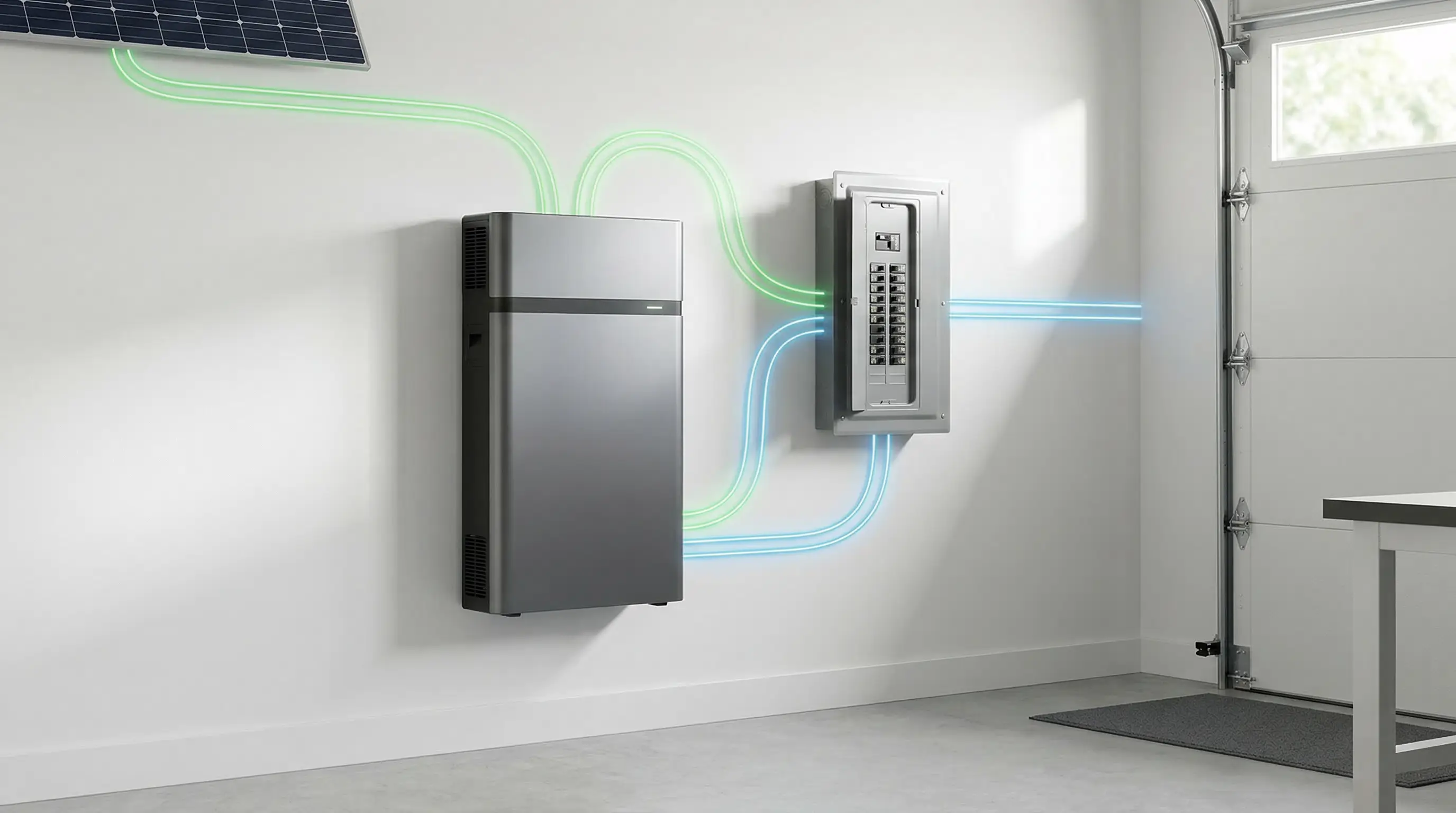
If you are a Unitil customer in the Fitchburg area, ConnectedSolutions is not available to you. A battery still provides backup power during outages, but it will not generate the demand response revenue that Eversource and National Grid customers receive. This means Unitil customers see a longer payback on batteries.
The long-term value of solar in Massachusetts is enormous — even at $0 federal credit. With 3% annual electricity rate escalation, your avoided electricity costs alone exceed $80,000 over 25 years. Add SMART income, ConnectedSolutions, and tax savings, and the total value approaches $134,000.
| Revenue Stream | Annual | 25-Year Total | Notes |
|---|---|---|---|
| Electricity Savings | $2,400 | $80,000+ | Assumes 3% annual rate escalation |
| SMART 3.0 Income | $264 | $5,280 | $0.03/kWh x 8,800 kWh (20 years) |
| ConnectedSolutions | $1,375 | $34,375 | 5 kW battery, Eversource $275/kW |
| Property Tax Savings | $584 | $11,680 | 20-year exemption |
| Sales Tax Saved | — | $1,575 | 6.25% upfront |
| State Tax Credit | — | $1,000 | 15% of cost, capped |
| Total (with battery) | ~$4,623/yr | ~$133,910 | Eversource, 8 kW, 5 kW battery |
Bottom line: You invest $22,625 (after state incentives) and receive approximately $134,000 in total value over 25 years. That is a 5.9x return on investment — without a single dollar of federal tax credit. Very few investments offer that kind of guaranteed return.
“Should I wait for prices to drop?” “Will the tax credit come back?” These are fair questions. Here is why waiting costs you money.
Over the past decade, Massachusetts electricity rates have increased an average of 4–6% annually. Even at a conservative 3% growth:
Every month you wait costs ~$200–$300 in electricity bills solar would offset.
Solar panel prices dropped 80% from 2010–2020. That era of rapid decline is over. Installed costs have stabilized at $3.00–$3.40/W in Massachusetts.
If you are considering a PPA or lease, the Section 48/48E commercial ITC requires projects to begin construction before July 4, 2026. After that date, the third-party ITC drops significantly or disappears entirely. This means PPA/lease rates will likely increase after the deadline.
The tax credit is NOT coming back for homeowners. There is no pending legislation to restore Section 25D. Waiting for a restoration that is not coming while paying $0.28–$0.32/kWh is the most expensive option available.
Every home is different. Here are three common Massachusetts homeowner profiles and how the solar math works for each — all without the federal tax credit.
4-bedroom colonial, 2 kids, central AC, Eversource territory
Recommendation: Cash or Propel lease. With ConnectedSolutions battery, payback drops to ~5.8 years. The high bill means faster ROI.
Cape Cod style, 2 people, moderate usage, National Grid territory
Recommendation: Cash purchase if staying long-term. A 6 kW system at $18,900 pays back in ~8 years with National Grid's higher rates. Property tax exemption adds $584/yr.
Charges Tesla at home, 12,000 mi/yr, Eversource territory
Recommendation: The EV adds 3,600 kWh/yr of consumption, all offset by a larger system. Payback ~8.5 years. The bigger system generates more SMART income ($396/yr) and higher net metering credits.
We believe in honest advice. Without the ITC buffer, these situations are more important to evaluate carefully.
Removing and reinstalling solar panels for a roof replacement costs $2,000-$5,000. If your roof is nearing end of life, replace it first or do a combined roof+solar project.
If your roof gets less than 4-5 hours of direct sun between 9 AM and 3 PM, solar production drops significantly. Get a proper shade analysis before committing.
About 14% of MA households are served by municipal light plants. MLP customers do NOT qualify for SMART 3.0 and may have different net metering. If you are on Reading Municipal, Concord Municipal, or similar, contact your MLP directly.
With a ~9.5-year payback (cash), you will not fully recoup your investment if you sell within 3-4 years. Solar increases home value, but a PPA/lease (which transfers to the buyer) may be a better option for shorter ownership.
Common questions about solar economics in Massachusetts after the federal ITC expired. Updated for March 2026.
Yes. Massachusetts has the strongest state-level solar incentive stack in the country. The combination of the highest residential electric rates in the continental US ($0.28-$0.32/kWh), SMART 3.0 program payments ($0.03/kWh for 20 years), 1:1 net metering at full retail rate, a $1,000 state tax credit, 20-year property tax exemption, and 6.25% sales tax exemption creates a payback period of approximately 9.5 years for an 8 kW cash purchase. With a battery and ConnectedSolutions, payback drops to approximately 6.2 years.
The One Big Beautiful Bill Act (OBBBA), signed July 4, 2025, eliminated the Section 25D residential clean energy credit effective December 31, 2025. Homeowners who purchase solar with cash or a loan now receive $0 in federal tax credits. There is no scheduled return date and no pending legislation to restore it. Section 25C (energy efficiency credit for heat pumps) also expired on the same date.
Yes, indirectly. Section 48/48E, the commercial Investment Tax Credit, is still available for projects beginning construction before July 4, 2026. When you sign a solar PPA or lease, a third-party financing company owns the system on your roof. As a business entity, that company (the system owner, not the installer) claims the 30% ITC under Section 48. The savings are passed through to you as lower PPA rates or lease payments.
For an 8 kW cash purchase at $3.15/W ($25,200), payback is approximately 9.5 years in Eversource territory ($0.2836/kWh). In National Grid territory ($0.32/kWh), payback is approximately 8.5 years due to higher rates. Adding a battery with ConnectedSolutions (Eversource $275/kW summer) reduces payback to approximately 6.2 years. All scenarios assume SMART 3.0 income ($264/yr) and MA state incentives.
No. There is no pending legislation to restore Section 25D. Waiting means paying $0.28-$0.32/kWh every month while MA electricity rates continue rising 3-5% annually. Every month you wait costs approximately $200-$300 in electricity bills that solar would have offset. Additionally, the Section 48 third-party ITC for lease/PPA expires July 4, 2026. After that date, even the PPA/lease cost advantage disappears.
Eversource pays $275/kW for summer demand response events and $50/kW for winter events. National Grid pays $225/kW summer and $50/kW winter. For a typical 5 kW battery, that is $1,375/yr with Eversource or $1,125/yr with National Grid. Unitil does not participate in ConnectedSolutions. This revenue is on top of backup power benefits and SMART battery adders.
It depends on your situation. Cash purchase produces the highest 25-year savings ($80,000+) because you keep 100% of SMART income and net metering credits. Solar loans (6-8% APR) allow ownership with $0 down but interest costs reduce total savings. PPA/lease is compelling because the third-party owner claims the 30% Section 48 ITC — $0 down, immediate savings (10-20% below retail), no maintenance. For homeowners who cannot spend $25,000 upfront, PPA/lease is a strong option while Section 48 lasts.
Yes, SMART 3.0 is fully active and unaffected by federal changes. The Solar Massachusetts Renewable Target program pays residential solar owners $0.03/kWh for every kWh produced, locked in for 20 years. Low-income households receive $0.06/kWh. Adding a battery qualifies for a $0.04/kWh storage adder. For an 8 kW system producing 8,800 kWh/year, SMART generates approximately $264/year or $5,280 over 20 years.
Deeper analysis on specific aspects of Massachusetts solar in 2026.
Full overview of solar in Massachusetts — costs, incentives, utilities, and next steps.
Detailed cost breakdown by system size, city, and equipment tier.
How SMART 3.0 works, current rates, adders, and enrollment.
Compare financing and see which makes sense without the ITC.
Earn $1,125-$1,375/yr with battery demand response.
Why MA rates keep rising and how solar hedges against increases.
Get a personalized solar proposal for your Massachusetts home. We will show you the exact costs, incentives, and payback for your specific address, roof, and utility. No pressure, no gimmicks — just honest numbers.
NABCEP-certified installers serving all of Massachusetts since 2008.