
Loading NuWatt Energy...
We use your location to provide localized solar offers and incentives.
We serve MA, NH, CT, RI, ME, VT, NJ, PA, and TX
Loading NuWatt Energy...
NuWatt designs, installs, and manages solar, battery, heat pump, and EV charger systems across 9 states. One company, one warranty, one point of contact.
Get a Free QuoteHow long does solar installation really take? Real data from thousands of residential installs across 9 states, broken down by phase, utility, and common delay factors.

9
States Covered
5-14
Weeks Range
8
Utilities Profiled
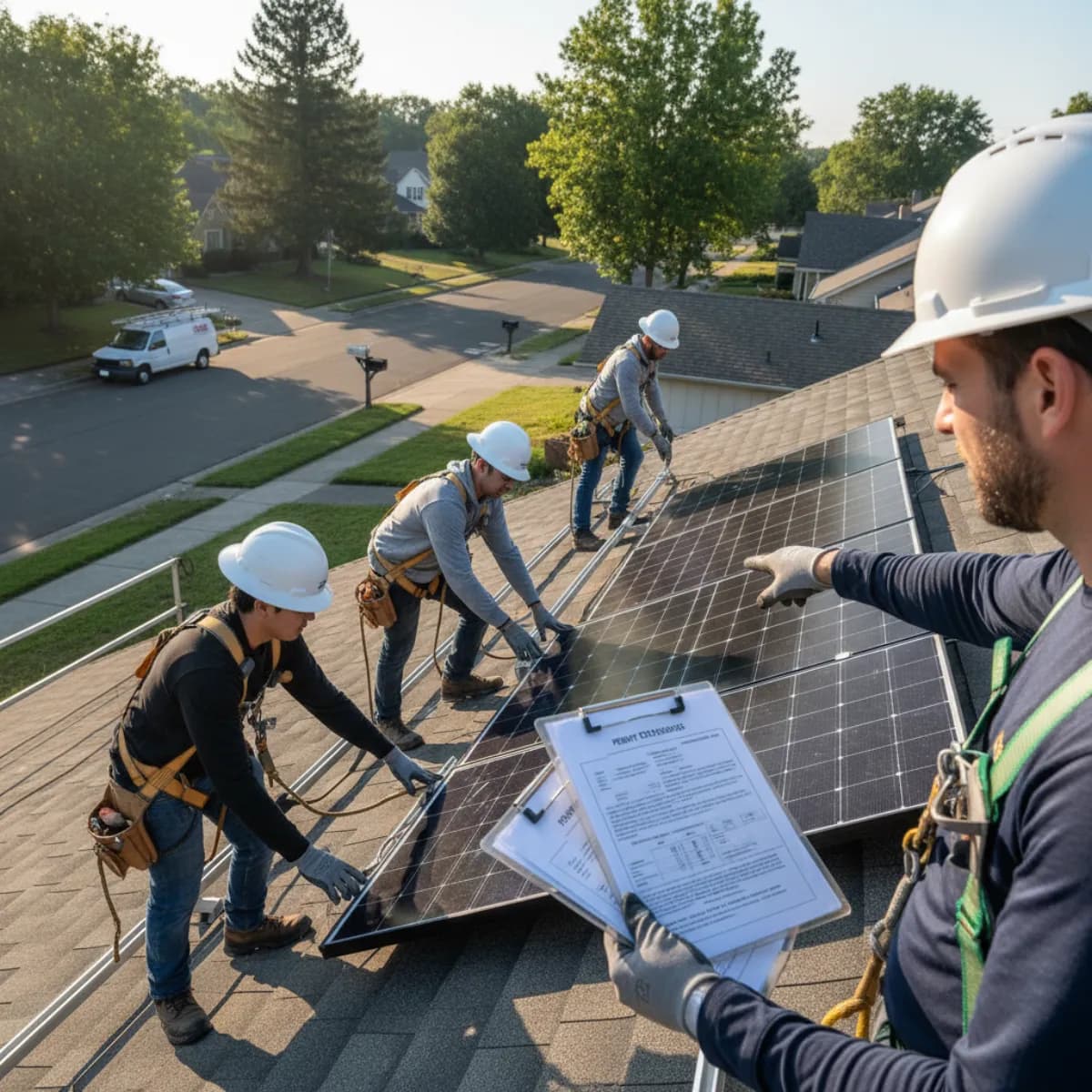
The total solar installation timeline from contract signing to PTO ranges from 5 to 14 weeks in 2026, depending on your state and utility. The actual rooftop installation takes only 1-2 days. The rest is waiting: permitting (1-4 weeks), inspection (1-2 weeks), and utility interconnection (2-10 weeks). Vermont is typically the fastest state (5-9 weeks) while Massachusetts, New Jersey, and Texas can take 8-14 weeks. The single biggest variable is your utility's interconnection queue.
Permission to Operate (PTO) is the formal approval from your electric utility that allows you to turn on your solar system and begin exporting electricity to the grid. It is the final step in the solar installation process and the moment your system starts saving you money.
Until you receive PTO, your solar panels must remain off — even though they are physically installed and wired. This is not a suggestion; it is a contractual and safety requirement. Grid-tied solar systems have anti-islanding protections specifically to prevent energizing power lines that utility workers may be repairing. Operating before PTO can void your interconnection agreement and put workers at risk.
PTO also triggers the start of your net metering credits. Any electricity your system produces before PTO is not metered and you receive no credit for it. So the faster you reach PTO, the sooner your investment starts generating returns.
Do Not Turn On Before PTO
We see this with DIY installs and inexperienced installers: the panels are up, the inverter is wired, and someone flips the breaker “to test it.” This creates a safety hazard and can result in your utility denying the interconnection application entirely. Wait for written PTO confirmation.
Every solar project follows these 6 phases. The durations vary by state and utility, but the sequence is universal.
After you sign the contract, your installer creates a detailed system design using satellite imagery, shade modeling, and your energy usage data. A structural engineer reviews the roof loading calculations. Electrical engineers design the panel layout, string sizing, and inverter configuration. This phase runs entirely on your installer's side — you just need to provide access to your utility account.
Why it takes this long: Engineering drawings must be precise enough to pass permit review on the first submission. A resubmission due to incomplete drawings can add 2-3 weeks.
Your installer submits a building permit application to your city or town building department. This includes structural engineering plans, electrical diagrams, site plans, and equipment specifications. The building department reviews for code compliance (structural, electrical, fire setback). Some municipalities offer over-the-counter solar permits that are issued the same day; others require a full plan review that takes 2-4 weeks.
Why it takes this long: Municipal building departments are understaffed and process permits in order. Complex projects (ground mount, historical district, three-family homes) face additional scrutiny. If a plan reviewer finds an error, the resubmission goes to the back of the queue.
The installation crew mounts racking on your roof (or constructs a ground mount frame), installs solar panels, runs wiring from the array to the inverter, and connects the inverter to your electrical panel. Most residential rooftop installations complete in a single day. A second day may be needed for battery storage, EV charger integration, or larger systems (12+ kW). Ground mount systems take 2-5 days due to concrete footings, trenching, and longer conduit runs.
Why it takes this long: This is the only phase that depends entirely on your installer and weather. Experienced crews with pre-staged materials can install a standard 8 kW system in 4-6 hours. Rain or snow can push a scheduled install by a day.
After installation, your installer schedules a final inspection with the municipal building inspector. The inspector verifies that the installation matches the approved permit drawings, checks electrical connections, verifies grounding, confirms fire code setbacks, and signs off on the permit. Some states require both a building inspection and a separate electrical inspection.
Why it takes this long: Inspection scheduling depends on inspector availability — some towns have one inspector covering all trades. Failed inspections (rare with experienced installers) require corrections and a re-inspection, adding another 1-2 weeks.
Your installer submits the interconnection application to your electric utility, along with the passed inspection report, equipment specs, and proof of insurance. The utility reviews the application, may conduct their own inspection, schedules a meter swap (from a standard meter to a bidirectional net meter), and formally approves the interconnection. This is when your net metering account is activated.
Why it takes this long: Utility interconnection is the single longest wait in the entire process, and you have zero control over it. Utilities process applications in queue order. During peak solar season, queues grow. Larger systems or those that exceed local transformer capacity may trigger an engineering study, adding 2-4 weeks. Each utility has its own process, timeline, and portal.
Once the utility grants Permission to Operate, your installer activates the system (or instructs you how to flip the breaker), configures monitoring, and registers your warranties. Your system is now live and producing electricity. Net metering credits begin accruing from this day forward.
Why it takes this long: This is instant once the utility issues PTO. Your installer should activate the system and configure monitoring within 24-48 hours of receiving the PTO letter.
Based on residential solar installations completed by NuWatt and industry averages across our 9-state service area.
| State | Permit | Install | Inspection | Interconnection | Total |
|---|---|---|---|---|---|
| MA Massachusetts | 2-4 weeks | 1-2 days | 1-2 weeks | 4-8 weeks | 8-14 weeks |
| CT Connecticut | 1-3 weeks | 1-2 days | 1-2 weeks | 4-6 weeks | 7-12 weeks |
| NJ New Jersey | 2-4 weeks | 1-2 days | 1-2 weeks | 4-8 weeks | 8-14 weeks |
| PA Pennsylvania | 1-3 weeks | 1-2 days | 1-2 weeks | 3-6 weeks | 6-12 weeks |
| NH New Hampshire | 1-2 weeks | 1-2 days | 1 week | 3-6 weeks | 6-10 weeks |
| RI Rhode Island | 1-2 weeks | 1-2 days | 1 week | 3-6 weeks | 6-10 weeks |
| VT Vermont | 1-3 weeks | 1-2 days | 1 week | 2-4 weeks | 5-9 weeks |
| ME Maine | 1-2 weeks | 1-2 days | 1 week | 3-8 weeks | 6-12 weeks |
| TX Texas | 1-2 weeks | 1-2 days | 1 week | 3-10 weeks | 6-14 weeks |
Eversource and National Grid interconnection backlogs are the primary bottleneck. SMART 3.0 enrollment adds no timeline — it runs in parallel.
CT has streamlined residential permitting in many towns. Fairfield County (Stamford, Greenwich) tends to be the slowest due to architectural review requirements.
NJ adopted S4100 (Solar Permit Streamlining Act) but implementation varies by municipality. PSE&G territory has the longest interconnection queues.
PA has no statewide solar permitting standard, so timelines vary dramatically. Philadelphia L&I can take 3-4 weeks alone. Lancaster and suburban counties are much faster.
NH has relatively permissive solar policies. Group net metering applications can take longer. Liberty Utilities and Eversource NH are both efficient.
RI has a single utility (Rhode Island Energy) which simplifies interconnection. Providence is slower due to historical district restrictions in certain neighborhoods.
VT has one of the fastest PTO timelines in the Northeast. Systems under 15 kW use simplified registration instead of full interconnection review. Green Mountain Power is particularly efficient.
CMP (Central Maine Power) historically has longer interconnection queues than Versant Power. Net billing enrollment runs in parallel but must be complete before PTO.
TX has the widest interconnection variance of any NuWatt state. CenterPoint (Houston) is notorious for delays. Oncor (DFW) is moderate. Austin Energy is fast but serves a limited area. No statewide net metering — each REP has different buyback terms.
Interconnection is the longest and least predictable phase. Here is what to expect from the utilities in NuWatt's service area.
MA, CT, NH
Eversource processes interconnection applications through their online portal. Peak season (May-August) adds 1-2 weeks. Systems over 25 kW require an engineering study that adds 2-4 weeks.
MA, RI (formerly)
National Grid has historically been the slowest utility in Massachusetts for solar interconnection. Their queue management system can bottleneck during high-volume months. Post 2024, they improved their timeline but remain the longest wait in MA.
NJ (largest territory)
PSE&G serves the most populous part of NJ and has the largest interconnection queue. Their process requires separate electrical and meter departments to coordinate, which adds friction.
PA (Philadelphia area)
PECO has improved its interconnection timeline since 2024. The main variable is whether a panel upgrade is required — older homes in Philadelphia often need a service upgrade from 100A to 200A, which PECO must schedule.
TX (Dallas-Fort Worth)
Oncor is a transmission/distribution utility only (ERCOT deregulated market). Interconnection is technically with Oncor, but your REP (retail electric provider) handles billing. Oncor processes are moderate in speed.
TX (Houston area)
CenterPoint has the longest interconnection timeline of any NuWatt-served utility. Their meter swap scheduling and inspection coordination add weeks. Houston HOA requirements compound the problem.
RI (sole utility)
Formerly National Grid RI, now Rhode Island Energy under PPL Corp. Being the sole utility means a single, somewhat predictable process. REG (Renewable Energy Growth) net metering enrollment runs in parallel.
VT (primary)
GMP has one of the fastest interconnection processes in the NuWatt service area. Systems under 15 kW use a simplified registration process that can complete in as little as 2 weeks.
Select your state, utility, and project details to get a personalized permit-to-PTO estimate with a Gantt-style visual breakdown.
Get a personalized estimate based on your state, utility, and project details
These are the most common factors that push a solar project past the typical timeline. Knowing them in advance lets you plan around them.
Homeowner association architectural review boards typically meet monthly. If you miss the submission deadline for the current month, you wait an entire cycle. Some HOAs require specific panel colors (all-black) or restrict visibility from the street.
Properties in historical districts (common in Boston, Providence, Philadelphia, and many New England towns) may require approval from a historical commission. Panels visible from public ways are often restricted or must use specific colors and profiles.
If shading from mature trees significantly impacts production, tree removal may be recommended. Many municipalities require tree removal permits, and protected species (heritage trees) may not be removable at all.
Homes with 100-amp or 150-amp electrical panels often need a 200-amp upgrade before solar can be installed. This requires a separate electrical permit, utility coordination for the service upgrade, and a re-inspection — each adding time.
Solar installations peak from April through September. During these months, utility interconnection queues grow, inspection departments are busier, and permits take longer to process. Signing in January-March can mean faster processing.
If your roof needs replacement before solar installation (recommended for roofs over 15 years old), the reroof project adds its own permitting and construction timeline before solar work can begin.
Systems larger than 25 kW (or that exceed a threshold percentage of the local transformer capacity) may trigger a utility engineering study. The utility evaluates whether the local grid infrastructure can handle the added generation.
Ground-mounted systems that do not meet standard setback requirements may need a zoning variance. This typically requires a hearing before the local zoning board, which may meet monthly or less frequently.
You cannot control the utility, but you can control everything else. These steps consistently shave 1-4 weeks off the total timeline.
If your roof is older than 15 years, get a roofer to assess it before you commit to solar. Discovering you need a reroof mid-process adds 4-8 weeks and disrupts the entire schedule.
Your installer needs your utility account number, meter number, and 12 months of usage history. Having this ready at the site visit saves a week of back-and-forth.
Installers with established relationships at your local building department and utility process permits faster. They know the specific requirements and avoid resubmissions.
Building departments and utility interconnection queues are shortest during fall and winter. A project signed in November can reach PTO before the spring rush begins.
If you have an HOA, submit the architectural review application the same week you sign your contract — before your installer even starts the permit application. HOA review and permitting can run in parallel.
Ask your installer to check your panel during the initial site visit. If a 200A upgrade is needed, your installer can start that process in parallel with system design, saving 2-3 weeks.
Your installer will need signed documents, utility authorization, and occasionally photos. Every day you delay a response is a day added to your timeline. Set a goal: respond within one business day.
Ask how many projects your installer has completed with your specific utility. Installers with high volume at a given utility know the process intimately and can anticipate issues before they cause delays.
We track our own project timelines obsessively. Here is how NuWatt compares to industry averages across our service states.
| Phase | Industry Average | NuWatt Average | Why We Are Faster |
|---|---|---|---|
| Design & Engineering | 2-3 weeks | 1-2 weeks | In-house engineering team, no unnecessary handoffs |
| Permitting | 2-4 weeks | 1-3 weeks | Dedicated permitting staff with local building department relationships |
| Installation | 1-3 days | 1-2 days | Experienced crews with pre-staged materials; quality-controlled crews |
| Inspection | 1-3 weeks | 1-2 weeks | Clean installs pass inspection on first attempt (99% pass rate) |
| Interconnection | 4-8 weeks | 3-7 weeks | Utility portal expertise; applications submitted complete on first try |
| Total | 10-18 weeks | 7-14 weeks | End-to-end project management with dedicated coordinator per project |
Based on NuWatt projects completed January-March 2026 across all 9 service states. Your project timeline will vary based on your specific municipality and utility.
If you plan to use a Section 48 lease, PPA, or NuWatt Propel to access the 30% commercial ITC, your project must “begin construction” before July 4, 2026. This means paying at least 5% of the project cost (the safe harbor test). You do not need to complete installation by that date.
Given the timelines above, signing by mid-May 2026 ensures you can meet the 5% safe harbor before the deadline, even with normal permitting delays.
Start Before the DeadlineStep-by-step guide to every phase of a residential solar install
Read guideDetailed permit data for 100+ municipalities in 9 states
Read guideStart your project with NuWatt — free assessment, no obligation
Read guideHow to access the only federal incentive left before July 4
Read guideState-by-state pricing without the expired federal tax credit
Read guideHonest analysis — state by state — after the ITC expired
Read guidePermission to Operate (PTO) is the official approval from your utility that allows you to turn on your solar system and begin sending electricity to the grid. Until you receive PTO, your system must remain off — even if installation and inspection are complete. Turning on a system before PTO can void your interconnection agreement and create safety hazards for utility workers.
NuWatt handles every phase from contract to PTO — permits, utility coordination, inspection, and activation. Our dedicated project coordinator keeps you informed at every step. Dedicated local crews, no surprises.