
Loading NuWatt Energy...
We use your location to provide localized solar offers and incentives.
We serve MA, NH, CT, RI, ME, VT, NJ, PA, and TX
Loading NuWatt Energy...
NuWatt designs, installs, and manages solar, battery, heat pump, and EV charger systems across 9 states. One company, one warranty, one point of contact.
Get a Free Quote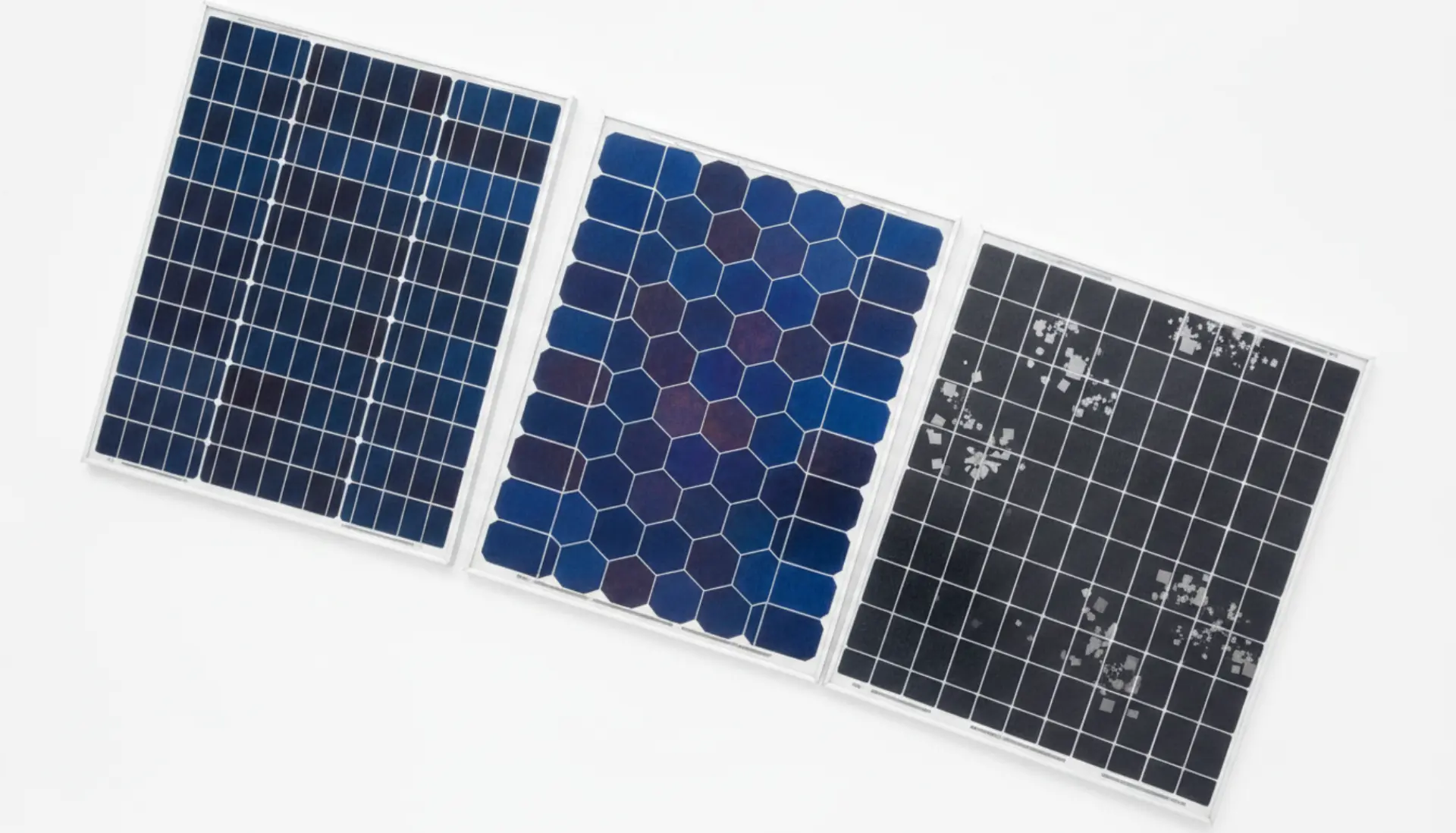
Three panels, three tiers, three different ideal buyers. We install all of them and know their real-world strengths and trade-offs. This is the definitive side-by-side comparison from our crew.

3
Panels Compared
3
Price Tiers
9
Service States
15
Specs Analyzed
After installing thousands of systems with all three panels, our recommendation depends entirely on your situation. Each panel wins in a different category:
Hyundai 440W
Solid performance at the lowest price in our lineup
Silfab 440W
Made in America with the longest warranty in our lineup
REC 460W
The highest-performing panel in our lineup, period
Every NuWatt installation uses Enphase IQ8 microinverters. The panel choice determines your cost, long-term output, and financing options.
Solid performance at the lowest price in our lineup
Wattage
440W
Efficiency
22.07%
Temp Coeff
-0.30%/°C
Degradation
0.40%/yr
Made in America with the longest warranty in our lineup
Wattage
440W
Efficiency
22.2%
Temp Coeff
-0.26%/°C
Degradation
0.25%/yr
The highest-performing panel in our lineup, period
Wattage
460W
Efficiency
22.5%
Temp Coeff
-0.24%/°C
Degradation
0.25%/yr
Every metric that matters, side by side. Winners highlighted per row based on objective performance.
| Specification | Hyundai 440WEntry Tier | Silfab 440WFEOC Tier | REC 460WPremium Tier | Winner |
|---|---|---|---|---|
Wattage (STC) REC produces 20W more per panel — fewer panels needed for the same system size. | 440W | 440W | 460W | REC |
Module Efficiency REC’s gapless cell layout squeezes more watts from the same surface area. | 22.07% | 22.2% | 22.5% | REC |
Cell Technology HJT (Silfab & REC) outperforms TOPCon in heat and low-light; split-cell adds shade tolerance. | N-type TOPCon | N-type HJT | HJT split-cell | Tie |
Temperature Coefficient Lower is better. On a 95°F day, REC loses ~2.4% vs Hyundai’s ~3.0%. Matters most in TX, southern states. | -0.30%/°C | -0.26%/°C | -0.24%/°C | REC |
Annual Degradation Silfab and REC degrade 40% slower than Hyundai. Over 25 years this gap compounds. | 0.40%/yr | 0.25%/yr | 0.25%/yr | Tie |
Year 25 Guaranteed Output REC guarantees 92% at year 25 — the best in the industry. | ~87.4% | ~90.8% | ~92% | REC |
Product Warranty Silfab’s 30-year product warranty is the longest in our lineup. REC includes labor coverage. | 25 years | 30 years | 25 years (incl. labor) | Silfab |
Performance Warranty Silfab extends performance guarantees a full 5 years beyond competitors. | 25 years | 30 years | 25 years | Silfab |
Weight Minor differences. All three are standard weight and roof-load compatible. | 21.8 kg (48.1 lbs) | 21.5 kg (47.4 lbs) | 22.0 kg (48.5 lbs) | Silfab |
FEOC Compliant Only Silfab meets Foreign Entity of Concern requirements for Section 48/48E ITC financing. | No | Yes | No | Silfab |
Made In Silfab is the only domestically manufactured option. REC HQ is in Norway. | South Korea / Vietnam | USA / Canada | Singapore | |
NuWatt $/W Offset Hyundai is the most affordable. On a 10 kW system, that’s ~$700 less than Silfab. | −$0.07/W | Base ($0.00) | +$0.19/W | Hyundai |
Propel PPA Eligible Propel requires FEOC-compliant panels. Only Silfab qualifies for $0-down TPO financing. | No | Yes | No | Silfab |
Bifacial Capable Bifacial gains are modest on rooftops (2-5%) but meaningful for ground mounts and white-roof commercial. | No (opaque backsheet) | Yes (glass-glass) | Yes (glass-glass) | Tie |
Cells Configuration More cells with smaller cuts improve shade tolerance and reduce resistive losses. | 108 half-cut | 120 half-cut | 132 split-cell | REC |
Scorecard: REC wins on 5 specs (raw performance), Silfab wins on 5 specs (warranty, FEOC, weight), Hyundai wins on 1 spec (price), with 4 ties. No single panel dominates across all categories — which is exactly why NuWatt offers all three.
Understanding the cell technology behind each panel helps explain the performance and price differences.

Tunnel Oxide Passivated Contact
Used in: Hyundai HiE-S440VG
TOPCon is the current mainstream high-efficiency architecture. It uses a thin tunnel oxide layer on the rear surface of an N-type silicon wafer to reduce electron recombination and improve voltage. TOPCon panels offer a strong balance of performance and cost, with efficiencies of 21-23% and good temperature behavior.
Advantages
Trade-offs
Heterojunction Technology
Used in: Silfab SIL-440-BG
HJT sandwiches a crystalline silicon wafer between ultra-thin layers of amorphous silicon. This creates an exceptionally clean cell interface with minimal recombination losses. HJT cells achieve the lowest temperature coefficients and degradation rates of any mainstream technology, making them ideal for hot climates and long-term performance.
Advantages
Trade-offs
Heterojunction Split-Cell with Gapless Layout
Used in: REC Alpha Pure-RX 460
REC’s proprietary evolution of HJT uses split cells (132 vs 120) arranged in a gapless layout that eliminates dead space between cells. This maximizes active area, improving efficiency to 22.5%. Split cells also halve the current in each string, reducing resistive losses and improving partial-shade performance.
Advantages
Trade-offs
Real pricing from NuWatt's 2026 rate card. All systems include Enphase IQ8 microinverters, racking, permitting, and installation labor.
$700 less than Silfab
$1,900 more than Silfab
No Federal Tax Credit for Homeowner Purchases
The Section 25D residential solar tax credit expired December 31, 2025. These prices reflect the full out-of-pocket cost for cash or loan purchases. State incentives (SMART in MA, REG in RI, ADI in NJ, etc.) still apply and can significantly reduce your net cost. Learn about solar without the tax credit.
Understanding Foreign Entity of Concern rules is critical for choosing between cash purchase and third-party ownership.
The Inflation Reduction Act requires that equipment claiming the Section 48/48E Investment Tax Credit must not contain components manufactured by Foreign Entities of Concern. This primarily targets Chinese manufacturing and supply chains.
Propel is NuWatt's third-party ownership program. A financing partner owns the panels and sells you electricity at a fixed per-kWh rate — typically 15-30% below your utility rate. Because the financing partner claims the Section 48/48E ITC, the panels must be FEOC-compliant.
Cash or loan buyers: FEOC compliance does not matter for you. Since homeowners cannot claim any ITC (Section 25D expired), you can choose any panel — Hyundai, Silfab, or REC — based purely on specs, price, and preference.
Six common buyer profiles and our honest panel recommendation for each.
You want reliable solar at the lowest possible upfront cost. Every dollar per watt matters.
You want panels manufactured in the United States and care about domestic supply chains.
You want solar with no upfront cost through a third-party ownership power purchase agreement.
You want the absolute best-performing panel regardless of price. Roof space may be limited.
You live in Texas, the Southeast, or another warm region where panels regularly exceed 100°F.
You plan to stay in your home for 25+ years and want the longest possible manufacturer backing.
Modeled output using PVWatts with 4.5 peak sun hours, south-facing roof at 30-degree tilt, and manufacturer degradation rates.
| Metric | Hyundai 440W | Silfab 440W | REC 460W |
|---|---|---|---|
| Year 1 Production | 13,100 kWh | 13,200 kWh | 13,700 kWh |
| Year 10 Production | 12,580 kWh | 12,870 kWh | 13,360 kWh |
| Year 25 Production | 11,440 kWh | 11,980 kWh | 12,600 kWh |
| 25-Year Total | ~306,000 kWh | ~316,000 kWh | ~330,000 kWh |
| Lifetime Savings | ~$85,700 | ~$88,500 | ~$92,400 |
Based on MA average electric rate of $0.28/kWh. Actual production varies by roof orientation, shading, soiling, and weather patterns. Savings assume flat utility rates (actual rates typically increase 2-4% annually, improving returns).
What our installers notice in the field that spec sheets do not tell you.
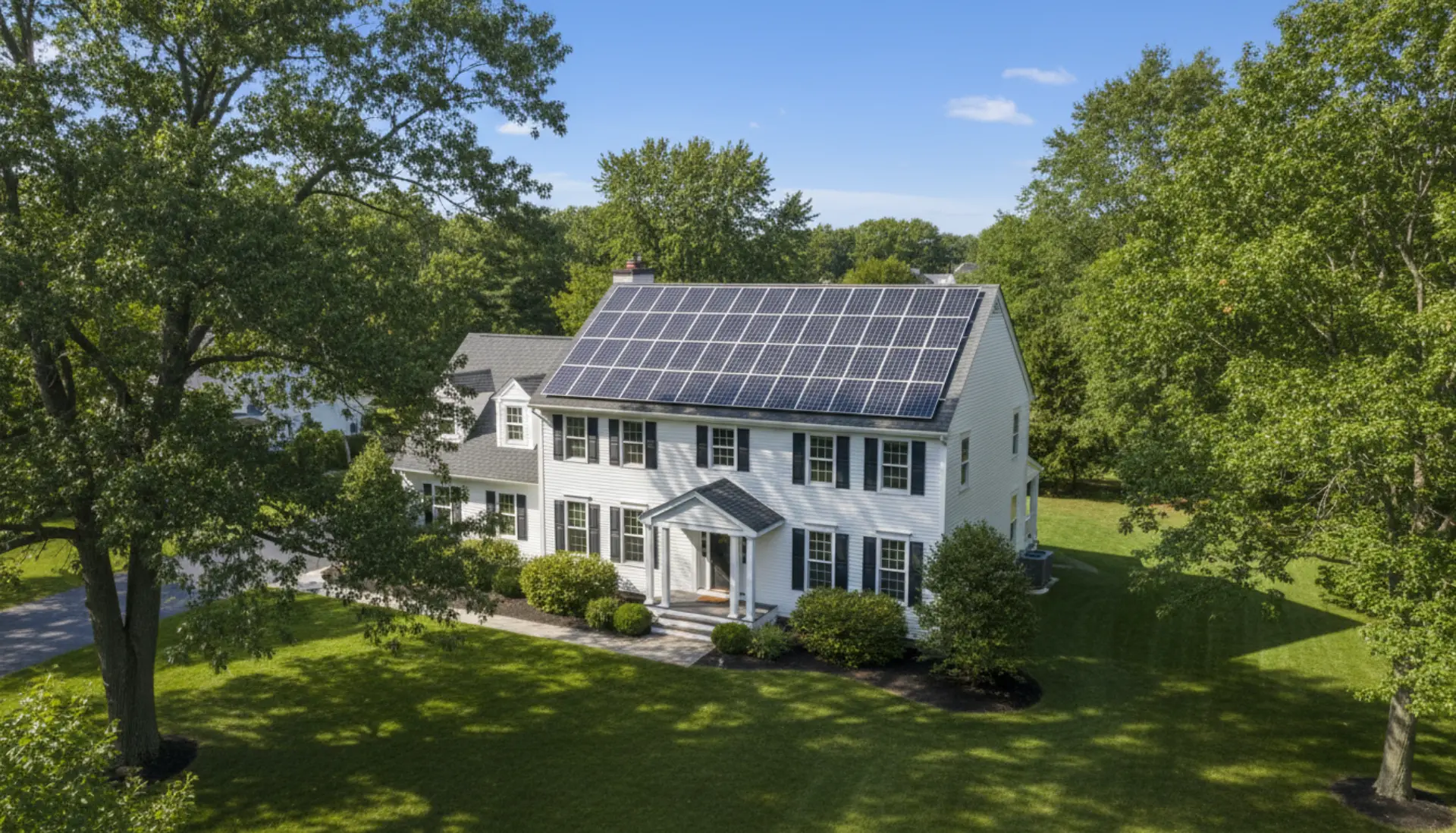
After installing thousands of systems with all three panels, here is our honest guidance.
There is no single “best” panel in our lineup. We deliberately chose three panels that excel in different areas because our customers have different priorities:
All three panels ship with Enphase IQ8 microinverters, NuWatt's 25-year workmanship warranty, and our post-installation monitoring. The panel choice changes your cost and long-term production, but the installation quality is identical.
Common questions about NuWatt's panel lineup, answered by our engineering team.
There is no single "best" panel — it depends on your priorities. For most budget-conscious homeowners paying cash or taking a loan, Hyundai offers the best value at the lowest price. For homeowners who want American-made panels or need $0-down financing through Propel PPA, Silfab is the only option. For those who want maximum long-term production and can afford the premium, REC delivers the best specs in the industry.
The Section 25D residential solar tax credit expired December 31, 2025. Homeowners purchasing solar with cash or a loan receive $0 in federal tax credits. However, through third-party ownership (PPA or lease), the financing company can claim the Section 48/48E commercial ITC at 30% for projects beginning construction before July 4, 2026 — but this requires FEOC-compliant panels. In NuWatt’s lineup, only Silfab qualifies.
FEOC stands for Foreign Entity of Concern. Under the Inflation Reduction Act, equipment receiving Section 48/48E tax credits must not contain components manufactured by designated foreign entities (primarily China-linked). Silfab panels, manufactured in the USA and Canada, meet this requirement. Hyundai (South Korea/Vietnam) and REC (Singapore) do not. This only matters if you are using a third-party ownership financing model like Propel PPA.
On a 10 kW system in Massachusetts, the REC Alpha adds approximately $0.26/W compared to Hyundai ($0.19 above Silfab vs $0.07 below Silfab). That works out to roughly $2,600 more for the entire system. Over 25 years, the REC produces approximately 24,000 more kWh due to higher wattage and lower degradation, which at $0.28/kWh equals about $6,700 in additional savings — a strong return on the $2,600 premium.
TOPCon (Tunnel Oxide Passivated Contact) and HJT (Heterojunction Technology) are both N-type cell architectures, but they differ in construction. TOPCon adds a thin oxide layer to the rear of a standard crystalline cell, while HJT sandwiches a crystalline wafer between layers of amorphous silicon. HJT achieves lower temperature coefficients (-0.24 to -0.26%/°C vs -0.30%/°C) and slower degradation (0.25% vs 0.40%/yr), but costs more to manufacture.
Yes. NuWatt exclusively installs Enphase IQ8 microinverters, which allow each panel to operate independently. You can mix Hyundai, Silfab, and REC panels on the same roof without any performance penalties. This is useful if you want to start with a smaller Hyundai system now and add premium panels later, or if you want REC on your south-facing roof and Hyundai on the east-facing section.
REC Alpha Pure-RX 460, due to its industry-leading temperature coefficient of -0.24%/°C. On a 100°F day, the REC loses approximately 4.1% of its rated output, while the Hyundai loses 5.2%. Over 25 years in Texas with ~5.5 peak sun hours, this translates to roughly 2,500+ additional kWh of production from the REC. The Silfab (-0.26%/°C) is also a strong choice for hot climates.
Propel is NuWatt’s $0-down solar financing program available in Maine and Texas. It is a Power Purchase Agreement (PPA) where a third-party company owns the system and sells you the electricity at a fixed rate. Because the third-party owner claims the Section 48/48E commercial ITC (30% tax credit), the panels must be FEOC-compliant. Only Silfab meets this requirement in our lineup.
Silfab offers the longest warranty at 30 years for both product and performance. Hyundai and REC both offer 25-year warranties. However, REC’s 25-year warranty uniquely includes labor coverage — if a panel fails, REC covers the cost of a technician to replace it. Hyundai and Silfab warranties cover the panel itself but not the labor to swap it (NuWatt handles this separately through our workmanship warranty).
Absolutely not. Hyundai Energy Solutions is a division of Hyundai Group, one of the world’s largest conglomerates. The HiE-S440VG is a Tier 1 panel with Bloomberg bankability certification, IEC/UL safety certifications, and 22.07% efficiency — which would have been the premium tier just two years ago. The lower price reflects overseas manufacturing costs (South Korea/Vietnam), not lower quality.
For a 10 kW system in Massachusetts, our production modeling shows: REC produces approximately 330,000 kWh over 25 years, Silfab approximately 316,000 kWh, and Hyundai approximately 306,000 kWh. REC’s advantage comes from both higher starting wattage (460W vs 440W) and lower degradation (0.25%/yr vs 0.40%/yr for Hyundai). The REC system produces roughly 24,000 more kWh than Hyundai over its lifetime.
Yes. NuWatt offers all three panel tiers across our nine-state service area (MA, CT, RI, NH, ME, NJ, TX, and expanding). The one exception is the Propel PPA program, which is currently available only in Maine and Texas and requires Silfab panels. For cash and loan purchases, all three panels are available everywhere we install.
NuWatt's Solar IQ tool builds a custom system design with the panel tier that matches your roof, budget, and goals. Takes 2 minutes.