

What Is a Virtual Power Plant?
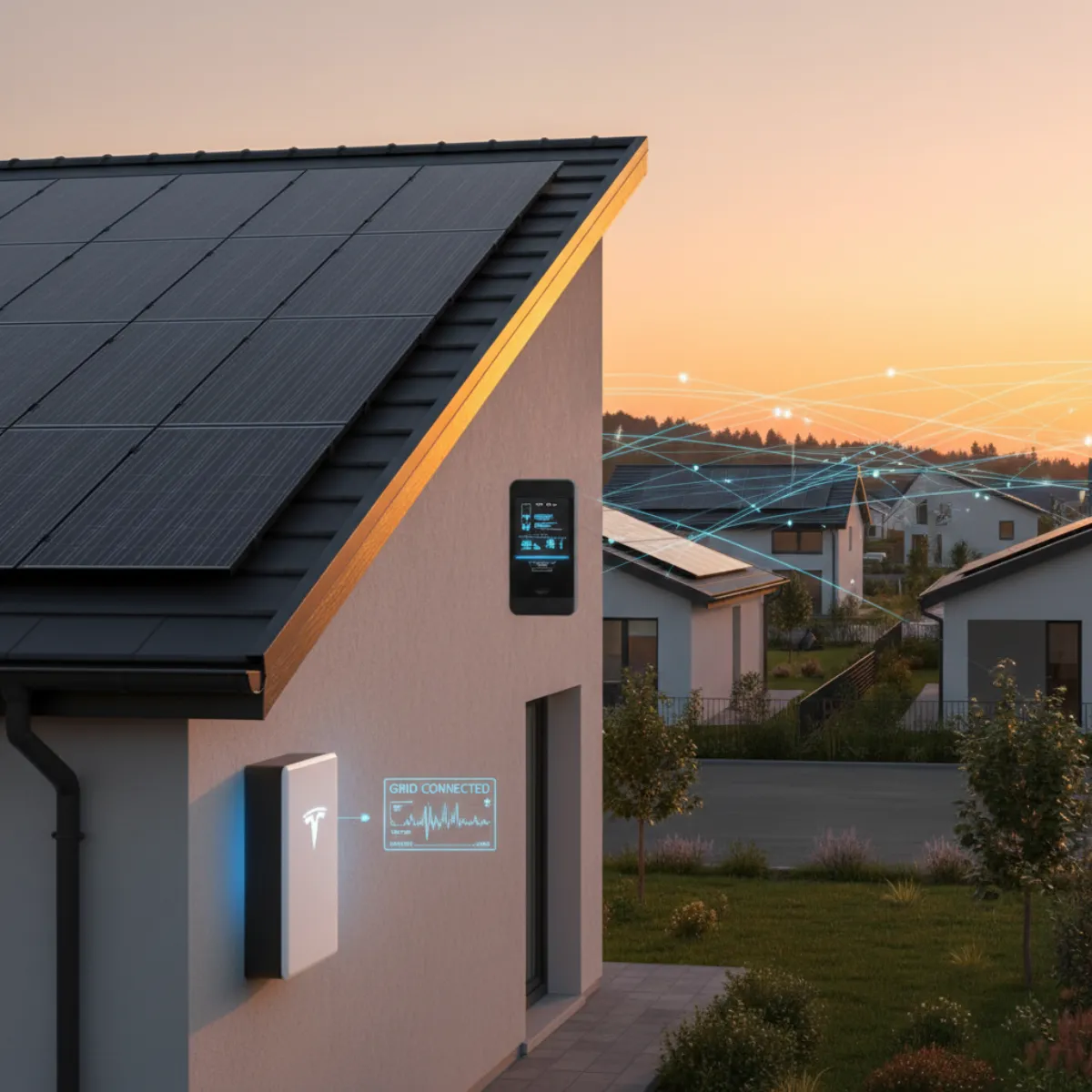
A virtual power plant (VPP) is a network of distributed energy resources — primarily home batteries, solar inverters, and smart thermostats — that are aggregated and coordinated to function like a traditional power plant. Instead of building a new gas peaker plant to handle hot-afternoon demand spikes, utilities can dispatch stored energy from thousands of home batteries simultaneously.
For homeowners, the proposition is straightforward: your battery charges from solar or the grid during off-peak hours, and when the grid operator calls a demand response event, your battery discharges a portion of its stored energy. You keep your backup reserve intact, and you earn money for the capacity you contribute.
VPPs are growing rapidly because they solve multiple problems at once. Utilities avoid the cost of building peaker plants (which can run $500 million or more). Grid operators get reliable, fast-responding capacity. And homeowners generate income from equipment that would otherwise sit idle 95% of the time. The result is a cleaner, more resilient grid — and a battery that pays for itself faster.
Battery Charges
Your battery charges from solar panels during the day or from the grid during off-peak hours when electricity is cheapest.
Grid Stress Event
On hot afternoons or during cold snaps, the grid operator signals a demand response event requiring extra power.
Battery Dispatches
Your battery automatically discharges stored energy to the grid or reduces your home draw. Your backup reserve stays protected.
You Get Paid
You earn $80–$225 per kW of capacity per season, credited to your utility bill or paid directly by the VPP operator.
VPP Programs by State: 2026 Rates and Availability
NuWatt serves 9 states, each with different VPP program structures and earning potential. Below is the current landscape for 2026.
| State | Program | Utilities | Summer Rate | Winter Rate | Est. Annual (5 kW) | Status |
|---|---|---|---|---|---|---|
| Massachusetts | ConnectedSolutions | Eversource, National Grid, Unitil | $225/kW | $50/kW | $1,125–$1,375 | Active |
| Connecticut | ConnectedSolutions CT | Eversource CT, United Illuminating | $200/kW | $25/kW | $1,000–$1,125 | Active |
| Rhode Island | ConnectedSolutions RI | Rhode Island Energy | $225/kW | $50/kW | $1,125–$1,375 | Active |
| New Hampshire | ConnectedSolutions NH | Eversource NH | $175/kW | — | $875 | Active |
| Vermont | GMP Battery Program | Green Mountain Power | $150/kW | $50/kW | $750–$1,000 | Active |
| Maine | Efficiency Maine + Pilot | Central Maine Power | $100/kW | — | $500 | Pilot |
| New Jersey | NJ Grid Services Pilot | PSE&G, JCP&L | $100/kW | — | $500 | Pilot |
| Pennsylvania | No Active VPP | PECO, PPL Electric | — | — | $300–$500 (TOU only) | None |
| Texas | Tesla VPP / Octopus / GME | Tesla Electric, Octopus Energy, Green Mountain Energy | $80–$120/kW | $30–$40/kW | $600–$1,000 | Active |
Massachusetts
ActiveStrongest VPP program in the country. Battery owners earn summer + winter payments.
Connecticut
ActiveCT program mirrors MA with slightly lower rates. Growing participation.
Rhode Island
ActiveRates match MA. Rhode Island Energy administers the program statewide.
New Hampshire
ActiveSummer-only program through Eversource NH. No winter dispatch yet.
Vermont
ActiveGMP offers lease-a-battery ($55/mo) or bring-your-own enrollment. Year-round dispatch.
Maine
PilotEfficiency Maine offers battery incentives. VPP pilot programs emerging.
New Jersey
PilotNJ Board of Public Utilities running grid services pilots. Expected to expand.
Pennsylvania
NoneNo VPP program yet. Battery value comes from TOU arbitrage and backup power.
Texas
ActiveERCOT volatility creates high-value dispatch events. Multiple VPP operators.
Rates shown per kW of continuous discharge capacity based on a 5 kW battery (e.g., Tesla Powerwall 3). Actual earnings depend on battery size, event participation, and utility program terms.
How VPPs Work in Each State
Massachusetts: ConnectedSolutions
Massachusetts runs the strongest residential VPP program in the country through ConnectedSolutions. Administered by Eversource, National Grid, and Unitil, the program pays $225/kW for summer dispatch and $50/kW for winter dispatch. A homeowner with a Tesla Powerwall 3 (5 kW continuous) earns approximately $1,125 in summer and $250 in winter — roughly $1,375 per year from VPP payments alone.
Summer events run June through September, typically on hot weekday afternoons from 2–7 PM. There are usually 30–60 events per season, each lasting 1–3 hours. Participants set a backup reserve (typically 20–30%) that the program cannot breach. Winter events are less frequent but help offset the seasonal gap.
Connecticut: ConnectedSolutions CT
Connecticut's ConnectedSolutions CT program, administered by Eversource CT and United Illuminating, pays $200/kW for summer capacity and $25/kW for winter. A 5 kW battery earns approximately $1,000–$1,125 annually. The program structure mirrors Massachusetts but with slightly lower per-kW rates.
CT has been expanding battery participation alongside its ESS (Energy Storage Solutions) program, creating a dual incentive for battery adoption. Homeowners can stack VPP earnings with Connecticut's residential battery incentives and Smart-E Loan financing for $0-down battery installations.
Rhode Island
ConnectedSolutions RI through Rhode Island Energy pays rates matching Massachusetts at $225/kW summer and $50/kW winter. The statewide single-utility structure simplifies enrollment. NuWatt handles all RI enrollments.
New Hampshire
Eversource NH operates a summer-only ConnectedSolutions program at $175/kW. No winter dispatch yet, but the program is expected to expand as battery adoption grows across the state.
Vermont
Green Mountain Power runs a unique battery program where homeowners can lease a Powerwall for $55/month or bring their own battery. GMP dispatches year-round and provides grid services payments of approximately $150/kW summer and $50/kW winter.
Maine
Efficiency Maine offers battery incentives, and VPP pilot programs are emerging through Central Maine Power. Current earnings are modest (~$100/kW summer) but the market is developing. Battery backup value is strong given Maine's storm-prone grid.
New Jersey
NJ Board of Public Utilities is running grid services pilot programs through PSE&G and JCP&L. Current pilot rates are approximately $100/kW for summer capacity. Full VPP programs are expected as NJ pushes toward its clean energy targets.
Pennsylvania
PA does not have an active VPP program, but batteries still deliver value through TOU arbitrage (PECO, PPL) and backup power during outages. Battery owners save $300–$500 annually from TOU shifting alone. VPP programs are anticipated as PJM market evolves.
Texas: ERCOT VPP Market
Texas operates on the deregulated ERCOT grid, which creates unique VPP opportunities. Because wholesale electricity prices can spike to $5,000/MWh (or higher) during extreme heat or cold, VPP dispatch events in Texas can be highly profitable.
Multiple VPP operators serve Texas: Tesla Electric offers its Virtual Power Plant to Powerwall owners with automated dispatch and per-event credits. Octopus Energy runs a VPP program with competitive event-based payments. Green Mountain Energy offers a buyback program where batteries discharge during high-price periods.
Texas homeowners with batteries typically earn $600–$1,000 annually from VPP programs, with additional TOU arbitrage savings of $300–$500 given the state's large peak-to-offpeak price spreads. Note that Texas has no statewide net metering — battery storage and VPP participation are the primary ways to monetize excess solar production.
Revenue Stacking: How One Battery Generates Multiple Income Streams
The real power of a home battery is not any single program — it is the ability to stack multiple revenue and savings streams simultaneously. A well-optimized battery in a strong VPP state can generate $1,500–$2,500 in total annual value.
Backup Power
Avoided generator fuel costs and spoiled food/income during 2–3 annual outages.
TOU Arbitrage
Charge during off-peak hours ($0.10–$0.15/kWh), discharge during peak hours ($0.25–$0.45/kWh).
VPP Payments
Direct payments from ConnectedSolutions, Tesla VPP, or other demand response programs.
Self-Consumption
Store excess solar during the day and use it at night instead of buying from the grid.
Total Revenue Stack Example: Massachusetts
A Massachusetts homeowner with solar + Tesla Powerwall 3 on Eversource:
Estimate Your VPP Earnings
Select your state, utility, and battery to see estimated annual revenue from VPP participation, TOU arbitrage, and solar self-consumption combined.
VPP Earnings Calculator
Estimate your annual battery revenue
Your Setup
Program: ConnectedSolutions
Estimated Annual Revenue
Charge low, discharge high
Offsetting grid purchases with stored solar
Estimates based on 2026 program rates and typical usage. Actual earnings vary by utility rates, battery cycling, solar production, and event participation. VPP payments are in addition to backup power protection.
Which Batteries Qualify for VPP Programs?
Most major residential batteries are VPP-compatible, but program eligibility varies. Here are the batteries NuWatt installs and their VPP earning potential.
| Battery | Capacity | Power Output | VPP Programs | Est. VPP Earnings | Installed Price |
|---|---|---|---|---|---|
| Tesla Powerwall 3 | 13.5 kWh | 5 kW continuous / 11.5 kW peak | ConnectedSolutions, Tesla VPP, Octopus VPP | $1,125–$1,375 | $12,000–$14,000 |
| Tesla Powerwall 2 | 13.5 kWh | 5 kW continuous | ConnectedSolutions, Tesla VPP | $1,125–$1,375 | $11,000–$13,000 |
| Enphase IQ Battery 10T | 10.08 kWh | 3.84 kW continuous | ConnectedSolutions | $670–$960 | $10,000–$12,000 |
| Franklin aPower | 13.6 kWh | 5 kW continuous | ConnectedSolutions | $1,125–$1,375 | $13,000–$15,000 |
| SonnenCore+ | 10 kWh | 4.8 kW continuous | sonnenConnect VPP, ConnectedSolutions | $840–$1,200 | $10,000–$12,500 |
VPP earnings based on ConnectedSolutions MA rates ($225/kW summer + $50/kW winter). Installed prices include equipment and labor; actual pricing varies by installation complexity. NuWatt provides exact quotes after site assessment.
ConnectedSolutions vs. Tesla VPP vs. Other Models
Not all VPP programs work the same way. Here is how the major models compare in structure, payment, and availability.
ConnectedSolutions
– Summer-focused, limited to New England
Tesla Virtual Power Plant
– Tesla Powerwall only, newer program
GMP Battery Program
– Vermont only, lower per-kW rates
Octopus Energy VPP
– Texas only, requires Octopus as REP
VPP Changes the Battery Payback Math
Without VPP participation, a home battery can take 12–18 years to pay for itself through TOU savings alone. VPP programs compress that timeline significantly.
Your Backup Power Is Always Protected
Configurable Reserve
Every VPP program lets you set a minimum reserve level (typically 20–30%). Your backup power is never touched during dispatch events. If a storm is approaching, you can temporarily increase your reserve or opt out entirely.
Advance Notice
ConnectedSolutions and most VPP programs provide advance notification before events. You always know when your battery will dispatch, and you retain the ability to override or skip events without losing program enrollment.
Solar Recharge
VPP events happen on the hottest, sunniest days — which are also the best days for solar recharging. Your battery typically returns to full charge by the next morning, maintaining both VPP readiness and backup capacity.