
Loading NuWatt Energy...
We use your location to provide localized solar offers and incentives.
We serve MA, NH, CT, RI, ME, VT, NJ, PA, and TX
Loading NuWatt Energy...
NuWatt designs, installs, and manages solar, battery, heat pump, and EV charger systems across 9 states. One company, one warranty, one point of contact.
Get a Free Quote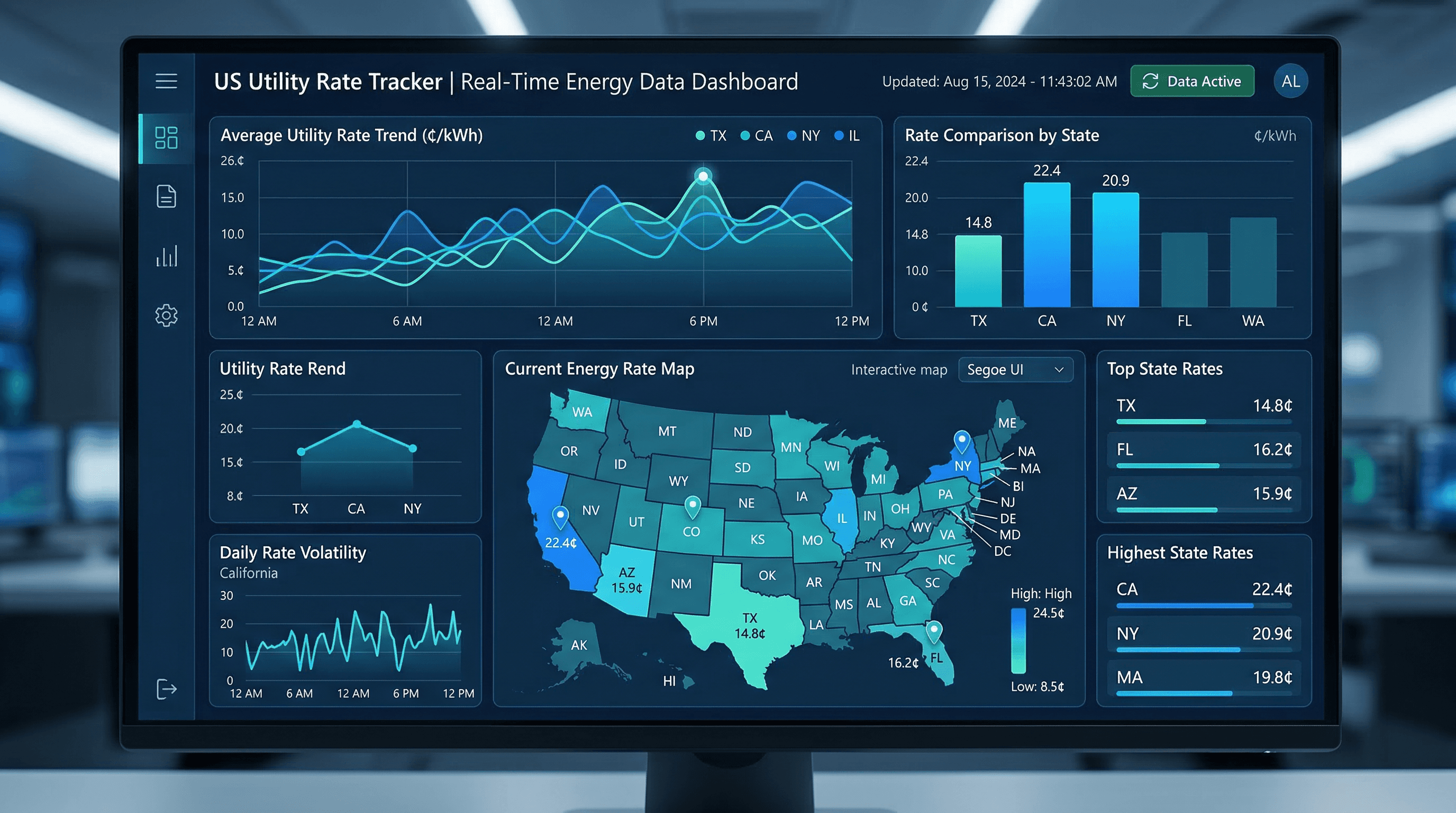
NuWatt updates utility rates weekly, tracks every state incentive deadline, and never shows you credits that don't exist. Other solar sites still show the 30% federal credit that expired 3 months ago. We show you what's real.
Most Solar Estimates in 2026 Are Wrong
The Section 25D residential solar tax credit expired December 31, 2025. Any estimate showing a 30% federal credit for cash or loan purchases is factually incorrect and will overstate your savings by $5,000-$10,000+.
The solar industry changed dramatically when the residential federal tax credit expired. Most estimation tools haven't caught up.
Section 25D expired December 31, 2025 under OBBBA. Homeowners who buy or finance solar with a loan get $0 in federal tax credits. Yet most solar calculators, lead-gen sites, and even some installer websites still advertise 30% savings.
Impact: Inflates savings by $5,000-$10,000+
The U.S. average residential rate is about $0.17/kWh. But if you live in Massachusetts (Eversource: $0.2836/kWh, National Grid: $0.32/kWh), that average understates your savings by 40-90%. In Texas (Oncor: $0.15/kWh), it overstates them.
Impact: Makes savings calculations 40-90% wrong
Programs like MA SMART 3.0 have capacity caps (600 MW). CT Smart-E Loan expires March 31, 2026. RI REG enrollment opens once per year on April 1. Generic estimates say "state incentives available" without knowing if you can actually access them.
Impact: Promises incentives you may not qualify for
The most damaging error: showing a "net cost after tax credit" line item that subtracts 30% from your system cost. When you sign the contract and file your taxes, the credit isn't there. No refund. The real cost was always the full price.
Impact: Creates a $7,000+ surprise at tax time
Every NuWatt estimate is built on five data pillars that most solar companies either ignore or can't maintain.
We track 25+ utilities across 9 states. Your estimate uses your actual utility rate — not a national average. Eversource MA at $0.2836/kWh is a completely different solar proposition than Austin Energy at $0.12/kWh.
SMART 3.0 at $0.03/kWh. ADI at $85.90/MWh. REF at $0.65/W. REG at $0.27/kWh. ConnectedSolutions at $225-275/kW. We show exact dollar amounts with current program status — not "various state rebates."
Section 48E construction deadline (July 4, 2026). Smart-E Loan expiration (March 31, 2026). REG enrollment (April 1). SMART capacity caps. We flag every deadline that affects your estimate.
We pull from EIA data, utility filings, state PUC dockets, and program administrator announcements. When Eversource files a rate case or a state changes net metering policy, your estimate reflects it within days.
We never show the 30% federal credit for cash or loan purchases because it doesn't exist. We never inflate payback periods or fabricate savings. If the honest payback is 9.5 years, we tell you 9.5 years — not 6.
Every assumption in your estimate is visible: the rate we used, the incentive amounts, the degradation factor, the net metering credit structure. You can verify every number. Nothing is hidden behind "proprietary calculations."
Here's what a Massachusetts homeowner with a 8.4 kW system would see from a typical solar site versus NuWatt. Same house, same roof — completely different numbers.

Example based on 8.4 kW system in Eversource MA territory. Actual estimates vary by location, utility, system size, and current incentive availability.
Accurate estimates require a systematic approach to data maintenance. Here's the pipeline that keeps NuWatt's numbers honest.

Monthly EIA-861 residential rate data by utility service territory
State Public Utility Commission rate case filings and decisions
Automated tracking of supply rate changes, delivery adjustments, and TOU shifts
Program caps, enrollment windows, rate changes, and sunset dates
Manual cross-check of all data points against primary sources
When you request a quote from NuWatt, you're getting numbers you can actually trust to make a decision.
Our estimates closely match engineered proposals because we use real data, not assumptions. The only variables left are roof complexity and electrical panel condition — things that require a site visit.
You'll never sign a contract expecting a $7,500 tax credit that doesn't exist. If you buy with cash or a loan, we show $0 federal credit from the start.
A real 9.5-year payback lets you make a genuine cost-benefit assessment. A fake 6-year payback just delays your disappointment. We respect your intelligence.
We model your savings using actual rate escalation trends from your utility, not a generic 3% assumption. Northeast rates have been climbing 4-8% annually.
Free. No obligation. Based on your actual utility rate and current incentives.
Your estimate uses the rate from your specific utility — not a state average or national average. Here are the utilities we monitor across our 9-state service area.
Rates shown are residential all-in rates (supply + delivery) as of March 2026. Additional municipal utilities and co-ops tracked but not listed.View full rate tracker →
Every state has different solar incentive programs with specific rates, caps, and enrollment windows. Here's what we monitor for each state we serve.

SMART cap: 600 MW (filling)
Smart-E: March 31, 2026
REG enrollment: April 1 annual
NEM locked through 2041
NEB: under review
ADI rising to $95.23/MWh (EY2026-27)
SREC market fluctuates
Austin Energy: ongoing
Stable policy
These are the incentive deadlines that directly affect solar estimates in our service area. Every NuWatt estimate flags any deadline that applies to your project.
0.99% APR through CT Green Bank expires
Annual enrollment window opens for $0.27/kWh guaranteed payments
Connecticut successor incentive program takes effect
Third-party ITC requires construction start before this date. FEOC rules eliminate ITC for Chinese-sourced components.
600 MW cap filling — once reached, program closes to new applications
Rate increases to $95.23/MWh in EY2026-27 — projects registered now lock lower rate
Common questions about solar estimate accuracy, NuWatt's data methodology, and the current state of solar incentives.
Many solar websites and lead-generation platforms have not updated their calculators since Section 25D expired on December 31, 2025. The Inflation Reduction Act's residential credit was repealed by the One Big Beautiful Bill Act (OBBBA) signed July 4, 2025. Homeowners who buy solar with cash or a loan receive $0 in federal tax credits. NuWatt reflects this reality in every estimate.
Our estimates are typically within 5-10% of the final engineered proposal. This accuracy comes from using your actual utility rate (not a national average), current state incentive amounts, and real equipment pricing. The main variables that can shift the final number are roof complexity, electrical panel upgrades, and permitting fees — things that require a site visit to assess.
We use the actual residential rate from your specific utility company. For example, an Eversource customer in Massachusetts sees calculations based on $0.2836/kWh, while a National Grid customer in the same state sees $0.32/kWh. Most competitors use the national average of roughly $0.17/kWh, which understates savings for Northeast customers and overstates savings for Texas customers.
We verify data on a weekly cycle. We monitor EIA rate publications, state PUC docket filings, utility rate case decisions, and incentive program status announcements. When a rate changes or a program deadline shifts, our estimates reflect the update within days — not months.
Not if you buy the system outright or finance with a loan. Section 25D (the residential clean energy credit) expired December 31, 2025 for homeowner purchases. However, if you lease a solar system or enter a PPA (Power Purchase Agreement), the third-party system owner can still claim the commercial ITC under Section 48/48E — and that savings gets passed to you through lower lease/PPA rates.
Because we show the real payback period based on current policy. Many sites still calculate payback assuming a 30% federal credit that no longer exists for cash/loan buyers, which artificially shortens the payback by 2-4 years. Our honest 9-12 year payback estimates for cash/loan purchases reflect reality. Interestingly, lease/PPA options often show shorter payback periods because the system owner claims the ITC.
We track every active state-level solar incentive across our 9-state service area: SMART 3.0 in Massachusetts, ESS/successor programs in Connecticut, REG and REF rebates in Rhode Island, NEM 2.0 in New Hampshire, Net Energy Billing in Maine, ADI/SREC-II in New Jersey, SRECs in Pennsylvania, utility rebates in Texas, and net metering in Vermont. Each program has specific rates, caps, and enrollment windows that we monitor continuously.
NuWatt is both a solar installer and a data-driven platform. Unlike marketplaces that collect your information and sell it to 3-7 competing installers, we provide estimates based on our own installation costs, utility rate data, and current incentive programs. Our estimates use your specific utility rate and current policy — not templated calculations with outdated assumptions.
We flag upcoming deadlines directly in your estimate. If you receive a quote referencing a program with a known deadline (like CT Smart-E expiring March 31, 2026, or the Section 48E construction start deadline of July 4, 2026), we clearly note it. If a program changes between your estimate and contract signing, we update the numbers before you commit.
Yes. Net metering policy varies significantly by state and is constantly evolving. For example, Massachusetts credits 100% of retail rate for systems under 10 kW but only 60% for larger systems. Rhode Island moved to 80% retail for post-April 2023 interconnections. New Hampshire NEM 2.0 credits approximately 85% of retail (not 1:1). We model these specific policies in every estimate.
Your electric rate is the single biggest factor in solar savings. A homeowner paying National Grid's $0.32/kWh in Massachusetts saves nearly twice as much per kWh of solar production as someone paying the national average of $0.17/kWh. Using the wrong rate can make a solar estimate off by 40-90%. This is why we insist on using your actual utility rate, not an average.
Yes, but with a critical deadline. Section 48E provides 30% (plus potential bonus credits) for commercial and third-party-owned systems that begin construction before July 4, 2026. This is how solar leases and PPAs can still offer competitive pricing — the financing company claims the ITC and passes savings to the homeowner through lower monthly payments.
Solar is a 25-year investment. The estimate you base your decision on should reflect what's actually true in March 2026 — not what was true in 2024.
No phantom tax credits. No national average rates. No vague “state incentives available.” Just your utility rate, your state's actual programs, and honest payback numbers.