Loading NuWatt Energy...

We use your location to provide localized solar offers and incentives.
We serve MA, NH, CT, RI, ME, VT, NJ, PA, and TX
Loading NuWatt Energy...
NuWatt designs, installs, and manages solar, battery, heat pump, and EV charger systems across 9 states. One company, one warranty, one point of contact.
Get a Free Quote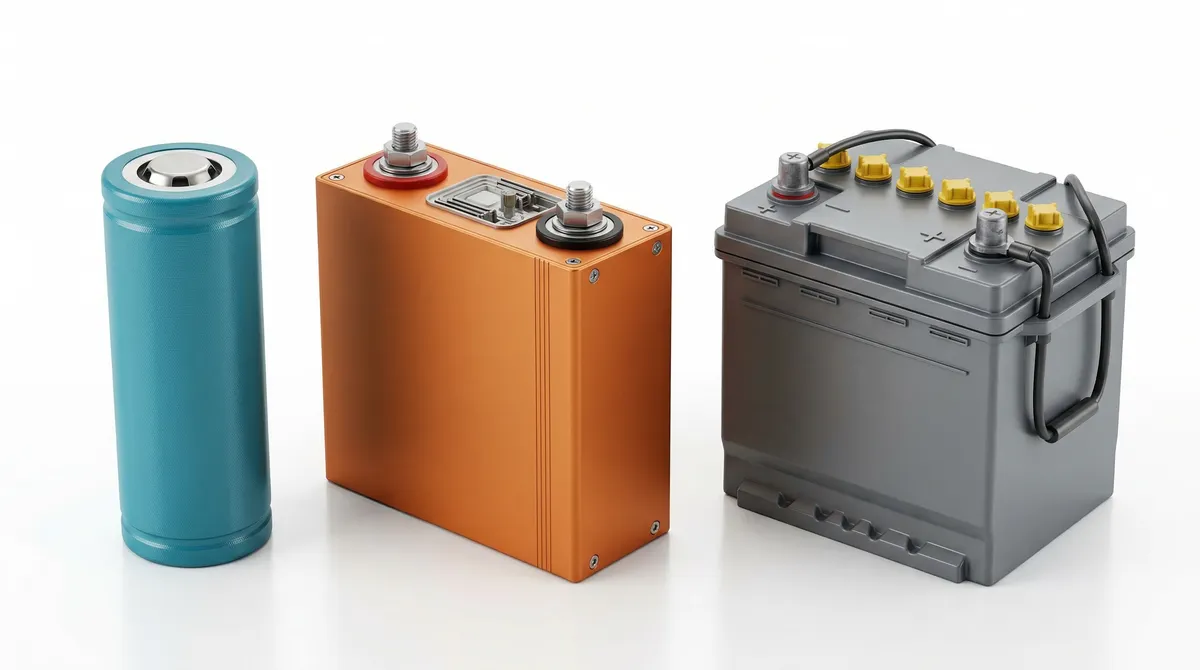
The chemistry inside your home battery determines how long it lasts, how safe it is, and how much usable energy you actually get. In 2026, LFP dominates for good reason — but the right choice depends on your use case.
Quick Answer
LFP (Lithium Iron Phosphate) lasts longest among home battery chemistries, with 6,000-10,000 cycles compared to 3,000-5,000 for NMC and 1,000-1,500 for lead-acid. LFP is also the safest option with near-zero thermal runaway risk. As of 2026, all major residential battery brands including Tesla, Franklin, and Enphase use LFP in their current products.
When homeowners shop for a home battery, they compare brands: Tesla vs. Enphase vs. Franklin. But the single biggest factor determining how long your battery lasts, how safe it is, and how much energy you can actually use is not the brand — it's the chemistry inside the cells.
Battery chemistry affects four critical performance factors:
How many charge-discharge cycles before the battery degrades to 80% capacity. Ranges from 1,000 to 10,000+ depending on chemistry.
Thermal runaway risk, fire potential, and chemical stability under stress. Some chemistries are inherently safer than others.
How much of the rated capacity you can actually use. Higher DoD means more usable energy per dollar.
Performance in extreme cold (New England winters) and heat (Texas summers). Chemistry determines the operating window.
As of March 2026, three chemistry families dominate the home battery market: LFP (Lithium Iron Phosphate), NMC (Nickel Manganese Cobalt), and lead-acid. Each has distinct strengths and trade-offs. Understanding these differences will save you thousands of dollars and years of battery life.
The industry standard for home storage in 2026
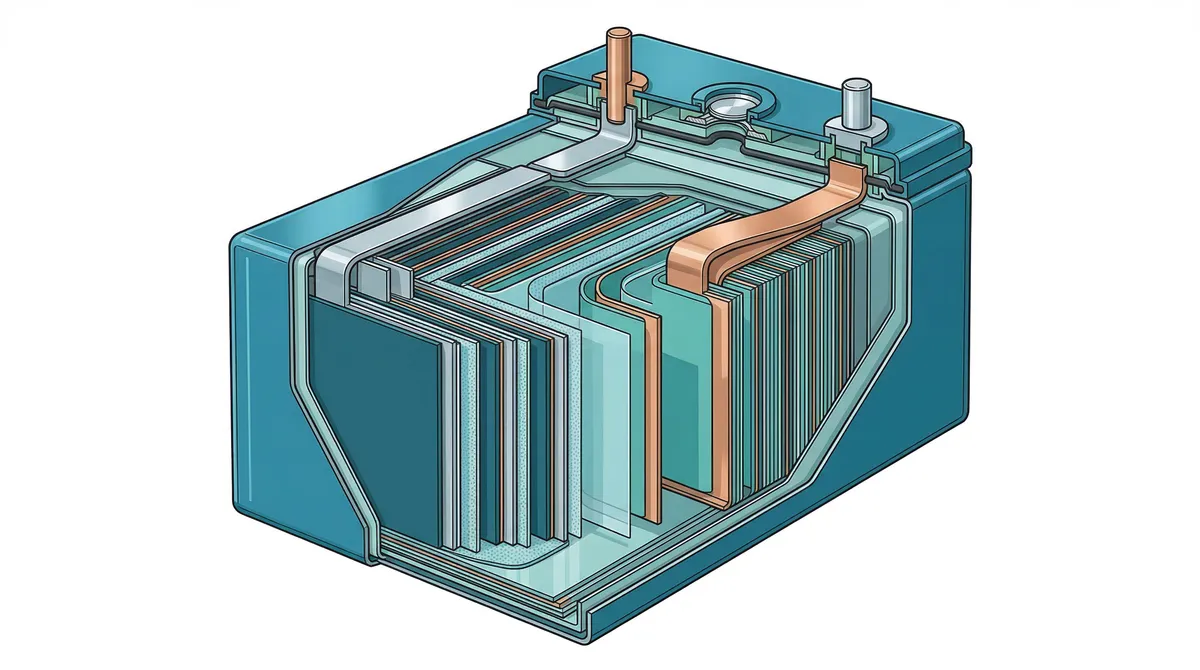
LFP (LiFePO4) uses iron phosphate as the cathode material. It was originally considered a second-tier lithium chemistry because of its lower energy density compared to NMC. That changed dramatically. By 2024, every major home battery manufacturer had either switched to LFP or announced plans to do so. The reason: LFP's combination of safety, longevity, and cost has become unbeatable for stationary storage.
Capacity: 13.5 kWh
Power: 11.5 kW continuous
Warranty: 10 years
Price: $11,500-14,000 installed
Integrated inverter, highest power output
Capacity: 13.6 kWh
Power: 10 kW continuous
Warranty: 12 years
Price: $12,000-15,000 installed
Modular, outdoor-rated, stackable
Capacity: 5 kWh
Power: 3.84 kW continuous
Warranty: 15 years
Price: $8,000-9,500 installed
Microinverter-integrated, scalable
Capacity: 10.08 kWh
Power: 3.84 kW continuous
Warranty: 15 years
Price: $10,000-12,000 installed
Best for existing Enphase systems
Higher density, shorter lifespan
NMC (LiNiMnCoO2) was the dominant lithium chemistry for home batteries from 2015 to 2023. It packs more energy into less space and weight, which made it the go-to for early products like the original Tesla Powerwall and LG Chem RESU series. NMC is still widely used in electric vehicles where weight matters, but for stationary home storage, it has largely been overtaken by LFP.
Capacity: 16 kWh
Power: 7 kW continuous
Warranty: 10 years
Price: $13,000-17,000 installed
Highest single-unit capacity, SolarEdge pairing
Capacity: 12-20 kWh
Power: 8 kW continuous
Warranty: 10 years / 10,000 cycles
Price: $15,000-25,000 installed
Smart home integration, premium
Off-grid only — not recommended for grid-tied homes
Lead-acid batteries (both flooded and sealed AGM variants) are the oldest rechargeable battery technology, dating back to the 1850s. They are still manufactured because they are cheap to produce and widely available. However, for residential grid-tied solar storage, lead-acid is not a viable option in 2026.
NuWatt does not install lead-acid batteries for grid-tied residential systems. The short cycle life (1,000-1,500 cycles), 50% depth of discharge limit, heavy weight, and maintenance requirements make the total cost of ownership 2-3 times higher than LFP over a 10-year period. Lead-acid only makes sense for off-grid cabins or sheds with minimal power needs and very tight budgets.
Complete specification comparison as of March 2026
| Specification | LFP | NMC | Lead-Acid |
|---|---|---|---|
| Chemistry Type | Lithium Iron Phosphate | Nickel Manganese Cobalt | Lead-Acid (AGM/Flooded) |
| Cycle Life (to 80%) | 6,000-10,000 | 3,000-5,000 | 1,000-1,500 |
| Depth of Discharge | 90-100% | 80-90% | 50% |
| Round-Trip Efficiency | 95-97% | 93-96% | 75-85% |
| Energy Density | 90-160 Wh/kg | 150-250 Wh/kg | 30-50 Wh/kg |
| Weight (per 10 kWh) | ~200 lbs | ~130 lbs | ~600 lbs |
| Installed Cost/kWh | $750-950 | $800-1,100 | $150-350* |
| Thermal Runaway Risk | Near zero | Low (managed) | Low (acid/gas) |
| Operating Temp Range | -4F to 122F | 14F to 113F | -4F to 113F |
| Warranty (typical) | 10-15 years | 10 years | 3-5 years |
| Maintenance | None | None | Water topping (flooded) |
| Best For | Daily cycling, grid-tied | Backup, space-limited | Off-grid cabin only |
* Lead-acid equipment cost only. Installed cost with wiring, charge controller, and labor adds $300-600/kWh. Multiple replacements over 10 years make lifetime cost higher than LFP.
The right battery chemistry depends on how you plan to use it
Daily cycling demands the highest cycle count. LFP's 6,000-10,000 cycles mean 16-27 years at one cycle per day, far outlasting NMC and lead-acid.
Backup-only batteries cycle infrequently (maybe 5-20 times per year), so cycle life matters less. Both LFP and NMC provide reliable backup. LFP still edges out on safety and longevity.
LFP operates down to -4F and degrades less in cold cycling. Critical for New England winters in ME, NH, VT where garage or outdoor installations face sub-zero temperatures.
NMC's higher energy density means 30-40% less weight and volume per kWh. If your only option is a tight closet or utility room wall, NMC packs more energy into less space.
For a seasonal cabin with minimal loads and tight budget, lead-acid provides basic storage at $150-350/kWh equipment cost. But LFP is still better if budget allows.
Demand response programs cycle your battery during summer peaks. LFP handles this extra cycling without meaningful degradation, maximizing your $225-275/kW annual revenue.
Our battery sizer tool recommends the right capacity and chemistry based on your utility, usage, and goals.
Size My Battery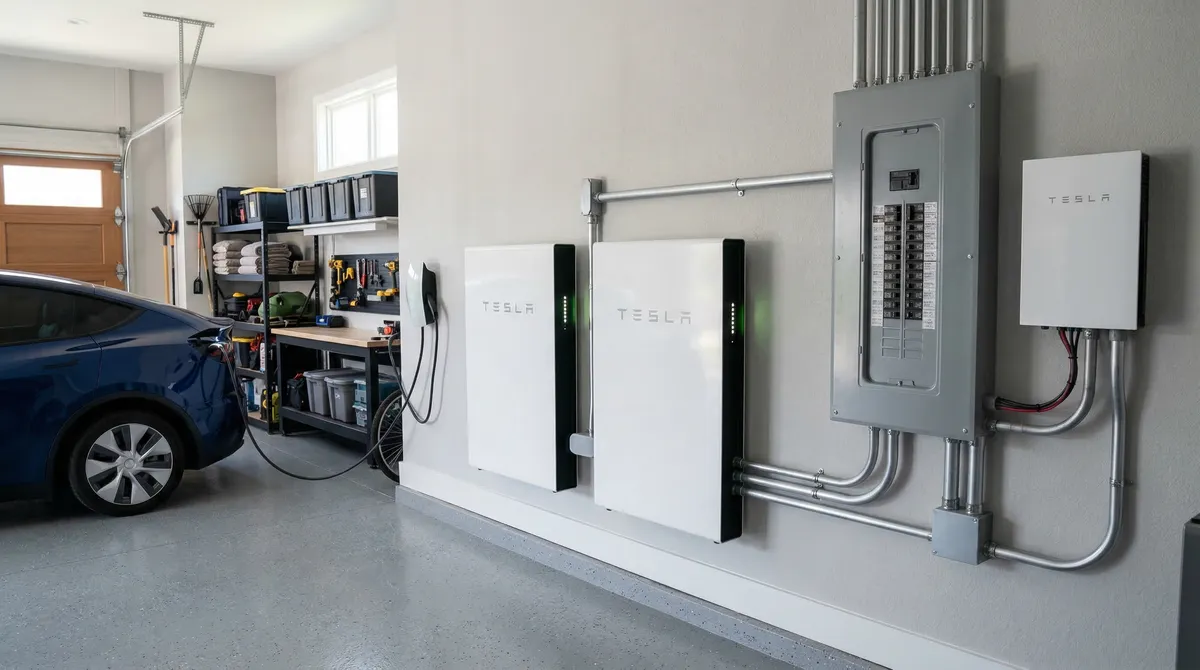
NuWatt installs exclusively LFP-based battery systems for grid-tied residential customers. After evaluating cycle life data, warranty terms, safety records, and long-term cost of ownership, we concluded that LFP is the only chemistry that makes economic and safety sense for daily-cycling home installations. Here is what we install and why:
Highest continuous power output (11.5 kW), integrated inverter simplifies installation, and Tesla's software platform enables Storm Watch, TOU optimization, and ConnectedSolutions enrollment.
Read full reviewIndustry-leading 12-year warranty, outdoor-rated IP67 enclosure, and modular stackable design for easy capacity expansion. Ideal for customers who want to start with one battery and add more later.
Read full reviewSeamless integration with existing Enphase microinverter systems. 15-year warranty is the longest in the industry. Compact 5 kWh units can be stacked for custom capacity.
Read full reviewBest retrofit option for homes with existing Enphase solar systems. 10 kWh capacity in a single wall-mounted unit with the same 15-year warranty.
Read full reviewLead-acid looks cheap at $150-350/kWh for equipment. But when you factor in replacements, lost efficiency, and limited usable capacity, the picture changes dramatically. Here is a 15-year cost comparison for 10 kWh of usable storage:
Upfront (10 kWh usable)
$8,500-9,500
Replacements (15 yr)
0
Efficiency Loss
~$120/yr
15-Year Total Cost
$8,500-11,300
Cost per Cycle
$0.58-0.73
Upfront (10 kWh usable)
$9,000-11,000
Replacements (15 yr)
1 likely
Efficiency Loss
~$160/yr
15-Year Total Cost
$14,000-20,000
Cost per Cycle
$0.85-1.22
Upfront (10 kWh usable)
$3,500-5,000
Replacements (15 yr)
3-4
Efficiency Loss
~$400/yr
15-Year Total Cost
$17,000-25,000
Cost per Cycle
$3.10-4.56
Assumptions: 1 cycle/day, electricity at $0.25/kWh, 10 kWh usable storage. Lead-acid requires 20 kWh rated capacity for 10 kWh usable (50% DoD). Replacement costs include labor. Efficiency loss calculated from round-trip losses vs. LFP baseline.
If you live in Maine, New Hampshire, Vermont, or anywhere that sees sub-zero temperatures, battery chemistry directly affects real-world performance. This is not theoretical — we install batteries in garages and basements across the Northeast, and we see the temperature impact firsthand.
Loses 10-15% capacity below 32F. Charging limited below 14F but still provides discharge power. Best cold-weather lithium option.
Loses 15-25% capacity below 32F. Cycling in cold accelerates degradation. Not recommended for unheated outdoor installations in northern states.
Loses 30-40% capacity at 0F. Can freeze and crack if deeply discharged in extreme cold. Electrolyte freezing point drops with charge level.
Our recommendation for cold climates:Choose LFP, and install the battery in a garage, basement, or utility room that stays above 14F year-round. This is achievable in nearly all New England homes. Outdoor installations should use rated enclosures with internal heating pads — both Tesla and Franklin include these as standard in their outdoor-rated models.
The residential clean energy tax credit (Section 25D) expired on December 31, 2025. If you purchase a battery with cash or a home improvement loan, you receive $0 in federal tax credits. This applies to all chemistries — LFP, NMC, and lead-acid alike.
The commercial Investment Tax Credit (Section 48/48E) remains available for batteries installed through third-party-owned arrangements. If a leasing company owns the battery and leases it to you, the leasing company can claim the 30% ITC. Some PPA and lease providers pass a portion of this benefit to homeowners through lower monthly payments.
What still helps:State programs like ConnectedSolutions (MA, CT, RI) provide $225-$275/kW annually — typically $1,000-$1,500/year for a single Powerwall. This demand response revenue can significantly offset battery costs regardless of chemistry.
LFP stands for Lithium Iron Phosphate (chemical formula LiFePO4). It is a type of lithium-ion battery that uses iron phosphate as the cathode material instead of nickel, manganese, or cobalt. LFP batteries are known for exceptional safety, long cycle life (6,000-10,000 cycles), and stable chemistry that resists thermal runaway. As of 2026, LFP is the dominant chemistry in home battery storage products like the Tesla Powerwall 3, Franklin aPower2, and Enphase IQ series.
LFP is better for most home battery applications in 2026. It lasts 2-3 times longer than NMC (6,000+ cycles vs. 3,000-5,000), is significantly safer with near-zero thermal runaway risk, tolerates deeper discharges without degradation, and performs better in temperature extremes. NMC has higher energy density (more kWh per pound), but for a stationary home battery where weight does not matter, LFP's longevity and safety advantages are decisive. This is why Tesla, Franklin, and Enphase all switched to LFP for their current-generation products.
It depends on the chemistry. LFP batteries last 6,000-10,000 cycles before reaching 80% capacity retention. At one cycle per day, that is 16-27 years. NMC batteries last 3,000-5,000 cycles (8-14 years at daily cycling). Lead-acid batteries last only 1,000-1,500 cycles (3-4 years at daily cycling). Most home battery warranties guarantee 10 years or a specified number of cycles, whichever comes first, with at least 70-80% capacity retention.
Lead-acid batteries are only viable for off-grid cabin or shed installations where upfront cost is the primary concern and daily cycling is minimal. For grid-tied homes, lead-acid is not recommended. The short cycle life (1,000-1,500 cycles), heavy weight (2-3 times heavier per kWh), lower depth of discharge (50% vs. 90-100% for LFP), and lower round-trip efficiency (80% vs. 96%) make the total cost of ownership significantly higher than lithium alternatives over a 10-year period.
Yes, but performance varies by chemistry. LFP batteries operate from -4F to 122F and handle cold better than NMC, which is why they dominate in Northeast states like Maine, New Hampshire, and Vermont. Below freezing, LFP capacity may decrease 10-15%, and charging may be limited. NMC batteries have slightly narrower operating ranges and degrade faster when cycled in extreme cold. Lead-acid batteries lose up to 30-40% capacity at 0F. For cold climates, install batteries in garages, basements, or conditioned spaces when possible.
Depth of discharge (DoD) is the percentage of a battery's total capacity you can use before recharging. LFP batteries support 90-100% DoD, meaning you can use nearly all the stored energy. NMC batteries typically support 80-90% DoD. Lead-acid batteries should only be discharged to 50% to avoid permanent damage. Higher DoD means you get more usable energy from the same rated capacity. A 13.5 kWh LFP battery at 100% DoD gives you 13.5 kWh usable, while a 13.5 kWh lead-acid battery at 50% DoD gives you only 6.75 kWh usable.
No. The residential clean energy tax credit (Section 25D) expired on December 31, 2025. Homeowners who purchase a battery with cash or a loan receive $0 in federal tax credits. However, batteries installed as part of a third-party-owned system (solar lease or PPA) may still qualify for the 30% commercial ITC under Section 48/48E, because the tax credit goes to the system owner (the leasing company), not the homeowner. State incentives like ConnectedSolutions remain available in MA, CT, and RI.
Installed cost per kWh varies by chemistry and product. LFP home batteries cost $750-$950 per kWh installed (e.g., Tesla Powerwall 3 at ~$850/kWh for 13.5 kWh). NMC batteries cost $800-$1,100 per kWh installed. Lead-acid batteries cost $150-$350 per kWh for equipment, but when you factor in shorter lifespan and replacement costs, the lifetime cost per kWh stored is actually higher than LFP. The lowest total cost of ownership over 10-15 years belongs to LFP batteries.
As of 2026, most major home battery products use LFP chemistry: Tesla Powerwall 3 (13.5 kWh), Franklin aPower2 (13.6 kWh), Enphase IQ Battery 5P (5 kWh), Enphase IQ Battery 10C (10 kWh), and EG4 PowerPro (5.12 kWh). The industry shifted heavily toward LFP starting in 2023-2024 because of its safety advantages and longer cycle life. Older products like the original Tesla Powerwall, LG RESU, and some Sonnen models used NMC chemistry.
No, you should not mix LFP and NMC batteries in the same system. They have different voltage characteristics, charging profiles, and degradation rates that make them incompatible. Mixing chemistries can lead to unbalanced charging, reduced system life, and potential safety issues. If you are expanding an existing NMC battery system, either add matching NMC units or consult your installer about transitioning entirely to LFP. Most battery management systems are designed for a single chemistry type.
Home Battery Guide 2026
Do you need a battery? Cost, sizing, and ROI analysis.
Battery Storage Cost 2026
How much does a home battery cost installed in 2026?
Is Solar + Battery Worth It?
ROI analysis for solar paired with battery storage.
Grid Outage Battery Guide
How batteries perform during grid outages.
Whole-Home vs Partial Backup
Sizing guide for backup coverage levels.
Tesla Powerwall 3 Review
In-depth review of Tesla's LFP battery.
Franklin aPower2 Review
Review of Franklin's 13.6 kWh LFP system.
Enphase IQ Battery Review
Review of Enphase's microinverter-integrated battery.
Battery Sizer Tool
Calculate the right battery size for your home.
ConnectedSolutions Guide
Earn $1,000+/year with demand response programs.
Research
You just did this
Calculate
See your savings
Save
Lock in your price
You understand the science. Now let us size the right LFP battery for your home, utility, and budget.
Size My BatteryTalk to an expertNo credit card required. 100% free. Takes about 2 minutes.