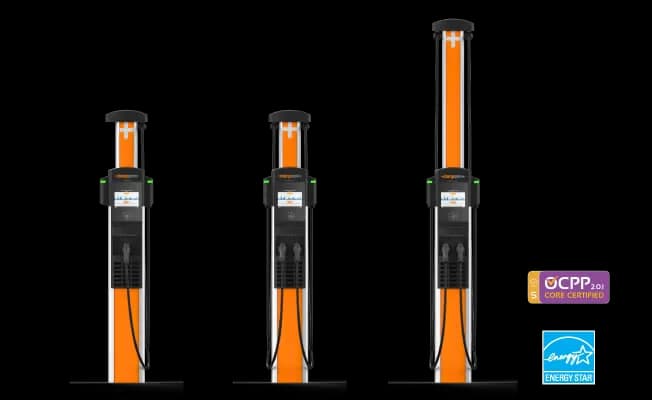
Commercial AC Level 2
ChargePoint CP6000
Workplace & destination parking
A commercial AC station for workplaces, hospitality properties and other businesses. Evaluate it for vehicles parked for several hours.

We use your location to provide localized solar offers and incentives.
We serve MA, NH, CT, RI, ME, VT, NJ, PA, and TX
Loading NuWatt Energy...
NuWatt designs, installs, and manages solar, battery, heat pump, and EV charger systems across 9 states. One company, one warranty, one point of contact.
Get a Free Quote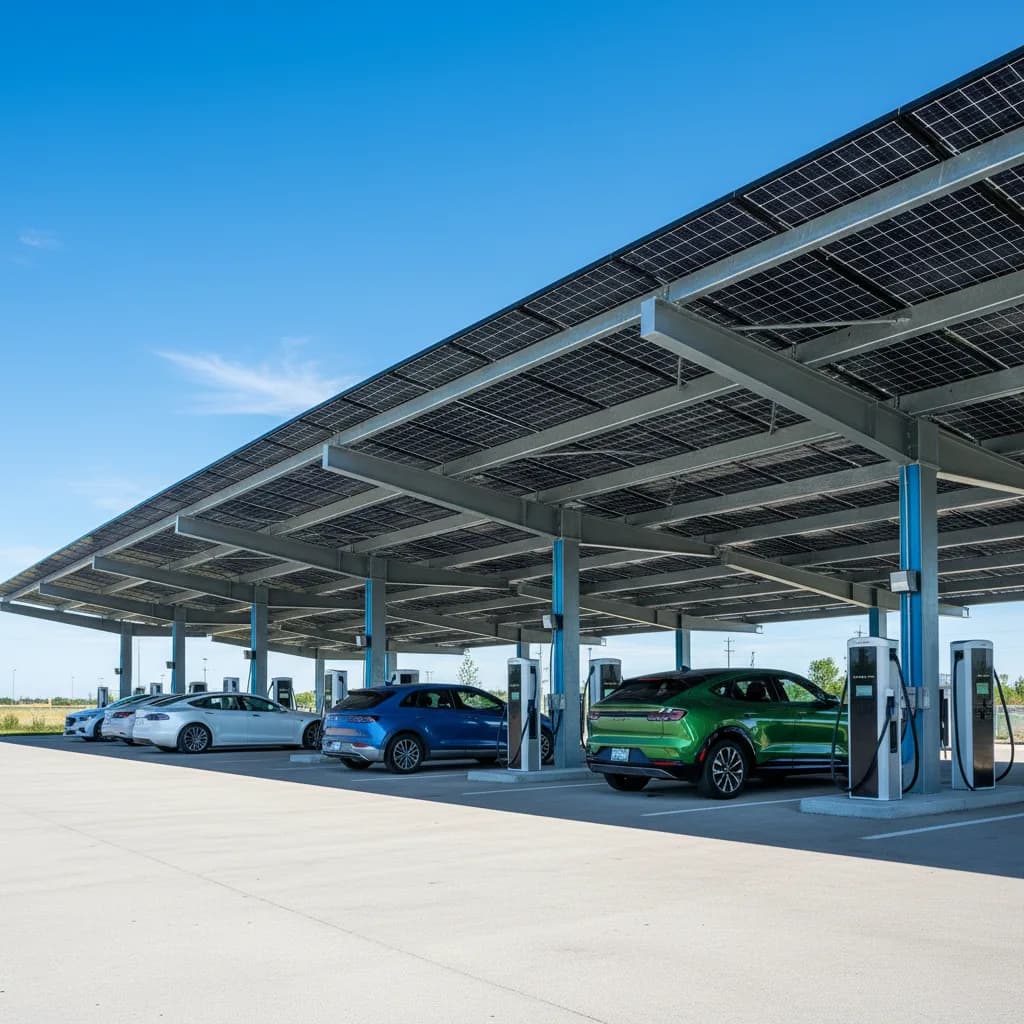
48E on the canopy is live — the 30C charger credit expired June 30, 2026
48E
Up to 60% federal credit
$300K–$3M
Deal range
BESS option
Demand-charge mitigation
9 states
States served
Section 48E covers the solar canopy (30% base, up to 60% with adders) and remains active. The Section 30C charger credit (30% with PWA, capped at $100K per port) expired June 30, 2026 — chargers placed in service by that date are claimed on Form 8911. The two credits applied to separate basis on one project.
A solar canopy over a commercial parking lot is the single largest deal-size opportunity NuWatt runs. Add EV charging underneath it and the canopy still earns Section 48E — and bundles whose chargers were placed in service by June 30, 2026 also captured Section 30C on the chargers — plus state rebates and utility make-ready. This page is the engineering and underwriting brief we walk every bundle buyer through.
Section 30C expired June 30, 2026 — pre-expiry installs claim it on Form 8911. Section 48E closed its canopy begin-construction window July 4, 2026 — new starts keep the full 30% if in service by Dec 31, 2027.
30C guideExample: a $700K mid-size project. PWA-compliant, domestic-content compliant, in an eligible 30C census tract, chargers placed in service by June 30, 2026 — the 30C line does not apply to later installs.
Gross project
$700K
Federal credits
-$250K
State + utility (est.)
-$100K
Net host cost
$350K
Illustrative — actual credit amounts depend on PWA compliance, domestic-content sourcing, census-tract eligibility, and state-program availability at time of build.
Canopy structural, PV, BESS, EVSE, and interconnection — under a single general contractor keeps the project moving and the coordination risk with NuWatt.
Daytime PV production offsets charger peak loads. A paired battery shaves demand windows and cuts $/kW-month tariff exposure. This is the economic thesis in Texas.
Levelized cost of driver-delivered kWh is the lowest of any charging architecture — solar + BESS + retail grid. Payback lands in 4–8 years across our markets.
One building permit, one utility interconnection, one inspection cycle. Sequencing the canopy and chargers together cuts 60–90 days off the schedule versus separate projects.
A bundle is not two projects stapled together — it is one integrated engineered system. Every component lives on the 48E or 30C basis schedule.
Ranges reflect NuWatt Q1 2026 turnkey pricing with 48E + 30C captured under pre-expiry rules — the 30C charger credit expired June 30, 2026. Actual numbers depend on site civil, utility upgrade scope, and state program availability.
Good fit: office park, small workplace, retail strip.
Good fit: hospital, campus, light-industrial, municipal.
Good fit: fleet depot, logistics, major employer.
Solar
30% of solar canopy cost with prevailing wage and apprenticeship compliance (6% base), with no per-item cap. The begin-construction window closed July 4, 2026 — projects that began by then locked in the full timing pathway; new starts generally must be placed in service by December 31, 2027.
Chargers
30% of EV charger cost with PWA (prevailing wage + apprenticeship). Base rate 6%. Capped at $100,000 per item (each port, dispenser, or storage asset). Applies only to chargers placed in service by June 30, 2026.
Three states, three different incentive stacks. Each worked out on a $700K mid-tier bundle. The federal line assumes chargers placed in service by June 30, 2026 — the 30C portion has expired for later installs.
SMART revenue compounds the payback.
PSE&G program deadline July 15, 2026.
TCEQ pool closes Aug 31, 2026 or when funds exhaust.
Commercial charging selection
Choose charging around parking duration, vehicle needs and site power—not the presence of a solar canopy. Compare commercial AC Level 2 for longer stays with DC fast charging for faster turnaround.
Commercial AC Level 2
Workplace & destination parking
A commercial AC station for workplaces, hospitality properties and other businesses. Evaluate it for vehicles parked for several hours.
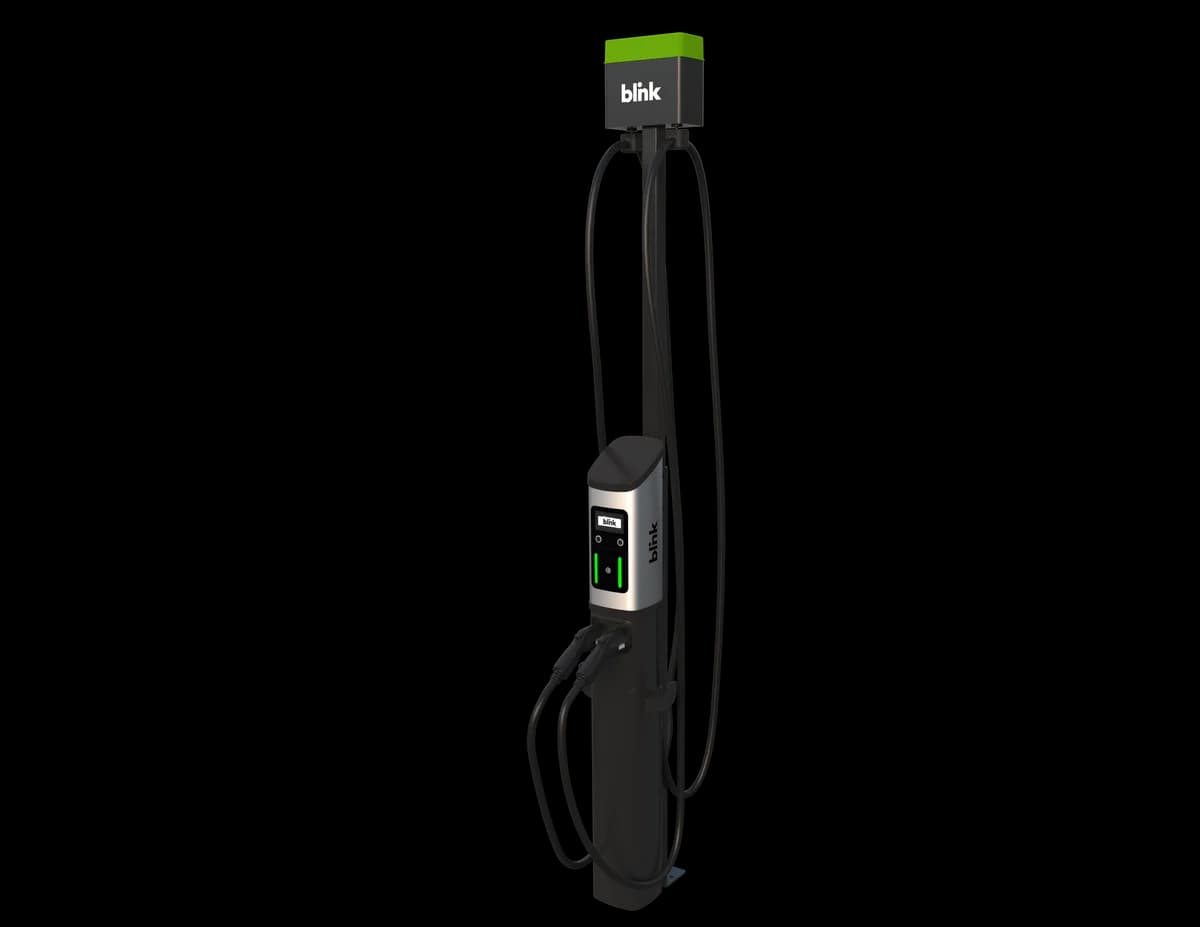
Commercial AC Level 2
Shared parking & managed access
Single- or dual-port commercial charging with network connectivity. Evaluate the operating plan for employee, tenant or guest access.
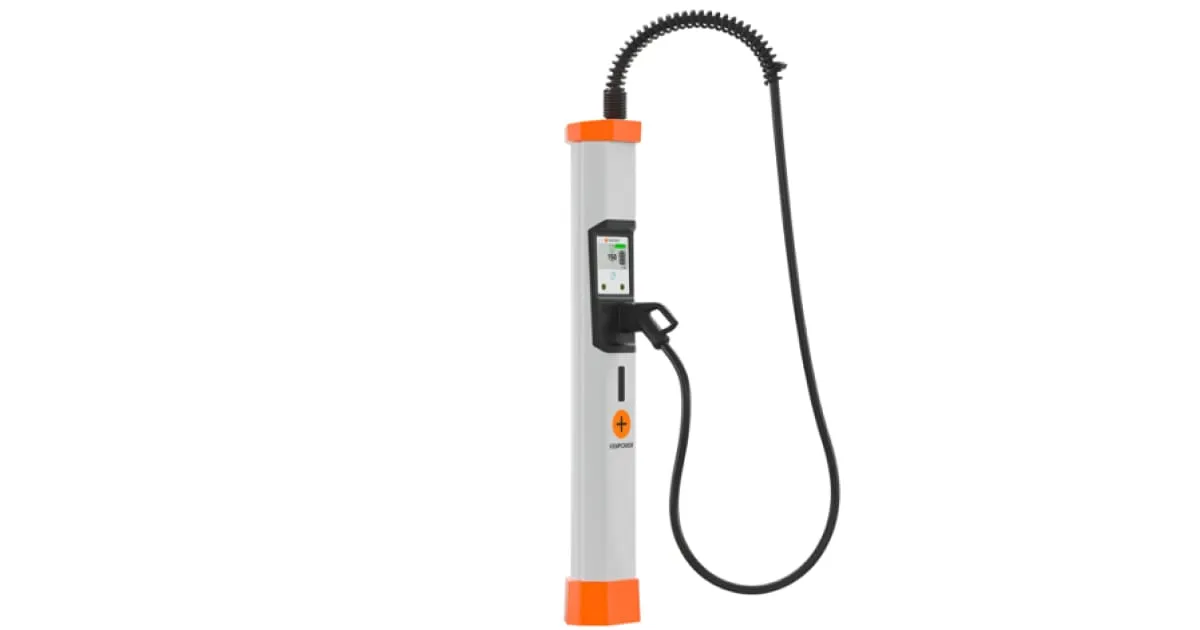
DC fast charging
Fleet turnaround & short dwell
A distributed DC charging system for sites that need faster vehicle turnaround. Satellites work with a separate power unit; they are not standalone AC wall chargers.
Equipment examples, not a guarantee of NuWatt installation history, availability or incentive eligibility. Request a project quote covering equipment, networking, installation and ongoing service; hardware-only retail prices are not installed commercial costs.
Compare commercial charging requirementsSMART 3.0, MassEVIP, Eversource/NatGrid make-ready — worked through on a commercial parking example.
MA guideEnergize CT, Smart-E, ESS Program, SCEF — the CT-specific layering on a canopy bundle.
CT guideERCOT retail buyback, Oncor Drive Forward, TCEQ All-Electric — how TX fleets stack.
TX guideSample project
Real numbers on a Texas light-duty delivery fleet with a 300 kW canopy, 20 Level 2 plus 4 DCFC, and a 500 kWh battery — 48E, 30C, TCEQ All-Electric, and Oncor captured.
They apply to the same project but against different assets. Section 48E (Clean Electricity Investment Credit) covers the solar canopy — the steel structure, PV modules, inverters, racking, and paired battery storage — at 30% of basis, with adders up to 60% for domestic content and energy-community siting. Section 30C covered the EV chargers — ports, dispensers, pedestals, and related refueling property — at 6% base, 30% with prevailing wage and apprenticeship, capped at $100,000 per item; that credit expired June 30, 2026, and chargers placed in service by then are claimed on Form 8911. On one $700K project with a $400K canopy and $300K charger scope placed in service pre-expiry, the combined federal basis reduction could reach $210K–$270K. 30C does not apply to solar. 48E does not apply to chargers. They never overlap.
26 U.S.C. § 48E — Clean Electricity Investment Credit
IRS code, as amended by the One Big Beautiful Bill Act; 6% base, 30% with PWA. Begin-construction window closed July 4, 2026; later starts placed in service by December 31, 2027.
26 U.S.C. § 30C — Alternative Fuel Vehicle Refueling Property
Expired June 30, 2026 per OBBB Act; IRS Form 8911.
IRS Form 3468 — Investment Credit
Filing form for Section 48E claims.
IRS Form 8911 — Alternative Fuel Vehicle Refueling Property Credit
Filing form for Section 30C claims.
DSIRE — Database of State Incentives for Renewables & Efficiency
State program registry; NC Clean Energy Tech Center.
Massachusetts — SMART 3.0 + MassEVIP program guidance
mass.gov and MassCEC program pages.
New Jersey BPU — PSE&G + JCP&L EV programs
nj.gov BPU docket EO18101111, closing July 15, 2026.
Texas — TCEQ All-Electric + Oncor Drive Forward
tceq.texas.gov and oncor.com rebate portal.
Last verified by NuWatt Incentive Team on 2026-04-14. Federal credit phase-outs, census-tract designations, and state program funding change frequently; we re-verify monthly.
Section 48E still compresses the canopy cost — the July 4, 2026 begin-construction window has closed, and new starts still qualify at 30% if placed in service by December 31, 2027. The 30C charger credit expired June 30, 2026 — we document pre-expiry installs for the Form 8911 claim. Let NuWatt engineer, permit, and interconnect the bundle.