Loading NuWatt Energy...

We use your location to provide localized solar offers and incentives.
We serve MA, NH, CT, RI, ME, VT, NJ, PA, and TX
Loading NuWatt Energy...
NuWatt designs, installs, and manages solar, battery, heat pump, and EV charger systems across 9 states. One company, one warranty, one point of contact.
Get a Free Quote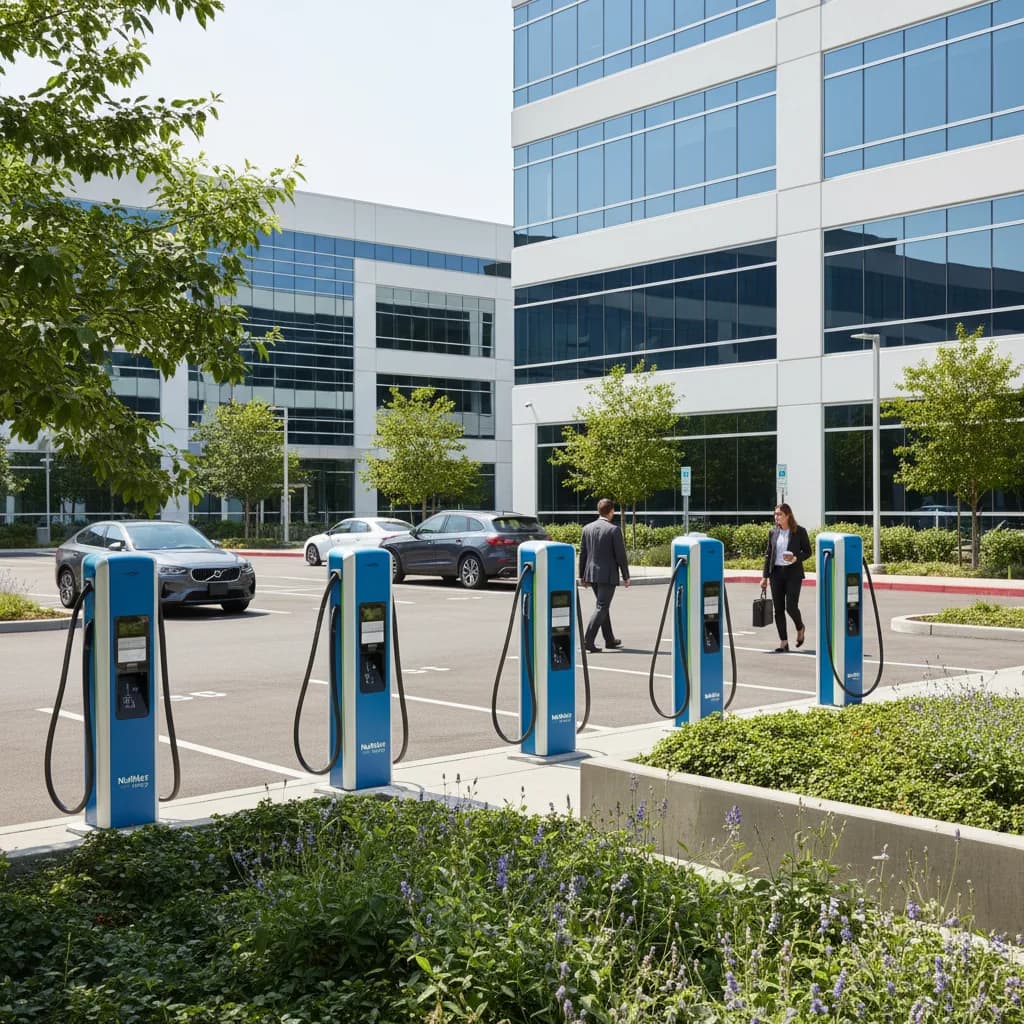
Turnkey Level 2 charging with utility make-ready stacks, state rebate capture, and 60–150 day delivery.
$35K–$300K
Project Range
4–20
Typical Ports
60–150 Days
Delivery Cycle
Up to 100%
Utility Make-Ready
Workplace EV charging means employer-installed Level 2 (and occasionally DCFC) stations at offices and campuses. A typical 4–20 port project runs $35K–$300K installed. Utility make-ready and state rebate stacks cover the bulk of gross cost in MA, NJ, and CT when sequenced correctly. The federal Section 30C credit expired June 30, 2026 — chargers placed in service by that date can still be claimed on Form 8911.
Facilities teams, operations directors, and CFOs at Class A offices, life-science campuses, multi-tenant office parks, and corporate headquarters across New England, the Mid-Atlantic, and Texas are moving on workplace charging now. The force driving the 2026 timing: state rebate pools (especially PSE&G in New Jersey and MassEVIP in Massachusetts) are reserving or draining faster than they did in 2024 — and installs that went live by June 30, 2026 can still claim the now-expired Section 30C credit on Form 8911. NuWatt is the only installer covering all nine of our target states with a single incentive-capture workflow, and this page is the planning brief we walk every workplace buyer through.
$35K–$300K
Project range
60–150 days
Delivery cycle
4–40
Typical ports
Expired Jun 30 2026
Section 30C credit
A useful rule of thumb in 2026: plan for EV-ready capacity equal to 20% of your employee parking stalls, and install Level 2 ports for roughly 5% of stalls on day one. A 200-stall office should size conduit and panel for 40 ports and install 8–10 to start. Fortune 500 sustainability teams are sizing higher — Bain, Boston Consulting Group, and several regional law firms have standardized on 10% installed coverage. Under-sizing is the most common and most expensive mistake we see: retrofitting a panel in year three costs 3x to 4x what pre-wiring costs today, and blown utility rebate windows compound the damage. Right-sizing also depends on average dwell time. A corporate HQ with 9-hour shifts charges far more cars per port than a flex coworking building with 3-hour dwell. We model both in the site plan.
| Site size | Typical install | Turnkey range | 30C at 30% (PWA) | Likely utility stack |
|---|---|---|---|---|
Small office (50–100 stalls) | 4 ports | $35K–$70K | Up to $21K | MA National Grid / CT UI |
Mid office (150–250 stalls) | 8 ports | $70K–$140K | Up to $42K | MassEVIP Workplace + Eversource |
Large campus (400+ stalls) | 16 ports | $140K–$300K | Up to $84K | PSE&G EV Program |
30C dollar figures shown at the 30% prevailing-wage-and-apprenticeship tier, capped at $100,000 per port; base tier is 6% without PWA compliance. The Section 30C credit expired June 30, 2026 — the 30C column applies only when claiming chargers placed in service by that date on Form 8911. Utility make-ready figures are additive and vary by service territory.
The honest 2026 answer is that workplace Level 2 charging lands between $7,500 and $15,000 per port all-in, before incentives. The floor applies when existing panel capacity absorbs the load, conduit runs are short, and the site uses lower-cost networked hardware. The ceiling kicks in when the building needs a new sub-panel, the utility requires a transformer upgrade, the site is bored under a paved lot, or the customer specifies Tesla-compatible Universal Wall Connectors alongside J1772 ports.
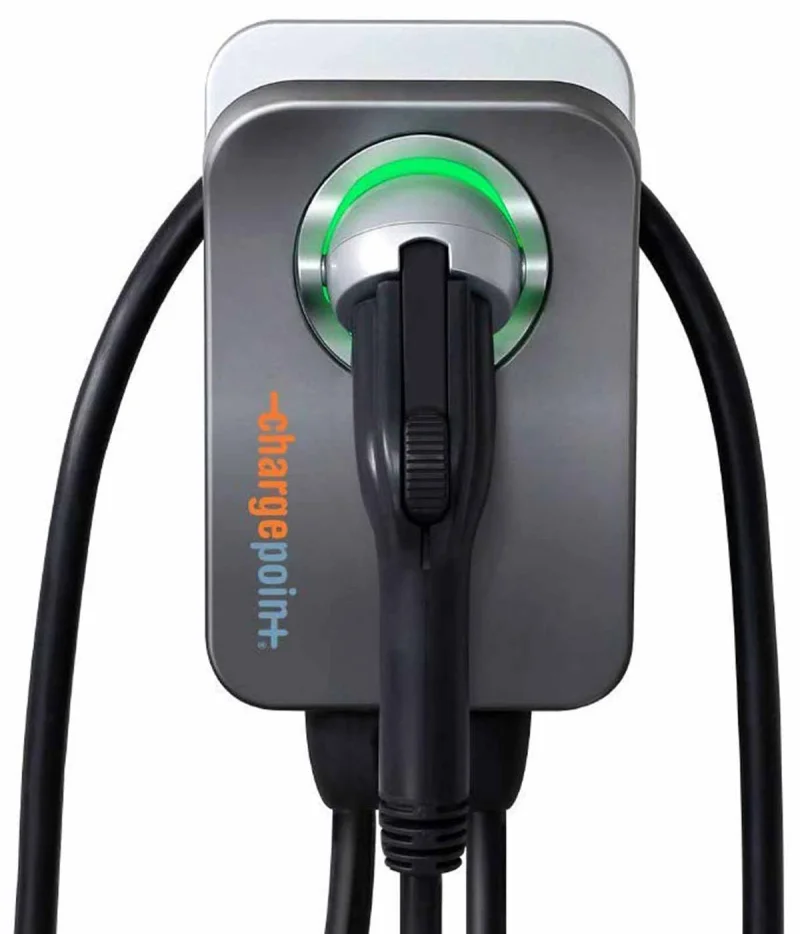
Hardware typically accounts for 25–35% of the total, electrical labor and materials 40–55%, trenching and concrete 5–15%, and network activation plus permitting the rest. Equipment we specify most often includes the ChargePoint CP6000 (dual-port, 80A, the workhorse), the Blink Series 7 (strong for mid-market buildings), and EV Connect networked stations on sites that want a utility-agnostic back end. NACS-capable Tesla Universal Wall Connectors show up in about a third of our 2026 workplace designs where tenants drive Model Y and newer Ford and GM EVs.
Incentives change the math dramatically. In PSE&G territory, the utility make-ready rebate plus the customer-side rebate can cover $17,800 per installed port ($11,100 make-ready plus $6,700 per port, up to 10 ports). In MA National Grid territory, make-ready is paid at 100% plus $3,900 per L2 port. Stacked correctly, a well-sited 8-port project can net out at 20–40% of gross cost.
Massachusetts is the most generous workplace charging market in NuWatt’s footprint. The state’s MassEVIP Workplace & Fleet grant covers up to 60% of installed cost, capped at $50,000 per address, for Level 2 charging at employer sites and fleet depots. Applications are rolling and funded through MassDEP; we handle the application package, equipment approved-products-list check, and post-install verification on every MA project.
Two utilities add another layer on top. National Grid EV Charging Infrastructure and Eversource ChargeSmart fund 100% of customer-side make-ready — the panel upgrade, service trench, and conduit — and contribute $3,900 per Level 2 port toward equipment. Together with MassEVIP, most Massachusetts workplaces end up paying roughly 15–30% of gross installed cost out of pocket. ConnectedSolutions demand-response enrollment can add per-plug monthly payments on top, though those apply more often to DCFC and fleet designs.
Connecticut runs a similar structure through Energize CT: Eversource and United Illuminating pay 50% of networked EVSE equipment and 100% of make-ready, with managed charging incentives of $5–$40 per plug per month during the June–September demand season. New Jersey’s PSE&G EV Programis the largest single pool in the region — $166M committed — but the application window closes July 15, 2026 (or when funds exhaust), so queuing early is essential. JCP&L’s EV Driven program runs on the same deadline.
MassEVIP Workplace & Fleet
Up to 60% / $50K per address
Massachusetts guide
PSE&G EV Charging Program
$11,100 make-ready + $6,700/port (10-port cap)
New Jersey guide
EnergizeCT EV Charging
50% of EVSE + 100% make-ready
Connecticut guide
Networked chargers win for almost every workplace use case in 2026. Non-networked units save $400–$700 per port up front, but two things changed: every major state rebate program now requires networked hardware on the approved products list, and HR needs session-level reporting to allocate electricity cost fairly.
Non-networked chargers still have a niche. Small employers under 25 employees with a single EV-driving owner can save real money with a hardwired unit. Above that threshold, networked CP6000s or Blink Series 7 units pay back through rebate capture and reporting automation within the first year.
Only for chargers placed in service by June 30, 2026 — the date the Section 30C credit expired — at a site in an IRS-designated eligible census tract. Section 30C was the federal alternative fuel refueling property credit. For business property the credit is 6% of installed cost at the base tier, rising to 30% when a project above $1 million met the prevailing wage and apprenticeship (PWA) requirements defined in Inflation Reduction Act guidance. The cap is $100,000 per item, which the IRS defines as each charging port (or each fuel dispenser). An 8-port workplace could theoretically claim up to $800,000 in credit if costs and PWA compliance supported it.
The eligibility gate is the census tract. Only properties in designated low-income communities or non-urban (rural) tracts qualify — not every office park does. NuWatt runs the GEOID lookup when substantiating a claim so the tract number is documented before filing. Taxpayers claim the credit on IRS Form 8911 for the tax year the chargers went live, with records substantiating the placed-in-service date. Direct pay is available for tax-exempt entities (municipalities, schools, churches, nonprofits) on qualifying pre-expiry installs. Installs placed in service after June 30, 2026 receive no federal 30C credit — state and utility programs carry the economics for new projects.
Do not confuse Section 30C with Section 48E. Section 48E covers solar and storage investment (6% base, 30% with prevailing wage and apprenticeship compliance) and applies to a solar canopy over your parking lot, not the chargers themselves. When a workplace bundled a solar canopy with EV charging before the expiry, we layered 48E against the canopy and 30C against the chargers — two different credits, one project. 48E remains live for new canopy builds: its begin-construction window closed July 4, 2026, so projects that began construction on or before that date locked in the full timing pathway, while projects starting now still qualify for the 30% credit but generally must be placed in service by December 31, 2027.
Owns the site plan, panel capacity, parking lot geometry, and utility relationship. Typically drafts the RFP and signs the install contract.
Drives the business case from an ESG and retention angle. Often pushes timing and coordinates with HR on employee access policy.
Approves capital and reviews the state + utility incentive stack. Cares about net project cost, MACRS depreciation of the equipment, and payback.
NuWatt is hardware-agnostic — we spec based on site, utility program, and tenant mix. These four units show up in most 2026 workplace designs.
50A networked Level 2 with OCPP firmware and session metering
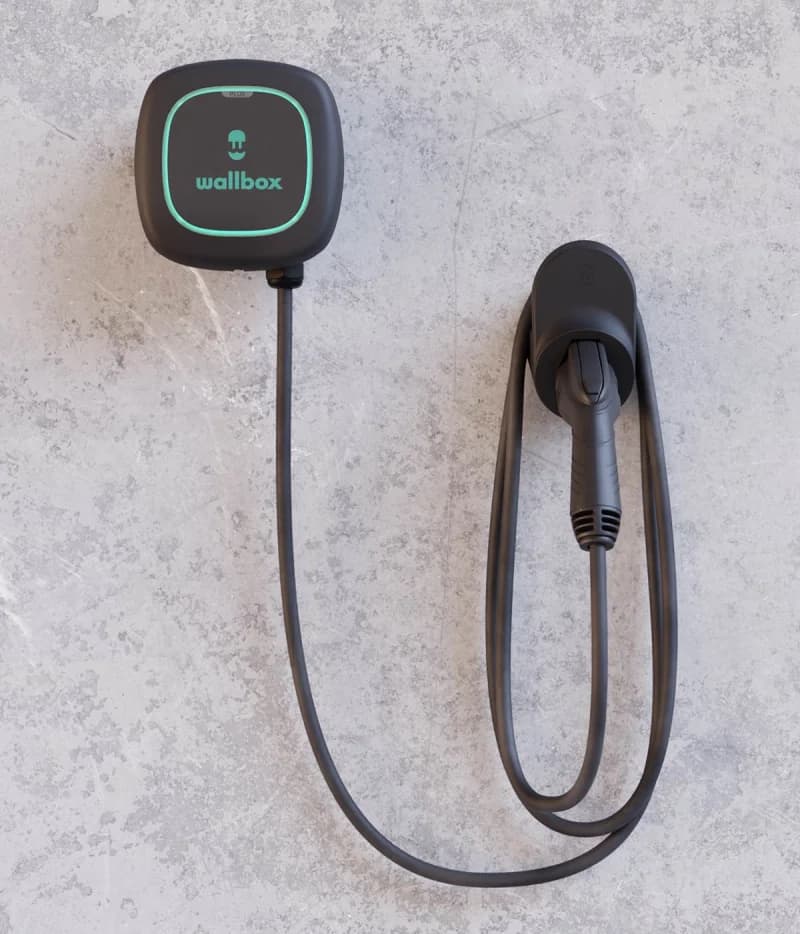
40–48A L2 with smart load sharing across up to 24 ports
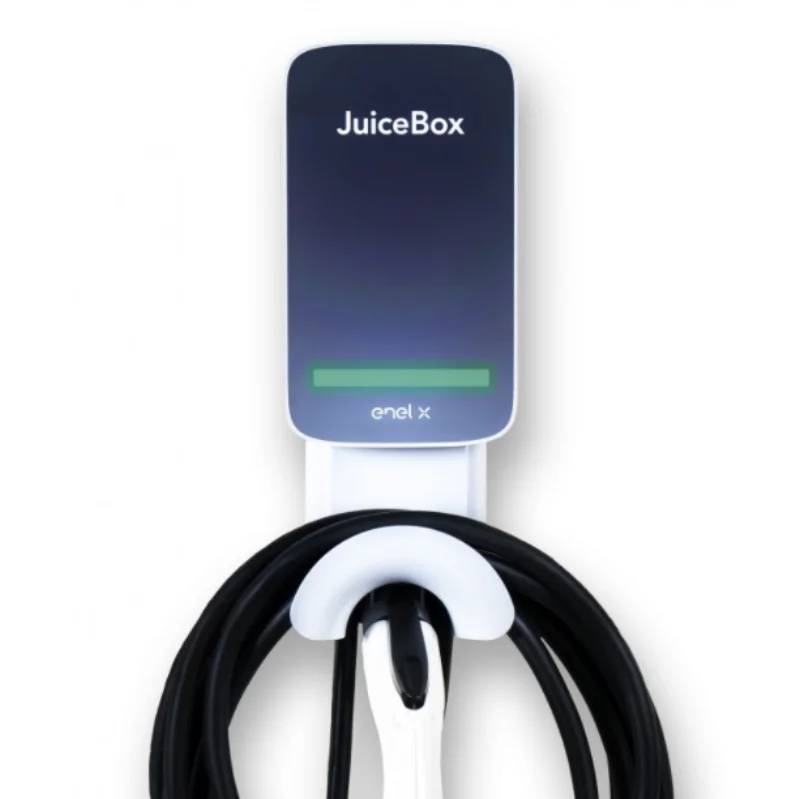
48A networked L2, WiFi + cellular, rebate-approved in MA & CT
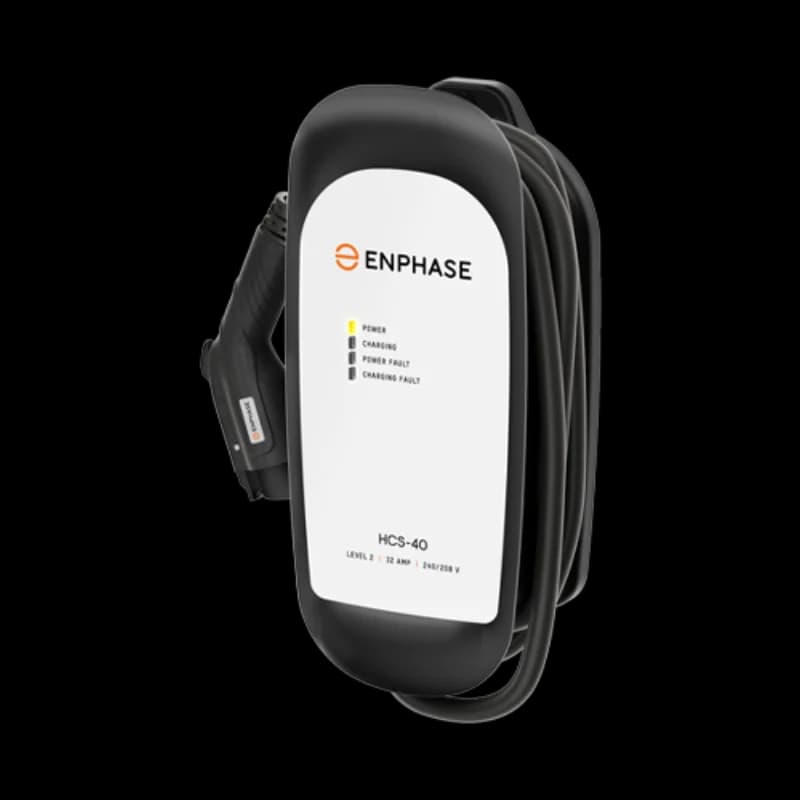
40A ruggedized non-networked L2, NEMA 4 enclosure
We do not recommend pure non-networked hardware above two ports. The loss of rebate eligibility and session reporting exceeds the hardware savings in every scenario we have modeled.
No. Employers can offer free charging as a benefit, charge a flat monthly fee, bill per kWh, or use managed charging networks like ChargePoint or Blink to meter individual sessions. Free access is most common in tenured Class A offices where the electricity cost is treated as a retention amenity. Metered workplaces typically recover the $0.10–$0.18 per kWh cost of electricity with a small administrative margin.
Plan for a 60 to 150 day calendar cycle from signed proposal to energization. Timeline drivers include utility make-ready scheduling (often the longest item, especially with National Grid and PSE&G), permit turnaround at the municipal level, panel or transformer upgrades, and the delivery of networked hardware. NuWatt manages this end to end and sequences the utility application early to protect your incentive window.
IRS Form 8911
Alternative Fuel Vehicle Refueling Property Credit (Section 30C filing).
Massachusetts DEP — MassEVIP Workplace & Fleet
State grant program for workplace and fleet Level 2 charging.
National Grid MA — EV Charging Infrastructure
Utility make-ready + per-port rebate program tariff.
Eversource MA — ChargeSmart EV
Massachusetts ChargeSmart business EV charging program.
PSE&G — EV Charging Program
NJBPU docket EO18101111 — $166M program tariff.
EnergizeCT EV Charging Program
Eversource and United Illuminating joint business EV program.
JCP&L — EV Driven
New Jersey utility make-ready and port rebate.
26 U.S.C. § 30C (as amended by OBBB)
Federal statute — expired for property placed in service after June 30, 2026.
Last verified by NuWatt Incentive Team on 2026-04-14. Incentive amounts and deadlines change frequently; we re-verify every page monthly.
PSE&G and MassEVIP pools are draining. Get a turnkey workplace EV design with every live incentive captured.