Loading NuWatt Energy...

We use your location to provide localized solar offers and incentives.
We serve MA, NH, CT, RI, ME, VT, NJ, PA, and TX
Loading NuWatt Energy...
NuWatt designs, installs, and manages solar, battery, heat pump, and EV charger systems across 9 states. One company, one warranty, one point of contact.
Get a Free Quote
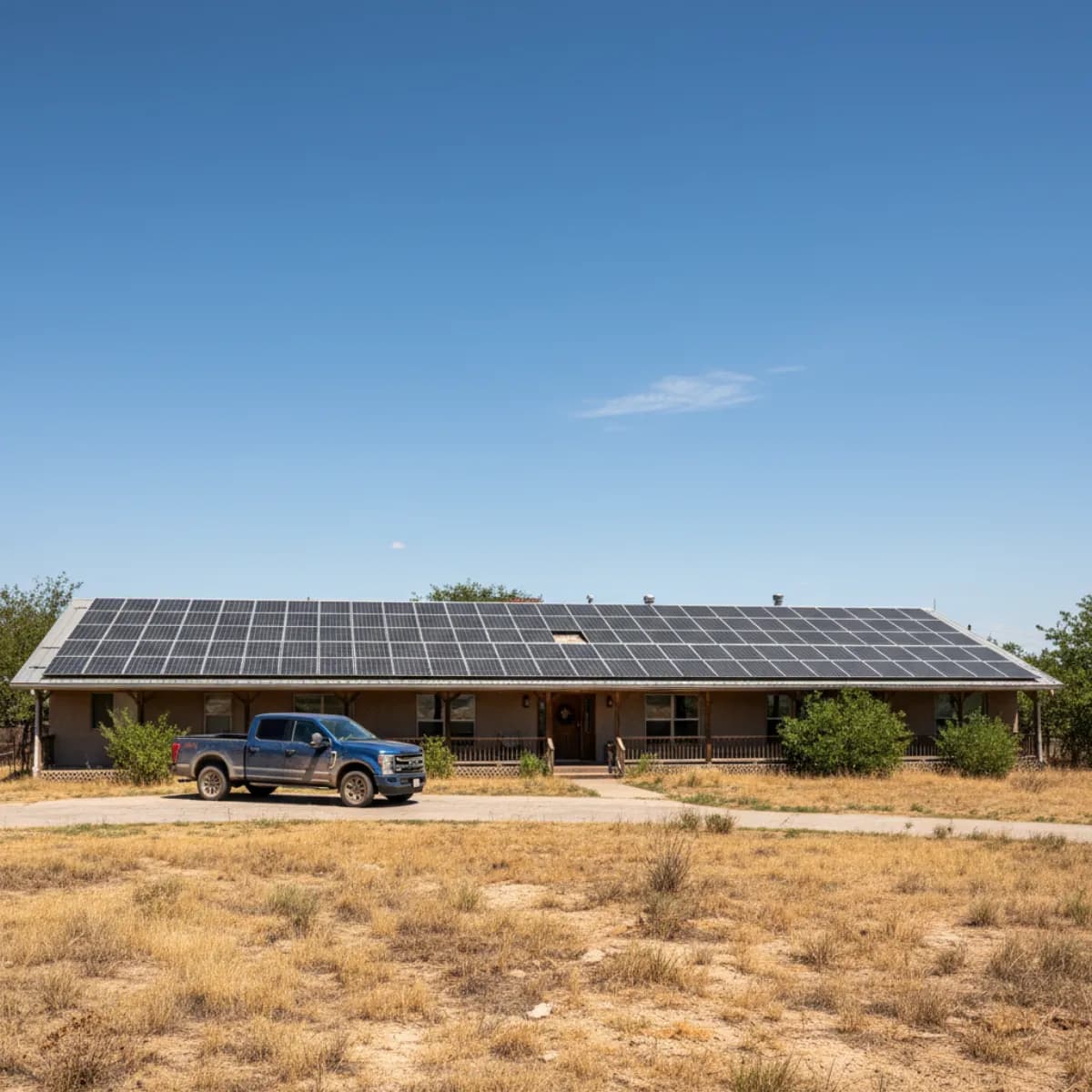
Texas offers the highest solar production and lowest installed costs in the Propel footprint. Deregulated ERCOT market, year-round installation, hail-rated Silfab panels, and grid reliability backup with optional battery.
Quick Answer
Propel solar is live in Texas across the ERCOT territory (Houston, DFW, Austin, San Antonio). Texas offers the highest production (1,500-1,700 kWh/kW/year) and lowest installed costs ($1.80-$2.20/W) in the Propel footprint. Typical 10-14kW system: $25K-$35K gross, ~$15K-$21K after 40% ITC (approximately 30% off cash, 40%+ in §48E energy communities), $125-$175/month at the 9.69% Standard-product APR. REP buyback rates vary (3-16.9 cents/kWh). Hail-rated Silfab panels (required domestic-content compliance). 100% property tax exempt, sales tax exempt. No state income tax (ITC is federal only). Battery add-on recommended for ERCOT grid reliability. Year-round installation.
Texas operates under a deregulated electricity market managed by ERCOT (Electric Reliability Council of Texas). Unlike Maine, where there is one utility rate, Texas homeowners choose their Retail Electricity Provider (REP) from dozens of competing providers. This creates both opportunities and complexity for Propel solar.
The key factor: your REP determines your solar buyback rate — the rate you receive for excess solar energy sent to the grid. These buyback rates range from as low as 3 cents/kWh to as high as 16.9 cents/kWh depending on your plan. The gap between your retail rate (what you pay to buy power) and your buyback rate (what you receive for exported solar) affects your net savings.
Self-consumption — using solar energy directly rather than exporting it — is always valued at your full retail rate (avoiding a grid purchase). This is why battery storage is particularly valuable in Texas: it increases self-consumption by storing daytime solar for evening use, avoiding low buyback rates.
| Provider / Plan | Buyback Rate | Plan Type | Notes |
|---|---|---|---|
| Green Mountain Energy | 9.01 cents/kWh | Solar buyback | Consistent rate |
| TXU Energy | 8.7 cents/kWh | Solar buyback | Fixed term plans |
| Reliant Energy | 3-7 cents/kWh | Various plans | Rate varies by plan |
| Chariot Energy | 16.9 cents/kWh | Solar buyback | Highest available |
| Austin Energy (VoS) | 9.91 cents/kWh | Value of Solar | Municipal utility |
| CPS Energy (San Antonio) | Varies | Net metering | Municipal utility |
Rates are approximate and subject to change. NuWatt helps you evaluate your current REP plan and may recommend switching to maximize solar savings. Always verify current rates with your REP.
Each Texas metro has unique utility territory, rate structure, and solar considerations. Here is what to expect in the four major markets.
Texas systems are typically larger than Maine due to higher cooling loads and lower per-watt costs. Here are representative configurations.
Best for: Average TX home (2,000 sq ft), moderate AC usage
Best for: Larger TX home (2,500+ sq ft), pool, higher AC
Best for: Large home, full electrification (EV + pool pump + HVAC)
All estimates assume 9.69% APR (the Standard product, effective May 25, 2026), 40% ITC (30% base + 10% required domestic-content adder), south-facing roof with minimal shading, and 25-year loan term. Texas per-watt costs ($1.80-$2.20/W) are lower than the national average due to competitive labor market, year-round installation, and scale.
Since Winter Storm Uri in February 2021, ERCOT grid reliability has been a top concern for Texas homeowners. The storm left millions without power for days in freezing temperatures, causing an estimated $195 billion in damage and at least 246 direct deaths. While ERCOT has implemented weatherization improvements, the underlying grid challenges remain: peak demand during extreme heat and cold, limited interconnection with neighboring grids, and an aging transmission infrastructure.
A Propel solar system with battery storage directly addresses this concern. During daylight hours, your solar panels reduce grid dependence. The battery stores excess solar for use during peak demand or outages. If the grid goes down, the battery provides backup power while the solar panels recharge it each day.
Hail Protection: Silfab Panels in Texas
Texas leads the nation in hail events. The DFW Metroplex, San Antonio, and Austin corridors are particularly vulnerable. Silfab 440W panels are rated to withstand 1-inch hailstones at 50+ mph, exceeding standard IEC 61215 testing requirements. While no solar panel is invulnerable to the most extreme hail events, the Silfab panels provide robust protection. Your homeowners insurance typically covers hail damage to solar panels, and the Silfab 25-year product warranty covers manufacturing defects.
Texas offers the highest solar production of any Propel state, with 1,500-1,700 kWh per installed kW per year. This means a Texas Propel system produces 25-40% more energy than the same system would in Maine. Here is what drives that advantage.
Texas averages 5.5-6.0 peak sun hours per day, compared to Maine's 4.5. More sun = more kWh from every panel installed.
No snow cover, shorter winter. Texas systems produce meaningful energy every month. December output is 3-4x higher than Maine.
Less seasonal variation than northern states. Summer peak may be lower than expected due to heat (panels lose efficiency in extreme heat), but annual total is highest.
| Month | Houston (kWh) | Portland, ME (kWh) | TX Advantage |
|---|---|---|---|
| January | 1,050 | 650 | +62% |
| April | 1,400 | 1,200 | +17% |
| July | 1,550 | 1,450 | +7% |
| October | 1,350 | 900 | +50% |
| Annual Total | 15,600 | 12,000 | +30% |
Estimates based on NREL PVWatts data for south-facing arrays at optimal tilt. Actual production varies by roof orientation, shading, and weather patterns.
Texas does not have a state income tax or state solar rebate, but the combination of federal ITC (captured by Propel) and Texas property/sales tax exemptions creates strong savings.
Federal ITC (30-50%) — Handled by Propel
AutomaticSection 48E ITC claimed by the third-party owner, passed to you through a lower financed amount. 30% base + 10% FEOC (Silfab) + 10% energy community (if eligible). No state income tax means you cannot use a state credit anyway.
100% Property Tax Exemption
Application RequiredTexas Tax Code Section 11.27 provides a 100% property tax exemption for solar energy devices. You must file an application with your county appraisal district. NuWatt can assist with the application process. Your home value increases but property tax does not.
Sales Tax Exemption
AutomaticTexas exempts solar panels and energy storage from state sales tax (6.25%) and local sales tax (up to 2%). For a $30,000 system in Houston (8.25% combined rate), this saves approximately $2,475.
Austin Energy Value of Solar (VoS)
Austin OnlyAustin Energy customers receive 9.91 cents/kWh for exported solar under the Value of Solar tariff. This is one of the most predictable and favorable buyback rates in Texas. Austin Energy is a municipal utility — not part of the deregulated ERCOT market.
REP Solar Buyback Plans
Varies by REPIn deregulated areas, many REPs offer solar buyback plans with rates from 3 to 16.9 cents/kWh. Choosing the right REP plan can significantly impact your Propel savings. NuWatt helps you evaluate and switch if needed.
Texas's year-round installation window and competitive solar market create a faster, more streamlined Propel experience compared to seasonal markets.
Initial Consultation (Week 1)
We review your REP plan and electricity usage, assess your roof via satellite imagery, and check Propel eligibility with a soft credit pull. We may recommend switching to a solar-friendly REP plan to maximize savings.
Custom Proposal (Week 1-2)
Detailed proposal with system size, Silfab 440W panel layout, estimated annual production using Texas NREL data, monthly payment by credit tier, REP buyback analysis, and 25-year savings projection.
Loan Processing (Week 2-3)
Concert Finance processes your application. Hard credit pull. Loan terms locked with Medallion Bank. You sign the loan agreement and Prepaid ESA.
Permitting (Week 3-5)
Texas permitting is generally faster than the Northeast. Houston, DFW, and Austin typically process solar permits in 1-3 weeks. NuWatt handles all permitting and HOA coordination if applicable.
Installation (Week 5-7)
Installation typically takes 1-2 days for a 10-14kW system. Year-round scheduling available. Crews may adjust for extreme heat days. Silfab panels arrive pre-staged for efficient installation.
Utility Interconnection (Week 7-10)
NuWatt files interconnection with your utility (CenterPoint, Oncor, Austin Energy, or CPS Energy). Texas interconnection is typically faster than Maine — 1-3 weeks in most territories. System goes live upon approval.
Total timeline: 7-10 weeks
Texas Propel projects typically complete 1-2 weeks faster than Maine due to faster permitting, year-round installation scheduling, and quicker utility interconnection. Starting the process by spring 2026 ensures your system captures maximum summer production and meets the July 4, 2026 FEOC construction deadline comfortably.
Propel is available in most of the ERCOT service territory, which covers approximately 90% of Texas electricity customers. This includes Houston (CenterPoint Energy), Dallas-Fort Worth (Oncor), San Antonio (CPS Energy, though CPS has some unique rules), and Austin (Austin Energy). Some Texas co-ops and municipal utilities outside ERCOT may not be supported. NuWatt will confirm your utility eligibility during the initial consultation.
Texas is a deregulated electricity market where Retail Electricity Providers (REPs) set their own solar buyback rates. These range from 3 cents/kWh to 16.9 cents/kWh depending on your REP and plan. Higher buyback rates mean more value from exported solar energy. NuWatt helps you evaluate your current REP plan and may recommend switching to a solar-friendly plan that maximizes your Propel savings. Self-consumption (using solar directly rather than exporting) is always valued at your full retail rate.
Most Texas homes install 10-14kW Propel systems. This typically requires 23-32 Silfab 440W panels and produces 15,000-23,800 kWh annually. Texas homes generally need larger systems than Maine due to higher cooling loads from air conditioning. System size depends on your electricity usage, roof area, and budget. Homes with pools, large square footage, or EVs may need systems at the larger end.
Yes. Silfab 440W panels are rated to withstand 1-inch hail at 50+ mph, which meets the requirements for most Texas regions. Texas experiences more hail events than any other state, particularly in the DFW Metroplex and North Texas. While no panel is indestructible in an extreme hail event, the Silfab panels provide solid protection. The 25-year product warranty covers manufacturing defects, and homeowners insurance typically covers hail damage.
Propel solar reduces your dependence on the ERCOT grid during daylight hours. Adding battery storage (optional) provides backup power during grid outages — critical given ERCOT reliability concerns following Winter Storm Uri. A solar+battery Propel system can keep essential loads running for 8-18+ hours depending on battery size. The battery charges from solar during the day and provides power during grid failures. For Texas homeowners, the battery option is especially valuable.
A typical 10-14kW Propel system in Texas has a gross cost of $25,000-$35,000 before the ITC pass-through. With the 40% ITC (30% base + 10% required domestic-content adder from Silfab panels), the effective financed amount drops to approximately $15,000-$21,000 — approximately 30% off cash in Texas, with 40%+ realized discount in §48E energy communities. Monthly payments range from $125-$175 at 9.69% APR (standard tier) over 25 years; rates effective May 25, 2026, after Concert Finance raised Propel APRs by 0.70%. Texas has lower per-watt installed costs than Maine ($1.80-$2.20/W vs $2.50-$3.00/W for small systems) due to less complex roofing, year-round installation, and larger system sizes.
Texas does not have a state income tax, so there is no state solar tax credit. However, Texas offers a 100% property tax exemption for solar energy devices (Texas Tax Code Section 11.27) and sales tax exemption for solar equipment. The federal ITC (captured by the third-party owner under Propel) is the primary financial incentive. Austin Energy customers may be eligible for the Value of Solar (VoS) tariff at 9.91 cents/kWh for exported power.
Yes. Texas weather allows year-round solar installation, which is a significant advantage over seasonal markets like Maine. There are no snow or freeze concerns that delay installation (except rare extreme cold events). Summer installations are common, though crews may adjust schedules during extreme heat days for safety. This year-round installation window means faster project timelines and more scheduling flexibility.
Texas is the highest-production, lowest-cost Propel market. Check your eligibility with a soft credit pull — no impact on your score.
Propel financing provided by Concert Finance. Loans originated by Medallion Bank, Member FDIC.
Propel Solar Main Page
Qualifier tool, rate calculator, and program overview.
Texas Propel Solar
NuWatt's Texas-specific Propel page.
Propel Cost Calculator
Estimate your payment by system size and credit tier.
Propel Eligibility Guide
Detailed qualification requirements.
Propel Solar Maine Review
How Propel works in the other live market.
Propel Battery Storage Guide
Complete guide to adding battery with Propel.
Elena helps homeowners plan whole-home electrification projects — solar, heat pumps, batteries, and EV charging. She focuses on financing strategies and long-term energy savings.