Loading NuWatt Energy...

We use your location to provide localized solar offers and incentives.
We serve MA, NH, CT, RI, ME, VT, NJ, PA, and TX
Loading NuWatt Energy...
NuWatt designs, installs, and manages solar, battery, heat pump, and EV charger systems across 9 states. One company, one warranty, one point of contact.
Get a Free Quote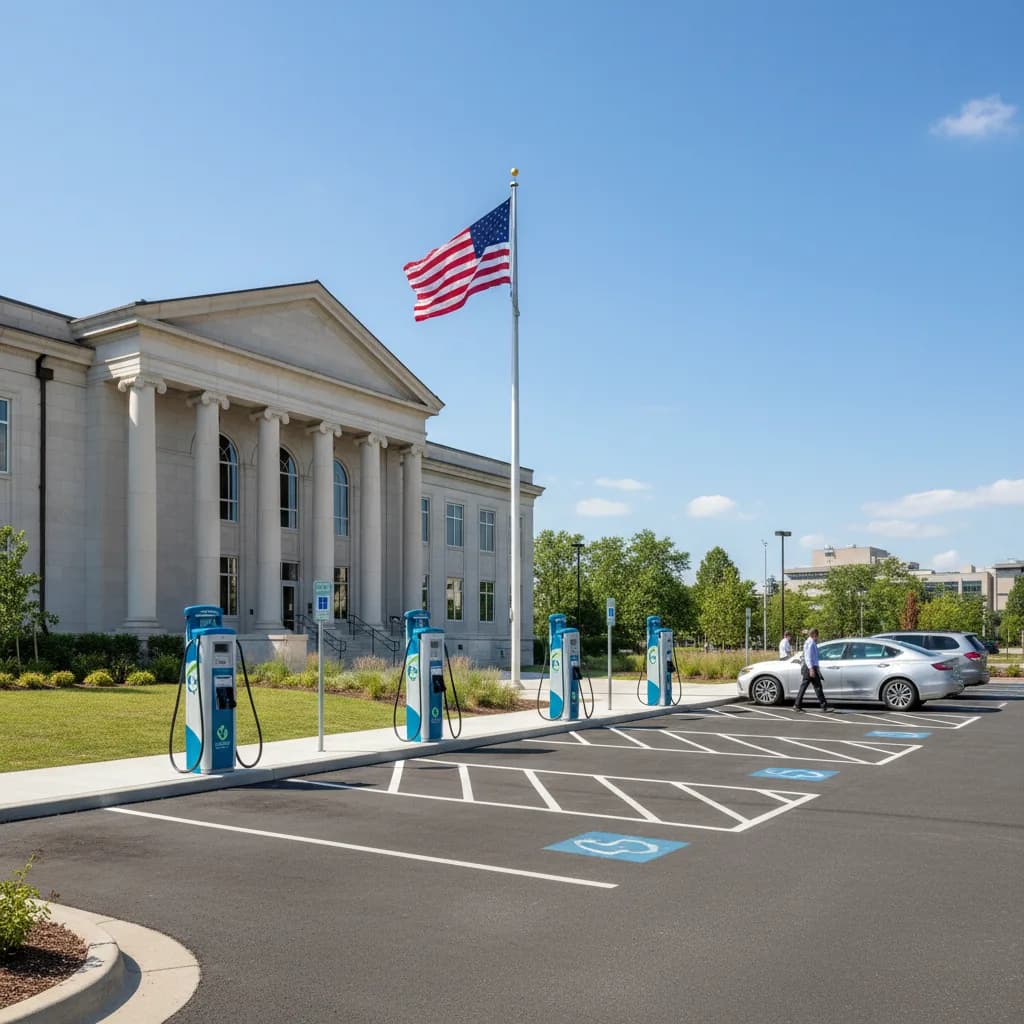
Direct-pay friendly, grant-stacked, RFP-ready. NuWatt runs the procurement, the compliance, and the incentive waterfall so your staff can focus on what taxpayers see.
$75K-$1.5M
Project Range
180-360 Days
Project Cycle
30% IRS Refund
Direct Pay
State + Utility
Grant Stack
Cities fund EV charging through three stacked layers. State: MA Green Communities, NJ Municipal Energy Resilience, PA DEP AFIG, CT EnergizeCT, and TX TCEQ pay direct grants. Utility: Eversource, National Grid, PSE&G, PECO, and others fund make-ready and port-level rebates. Federal: the Section 30C credit (6% base or 30% with prevailing wage and apprenticeship, capped at $100,000 per port) expired June 30, 2026 — municipalities can still claim it as a cash refund via elective pay under IRC 6417 for chargers placed in service by that date. Projects run $75K-$1.5M on a 180-360 day cycle due to procurement.
$75K–$1.5M
Project range
180–360 days
Project cycle
RFP / cooperative
Procurement
Direct pay + grants
Funding
Municipal EV charging funding is a coordination problem more than a dollars problem. The money is there. What trips up most cities is that the federal, state, and utility programs live on different calendars and filing systems.
A well-structured municipal project in 2026 combines a state-level municipal grant at 50–100% of the unfunded share with utility make-ready that covers transformer and trench work — and, for chargers placed in service by June 30, 2026, Section 30C at 30% of cost through elective pay. The city rarely needs to carry meaningful unfunded capital.
30% of cost with prevailing wage, $100K per port cap, claimed as cash via elective pay under IRC 6417. Expired June 30, 2026 — applies only to chargers placed in service by that date.
MA Green Communities, MassEVIP Govt 100%, NJ Municipal Energy Resilience, PA DEP AFIG, CT EnergizeCT, TX TCEQ All-Electric.
Eversource, National Grid, United Illuminating, PSE&G, JCP&L, PECO, and Oncor fund transformer, conduit, and trench on the utility side.
Eight sequential gates from first market sounding to energized ports. The slowest part is almost never the physical work — it is waiting for the next council meeting agenda slot.
Optional market sounding
Publish specification
Committee scores
Authorization vote
Make-ready design
Local permitting
Construction
Energize + hand-off
Total cycle: 180–360 days. NuWatt runs engineering, utility coordination, and incentive paperwork in parallel so procurement-cycle waits do not stack onto the critical path.
Yes — for chargers placed in service by June 30, 2026, when the Section 30C credit expired. Counties, cities, towns, boroughs, and other political subdivisions are explicitly listed as applicable entities under IRC section 6417. This is a material change from the pre-IRA framework, where municipal entities had no direct access to clean-energy tax credits.
The municipality completes an IRS pre-filing registration, documents the placed-in-service date, files the applicable tax return, attaches Form 8911 with the Section 30C credit calculation, and elects direct pay. The IRS issues the refund as a cash payment, typically within 6–12 weeks after the return is processed.
For most small and mid-sized municipalities outside major metro cores, the non-urban tract rule catches most municipal parcels including town halls, DPW garages, community centers, libraries, and park-and-ride lots. NuWatt runs the GEOID lookup for every candidate site as part of claim substantiation.
Required filings for municipal direct pay: IRS pre-filing registration (must be complete before return is filed), the applicable federal tax return, Form 8911 with substantiation, and the section 6417 elective-payment election.
Four units with deep municipal track records across our 9-state footprint. All available on standard cooperative contracts.
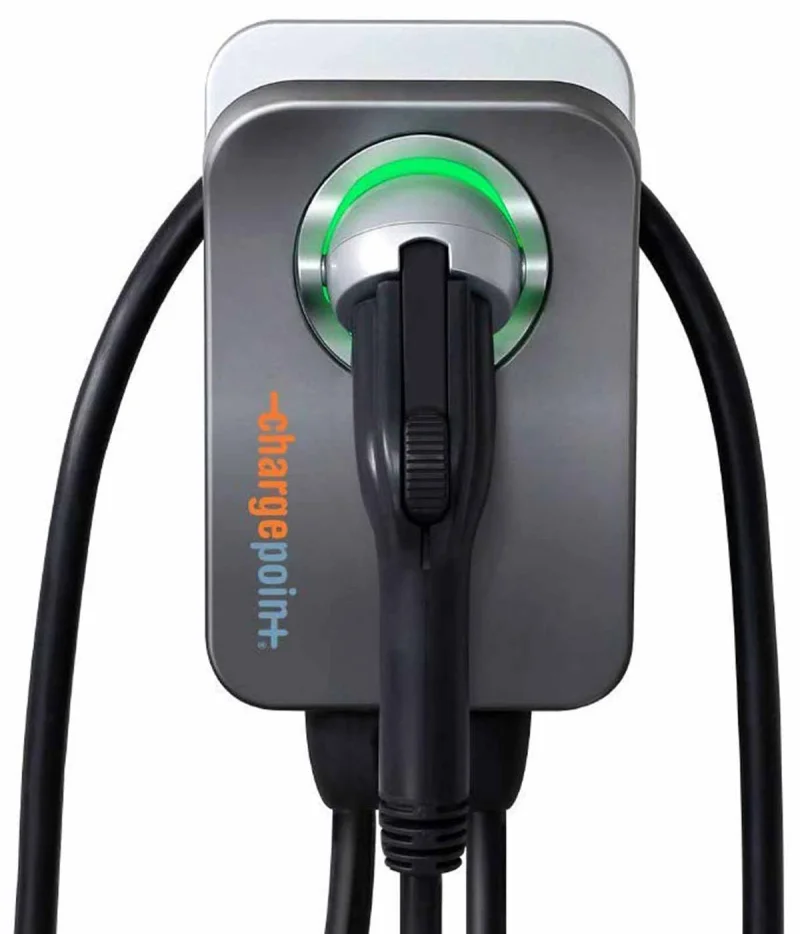
50A networked L2 with the deepest municipal deployment track record in our 9-state footprint
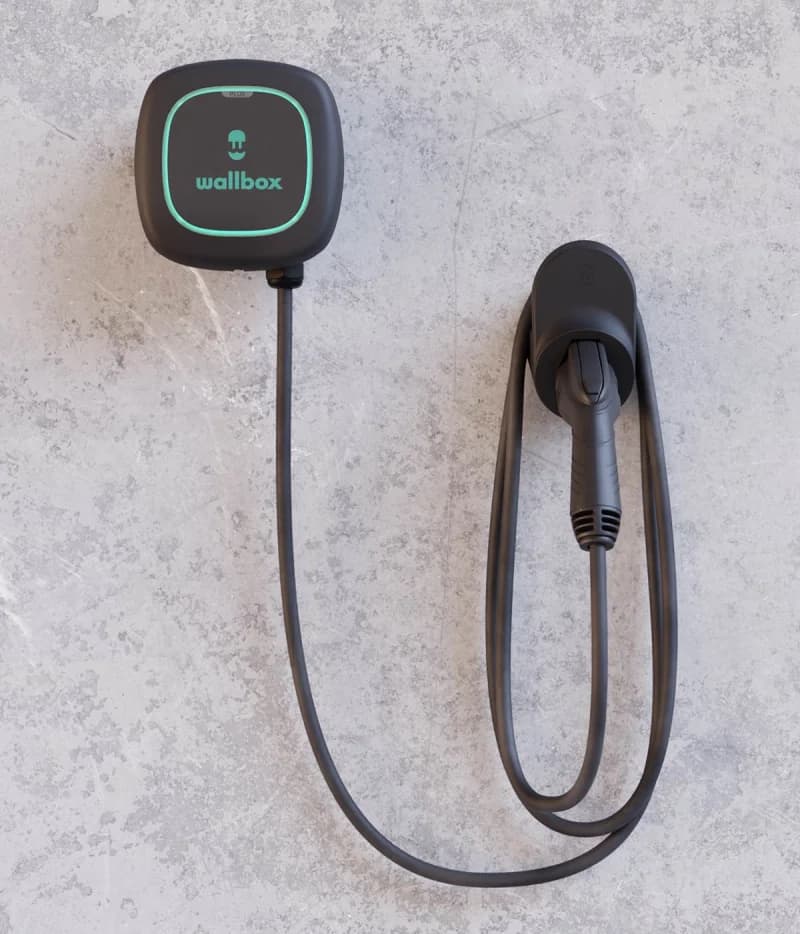
40–48A L2 with dynamic load management — fits small-panel civic buildings without service upgrades
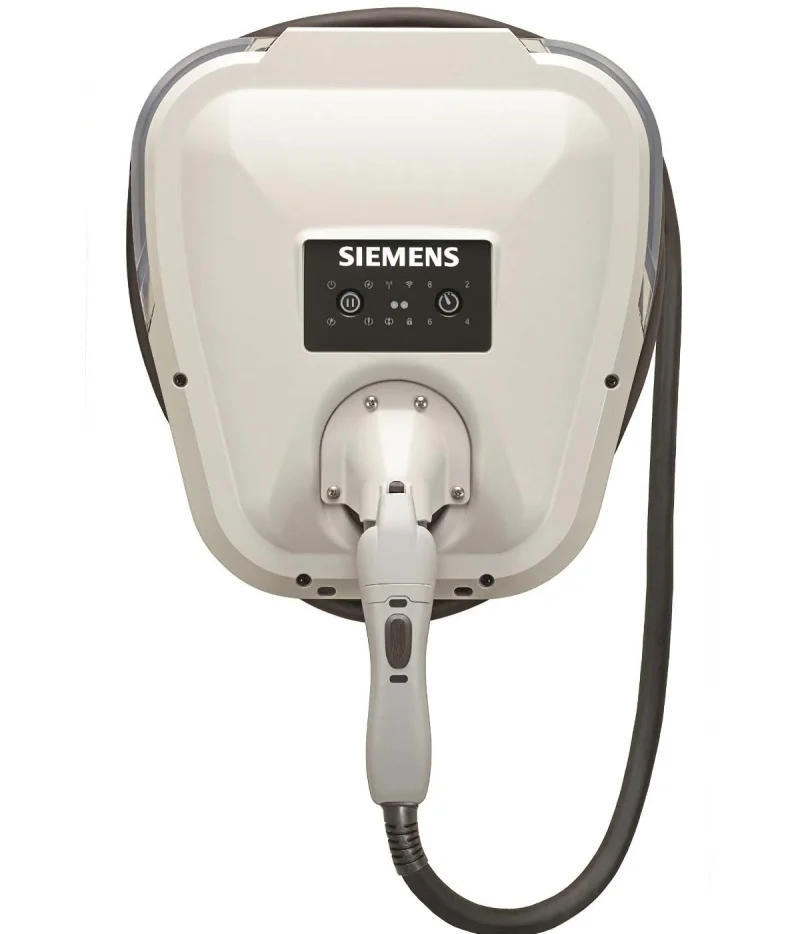
30–48A networked L2 rated for continuous public-works duty cycles and exterior exposure
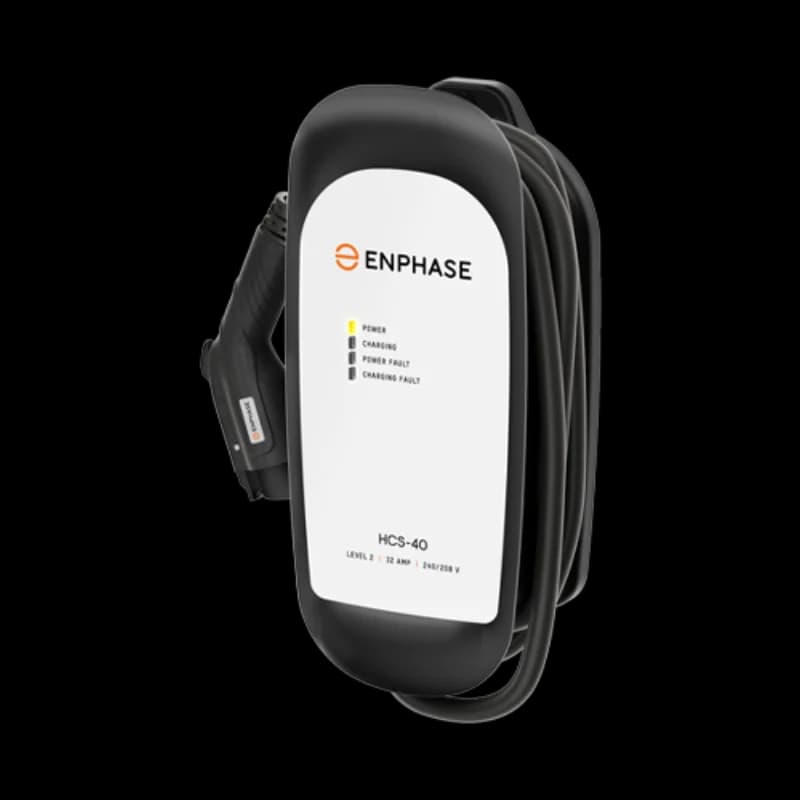
40A hardwired non-networked L2 — ideal for municipal fleet yards that do not want a subscription
Cooperatives let cities bypass full RFP publication by buying off pre-competed contracts. Cuts 60–90 days off the procurement cycle.
Operational Services Division
Massachusetts statewide cooperative contracts for public-access EV chargers. Pre-negotiated pricing, bypasses full RFP requirement for qualifying state and municipal buyers.
Cooperative Purchasing
Pennsylvania program that lets municipalities, schools, and authorities buy off state-negotiated contracts. Skips publication requirements and compresses award to weeks.
Houston-Galveston Area Council
Texas multi-jurisdiction cooperative. Cities and counties across TX use H-GAC Buy for EV charger procurement with pre-competed contract vehicles.
National cooperative (formerly NJPA)
National contract available to public agencies in all 50 states. Popular fallback when a state-specific vehicle does not list the hardware the city wants.
The 30% 30C rate required Prevailing Wage & Apprenticeship compliance — relevant when claiming chargers placed in service by the June 30, 2026 expiry. In states with “Automatic” status, your existing public-construction requirements already satisfy the federal rule — 30% is the default. “Elective” states required affirmative Davis-Bacon election.
MA prevailing wage law covers public construction. 30% rate is essentially default.
CT Little Davis-Bacon applies to public construction. 30% rate default on municipal work.
NJ prevailing wage mandatory on public works. 30% rate is the base case.
PA Prevailing Wage Act triggers on public construction. 30% rate achievable.
ME prevailing wage on public works satisfies 30C PWA requirements.
RI Davis-Bacon equivalent applies to municipal construction.
NH has no state PWA mandate — municipalities must affirmatively elect Davis-Bacon.
VT has limited PWA coverage. Election needed for 30% 30C rate.
No state PWA law. TX municipal projects must opt into Davis-Bacon wages to claim 30%.
Federal compliance
Federally funded municipal EV charging projects must comply with Buy America provisions. For EV chargers specifically, FHWA issued phased guidance setting requirements on chargers installed with NEVI or CFI funding.
Final assembly in the US + published manufacturer compliance letter + iron and steel produced domestically.
Imported chargers without US final assembly or manufacturers without current compliance letter. Waivers possible but time-consuming.
Note: Section 30C credits claimed via elective pay do not carry Buy America requirements independently. Buy America only attaches to the federal grant-funded portion of the project.
“Our town has 7,200 residents. I do not have the bandwidth to track IRS elective-pay registration, a state grant application, and a utility make-ready queue at the same time. NuWatt brought all three to the same council meeting with one clean waterfall — we voted yes that night.”
— Town administrator perspective, small New England municipality (illustrative)
Priority state stacks for cities and towns across the NuWatt footprint.
Designated Green Community municipalities access grants up to 100% of public charger costs. MassEVIP Public Access pays 100% for government-owned public-access ports at $50K per address. Eversource and National Grid make-ready adds $3,900 per L2 port plus $80K per DCFC port.
NJ BPU Municipal Energy Resilience funds resilience-focused EV and storage for public facilities. PSE&G Commercial EV and JCP&L EV Driven include government line items with $11,100 make-ready per port plus $6,700 customer rebate. Deadline July 15, 2026.
$5M cycle, deadlines April 1 and October 7, 2026, $500K maximum across applications, $300K per application. Minimum 2 ports at 7.2 kW concurrent. PA COSTARS cooperative contracts accelerate procurement.
Eversource and United Illuminating cover 50% of EV supply equipment plus 100% of make-ready for municipal public-access ports. Managed charging credits pay $5–$40 per plug per month during June–September peak.
TCEQ All-Electric $109.2M first-come first-served through August 31, 2026 tied to vehicle/equipment replacement. Oncor Drive Forward pays L2 hardware and install rebates. Texas municipalities can stack H-GAC Buy for procurement acceleration.
Smaller New England states fund municipal EV through Drive Electric programs, Efficiency Maine, and state energy offices. Programs are more application-by-application than in MA or CT. NuWatt tracks rolling windows.
Most municipal EV vendors are either hardware manufacturers trying to sell chargers, or general electrical contractors that treat EV as building electrical work. Neither model serves cities well.
NuWatt is an integrator. We select hardware vendor-neutrally based on what fits the city's master plan and compliance requirements. We handle utility coordination. We write the incentive waterfall. We carry the compliance paperwork through the entire project lifecycle.
Every project we deliver includes a written close-out package with grant and credit substantiation (including Section 30C for chargers placed in service by the expiry), state grant final reports, Buy America certificates, certified payrolls, commissioning records, and O&M handover. That is what a municipal auditor wants to see — and what keeps the next budget cycle on track.
Cities fund EV charging through a stack of state and utility programs, plus a federal claiming layer for older installs. State: MA Green Communities, NJ Municipal Energy Resilience, PA DEP Alternative Fuels, and similar state programs pay direct grants to cities for public-access EV charging. Utility: Eversource, National Grid, PSE&G, PECO, and others fund make-ready and port-level rebates that stack on top of state dollars. Federal: the Section 30C credit — 6% base or 30% with prevailing wage and apprenticeship, capped at $100,000 per port — expired June 30, 2026; tax-exempt municipalities can still claim it as a refundable cash payment via the elective-pay election under IRC section 6417 for chargers placed in service by that date.
Yes — for chargers placed in service by June 30, 2026, when the Section 30C credit expired. Counties, cities, towns, and other political subdivisions of a state qualify as applicable entities under Internal Revenue Code section 6417 and can elect direct pay for the Section 30C Alternative Fuel Vehicle Refueling Property Credit. The municipality completes an IRS pre-filing registration, files the applicable tax return (typically Form 990-T or Form 1120 where required for the reporting entity), attaches Form 8911, and elects payment. The IRS issues the refund as a cash payment. The credit is 6% of cost at the base rate or 30% with prevailing wage and apprenticeship compliance, capped at $100,000 per charging port, provided the address sat inside an IRS-designated low-income or non-urban census tract at the placed-in-service date.
RFP support, grant and make-ready capture, Buy America compliance. NuWatt handles the paperwork so your staff can focus on serving residents.
IRS Form 8911
Alternative Fuel Vehicle Refueling Property Credit filing reference.
IRC Section 6417
Elective payment of applicable credits for governmental and tax-exempt entities.
FHWA — Buy America EV Guidance
Federal Highway Administration phased Buy America requirements for EV chargers.
FHWA — NEVI Formula Program
National Electric Vehicle Infrastructure program guidance.
MA Green Communities Division
Designation, competitive, and companion EV grants for MA municipalities.
NJ BPU — Municipal Energy Resilience
Resilience-focused EV and storage funding for NJ public facilities.
PA DEP — AFIG
Alternative Fuels Incentive Grant (govt priority category).
Texas TCEQ — All-Electric Grant
$109.2M first-come first-served through August 31, 2026.
Last verified by NuWatt Incentive Team on 2026-04-14. This content is informational and not legal or tax advice. Municipalities should consult their solicitor and finance officer, confirm census tract eligibility, verify elective-pay registration status, and review current state grant program terms before relying on these programs for a specific project.