Loading NuWatt Energy...

We use your location to provide localized solar offers and incentives.
We serve MA, NH, CT, RI, ME, VT, NJ, PA, and TX
Loading NuWatt Energy...
Use the free estimator for a preliminary layout, or share your preferred response method with the commercial team. Final feasibility still requires site, utility, and engineering review.
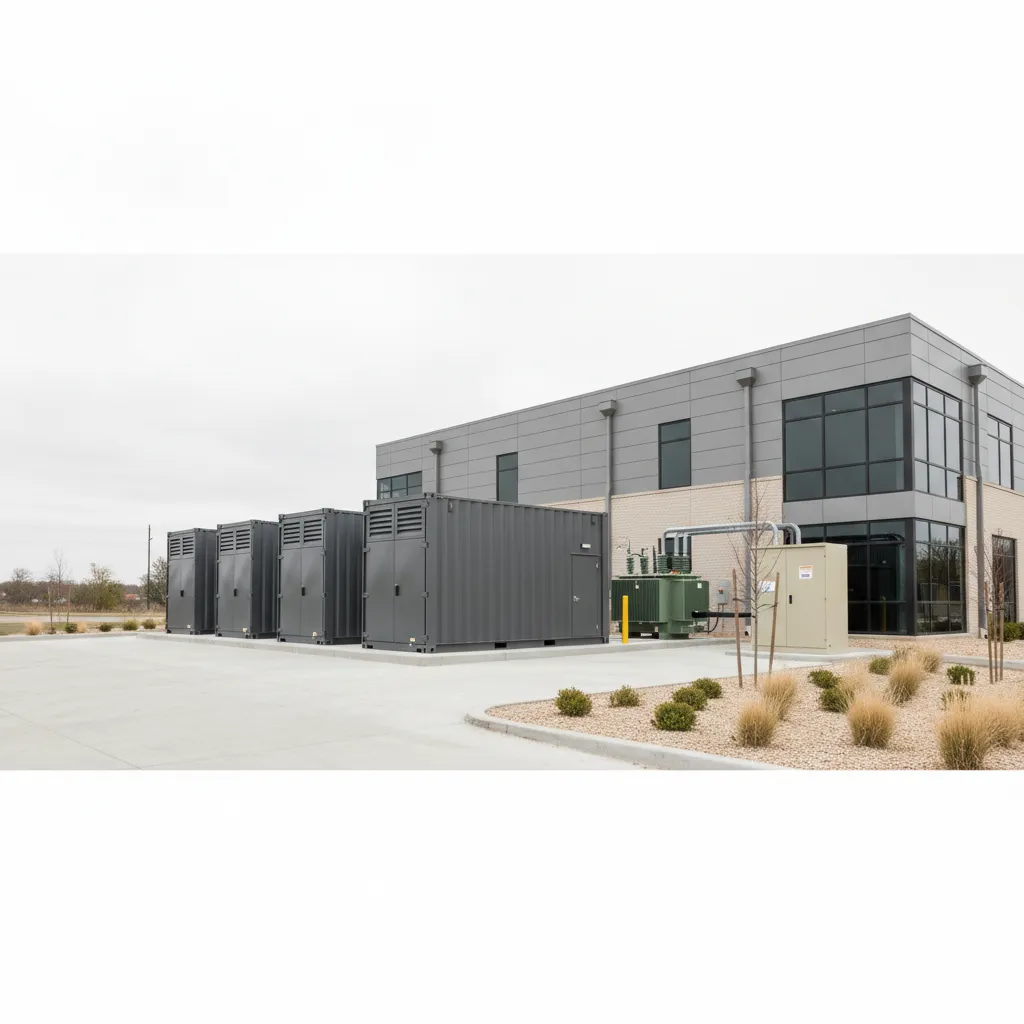
Commercial battery storage still earns the 30% Section 48E credit, with no solar-pairing requirement and without the placed-in-service deadline that applies to wind and solar facilities.
No. Energy storage technology is not subject to the December 31, 2027 placed-in-service deadline or the July 4, 2026 begin-construction trigger — both apply to applicable wind and solar facilities only, and Section 48E(e)(4)(C) expressly excepts energy storage technology (IRS Notice 2025-42, section 2.02). A standalone commercial battery remains eligible for the statutory 6% Section 48E credit, increased to 30% when the applicable wage and apprenticeship requirements are met, under the standard clean-electricity phase-out that starts at the later of 2032 or when U.S. greenhouse gas emissions from electricity are 25% of 2022 emissions or lower.
No — and this is the single most consequential thing to get right about storage economics in 2026. The deadline everyone is reacting to was written for wind and solar facilities. Energy storage technology is carved out of it by statute, and the carve-out appears in the same IRS notice that people cite for the deadline.
Energy storage technology is not subject to the December 31, 2027 placed-in-service deadline or the July 4, 2026 begin-construction trigger — both apply to applicable wind and solar facilities only, and Section 48E(e)(4)(C) expressly excepts energy storage technology (IRS Notice 2025-42, section 2.02). A standalone commercial battery remains eligible for the statutory 6% Section 48E credit, increased to 30% when the applicable wage and apprenticeship requirements are met, under the standard clean-electricity phase-out that starts at the later of 2032 or when U.S. greenhouse gas emissions from electricity are 25% of 2022 emissions or lower.
The two credits share a section number. Solar and storage both claim Section 48E, so almost every summary written for a solar audience describes the solar timing and stops. A reader with a battery project sees the section number they were told applied to them, reads a hard deadline, and concludes their window is closing. It is not. Set the two side by side and the difference is unambiguous.
| Solar under Section 48E | Energy storage under Section 48E | |
|---|---|---|
| Begin-construction trigger | July 4, 2026 — the date that split the two solar pathways | Does not apply. The trigger is written for applicable wind and solar facilities. |
| Placed-in-service termination | December 31, 2027 for projects that began construction after the trigger date | Does not apply. Section 48E(e)(4)(C) expressly excepts energy storage technology from the termination. |
| When the credit does step down | Governed by the termination above | The standard clean-electricity phase-out — the later of 2032 or when U.S. greenhouse gas emissions from electricity are 25% of 2022 emissions or lower |
| Pairing requirement | Not applicable — the facility is the solar | None. Storage is its own qualifying category under Section 48E(c)(2). |
One caveat travels with this: the OBBBA prohibited-foreign-entity and material-assistance rules do apply to storage for construction beginning after December 31, 2025 (IRS Notice 2026-15). Component sourcing has to be documented at procurement, not at filing.
No. This one has a long tail of stale guidance behind it, because before the Inflation Reduction Act a battery genuinely did have to be charged from an on-site renewable source to claim an investment credit, and there was a charging-percentage test to satisfy. That regime ended. Standalone storage has been independently eligible ever since, and Section 48E carried the treatment forward.
Energy storage technology is its own qualifying category under Section 48E(c)(2). There is no requirement that a commercial battery be paired with solar or charged from a renewable source to claim the credit.
Practically, that widens what qualifies considerably. A battery installed purely for demand-charge management at a facility with no solar at all is eligible. So is one installed for resilience at a site that will never export a kilowatt-hour. If a source tells you the battery must be solar-paired or must prove renewable charging, it is describing pre-2023 law.
Energy storage is five-year MACRS property, the same class as commercial solar, so it takes the same first-year treatment: 100% bonus depreciation under IRC Section 168(k), permanent under the OBBBA and confirmed by IRS Notice 2026-11. The credit and the deduction stack, with one adjustment: the depreciable basis is reduced by half the credit claimed.
Installed battery cost varies far too widely by chemistry, duration, site work and interconnection scope for a single price to be honest, so the table below is normalised to $100,000 of installed cost. Scale it to your own project cost and the ratios hold.
| Installed battery cost (the unit this example is scaled to) | $100,000 |
| Section 48E credit at 30% with prevailing wage and apprenticeship | $30,000 |
| Depreciable basis (cost minus 50% of the credit) | $85,000 |
| Year-one deduction at 100% bonus depreciation | $85,000 |
| Year-one tax savings at a 21% rate | $17,850 |
| Combined first-year benefit (credit plus depreciation savings) | $47,850 |
| Net cost after year one | $52,150 |
Discounted across the full six-year schedule at an 8% discount rate, the depreciation is worth about $17,850 per $100,000 of installed cost at a 21% tax rate — effectively all of it in year one, because at 100% bonus there is nothing left to spread. A business at a higher combined federal and state rate keeps proportionally more. This is illustrative arithmetic from the statutory rates, not tax advice.
Not directly, and this is where most of the remaining confusion sits. Section 48E is a business credit. The homeowner credit was Section 25D, and it expired at the end of 2025. Which credit is in play turns entirely on who owns the equipment.
Section 25D expired December 31, 2025. A cash or loan purchase of a home battery in 2026 earns no federal credit at all. That is a real change and it is worth saying plainly, because a great deal of published material still shows 30% for homeowners.
A third-party-owned system is different. Under a lease or a power purchase agreement, the owner is a business, and the business credit is available to it — which is why third-party structures survived the residential credit's expiration when direct purchase did not.
Full treatment: the 30% credit with prevailing wage and apprenticeship compliance, the domestic content and energy community adders where they apply, and 100% first-year bonus depreciation on the reduced basis. Standalone or solar-paired makes no difference to eligibility.
A tax-exempt owner — a school, a municipality, a nonprofit — has no liability to offset, so it uses elective pay to take the credit as cash instead. Depreciation is worth nothing to it either way.
If a project includes both, the solar side still carries its own clock even though the battery does not. The Section 48E begin-construction window closed July 4, 2026: projects that began construction on or before that date may use the longer continuity pathway. Commercial solar projects starting now generally must be placed in service by December 31, 2027. The statutory credit is 6%; it can increase to 30% when the applicable prevailing-wage and registered-apprenticeship requirements are met. Nothing about the storage carve-out relaxes that, so on a combined project the solar schedule is the binding one and should drive the programme.
The federal credit is the largest single line, but in the Northeast it is rarely the whole case. State demand-response programmes pay a commercial battery every year it performs, and those payments are what turn a resilience purchase into an investment. The rates differ sharply by state and are published on each administering utility's own pages.
The verified commercial demand-response rates a battery earns on top of the credit.
Ten years of performance payments under the April 2026 restructure.
Sizing, demand charges and the full revenue stack behind a C&I battery.
Why a lower first-year figure still circulates, and what the rate actually is.
The five-year schedule, basis reduction and Form 4562 mechanics.
The credit itself: base rate, prevailing wage, and the adders.
How a school, town or nonprofit takes the storage credit as cash.
Energy storage technology is its own qualifying category under Section 48E(c)(2) — no solar pairing required
Storage is excepted from the December 31, 2027 placed-in-service termination that applies to wind and solar facilities
The July 4, 2026 begin-construction trigger is likewise written for wind and solar, not for storage
Storage runs under the standard clean-electricity phase-out: the later of 2032 or when U.S. greenhouse gas emissions from electricity are 25% of 2022 emissions or lower
Base 6%, rising to 30% where prevailing wage and apprenticeship requirements are met
Domestic content and energy community adders each add 10 percentage points
Five-year MACRS property, so 100% first-year bonus depreciation applies to the reduced basis
Section 25D — the homeowner credit — expired December 31, 2025; this is a business credit
Energy storage technology placed in service after December 31, 2024
Standalone batteries qualify — installation with solar is optional, not required
No renewable-charging percentage test; that regime ended with the Inflation Reduction Act
Taxable businesses claim it against liability; tax-exempt owners use elective pay for cash
Third-party owners under a lease or PPA claim it on equipment sited at a customer property
Meet prevailing wage and apprenticeship requirements to move from the 6% base to 30%
Document component sourcing at procurement — the prohibited-foreign-entity and material-assistance rules reach storage for construction beginning after December 31, 2025 (IRS Notice 2026-15)
Claim on IRS Form 3468; depreciation is claimed separately on Form 4562
Reduce the depreciable basis by 50% of the credit claimed
Standalone energy storage becomes independently credit-eligible; the renewable-charging test is retired
Section 48E replaces Section 48 for property placed in service after December 31, 2024
Section 25D expires — homeowners buying a battery outright earn no federal credit from 2026
Prohibited-foreign-entity and material-assistance rules begin to reach storage for construction starting after this date (Notice 2026-15)
Begin-construction trigger for applicable wind and solar facilities — storage is excepted (Notice 2025-42, section 2.02)
Placed-in-service termination for applicable wind and solar facilities — storage is excepted
Storage phase-out begins at the later of 2032 or when U.S. greenhouse gas emissions from electricity are 25% of 2022 emissions or lower
30% (6% without prevailing wage)
The Section 48E Investment Tax Credit provides a 30% credit on commercial solar installations that meet prevailing wage and apprenticeship requirements. This is the cornerstone federal incentive for commercial solar.
5-year MACRS + 100% first-year bonus depreciation
Modified Accelerated Cost Recovery System (MACRS) lets businesses depreciate commercial solar over 5 years. Under the OBBBA, 100% first-year bonus depreciation was permanently restored for equipment placed in service after January 19, 2025.
100% first-year — permanent
100% first-year bonus depreciation is permanent for commercial solar placed in service after January 19, 2025. The 20% figure that still appears in 2026 articles and AI answers comes from a phasedown the OBBBA repealed.
No. Energy storage technology is not subject to the December 31, 2027 placed-in-service deadline or the July 4, 2026 begin-construction trigger — both apply to applicable wind and solar facilities only, and Section 48E(e)(4)(C) expressly excepts energy storage technology (IRS Notice 2025-42, section 2.02). A standalone commercial battery remains eligible for the statutory 6% Section 48E credit, increased to 30% when the applicable wage and apprenticeship requirements are met, under the standard clean-electricity phase-out that starts at the later of 2032 or when U.S. greenhouse gas emissions from electricity are 25% of 2022 emissions or lower.
Site-specific pricing with exact incentive calculations. No obligation.