Loading NuWatt Energy...

We use your location to provide localized solar offers and incentives.
We serve MA, NH, CT, RI, ME, VT, NJ, PA, and TX
Loading NuWatt Energy...
NuWatt designs, installs, and manages solar, battery, heat pump, and EV charger systems across 9 states. One company, one warranty, one point of contact.
Get a Free QuoteWho pays for the transformer, feeder, or substation upgrade when your 500 kW to 5 MW Connecticut commercial solar project hits a constrained distribution circuit in Eversource CT or United Illuminating territory? Complete guide to Pre-Application Reports, cost-causation allocation, cluster-study triggers, and mitigation strategies under the 2024-2026 PURA reforms — with the §48E December 31, 2027 placed-in-service deadline for new starts in view.
PAR Cost
$300-$1.5K
Before full application
Transformer Upgrade
$25K-$100K
Typical range
Feeder Reconductor
$50K-$500K+
Often Cluster Study
Substation Upgrade
$1M-$5M+
Always shared
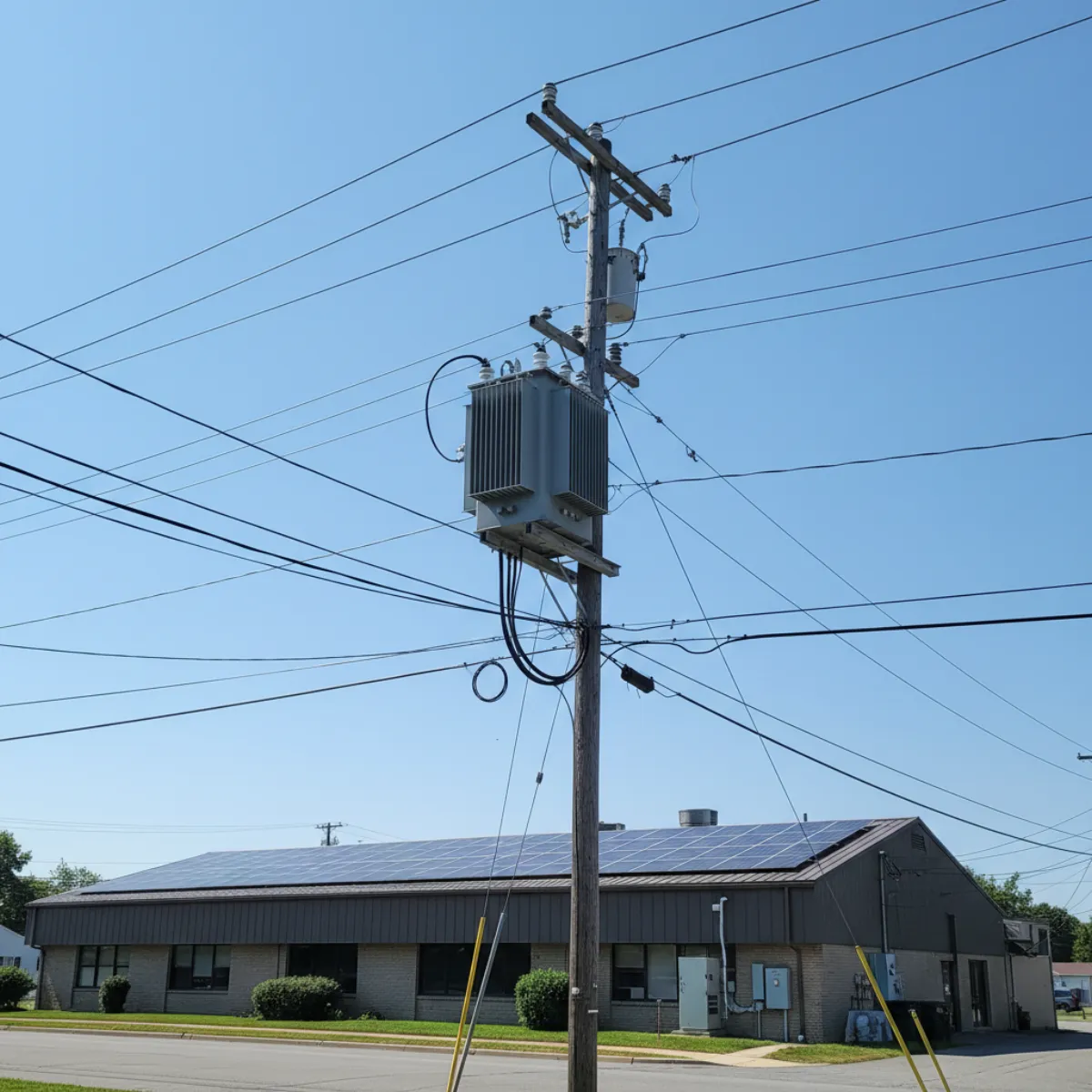
Under the PURA-approved Connecticut interconnection tariff, cost-causation governs: if your project alone causes the need for an upgrade, you pay for it (you break it, you buy it). Typical single-project upgrade costs include transformer replacement ($25K-$100K) and service upgrades ($15K-$75K). When multiple queued projects share responsibility for the same constraint — most common on feeder reconductors ($50K-$500K+) and substation bank upgrades ($1M-$5M+) — the utility triggers a Cluster Study and allocates costs pro-rata by nameplate AC capacity. Both Eversource CT and United Illuminating operate under the same PURA framework (Dockets 24-01-05 and 24-07-xx) with procedural differences driven by territory. Always order a Pre-Application Report ($300-$1,500) before full engineering — it reveals approximate upgrade costs and queue position in 10-20 business days, critical for protecting the §48E December 31, 2027 placed-in-service deadline for new starts (the July 4, 2026 begin-construction safe harbor has closed).
For commercial solar projects between roughly 500 kW and 5 MW in Connecticut, the single most common cause of a dead deal is not permitting, not financing, and not — in 2026 — the federal tax landscape on its own. It is an unexpected interconnection upgrade cost allocation combined with a timeline that pushes the project past the §48E beginning-of-construction deadline. A site owner signs a lease, the developer invests in engineering, and then the utility interconnection study returns a $350,000 feeder reconductor allocation and a 12-month Cluster Study schedule that destroys both the IRR and the federal ITC eligibility window.
The rules governing who pays are not secret. The PURA-approved tariffs that Eversource CT and United Illuminating operate under set out clear cost-causation principles. But the specific application of those rules — which feeder has constrained capacity, whether your project will trigger a Cluster Study, what the pro-rata allocation will look like — is site-specific and cannot be known with certainty until you ask the utility through a Pre-Application Report (PAR) or a full interconnection study.
This guide exists because CT commercial developers have had almost no public coverage of the interconnection queue dynamics, cost-causation versus cost-sharing mechanics, or cluster-study triggers that now shape every 500 kW+ project in the state. Adjacent NuWatt resources cover the CT commercial solar landscape, the end-to-end project timeline, and the commercial net metering rules. Here we focus narrowly on: who pays, how much, when it gets shared, and how to mitigate — all under the constraint of the §48E December 31, 2027 placed-in-service deadline for new starts (the July 4, 2026 begin-construction safe harbor has closed).
The audience for this page is CT commercial developers in the 500 kW to 5 MW scale, site-host decision-makers evaluating a proposed project on their building or land, and consultants performing interconnection feasibility diligence in Eversource CT or UI territory. If you are a residential-scale customer, the dynamics here mostly do not apply — residential systems almost always qualify for Simplified review with no meaningful upgrade allocation risk.
Every Connecticut commercial solar interconnection application lands in one of four review tiers. The tier determines the timeline, the study cost, and the likelihood of a material upgrade allocation. Here is the decision tree every CT developer should walk through before committing engineering dollars — especially under the §48E December 31, 2027 placed-in-service deadline for new starts (the July 4, 2026 begin-construction safe harbor has closed).
Under 10 kW (single-phase) / under 25 kW (three-phase)
Fastest lane. Small systems that pass 10 technical screens covering aggregate distributed generation (DG) on the feeder, service transformer loading, equivalent impedance, and voltage regulation. Primarily a residential and very small commercial pathway — not realistic for the 500 kW+ commercial projects that are the focus of this guide, but included for completeness so developers understand where the tier ladder starts.
Application Cost
No app fee or under $100
Study Required
None
Cost-Causation Exposure
Very rare — hosting capacity almost always available
25 kW to 500 kW (typical in Eversource CT and UI territory)
The typical path for mid-size commercial rooftop, carport, and small ground-mount projects. Each utility applies additional screens beyond Simplified review — aggregate DG penetration limits on the feeder, voltage flicker, protection coordination, and short-circuit contribution. If any supplemental screen fails, the project drops out of Expedited and into Supplemental or Standard review with a full impact study. Cost-causation allocation almost always applies at this tier when upgrades are required.
Application Cost
$500-$3,000 application + supplemental screening fees
Study Required
Supplemental screens only (no full impact study)
Cost-Causation Exposure
Moderate — localized transformer or service upgrades possible
500 kW to ~2 MW (single-project scope)
Full engineering review — load-flow analysis, short-circuit analysis, protection coordination study, voltage regulation study, and a facilities study that quantifies exactly what distribution system upgrades are required and prices them. Cost-causation rules assign those costs to the interconnecting customer under the CT interconnection tariff approved by PURA. This tier is where the majority of project-killing cost surprises originate for 500 kW to 2 MW CT commercial projects.
Application Cost
$5,000-$50,000+ for impact and detailed studies
Study Required
Impact Study + Facilities Study
Cost-Causation Exposure
High — feeder, regulator, and transformer upgrades common
Multiple queued projects sharing impact on the same feeder or substation
Triggered when the utility determines that multiple queued projects cause overlapping impacts on the same distribution assets. Instead of evaluating each project in isolation, the utility studies them as a cohort and allocates upgrade costs pro-rata by nameplate AC capacity. Timeline is longer because all projects in the cluster must finalize interconnection service agreements (ISAs) before any proceed, but per-project cost is typically far lower than Standard review alone. PURA Docket 24-01-05 clarified the cluster-formation triggers for 2026.
Application Cost
Pro-rata share of joint study costs
Study Required
Cluster / Group Impact Study
Cost-Causation Exposure
Shared — pro-rata by nameplate capacity
A CT project that lands in Standard review will often see 5-10x the upgrade allocation risk of the same project in Expedited review. Dropping a tier is one of the highest-leverage design decisions — and in 2026 it is often the difference between catching the §48E deadline and missing it. Two proven methods: shave nameplate below the threshold (typical loss: 1-4% of revenue), or pair with storage and contractually cap export to stay below the threshold. For the storage pathway and the April 2026 incentive changes, see our CT ESS Program changes guide.
The Pre-Application Report is a formal utility document that returns approximate upgrade cost ranges, feeder hosting capacity, and queue position for your proposed project — before you submit a full interconnection application. In Connecticut it is the single highest-value pre-development spend on any commercial solar site above 100 kW.
A PAR costs $300-$1,500 and takes 10-20 business days in CT. Compare that to what it protects against.
Without PAR — worst case
$40K-$80K
Engineering sunk cost on a site that returns an unaffordable Standard-review upgrade allocation
Without PAR — timeline risk
4-12 months
Late discovery of upgrade cost pushes the project past the §48E December 31, 2027 placed-in-service deadline for new starts and NRES capacity block closures
PAR investment
$300-$1,500
One-time per site, per utility request
Effective hit rate
~1 in 4
Share of CT commercial sites where PAR reveals a cost scenario significant enough to redesign, re-scope, or walk away
Bottom line: for any CT commercial site above 100 kW in 2026, the PAR is effectively mandatory pre-development hygiene. Skipping it is a false economy — especially when a single late-breaking cost surprise can collapse §48E eligibility.
Connecticut follows two parallel allocation principles under the PURA-approved interconnection tariff. Single-project impacts follow cost-causation. Multi-project shared impacts follow pro-rata cost-sharing in a Cluster Study. Knowing which rule applies to your project is the difference between a $400,000 bill and an $80,000 bill for the same physical upgrade.
When a single project causes the need for a distribution system upgrade, CT tariffs allocate the full upgrade cost to that project. Examples where cost-causation almost always applies in Eversource CT and UI territory:
Example: A 650 kW rooftop project in UI territory on a 500 kVA service transformer requires a transformer upgrade to 750 kVA. Cost: $55,000. Allocated 100% to the interconnecting customer. No other queued project contributes to the need, so cost-sharing does not apply.
When multiple queued projects share responsibility for the same upgrade, the utility groups them into a cluster study and allocates upgrade costs pro-rata by nameplate AC capacity. Examples where cost-sharing typically applies in CT:
Allocation formula:
A rural Eversource CT feeder in Litchfield County has 2.5 MW of remaining hosting capacity. Four queued projects collectively propose 4.8 MW, triggering a feeder reconductor estimated at $420,000. The utility forms a Cluster Study under PURA Docket 24-01-05 criteria.
| Project | Nameplate | Share | Allocation |
|---|---|---|---|
| Project A (ground-mount) | 2,000 kW | 41.7% | $175,000 |
| Project B (carport + rooftop) | 1,200 kW | 25.0% | $105,000 |
| Project C (rooftop) | 950 kW | 19.8% | $83,100 |
| Project D (ground-mount) | 650 kW | 13.5% | $56,900 |
| Total | 4,800 kW | 100% | $420,000 |
Without Cluster Study, whichever project applied first and was studied in isolation would have received the full $420,000 allocation and almost certainly been killed. Cost-sharing brings per-project allocation down to 13-42% of the total, preserving project viability across the cohort. The trade-off — a 9-18 month Cluster Study timeline — must be weighed against the §48E December 31, 2027 placed-in-service deadline for any new-start project relying on the federal ITC (the July 4, 2026 begin-construction safe harbor has closed).
These are the upgrade categories CT utilities most commonly allocate to commercial solar interconnection customers. Ranges reflect observed cost bands across Eversource CT and United Illuminating projects. Actual cost on your specific site is site-specific and should always be confirmed via PAR or full facilities study.
Project nameplate exceeds transformer rating (plus reverse-power headroom)
Small pole-top or pad-mount transformers are often replaced when a single commercial project exceeds the service rating. Costs scale with kVA and whether overhead or underground. Customer-caused upgrade — allocated entirely to the interconnecting project because the transformer serves only that host.
Secondary conductors undersized for bi-directional flow
Secondary wire, service entrance, and metering upgrades — common on older CT commercial buildings in mill, retail, and municipal portfolios where the existing service was sized for load only, not export. Typically customer-caused because the secondary is dedicated to one site.
Feeder thermal or voltage limit exceeded by project or aggregate queue
Replacing existing primary conductors with larger wire to increase thermal capacity, or rebuilding sections to address voltage regulation. Cost varies dramatically with feeder length, terrain, and road-work requirements in CT towns. One of the most frequent cluster-study candidates when multiple queued projects share the feeder in Eversource CT and UI territory.
Project requires three-phase service on a single-phase tap
Rural CT sites in Litchfield, Windham, and northeastern Tolland County frequently sit on single-phase primary taps that cannot support commercial-scale three-phase solar. Extending three-phase requires new conductor, additional phase wires on existing poles, and additional transformers. Almost always customer-caused unless a cluster of nearby projects shares the extension.
Voltage regulation falls outside ANSI C84.1 limits under PV export
High PV penetration on long rural Eversource CT feeders can push voltage above 1.05 pu at the end of line. The utility may install a new line voltage regulator or upgrade existing LTC controls. Often a cluster-study cost when multiple projects contribute to the voltage rise.
Existing protection cannot coordinate with inverter fault current
Direct Transfer Trip (DTT) schemes, recloser upgrades, and relay setting changes to handle reverse power flow and anti-islanding coordination. Can be customer-caused or cluster-allocated depending on which queued projects actually trigger the need.
Aggregate DG exceeds substation bank reverse-power rating
The largest cost category — replacing or modifying a substation transformer bank or installing a new load-tap-changer. Almost always a cluster-study allocation because one 500 kW to 2 MW project rarely causes this alone. In CT these costs can kill projects outright unless cluster cost-sharing brings the per-project burden down to a viable envelope.
Both Connecticut investor-owned utilities operate under the same PURA-approved tariff framework (Dockets 24-01-05 and 24-07-xx drove the 2024-2026 reforms), but territory scale and density create material procedural differences. Here is what each utility does differently and where friction tends to show up. For a broader comparison of the two, see Eversource vs UI Solar Incentives 2026 and Eversource vs UI Solar Rates.
Largest CT utility, ~1.2M customers; broader and more diverse territory; active DG queue
PAR Cost
$300 (simple) - $1,500 (complex site)
PAR Timeline
10-20 business days
Allocation Formula
Cost-causation default for Expedited review. In a Cluster Study, Eversource CT allocates pro-rata by nameplate AC capacity among all projects whose individual impact contributes to the need for the upgrade. Queue order is not the allocation driver — shared impact is.
Notable Rules
Common Friction Points
Southern coastal CT (~335K customers); denser territory; smaller queue but tighter feeders
PAR Cost
$300 (simple) - $1,500 (complex site)
PAR Timeline
10-20 business days
Allocation Formula
Cost-causation default. For Cluster Studies, UI uses a pro-rata share based on each project nameplate divided by the cumulative nameplate of all projects contributing to the constraint. Because the territory is smaller and more urban, cluster formation is less common but individual-project substation impacts can arrive sooner.
Notable Rules
Common Friction Points
Cluster Study and cost-sharing are not automatic. The utility decides based on specific triggering conditions clarified under PURA Docket 24-01-05. Developers and site hosts should understand these conditions because a project that would have been killed under Standard review may be viable under a Cluster Study — but you have to know to ask for it, and you have to weigh the 9-18 month cluster timeline against the §48E deadline.
When multiple applications land on the same Eversource CT or UI distribution feeder within a short time window, the utility typically studies them together rather than sequentially. This is the most common Cluster Study trigger.
If total queued DG on a feeder exceeds the utility-published hosting capacity, any upgrade required to accept the cohort is allocated pro-rata across contributing projects under the PURA-approved pro-rata formula.
Substation bank and LTC upgrades almost always trigger Cluster Study because one project rarely causes these alone. Allocation can span dozens of projects across multiple feeders served by the substation — common near shore and in Naugatuck Valley Eversource CT territory.
Occasionally Eversource CT or UI proactively proposes a feeder or substation upgrade to serve multiple anticipated projects under broader distribution system planning (PURA Docket 24-01-05 scope). Queued projects benefiting from the upgrade are allocated a pro-rata share.
Rural clusters in Litchfield, Windham, and Tolland Counties requiring three-phase extension down a single-phase road section are classic Cluster Study candidates. Each project on the extended section pays its share.
When multiple PV projects collectively push a long rural Eversource CT feeder above voltage regulation limits, a new line regulator or capacitor bank is allocated pro-rata across contributors.
A Cluster Study is almost always better for the individual CT developer than Standard review when upgrade costs are large. The trade-off is timeline — Cluster Studies take 9-18 months versus 4-10 months for Standard — but the cost savings typically far outweigh the delay. In 2026, the complicating factor is §48E: the July 4, 2026 begin-construction safe harbor has closed, so a new-start project must be placed in service by December 31, 2027 — and if a 9-18 month cluster pushes your project past that date, the ITC is at risk. When PAR results show significant upgrades, ask the utility directly whether Cluster Study treatment is available and model both paths against the deadline.
Once you know the rules, you can manage the risk. These are the seven mitigation strategies that professional CT commercial developers actually use to keep projects viable when interconnection costs threaten the economics — all while navigating the §48E July 4, 2026 construction deadline.
The single most important step for any CT commercial project above ~100 kW. For $300-$1,500 and 10-20 business days, the utility returns approximate upgrade cost estimates, available hosting capacity on your feeder, and current queue position. This converts an unknown multi-hundred-thousand-dollar risk into a priced question before you sink engineering dollars into a doomed site.
Cost
$300-$1,500
Upside
2-6 months of wrong-path engineering
Dropping from 525 kW to 499 kW often keeps a project in Expedited review instead of Standard, avoiding a full impact study and preserving a faster ISA timeline. The revenue loss from slight undersizing is usually far smaller than the cost of a Standard-tier impact study plus a full customer-caused upgrade allocation. This is the cheapest single design lever CT commercial developers have.
Cost
Minor revenue reduction (~1-4%)
Upside
3-9 months and $50K-$500K in upgrades
Pair solar with battery storage and use the inverter export limit to keep grid export below the problem threshold. Eversource CT and UI accept a contractual export cap (verified by certified controls) as the effective nameplate for interconnection review. Nameplate PV can be much larger than the export cap, preserving energy revenue while avoiding upgrades. The April 2026 CT Energy Storage Solutions (ESS) Program changes expanded the incentive alignment for this approach.
Cost
Battery adds $300-$500/kWh capex
Upside
Often the only way to keep a feeder-constrained CT site viable
Before signing a site lease, review the utility hosting capacity map for the specific feeder serving the parcel. Green-zone feeders with high remaining hosting capacity will cost a fraction of what red-zone constrained feeders cost. In CT this is especially important in the rural corridors of Litchfield, Windham, and Tolland Counties where feeder capacity varies street-by-street.
Cost
Free
Upside
Entire project risk
If your project triggers an upgrade on a constrained feeder, check whether other queued projects share the problem. Opting into a Cluster Study can reduce your pro-rata share of upgrade costs from 100% to 10-40% depending on how many projects share the constraint. The trade-off is a longer timeline (9-18 months), which must be weighed against the §48E December 31, 2027 placed-in-service deadline for new starts (the July 4, 2026 begin-construction safe harbor has closed).
Cost
Pro-rata share of joint study fees
Upside
Can convert a dead project into a viable one
Both Eversource CT and UI typically refund the study deposit if you withdraw before the Impact Study is formally initiated. If the PAR reveals upgrade costs that destroy the economics, withdraw early rather than sinking more capital. Then reassess — smaller nameplate, storage pairing, or a different site — and resubmit with better positioning.
Cost
Forfeited PAR fee only
Upside
Preserves deposit capital for the next attempt
Projects later in the queue can inherit upgrade obligations from earlier projects if the earlier projects caused the need. Projects earlier in the queue can be stuck funding an upgrade that benefits later arrivals. Timing your application to land either clearly before or clearly after a queue cluster can shift cost burden dramatically — but this must be balanced against the §48E December 31, 2027 placed-in-service deadline for new starts (the July 4, 2026 begin-construction safe harbor has closed), which limits how long you can wait.
Cost
Time opportunity cost
Upside
Variable — can save or cost months
Two active PURA dockets have reformed Connecticut's interconnection processes during the 2024-2026 window. Docket 24-01-05 covers distribution system planning — hosting capacity reporting, cluster-study formation rules, and queue transparency. Docket 24-07-xx covers interconnection procedural updates — PAR response targets, review-tier thresholds, and storage-paired pathways. The underlying cost-causation tariff did not change, but the process around it did. Here is what is different in 2026.
Both Eversource CT and UI now operate under PURA-mandated PAR turnaround targets, typically 10-20 business days depending on complexity. Previously PARs could take 30-60 days with limited accountability. For CT commercial developers, this compresses the front-end due diligence window meaningfully and makes it realistic to iterate PAR-engineering-PAR before committing to a full application.
Under Docket 24-01-05, both IOUs now publish standardized queue and hosting capacity data showing project count, aggregate queued capacity by feeder, and cluster formation status. Developers can see whether their project will likely land in a Cluster Study cohort before even submitting a PAR. This is a material upgrade from the pre-2024 situation where queue information was effectively opaque.
Cluster Study cohorts now form at defined queue milestones with clear criteria under Docket 24-01-05, reducing the ad-hoc nature of prior cluster determinations. Developers have better visibility into whether their project will be studied individually or as part of a cluster, which is critical for modeling both cost and timeline against the §48E December 31, 2027 placed-in-service deadline for new starts (the July 4, 2026 begin-construction safe harbor has closed).
The reforms expressly recognize storage-paired configurations with contractual export caps as a distinct interconnection pathway. Utilities must evaluate the system based on maximum export rather than PV nameplate, opening the storage-cap mitigation strategy more broadly. This dovetails with the April 2026 changes to the CT ESS Program that reshape storage incentives.
Security deposit refund conditions were clarified, making it easier for CT developers to withdraw strategically when PAR reveals unaffordable allocations without forfeiting full study deposits. This reduces the downside risk of committing to an initial application.
For the April 2026 CT Energy Storage Solutions changes that interact directly with the storage-paired pathway above, see our CT ESS Program Changes April 2026 guide. For the NRES commercial tariff context, see NRES Commercial Tariff CT 2026.
Interconnection upgrade costs paid by the customer are generally eligible to be included in the basis of the solar energy property for federal tax credit purposes. This materially softens the after-tax impact of upgrade allocations. The §48E credit is not a single-date cliff: projects that began construction on or before July 4, 2026 safe-harbored the widest placed-in-service window, while a later start still qualifies but generally must be placed in service by December 31, 2027. For Connecticut commercial projects in 2026, interconnection timing and the federal ITC timing pathways are tightly linked.
Commercial solar projects that began construction on or before July 4, 2026 safe-harbored the full Section 48/48E timing pathway (placed in service through roughly 2030); projects that begin construction after that date still qualify but generally must be placed in service by December 31, 2027. Interconnection costs paid by the taxpayer and required to place the system in service are generally includible in the tax basis, meaning a $200,000 interconnection upgrade can generate $60,000+ in ITC value (at 30% rate) plus MACRS depreciation benefits. For CT projects, that timing structure shapes every interconnection strategy decision — especially the choice between Cluster Study (cheaper but slower) and Standard review (faster but more expensive).
Connecticut tax-exempt entities (municipalities, non-profits, cooperatives, K-12 districts) can elect direct pay for the Section 48/48E ITC under Section 6417. For these project types, interconnection upgrade costs are recovered via the direct payment mechanism when included in the qualifying project basis — and the same July 4, 2026 safe-harbor and December 31, 2027 later-start placed-in-service rules apply.
The ITC (including the portion generated by interconnection upgrade basis) is transferable under Section 6418. Project owners without sufficient tax appetite can sell the credit, effectively monetizing the tax value of interconnection upgrade allocations. Typical market discount is 8-12% from face value. CT commercial developers increasingly use transferability to convert interconnection upgrade investments into near-term cash.
Why interconnection timing still matters in 2026
The Section 48/48E ITC does not disappear on a single date. Projects that commenced construction on or before July 4, 2026 safe-harbored the full timing pathway (several years to place in service, through roughly 2030); projects that begin construction after that date still qualify for the credit but generally must be placed in service by December 31, 2027. Either way, interconnection schedule drives whether you can hit those windows: Standard review in Eversource CT or UI territory (4-10 months) and Cluster Studies (9-18 months) eat into the placed-in-service runway. Any 500 kW+ CT commercial project targeting §48E should get a PAR in hand early, with the full interconnection application submitted promptly after. The sooner you lock in interconnection, the more schedule flexibility you keep against the December 31, 2027 placed-in-service deadline.
Master hub page for Connecticut commercial solar — NRES, federal incentives, pricing, and development pathway in Eversource CT and UI territory.
Read guideEnd-to-end project timeline from site selection to PTO, including interconnection, permitting, and construction phases.
Read guideNet metering rules, credit valuation, and allocation mechanics for commercial-scale Connecticut solar.
Read guideNon-Residential Renewable Energy Solutions tariff mechanics and capacity block scheduling for CT commercial solar.
Read guideEnergy Storage Solutions updates and how they align with storage-paired interconnection export-cap strategies.
Read guideUtility-by-utility comparison of commercial solar incentives, interconnection processes, and rate structures.
Read guideComparative rate analysis across the two CT investor-owned utilities for commercial solar economics.
Read guideResidential Renewable Energy Solutions tariff context — useful for developers handling mixed portfolios or host aggregation.
Read guideA Pre-Application Report (PAR) is a formal utility study that, for a fee of $300-$1,500, tells you approximately what distribution system upgrades will be required for your proposed commercial solar project — before you submit a full interconnection application. The PAR reveals hosting capacity on your feeder, typical upgrade cost ranges, queue position, and whether a cluster study might apply. For a Connecticut project in the 500 kW to 5 MW range, the PAR is one of the single highest-value pre-development expenses you can make. It converts an unknown multi-hundred-thousand-dollar risk into a priced question in 10-20 business days. NuWatt orders a PAR on every CT commercial project before completing engineering, because the results often drive design decisions around nameplate sizing, storage pairing under the ESS Program, and whether the site is even viable given the §48E December 31, 2027 placed-in-service deadline for new starts (the July 4, 2026 begin-construction safe harbor has closed).
NuWatt runs Pre-Application Reports, Cluster Study analysis, and storage-cap feasibility on every Connecticut commercial project in Eversource CT and UI territory. Know your real interconnection cost envelope and timeline risk before signing engineering contracts or site agreements — and ahead of the §48E December 31, 2027 placed-in-service deadline for new starts (the July 4, 2026 begin-construction safe harbor has closed).