Loading NuWatt Energy...

We use your location to provide localized solar offers and incentives.
We serve MA, NH, CT, RI, ME, VT, NJ, PA, and TX
Loading NuWatt Energy...
NuWatt designs, installs, and manages solar, battery, heat pump, and EV charger systems across 9 states. One company, one warranty, one point of contact.
Get a Free QuoteEarn passive income or cut electricity costs by hosting solar on your commercial roof — with zero capital investment and zero maintenance responsibility.
Roof Lease Rate
$1-3/sf/yr
Passive annual income
PPA Rate
$0.10-$0.18
15-30% below retail
Typical Term
15-25 yrs
With buyout options
Upfront Cost
$0
Developer pays everything
Massachusetts commercial property owners have two main options for hosting solar with zero upfront cost: (1) Roof Lease — rent your rooftop to a solar developer for $1-3 per square foot per year in passive income, or (2) Site Host PPA — a developer installs solar on your roof and you buy the electricity at $0.10-$0.18/kWh, saving 15-30% vs retail rates of $0.22-$0.30/kWh. In both cases, the developer owns the system, claims the ITC/MACRS tax benefits, handles all maintenance, and bears all financial risk. Typical terms are 15-25 years with 1-2% annual escalation and buyout options at Years 6, 10, and 15.
If you own a commercial property in Massachusetts with a suitable roof, you can benefit from solar energy without spending a dollar on equipment, installation, or maintenance. Third-party solar developers are actively seeking commercial rooftops across the state because Massachusetts offers some of the best solar economics in the country — high electricity rates ($0.22-$0.30/kWh), strong SMART 3.0 incentive payments, and favorable net metering policies.
The developer assumes all financial risk and technical responsibility. They pay for the equipment, installation, permitting, interconnection, insurance, and ongoing maintenance. In exchange, they receive the ITC tax credit (30-70%), MACRS depreciation, SMART 3.0 incentive payments, and net metering credits. Your benefit comes in the form of lease payments (passive income) or discounted electricity (PPA savings) — or both.
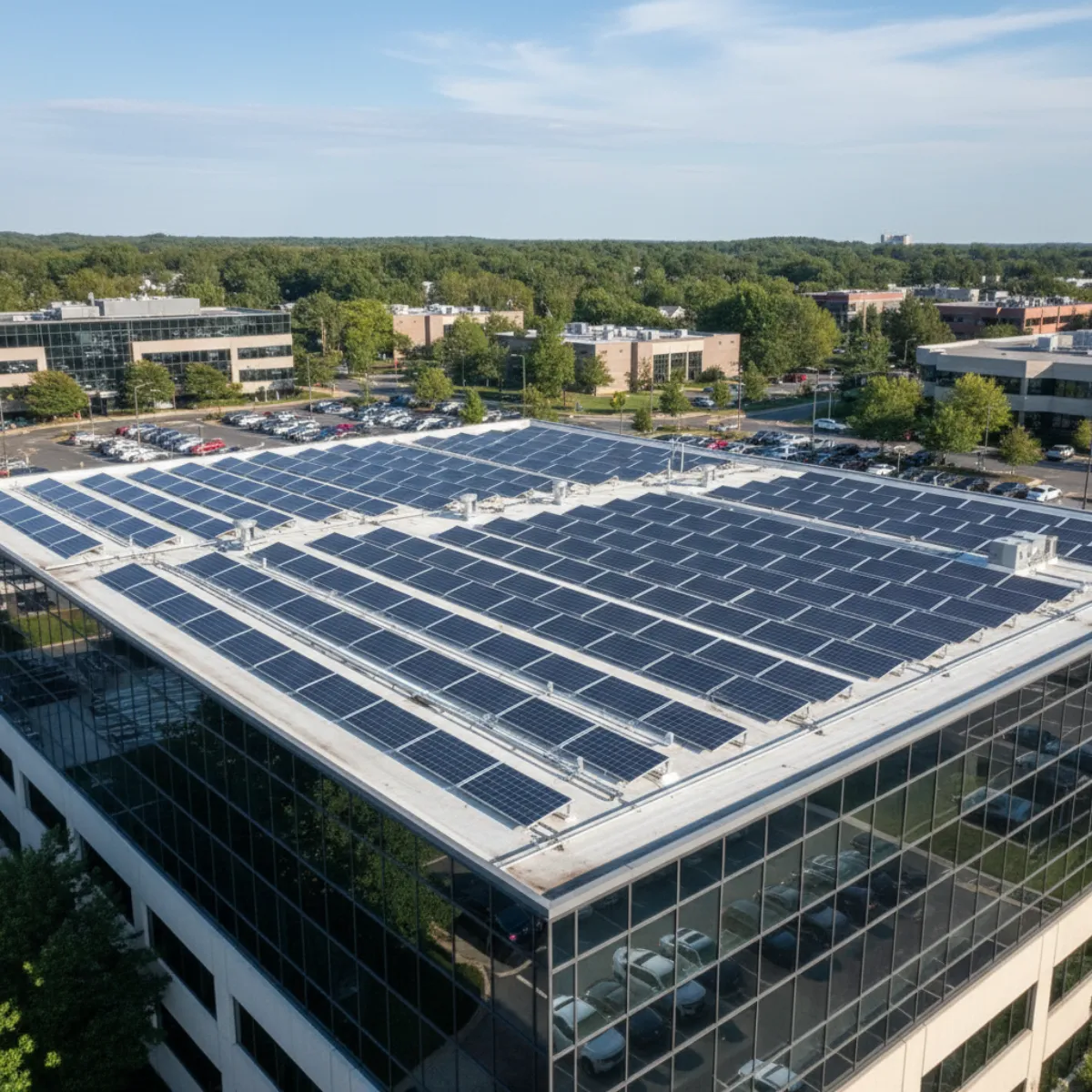
You rent your rooftop (or land) to a solar developer for a fixed annual payment. The developer installs, owns, maintains, and operates the solar system. You receive lease payments but do NOT consume the electricity — it goes to off-takers or the grid.
Payment/Savings
$1-3/sq ft/year
Electricity Savings
None (electricity goes to off-takers)
Upfront Cost
$0
Maintenance
Developer responsibility
ITC/MACRS
Developer claims
Typical Term
15-25 years
Best for: Property owners who want passive income without electricity consumption
A solar developer installs and owns a system on your roof, and you purchase the electricity it produces at a discounted rate below your current utility rate. You save on electricity costs without any capital investment.
Payment/Savings
$0 (you pay discounted electric rate)
Electricity Savings
15-30% below retail ($0.10-$0.18/kWh)
Upfront Cost
$0
Maintenance
Developer responsibility
ITC/MACRS
Developer claims
Typical Term
15-25 years
Best for: Businesses that want lower electricity costs without ownership
A combination where you receive a small lease payment AND purchase some of the electricity at a discounted rate. The developer splits revenue between lease income to you, discounted power to you, and off-taker revenue.
Payment/Savings
$0.50-$1.50/sq ft/year + discounted rate
Electricity Savings
10-20% below retail
Upfront Cost
$0
Maintenance
Developer responsibility
ITC/MACRS
Developer claims
Typical Term
15-25 years
Best for: Property owners who want both passive income and electricity savings
Not every commercial roof is suitable for a solar installation. Developers conduct thorough assessments before committing to a lease or PPA. Understanding these requirements upfront helps you evaluate whether your property qualifies and what, if any, improvements might be needed.
Roof should have 15+ years of remaining life. Most developers require a roof inspection and will not install on roofs needing near-term replacement. Some developers will contribute to a re-roofing if needed.
Roof must support 3-5 lbs/sq ft additional dead load from solar panels and racking. A structural engineer assessment is required. Most commercial flat roofs can handle this load, but some older structures may need reinforcement.
No active leaks, ponding water, or structural damage. Roof membrane should be in good condition. TPO, EPDM, and standing-seam metal roofs are all suitable. Built-up roofing may require additional attachment considerations.
Minimum 5,000-10,000 sq ft of usable roof area for a commercially viable installation (50-100+ kW). Usable area accounts for setbacks, HVAC equipment, skylights, and fire code pathways. Flat roofs are ideal.
Adequate electrical service panel capacity for solar interconnection. Most commercial 200A+ panels are sufficient. Larger systems may require panel upgrades or dedicated solar interconnection points.
The most attractive commercial roofs for solar developers are: flat or low-slope (under 5 degrees), 15,000+ sq ft of unobstructed area, 10+ years old with a recent membrane replacement (TPO or EPDM), southern or east/west orientation, and in the National Grid or Eversource service territory (higher electricity rates = better project economics). If your roof fits this profile, you will receive the most competitive lease rates or PPA pricing.
Solar lease and PPA agreements are long-term contracts (15-25 years) that significantly affect your property. Getting the right terms upfront is critical — renegotiating mid-term is extremely difficult. Here are the most important provisions to review and the red flags that should give you pause.
| Provision | Good Terms | Red Flags | Priority |
|---|---|---|---|
| Term Length | 15-20 years | >25 years or auto-renewal without notice | Critical |
| Escalation Clause | 1-2% annual increase | >3% annual or tied to volatile index | Critical |
| Insurance Requirements | Developer carries $2M+ liability | Property owner must insure the solar system | Critical |
| Roof Repair/Replacement | Developer removes/reinstalls at their cost | Property owner pays for panel removal | Critical |
| Buyout Option | Fair market value buyout at Years 6, 10, 15 | No buyout option or above-market pricing | Important |
| Assignment/Transfer | Transferable to new property owner | Non-transferable or developer consent required | Important |
| Performance Guarantee | Minimum production guarantee (90%+) | No production guarantees | Important |
| Termination Clause | Clear termination for cause + removal timeline | No termination rights for property owner | Critical |
| End-of-Term Options | Purchase at FMV, extend, or remove at developer cost | Automatic renewal at unfavorable terms | Important |
| Lien/Encumbrance | UCC filing only, no mortgage subordination | Requires mortgage subordination | Critical |
A solar lease or PPA is a complex commercial agreement with implications for property value, financing, insurance, and future sales. Engage an attorney experienced in solar contracts before signing. The legal review fee ($2,000-$5,000) is a tiny fraction of the contract value over 20 years and can save you from unfavorable terms that are extremely difficult to change after execution.
You have more negotiating power than you might think. Developers need good roofs — and yours is a finite, valuable asset. Here are six proven strategies to get the best terms for your solar lease or PPA agreement.
Obtain proposals from 3-5 solar developers. Lease rates and PPA prices vary significantly. Competition improves your terms.
Push for 1-2% annual escalation on PPA rates. Many developers start at 2.5-3% — negotiate down. Below utility rate escalation is key.
The developer should maintain your existing roof warranty. Any warranty void due to solar installation should be replaced by the developer.
Negotiate fair market value buyout options at Years 6 (post-ITC recapture), 10, and 15. This gives you flexibility without penalty.
The contract should specify that the developer removes the system and restores the roof at their cost at end-of-term or termination.
Ensure the agreement transfers to a new property owner if you sell the building. This protects property value and buyer acceptance.
A significant portion of the economics for third-party-owned solar in Massachusetts comes from SMART 3.0 incentive payments. Understanding how SMART revenue flows through lease and PPA structures helps you negotiate fair terms and evaluate whether you are getting your fair share of the project's value.
In a typical roof lease or PPA arrangement, the solar developer receives 100% of the SMART 3.0 production payments because they are the system owner. These payments can be substantial — a 250kW commercial system might generate $12,000-$20,000/year in SMART revenue over the 20-year incentive term. This revenue is one of the main reasons developers are willing to pay you for roof access or offer discounted PPA rates.
For a deeper understanding of how these economic factors affect your project, explore our MA Commercial Solar 2026 guide. If you are interested in exploring ownership instead, our IRR calculator can help model the returns of direct ownership vs hosting.
How do the three approaches compare financially for a 200kW system on a Massachusetts commercial building? The table below shows approximate 25-year economics for each model, using current MA electricity rates and incentive values.
| Factor | Roof Lease | Site Host PPA | Direct Ownership |
|---|---|---|---|
| Upfront Cost | $0 | $0 | $320,000-$380,000 |
| Year 1 Benefit | $20,000-$40,000 lease | $12,000-$18,000 savings | $135,000+ (ITC + MACRS) |
| 25-Year Total Value | $600,000-$1.2M | $400,000-$600,000 | $1.5M-$2.2M |
| Risk | Very low | Very low | Moderate |
| Maintenance Responsibility | None | None | Owner |
| Tax Appetite Needed | No | No | Yes (ITC + MACRS) |
| Best For | Passive income seekers | Cost-conscious businesses | Profitable businesses |
Direct ownership yields the highest total returns but requires capital investment and tax appetite. Roof leases provide passive income with zero effort — ideal for property owners who may not occupy the building. PPAs are the best choice for building occupants who want guaranteed electricity savings without ownership complexity. For nonprofits and municipalities without tax liability, hosting (lease or PPA) is typically the only viable option since they cannot directly use the ITC or MACRS.
Complete commercial solar overview: ITC, SMART, pricing, and financing options.
Model ownership vs hosting returns with our interactive IRR calculator.
Detailed comparison of lease, PPA, and ownership across residential and commercial.
Net metering classes and credit rates that affect lease/PPA economics.
Commercial roof lease rates in Massachusetts typically range from $1-3 per square foot per year, depending on roof size, location, and system capacity. A 20,000 sq ft commercial roof might generate $20,000-$60,000/year in lease payments. Rates are higher in areas with better solar economics (higher utility rates, favorable net metering) and for larger, unobstructed roofs. Lease payments typically escalate 1-2% annually over the 15-25 year term. The actual rate depends on the developer's projected SMART 3.0 revenue, net metering credit value, and ITC/MACRS tax benefits.
Get a free assessment of your roof's solar potential and compare lease, PPA, and ownership options tailored to your property.