Loading NuWatt Energy...

We use your location to provide localized solar offers and incentives.
We serve MA, NH, CT, RI, ME, VT, NJ, PA, and TX
Loading NuWatt Energy...
NuWatt designs, installs, and manages solar, battery, heat pump, and EV charger systems across 9 states. One company, one warranty, one point of contact.
Get a Free QuoteThe Jobs, Energy, Technology and Innovation Act (HB 5, 2023) replaces the expired Chapter 313 program. It offers a 10-year school-district M&O appraised value limitation on qualifying projects — manufacturing, semiconductor, hydrogen, and dispatchable electric generation including battery storage and solar+storage hybrids. Investment thresholds scale with county population. Pure utility-scale solar without storage generally does NOT qualify — we cover why, and how to restructure projects to fit.
10 yr
M&O Limitation Term
$20M+
Min Investment (Rural)
75%
Opportunity Zone Bonus
0 jobs
Dispatchable Gen Exempt
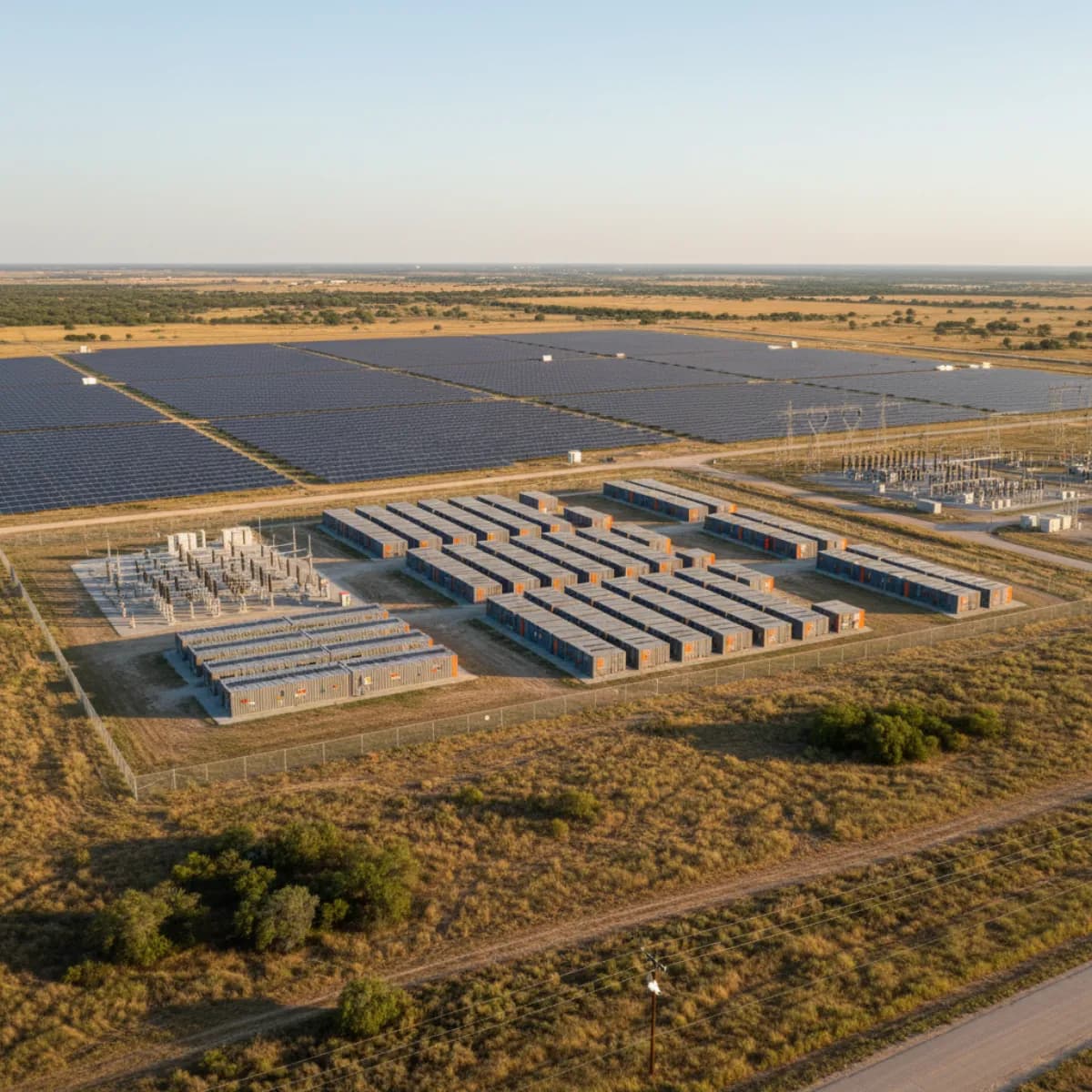
Reality check up front: JETI is deliberately narrower than the old Chapter 313 when it comes to renewables. The Texas Legislature designed HB 5 to favor dispatchable resources — gas, nuclear, battery storage, and hydrogen. Utility-scale solar PV alone generally does NOT qualify. Solar + battery storage configured as a dispatchable hybrid plant typically does. Read the eligibility section before you commit engineering spend.
JETI — the Jobs, Energy, Technology and Innovation Act — was enacted as House Bill 5 of the 88th Texas Legislature, signed into law in 2023 and effective in 2024. It replaces the expired Chapter 313 program, which sunset on December 31, 2022 and had been the primary state-level tax incentive for large-scale capital investment in Texas for two decades.
Chapter 313 was famously broad — it funded wind, solar, manufacturing, and industrial projects across Texas from 2002 to 2022. HB 5 intentionally restructured the incentive to favor dispatchable resources and limit support for intermittent renewables.
Minimums scale with the population of the county where the project is located. Dispatchable generation facilities are exempt from the job requirements but must still meet the investment threshold for their county tier.
| County Population | Texas Examples | Min Jobs | Min Investment |
|---|---|---|---|
| 750,000+ | Harris, Dallas, Tarrant, Bexar, Travis | 75 | $200M |
| 250,000–749,999 | Collin, Denton, Hidalgo, El Paso, Fort Bend | 50 | $100M |
| 100,000–249,999 | Brazoria, Galveston, Ellis, Midland, Webb | 35 | $50M |
| Under 100,000 | Most rural/agricultural counties | 10 | $20M |
Dispatchable electric generation facilities — including battery energy storage systems — are exempt from the job-creation requirement. The investment threshold still applies. For a standalone BESS project in a rural Texas county, the binding requirement is the $20M investment minimum, not headcount.
Required wages are based on the Quarterly Census of Employment and Wages (QCEW) as published by the Texas Workforce Commission, varied by eligible NAICS category. Wage floors are set at the project’s qualifying sector average — not at a single statewide number.
This is the most-asked JETI question and the one where most developers get surprised. The legislature drew the line deliberately — dispatchability is the deciding factor.
Large BESS projects generally qualify as dispatchable electric generation facilities. Job requirements are waived for dispatchable generation, but the investment threshold (by county population) still applies. Strong fit for ERCOT ancillary-services and capacity-value projects.
Solar paired with co-located BESS and operated as a dispatchable hybrid plant may qualify under the dispatchable-generation provision. The project economics need to treat the plant as a dispatchable resource — not just a PV facility with incidental storage. Pre-application discussion with the Comptroller’s Office is typical.
Pure utility-scale solar without storage is non-dispatchable. HB 5 was drafted specifically to encourage dispatchable resources, and solar-only projects generally do not meet the program’s intent. Developers often pivot to a solar+storage configuration to access JETI.
Wind is non-dispatchable and faces the same gap as solar-only projects. Wind-plus-storage hybrids may be considered on a case-by-case basis, but the program is not designed around intermittent renewables.
Gas-fired dispatchable generation is one of the core use cases HB 5 was designed for. Dispatchable generation projects are exempt from the job requirements (investment threshold still applies). NuWatt does not develop gas assets — included here for completeness of the eligibility map.
Hydrogen production facilities that contribute to dispatchable grid capacity may fit the dispatchable-generation framing. Emerging application area — expect more Comptroller guidance as projects come forward.
Qualifying manufacturing and industrial projects under the designated NAICS codes are directly in scope. Solar + storage installed as on-site infrastructure for a qualifying manufacturing project can factor into the overall eligible investment.
The Solar Developer’s Pivot: Restructure as Solar + Storage
Texas solar developers who previously relied on Chapter 313 have had to rethink project structure under JETI. The practical response is to add co-located battery storage sized and operated to make the plant dispatchable. The storage component counts toward the investment threshold, unlocks the JETI framework, and typically captures federal §48E ITC and MACRS depreciation on top.
The BESS sizing that turns a solar project JETI-eligible is usually larger than the 2-to-4 hour industry default — 4-hour or longer durations with firm capacity commitments are what the dispatchability framing calls for. This changes project economics meaningfully; plan the business case around the hybrid configuration from the start.
Projects located entirely within a federally designated Qualified Opportunity Zone (QOZ) get a 75% enhanced discount on top of the standard JETI cap. This is one of JETI’s most generous levers — and it’s underpublicized.
The best siting geographies for JETI + QOZ stacking tend to share three traits: (a) land availability and low acquisition cost, (b) ERCOT transmission access, (c) QOZ coverage.
QOZ map updates occur periodically; verify against the current U.S. Treasury Opportunity Zone list during site selection.
JETI applications go through the Comptroller’s eSystems portal and involve the company, school district, and Governor’s office. Budget six-figure legal, tax, and engineering diligence on top of the direct fees.
Confirm the project qualifies under JETI technology / NAICS categories. Verify county-population tier and investment-threshold math. Map opportunity zone coverage if relevant. Consider alternate sites — the program requires a compelling-factor determination based on competitive site selection.
Engage the local school district early. The district must vote to enter the agreement; early alignment on job commitments, wage floors, and bond structure avoids late-stage failure.
Submit the application through the Comptroller’s eSystems portal. Pay the $30,000 school district fee as part of the application package.
The Comptroller’s Data Analysis & Transparency Division reviews the application against statutory criteria. Governor’s office review runs in parallel. Expect 60–120 days of review depending on complexity.
Before the agreement executes, the applicant posts a performance bond securing the job, wage, and investment commitments. Bond amount scales with the benefit size.
Once executed, the 10-year limitation runs. Annual compliance reporting verifies continued meeting of job, wage, and investment commitments. Underperformance triggers recapture and bond forfeiture.
JETI is a performance-based agreement, not an unconditional benefit. If the project underdelivers on jobs, wages, or investment, the school district can recapture the tax benefit and draw on the performance bond.
Applicants file annual compliance reports documenting jobs, wages, and investment levels. The Comptroller and school district review these against the agreed commitments.
Material underperformance on jobs, wages, or investment can trigger recapture of the tax benefit plus penalties. The school district is the counterparty that initiates recapture action.
The performance bond posted before agreement execution secures the company’s commitments. If recapture is invoked and not satisfied, the bond is the district’s recovery mechanism.
JETI is a state-level property tax benefit. Federal incentives operate independently and can layer on top of a JETI agreement without reduction.
| Incentive | Type | Applies To | Stack With JETI? |
|---|---|---|---|
| JETI (this page) | State property tax limitation | School district M&O only | — |
| §48E ITC | Federal tax credit | Solar + storage basis | Yes — independent |
| MACRS 5-Yr | Accelerated depreciation | Solar + storage basis | Yes — independent |
| §179D Deduction | Federal tax deduction | HVAC, lighting, envelope at adjacent buildings | Yes — different scope |
| TCEQ NTIG | State grant (TERP) | Storage scope (50% reimbursement) | Yes — state grant × state tax distinct |
| USDA REAP | Federal grant (rural) | Solar / storage in rural sites | Yes — for rural co-located projects |
NuWatt supports commercial and utility-scale solar + battery storage development in Texas. We can build the engineering, dispatchability case, and interconnection plan that underpins a JETI application — paired with federal §48E ITC + MACRS modeling so you see the full stacked economics before committing capital.
Rules: Texas Tax Code Ch. 403 Subchapter T + 34 TAC Ch. 9 Subchapter O. Comptroller contact 844-519-5672.
Last updated: April 2026
Sources: Texas Comptroller JETI program page (comptroller.texas.gov/economy/development/prop-tax/jeti/), HB 5 (88th Texas Legislature), Texas Tax Code Chapter 403 Subchapter T, 34 TAC Chapter 9 Subchapter O, Texas Workforce Commission QCEW data, U.S. Treasury Qualified Opportunity Zone list