Loading NuWatt Energy...

We use your location to provide localized solar offers and incentives.
We serve MA, NH, CT, RI, ME, VT, NJ, PA, and TX
Loading NuWatt Energy...
NuWatt designs, installs, and manages solar, battery, heat pump, and EV charger systems across 9 states. One company, one warranty, one point of contact.
Get a Free Quote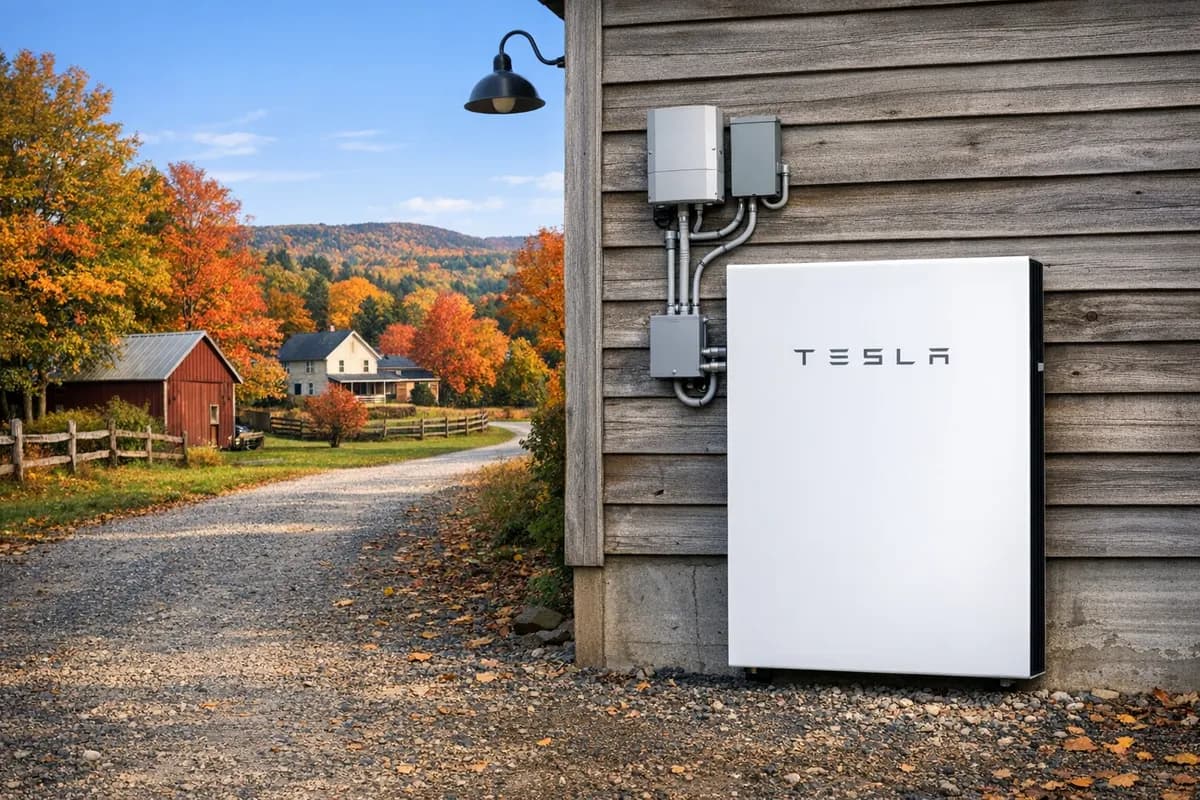
Vermont's rural grid and ice-storm-prone winters make battery storage essential for energy security. NuWatt installs Tesla Powerwall, Enphase, and Franklin batteries — with enrollment in GMP's Powerwall program, BED incentives, and VEC flexible load for maximum value.
Free consultation. We handle GMP/BED/VEC program enrollment.
Three proven battery options for Vermont homes. All include professional installation, monitoring setup, and manufacturer warranty.
Most popular in VT. Eligible for GMP Powerwall program.
Modular — stack 1-4 units. Best with Enphase microinverters. Scalable.
Whole-home backup capable. Excellent for off-grid or rural VT properties.
Federal 25D ITC expired Dec 31, 2025. $0 federal credit for batteries in 2026. GMP Powerwall program participants may receive reduced pricing.
Vermont utilities offer some of the best battery incentive programs in the country. NuWatt enrolls every eligible customer.
GMP Powerwall Program
GMP provides a Tesla Powerwall at reduced cost (or lease). Customer shares battery capacity with GMP for grid services during peak demand events. GMP manages the battery; homeowner keeps backup protection.
Reduced Powerwall cost + grid creditsBED Battery Program
Burlington Electric offers incentives for residential battery storage. Participants help BED manage peak demand on their 100% renewable grid while keeping backup power for outages.
Battery incentives + peak managementVEC Flexible Load
VEC offers a flexible load program that includes battery storage. Participating members earn credits for allowing VEC to manage battery discharge during grid stress events.
Bill credits + backup powerVermont's rural grid is vulnerable to ice storms and extended outages. A home battery keeps your essentials running when the grid goes down.
| Scenario | Battery Size | What It Powers | Duration | Installed Cost |
|---|---|---|---|---|
| Essential Loads Only | 1 Powerwall (13.5 kWh) | Fridge, lights, Wi-Fi, phone charging, well pump | 12-24 hours | $12,500-$14,500 |
| Extended Essential | 2 Powerwalls (27 kWh) | Essentials + heat pump, some outlets, garage door | 18-36 hours | $24,000-$28,000 |
| Whole Home Backup | 3+ Powerwalls (40.5+ kWh) | Full home including electric stove, dryer, EV charger | 24-48+ hours | $36,000-$42,000 |
Duration estimates assume no solar recharging (overnight/cloudy). With solar, batteries can sustain essential loads indefinitely during daylight hours. Well pumps require battery for water access during outages.
Vermont averages 2-4 significant ice/wind events per year. Extended outages of 24-72+ hours are common in rural areas. A battery keeps essentials running.
Many Vermont homes rely on well water and septic. Without power, there is no water. A battery ensures continuous water access during outages.
If your heat pump is your primary heat source, a battery keeps it running during winter outages — preventing frozen pipes and maintaining comfort.
GMP pays battery owners for grid services. Your battery earns credits by helping stabilize the grid during peak demand events.
Store excess daytime solar production for evening use. Paired with net metering, batteries give you complete energy independence.
Reduce reliance on the grid and volatile energy prices. Solar + battery = predictable, clean energy for decades.
Answers to common questions about battery storage in Vermont.
Home battery storage in Vermont costs $12,500-$15,000 for a single Tesla Powerwall 3 or Franklin aPower2, and $6,500-$8,000 per Enphase IQ Battery 5P unit. Most Vermont homes install 1-2 batteries. The federal Section 25D residential tax credit expired December 31, 2025, so there is no federal credit for batteries purchased in 2026. GMP Powerwall program participants receive reduced pricing.
Green Mountain Power (GMP) offers a unique Powerwall program where GMP provides a Tesla Powerwall at reduced cost or through a lease arrangement. In exchange, the homeowner shares battery capacity with GMP for grid services during peak demand events. You keep backup power protection while helping stabilize Vermont's grid. GMP manages the battery dispatch remotely.
Not necessarily, but batteries add significant value in Vermont. Vermont's rural grid is vulnerable to ice storms and extended outages. Net metering already credits you at full retail rate, so the financial case for batteries is primarily about backup power and grid services (GMP program credits). If you experience outages or want energy independence, a battery is worth the investment.
A single Tesla Powerwall 3 (13.5 kWh) can power essential loads (fridge, lights, Wi-Fi, well pump) for 12-24 hours. Two Powerwalls extend that to 18-36 hours with heat pump included. Paired with solar, batteries can sustain a home indefinitely during daylight hours. For multi-day outages, we recommend 2+ batteries plus solar.
No. The Section 25D residential clean energy tax credit expired December 31, 2025. There is no federal credit for home battery purchases in 2026. Vermont utility programs (GMP Powerwall, BED battery incentives, VEC flexible load) are the primary financial incentives for battery storage.
Technically yes, but we generally recommend grid-tied systems with battery backup. A full off-grid system requires significant battery capacity (40+ kWh), a large solar array, and a backup generator for extended winter weather. Grid-tied with batteries gives you backup protection while benefiting from net metering and GMP grid services credits.
NuWatt installs Tesla Powerwall 3 (13.5 kWh, most popular), Enphase IQ Battery 5P (5 kWh modular, stackable), and Franklin aPower2 (15 kWh, whole-home backup). All include manufacturer warranties of 10-15 years. We recommend the best battery for your specific needs — backup duration, solar system size, and utility program eligibility.
Vermont's rural grid experiences outages from ice storms, wind events, and tree falls. A battery provides immediate backup when the grid goes down — no generator needed, no fuel to store. With solar, your battery recharges daily. GMP and VEC also use enrolled batteries to stabilize the grid during peak demand, paying homeowners for the service.
Get a free consultation for battery storage with honest 2026 pricing. We handle GMP Powerwall program enrollment, BED incentives, and complete installation. Most consultations within 48 hours.