Loading NuWatt Energy...

We use your location to provide localized solar offers and incentives.
We serve MA, NH, CT, RI, ME, VT, NJ, PA, and TX
Loading NuWatt Energy...
NuWatt designs, installs, and manages solar, battery, heat pump, and EV charger systems across 9 states. One company, one warranty, one point of contact.
Get a Free QuoteTexas leads the nation in hail damage. This is the complete guide to protecting your solar investment — hail-rated panels, insurance coverage, roof timing, battery backup for storms, and how to file a claim when the worst happens.
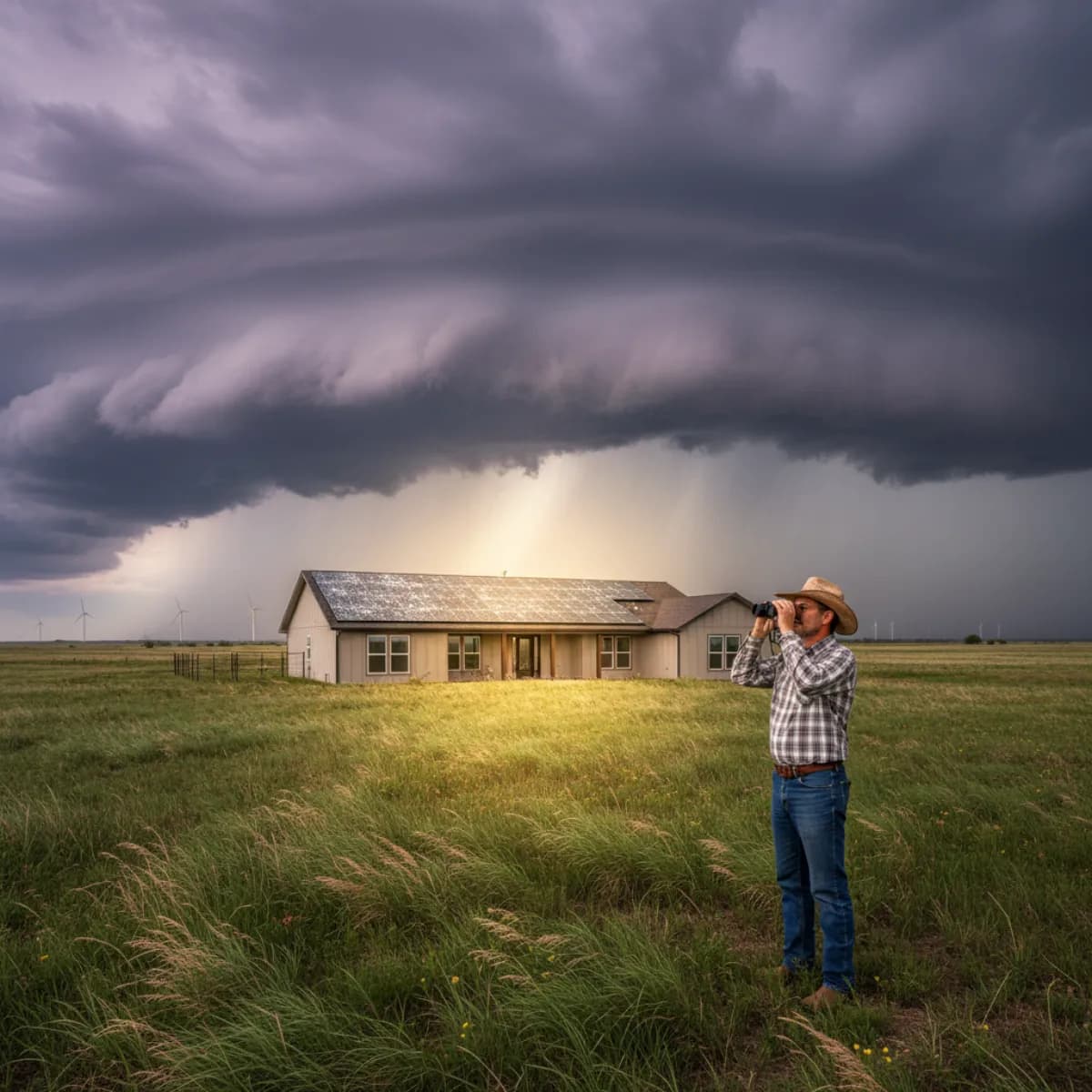
Not all of Texas faces the same hail threat. The DFW Metroplex sits at the southern end of "Hail Alley" — a corridor stretching from Texas through Oklahoma and Kansas that produces the most severe hailstorms in the United States. Houston, Austin, and San Antonio face moderate risk with fewer annual events.
Your location determines which panel class you need, what insurance deductible to expect, and how aggressively to invest in hail protection.
All solar panels sold in the US must pass IEC 61215 testing — withstanding 25mm (1-inch) hailstones at 23 m/s. This is the minimum standard. It is not enough for Texas.
The UL 61730 / IEC TS 62788 extended hail test uses larger ice balls at higher speeds. Panels marketed as "Class 3" withstand 1.75-inch ice balls at 70 mph. "Class 4" panels survive 2-inch ice balls at 70 mph — equivalent to hen-egg-sized hailstones.
For DFW, Amarillo, Lubbock, and Wichita Falls, Class 4 panels are a smart investment. For Houston, Austin, and San Antonio, Class 3 is sufficient for most seasons.
| Panel | Hail Class | Impact Test | Glass Type | Price Adder | Best For |
|---|---|---|---|---|---|
| REC Alpha Pure-R 460WTOP PICK | Class 4 | 51mm (2") @ 70 mph | Dual-glass (tempered front + back) | +$0.15/W | DFW Hail Alley — maximum protection |
| Q.CELLS Q.PEAK DUO 435W | Class 3 | 44mm (1.75") @ 70 mph | Tempered mono-glass | +$0.05/W | Austin, Houston, San Antonio — solid protection |
| Canadian Solar HiKu7 440W | Class 3 | 44mm (1.75") @ 70 mph | Bifacial dual-glass | +$0.08/W | Bifacial bonus + hail durability |
| SunPower Maxeon 7 440W | Class 3 | 44mm (1.75") @ 70 mph | Thick tempered glass front | +$0.19/W | Premium efficiency + IBC impact resistance |
| Silfab SIL-440-BHC (FEOC) | Class 2-3 | 35mm (1.4") @ 30 m/s | Dual-glass | Base (Propel) | Propel $0-down financing — good for moderate-risk areas |
Not all hail damage is visible. Up to 70% of solar cell damage from hail is invisible to the naked eye — micro-cracks that reduce output without any external signs. Here is what to look for and what requires professional detection.
Spider-web cracks or shattered surface. Water can penetrate and short-circuit cells. Immediate replacement needed.
Invisible to the naked eye. Cells crack internally from impact force but glass remains intact. Detected via thermal imaging or IV-curve testing.
Layers separating after impact. Appears as cloudy or bubbly areas under the glass. Worsens over time from moisture ingress.
Cosmetic frame damage usually does not affect performance. However, junction box damage can cause arcing or connection failures.
Surface scuffs or small dents with no cell damage. Glass intact, production unaffected. Document but no immediate action needed.
Pro tip: After any significant hailstorm, check your solar monitoring app (Enphase, SolarEdge, Tesla) before going on the roof. A sudden production drop of 10%+ is the earliest indicator of damage — and it creates timestamped evidence for your insurance claim.
Solar panels bolted to your roof are typically covered under your homeowners dwelling coverage (Coverage A) — the same coverage that protects your house. But the devil is in the deductible.
Texas homeowners policies have a separate, percentage-based deductible for wind and hail damage. This is not a flat dollar amount — it is 1-2% of your dwelling coverage (sometimes 3-5% in high-risk counties like Lubbock, Midland, and parts of DFW). On a $400,000 home with a 2% deductible, you pay the first $8,000 of any hail claim before insurance pays anything.
| Home Value | Deductible | Out-of-Pocket | Solar Damage | Insurance Pays | Note |
|---|---|---|---|---|---|
| $300,000 | 1% | $3,000 | $4,500 | $1,500 | Claim pays — damage exceeds deductible |
| $400,000 | 2% | $8,000 | $6,000 | $0 | Deductible exceeds damage — you pay everything |
| $400,000 | 2% | $8,000 | $22,000 | $14,000 | Major damage — significant claim |
| $400,000 | Rider ($500) | $500 | $4,500 | $4,000 | Solar endorsement protects partial damage |
| $600,000 | 3% (high-risk county) | $18,000 | $12,000 | $0 | High-risk deductible swallows entire claim |
A solar equipment endorsement (also called a rider) creates a separate coverage structure for your solar system with its own deductible — typically $500-$1,000 instead of the percentage-based wind/hail deductible. Cost: $50-$150/year added to your premium.
The time to protect yourself is at installation, not after a storm. Document everything on day one:
Multiple angles, date-stamped. Store copies in the cloud.
Record all panel, inverter, and battery serial numbers from installation docs.
Screenshot your system production baseline from your monitoring app.
Keep the full installation contract showing equipment value for insurance claims.
One of the most expensive mistakes Texas homeowners make is installing solar on an aging roof. Solar panels last 25-30 years. If your roof needs replacement in 5-10 years, you will pay $3,000-$8,000 to remove and reinstall the panels — and some mounting warranties may be voided.
The reverse is also true: a brand-new roof is the ideal foundation for solar. Here is how to decide.
Solar panels last 25-30 years. Removing and reinstalling panels for a roof replacement mid-life costs $3,000-$8,000 and voids some warranties.
Roof has 10-20 years remaining. Solar installation adds protection to the covered area. Set aside reroof funds for year 15-20.
New roof aligns perfectly with solar panel lifespan. Maximum value from both investments. No removal/reinstall costs.
Insurance-funded roof replacement is the ideal time to add solar. The crew is already on the roof, scaffolding is set up, and you start fresh with a 25-year roof + 25-year solar system.
Winter Storm Uri proved that Texas grid reliability is not guaranteed. 4.5 million homes lost power for 2-4+ days, 246 people died, and the estimated economic damage reached $197 billion. Generators — the traditional backup — failed at scale because their fuel supply was disrupted.
Solar + battery backup works differently: the battery stores energy from your panels during the day and releases it at night or during outages. There is no fuel to run out of, no exhaust, no maintenance, and the switchover happens in milliseconds — before your lights even flicker.
Standby generators connected to gas lines stopped running when gas pressure fell below operating threshold. Propane tanks ran dry within 48 hours.
Portable generators with untreated diesel failed to start. Gas stations lost power, making refueling impossible.
Continuous generator operation in extreme heat caused overheating, oil breakdown, and automatic shutdown. Rolling blackout alerts persisted for weeks.
Air conditioning is the single biggest factor in battery sizing for Texas. A central AC unit draws 3-5 kW continuously — it can drain a single battery in 3-5 hours during a summer outage. Here is how to size your system.
Most affordable — covers survival basics
Keeps one room cool in TX summer — biggest comfort upgrade
Central AC is the biggest load — runs the meter fast
Most Texas homeowners choose essential-load backup (1-2 batteries) rather than whole-home backup (3+ batteries). The reason is economics: running central AC during a summer outage requires enormous battery capacity. A single mini-split AC unit drawing 1.2 kW is far more battery-efficient than a 5 kW central AC system — and it keeps one room comfortable during an extended outage.
With solar recharging, even a single battery can run essential loads indefinitely during daylight hours — the panels refill what the battery used overnight.
Hail, wind, and thunderstorms deposit debris, dust, and residue on your panels. Dirty panels produce less energy — but cleaning them incorrectly can cause more damage than the storm did.
Never go on a roof during or immediately after a storm. Wait for stable weather and daylight. If you see downed power lines or smell gas, call 911 first.
Walk the perimeter and look for broken glass, displaced panels, or exposed wiring from the ground. Use binoculars if needed. Do not touch any electrical components.
Gently rinse panels with a garden hose from the ground or roof edge. Use only plain water — no soap, no pressure washer. Soap leaves residue that reduces output. Pressure washers crack glass and void warranties.
Remove branches, leaves, or ice using a soft brush or squeegee on an extension pole. Never use metal tools or walk on panels. Even minor scratches reduce output over time.
After cleaning, verify production returns to expected levels in your monitoring app. Persistent drops indicate hidden damage that cleaning cannot fix — schedule a professional inspection.
The 72 hours after a hailstorm are critical. Quick, thorough documentation is the difference between a paid claim and a denied one.
Take date-stamped photos of every damaged panel, racking, and inverter. Wide shots for scope, close-ups for cracks and impact points. Include your roof and any other property damage — a combined roof + solar claim often exceeds your deductible when solar alone would not.
Log into Enphase, SolarEdge, or Tesla and screenshot your production data. A sudden drop of 10%+ after a storm is documented proof of damage — even when panels look fine externally. Compare day-of-storm output to the prior week.
Contact your solar installer for a formal inspection report. Thermal imaging and IV-curve testing reveal micro-cracks invisible to the naked eye. A professional report carries far more weight with adjusters than photos alone. Cost: $150-$300.
Contact your insurer promptly. Provide the inspection report, photos, monitoring data, and your original installation invoice showing equipment value. Reference your dwelling coverage or solar endorsement. Ask specifically for an adjuster with solar experience.
Obtain at least two written quotes from licensed Texas solar contractors. Include panel replacement, labor, racking inspection, and system re-commissioning. Your insurer will typically use the lower quote unless you document why the higher one is appropriate.
If your claim is denied or undervalued, hire a public adjuster (free until your claim pays out) or file a complaint with the Texas Department of Insurance (TDI) at tdi.texas.gov. Texas has strict bad-faith insurance laws that protect homeowners.
After major hail events, contractors go door-to-door offering "free" roof and solar inspections. Some pressure homeowners into signing Assignments of Benefits (AOB) or contingency agreements that transfer your insurance rights to the contractor. Read all contracts carefully. Legitimate contractors do not pressure you into signing immediately. If in doubt, contact the Texas Department of Insurance (TDI) at tdi.texas.gov.
Propel financing uses FEOC-compliant Silfab 440W dual-glass panels with Class 3 hail resistance. A third-party owner installs the system and claims the Section 48E ITC, passing savings to you as a fixed monthly payment. Add battery backup for storm protection. 8.99% APR, 25-year term, 660 FICO minimum. Projects that began construction by July 4, 2026 locked in the full §48E timeline; later starts still qualify if placed in service by Dec 31, 2027.
See Propel Financing DetailsNuWatt installs Class 3-4 hail-rated panels and battery systems across Texas. We document everything for insurance purposes at installation — photos, serial numbers, and system baseline data included.
Get Your Free Texas QuoteUsually yes. Solar panels bolted to your roof are typically covered under dwelling coverage (Coverage A) for the same perils as your house, including hail. However, Texas policies have a separate wind/hail deductible — usually 1-2% of your home's insured value. On a $400,000 home with a 2% deductible, you pay the first $8,000 before insurance pays anything. If your solar damage is less than your deductible, you receive $0. Adding a solar equipment endorsement with a separate $500-$1,000 deductible is the single best protection.
Standard IEC 61215 testing certifies panels to withstand 25mm (1-inch) hailstones at 23 m/s. Most Texas hailstorms stay at or below this threshold. However, DFW and the Texas Panhandle regularly see 1.5-2.5 inch hailstones that exceed standard testing. Golf-ball-sized hail (1.75 inches) can crack standard-glass panels on impact. Class 3 panels (rated for 44mm / 1.75-inch ice balls at 70 mph) handle most Texas hail. DFW homeowners should consider Class 4 (51mm / 2-inch) panels.
If your roof is 15+ years old, replace it first. Solar panels last 25-30 years. Removing and reinstalling them for a mid-life roof replacement costs $3,000-$8,000 and may void mounting warranties. If your roof is under 10 years old and in good condition, install solar now. The ideal scenario is bundling a post-hail insurance-funded roof replacement with solar installation — fresh roof, fresh solar, maximum lifespan alignment.
Adding solar panels to your homeowners insurance typically increases premiums by $10-$25/month ($120-$300/year) depending on system size and insurer. A solar equipment endorsement (rider) with a separate $500-$1,000 deductible costs an additional $50-$150/year. The endorsement is worth it — without it, partial hail damage (the most common outcome) often falls entirely below your percentage-based wind/hail deductible.
Natural gas supply disruption was the primary cause. Wellheads froze across West Texas, pipeline pressure dropped below operating thresholds, and standby generators connected to gas lines simply stopped running. Propane tanks ran dry within 48 hours. Gas stations lost power, making refueling impossible for portable generators. Solar + battery systems that were fully charged before the storm continued operating because they have no fuel dependency — sunlight recharges the battery each day, even during winter.
Air conditioning is the deciding factor. A central AC unit draws 3-5 kW continuously. Essential loads only (refrigerator, lights, Wi-Fi) need 1 battery (13.5 kWh) lasting 12-24 hours. Adding a window AC unit or mini-split for one room requires 2 batteries (27 kWh) lasting 8-16 hours. Whole-home backup with central AC requires 3+ batteries (40+ kWh) lasting only 6-10 hours. Solar recharges the batteries each day, extending runtime indefinitely for essential loads.
Visible damage includes spider-web cracks in the glass, white or cloudy spots (delamination), dents in aluminum frames, and broken junction boxes on the panel back. However, up to 70% of hail damage is invisible — micro-cracks in solar cells that reduce output without any external signs. The only way to detect hidden damage is thermal imaging or IV-curve testing by a professional. Always check your monitoring app for production drops after a hailstorm.
You can do a basic rinse from the ground with a garden hose using plain water. Never use soap (leaves residue), a pressure washer (cracks glass and voids warranties), or metal tools (scratches surface). Do not walk on panels. For anything beyond a ground-level rinse, hire a professional cleaning service ($100-$250). More importantly, cleaning only addresses surface debris — it does not fix hail damage. If production drops persist after cleaning, you need an inspection, not more cleaning.
For most Texas homeowners, battery + solar is the more reliable backup. Generators failed during Winter Storm Uri because fuel supply was disrupted. Batteries have no fuel dependency, operate silently, switch on in milliseconds (generators take 10-30 seconds), produce zero emissions, and require zero maintenance. The tradeoff: generators are cheaper upfront ($3,000-$8,000 vs $10,000-$16,000 for a battery) and can power whole-home AC more affordably. If your primary concern is extended outages with full AC, a generator may be more cost-effective — but less reliable.
No. Manufacturer product warranties (25 years) and performance warranties (25-30 years) cover manufacturing defects only — delamination, premature power loss, faulty wiring. They explicitly exclude external events like hail, wind, lightning, and flooding. Hail damage is an insurance matter, not a warranty matter. You need both: a manufacturer warranty for defects and homeowners insurance (ideally with a solar endorsement) for weather damage. This is one of the most common misunderstandings among Texas solar owners.