
Quick Answer
DIY solar panels cost $1.00–$1.50 per watt for equipment, while professional installation runs $2.80–$3.50/W all-in. On a 10 kW system, that looks like $12,500 vs $31,500. But after adding permits ($500–$1,500), a licensed electrician ($1,000–$3,000), equipment rentals, and potential rework, real DIY costs land at $1.80–$2.30/W—cutting the savings gap from 60% down to roughly 25–35%. For roof-mounted, grid-tied systems, professional installation is almost always the smarter investment.
Why DIY Solar Interest Is Surging in 2026
Three factors are driving the DIY solar trend to all-time search highs in early 2026:
Federal Tax Credit
Section 25D expired Dec 31, 2025. The 30% ITC that used to offset $9,000+ on a typical system is gone. Every dollar of system cost now comes out of pocket.
Rising Utility Rates
Northeast electricity rates have crossed $0.30/kWh in several states. Texas deregulated rates are volatile. The motivation to go solar has never been stronger.
Panel Price Drop
Solar panel wholesale prices have fallen below $0.30/W for standard modules. A 10 kW panel set costs under $3,000 online. That accessibility makes DIY tempting.
The logic seems simple: if panels are cheap and the tax credit is gone anyway, why pay an installer $15,000–$20,000 in labor and overhead? The answer, as we will see, is more nuanced than most DIY advocates admit.
DIY Solar: True Cost Breakdown
The “$1.00/W DIY solar” number that circulates on Reddit and YouTube typically reflects only the panel cost. Here is what a complete 10 kW DIY grid-tied rooftop system actually costs in 2026:
| Component | Cost Range | Notes |
|---|---|---|
| Solar panels (10 kW) | $2,500–$4,000 | $0.25–$0.40/W retail for 400–450W modules |
| Microinverters or string inverter | $2,000–$3,500 | Enphase IQ8+ ~$150/unit; SolarEdge string ~$2,000 |
| Racking and mounting | $1,500–$2,500 | IronRidge, Unirac — roof type dependent |
| BOS (wiring, conduit, disconnects) | $500–$1,000 | Wire, junction boxes, rapid shutdown, grounding |
| Permits and engineering | $500–$1,500 | Building permit, electrical permit, plan review |
| Licensed electrician | $1,000–$3,000 | Panel upgrade, interconnection, final hook-up |
| Equipment rentals and tools | $200–$500 | Scaffolding, safety harness, drill, conduit bender |
| Shipping | $300–$800 | Freight for panels (heavy, oversized), inverters |
| Total DIY Cost (10 kW) | $8,500–$16,800 | $0.85–$1.68/W true all-in |
Reality check: The median DIY project we see discussed in installer forums lands at about $1.80–$2.30/W once all real costs are included. The $1.00/W figure only applies if you already own tools, skip permits (illegal and risky), and handle all electrical work yourself (also illegal in most jurisdictions without a license).
Professional Install: What You Are Actually Paying For
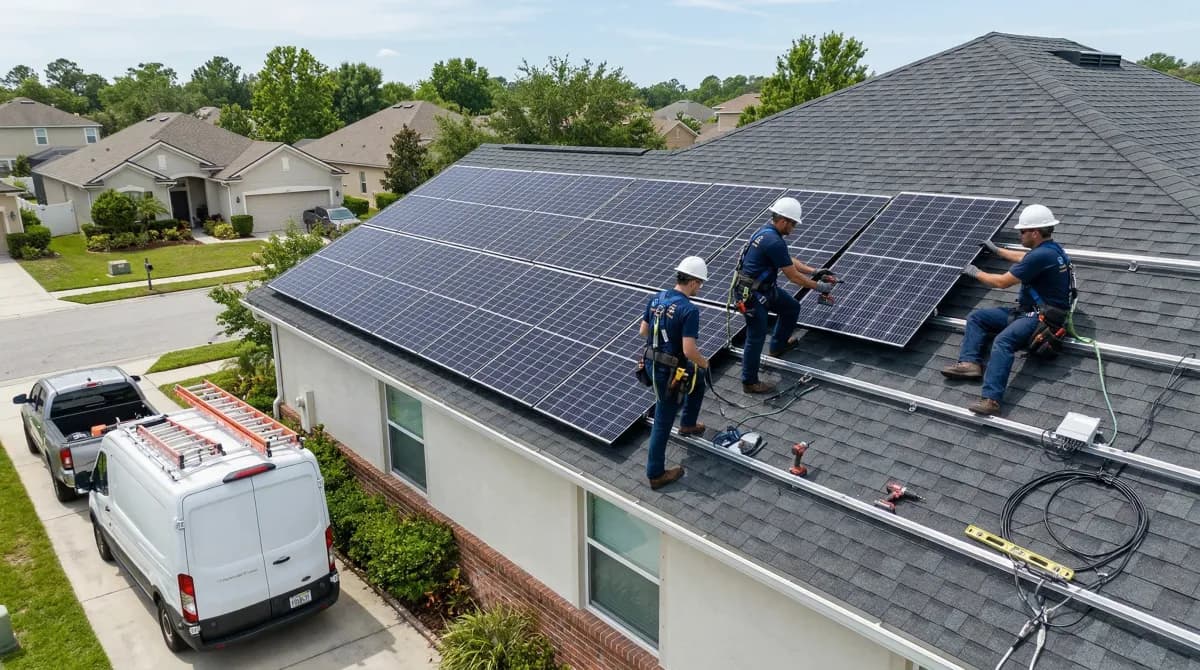
The $2.80–$3.50/W price tag for professional installation covers far more than panel mounting. Here is the breakdown of where that money goes:
Engineering and Design
- Site survey: Roof measurements, shade analysis, structural assessment
- System design: Panel layout, string sizing, electrical schematics
- Structural engineering: PE-stamped drawings for permit
- Production modeling: Accurate kWh estimates based on your roof
Permits and Interconnection
- Building permit: Filed and managed by installer
- Electrical permit: Licensed electrician on staff
- Utility interconnection: Application, meter change, PTO
- Inspections: Scheduled, attended, and remediated if needed
Warranty and Insurance
- Workmanship warranty: 10–25 years on installation
- Roof penetration warranty: Leak-free guarantee
- General liability: $1M+ coverage during install
- Workers comp: Crew injury coverage (not your liability)
Installation Quality
- Trained crews: OSHA-certified, manufacturer-trained
- Proper flashing: Code-compliant roof attachments
- Monitoring setup: App-based production tracking
- Code compliance: NEC 2023, rapid shutdown, arc fault
When you hire a professional, roughly 35–40% of the cost is equipment, 25–30% is labor, and 30–35% covers engineering, permits, overhead, warranty reserves, and profit. That 30–35% is what DIY eliminates—but also what protects you.
Head-to-Head: DIY vs Professional Solar
The full picture, side by side, for a typical 10 kW residential rooftop system in 2026:
| Factor | DIY Solar | Professional Install |
|---|---|---|
| Total cost (10 kW) | $18,000–$23,000 true all-in | $28,000–$35,000 |
| Cost per watt | $1.80–$2.30/W (real) | $2.80–$3.50/W |
| Timeline | 4–12 weekends (2–6 months) | 1–3 days install, 4–8 weeks total |
| Workmanship warranty | None | 10–25 years |
| Equipment warranty | May be voided by DIY install | Full manufacturer warranty |
| Permits handled | You manage everything | Installer handles all permits |
| Utility interconnection | You navigate the process | Installer manages PTO |
| Net metering eligibility | Requires licensed sign-off | Included |
| Insurance coverage | May be denied | Fully covered |
| Roof leak risk | High (improper flashing) | Low (warrantied) |
| Safety risk | Significant (falls, electrical) | Managed (OSHA, insurance) |
| Home resale impact | Questionable (no permits = liability) | Positive ($15K+ value add) |
| Financing options | Cash only (no solar loans) | Cash, loan, or third-party |
| Estimated payback | 10–14 years | 12–17 years |
Hidden DIY Costs Most People Miss
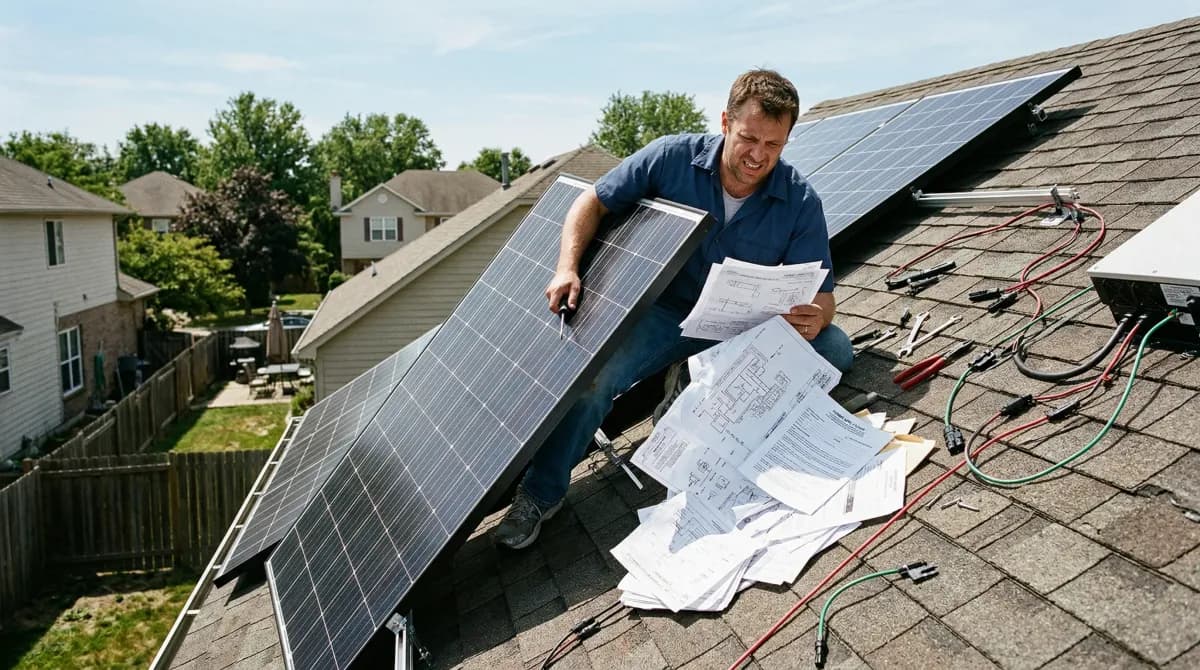
The YouTube tutorials make it look easy. Here are the costs and complications they usually leave out:
1. Permit Fees and Engineering Stamps
Building permits run $200–$500, electrical permits another $100–$300. Many jurisdictions require PE-stamped structural and electrical drawings, which cost $500–$1,500 from a third-party engineering firm. Professional installers absorb this cost. DIY builders pay it on top of equipment.
2. Inspection Failures and Rework
First-time DIY installers fail inspections at a significantly higher rate than licensed professionals. Common issues: improper grounding, wrong wire gauge, missing rapid shutdown devices (NEC 2023 requirement), and incorrect roof attachment spacing. Each failed inspection means scheduling a re-inspection ($100–$200) and buying additional materials to fix the issues.
3. Insurance Coverage Gaps
Homeowner insurance policies typically cover solar panels as attached structures. But if the installation was not permitted and inspected, insurers can deny claims for fire, water damage, or liability from the system. Some insurers increase premiums or drop coverage entirely for unpermitted solar. This is a catastrophic risk—a single roof fire claim can exceed $100,000.
4. Interconnection and Net Metering Delays
Most utilities require a licensed electrician or contractor to submit the interconnection application. Without this, you cannot get Permission to Operate (PTO) or receive net metering credits. DIY installers report 3–6 month delays navigating this process solo. Every month without PTO is a month your system generates power you cannot use or get credit for.
5. Equipment Warranty Voiding
Some manufacturers (notably Enphase and SolarEdge) require installation by a certified professional for warranty coverage. If your microinverter fails 5 years in and the manufacturer discovers a non-certified install, you may be denied warranty service on a $150+ component. Over 25 years across 20+ inverters, this risk adds up.
6. Resale and Appraisal Issues
When you sell your home, buyers and their lenders will ask for permit records and installation documentation. An unpermitted solar system can become a deal-killer or require expensive removal. Even permitted DIY systems may appraise lower than professionally installed systems due to lack of workmanship warranty.
When DIY Solar Actually Makes Sense
DIY is not always wrong. There are specific scenarios where it is a reasonable choice:
Ground-Mount on Rural Property
No roof work means no fall risk. Ground-mount racking is simpler to install. Electrical runs are longer but more accessible. Rural areas often have less restrictive permitting. If you have open land and mechanical aptitude, ground-mount DIY can genuinely save 40–50%.
Off-Grid Cabin or Shed
Off-grid systems skip interconnection entirely. No utility paperwork, no net metering requirements. Battery-based systems are self-contained. Small systems (1–3 kW) for cabins, workshops, or RVs are well-suited to DIY with kit systems available for $3,000–$8,000.
Portable or Temporary Systems
Portable solar generators, RV panel kits, and temporary power setups do not require permits or interconnection. These are true plug-and-play and a legitimate DIY category. Costs range from $500–$3,000 depending on size.
Licensed Electrician Doing Own Home
If you are a licensed electrician, you can handle permits, wiring, inspections, and interconnection yourself. This eliminates most hidden costs and lets you capture the full DIY savings. This is the only scenario where rooftop grid-tied DIY truly pencils out at the low end of cost estimates.
When Professional Installation Is the Clear Winner
For most homeowners, professional installation is the right choice. Here is when it is not even close:
Any roof-mounted system.Falls are the leading cause of construction fatalities. Roof work requires proper safety equipment, training, and experience. One slip can be fatal—this is not hyperbole.
Grid-tied systems requiring net metering. Most utilities require licensed contractor involvement. Without net metering, your payback period extends dramatically because excess generation has zero value.
Homes you plan to sell within 10 years. Professional installation with proper permits, warranties, and documentation adds $15,000+ to home value. DIY systems can reduce value or require costly removal.
Systems needing financing. Solar loans, HELOCs, and third-party ownership options are only available through licensed installers. If you need to finance the system, DIY is not an option.
Older roofs or complex roof geometry. Multiple roof planes, valleys, hips, dormers, and skylights require engineering expertise to navigate safely and efficiently. A professional design can fit 20–30% more panels on a complex roof than a DIY layout.
Electrical panel upgrades needed. If your home needs a main panel upgrade (common with older 100A or 150A panels), this requires a licensed electrician regardless. Once you are paying for electrical work, the incremental cost of professional installation shrinks significantly.
Bottom line:If your project involves a roof, a grid connection, or any plan to sell your home, professional installation pays for itself through warranty coverage, proper permitting, net metering access, and home value preservation. The $10,000–$15,000 “savings” from DIY is really $5,000–$8,000 after hidden costs—and it comes with significant risk.
Related Reading
Frequently Asked Questions
Can I legally install solar panels myself?
In most states, you can physically mount solar panels on your own property. However, the electrical work almost always requires a licensed electrician. Most jurisdictions require licensed contractor sign-off for building permits, electrical permits, and utility interconnection applications. Some states like Arizona and Florida explicitly require licensed solar contractors for any grid-tied system.
How much cheaper is DIY solar than professional installation?
Equipment-only costs run $1.00-$1.50 per watt compared to $2.80-$3.50 per watt for professional installation. For a 10 kW system, that is roughly $10,000-$15,000 for DIY materials versus $28,000-$35,000 professionally installed. However, DIY projects typically add $2,000-$5,000 in hidden costs for permits, electrician fees, rental equipment, and potential rework, narrowing the real gap significantly.
Will my homeowner insurance cover a DIY solar installation?
Most homeowner insurance policies require installations to meet local building codes and be performed by licensed professionals. A DIY installation without proper permits and inspections may not be covered, and some insurers will deny claims for fire or water damage related to unpermitted electrical work. Always check with your insurer before starting a DIY project.
Do I need a permit to install solar panels?
Yes. Nearly every municipality requires building permits and electrical permits for solar installations, whether DIY or professional. Some also require structural engineering stamps. The permit process typically involves plan review ($200-$500), inspections ($100-$300), and utility interconnection approval (free to $500). Skipping permits creates serious legal and insurance liability.
What happens if my DIY solar system fails the inspection?
Failed inspections mean you cannot connect to the grid or receive net metering credits. Common failure points include improper grounding, insufficient wire gauge, missing rapid shutdown equipment, and roof attachment violations. Fixing these issues often requires hiring a licensed electrician anyway, which can cost $1,000-$3,000 on top of your DIY investment.
Is DIY solar worth it in 2026 without the federal tax credit?
The residential federal tax credit (Section 25D) expired on December 31, 2025, so there is no ITC to claim regardless of who installs the system. DIY solar can still make financial sense for specific use cases like off-grid cabins, ground-mount systems on rural properties, or small portable setups. For standard grid-tied rooftop systems, the risks and hidden costs usually erode most of the DIY savings advantage.
Skip the Risk. Get a Professional Quote.
Our team handles engineering, permits, interconnection, and warranty—so you do not have to. See what professional solar costs for your home.
Get Your Free Quote