Loading NuWatt Energy...

We use your location to provide localized solar offers and incentives.
We serve MA, NH, CT, RI, ME, VT, NJ, PA, and TX
Loading NuWatt Energy...
NuWatt designs, installs, and manages solar, battery, heat pump, and EV charger systems across 9 states. One company, one warranty, one point of contact.
Get a Free Quote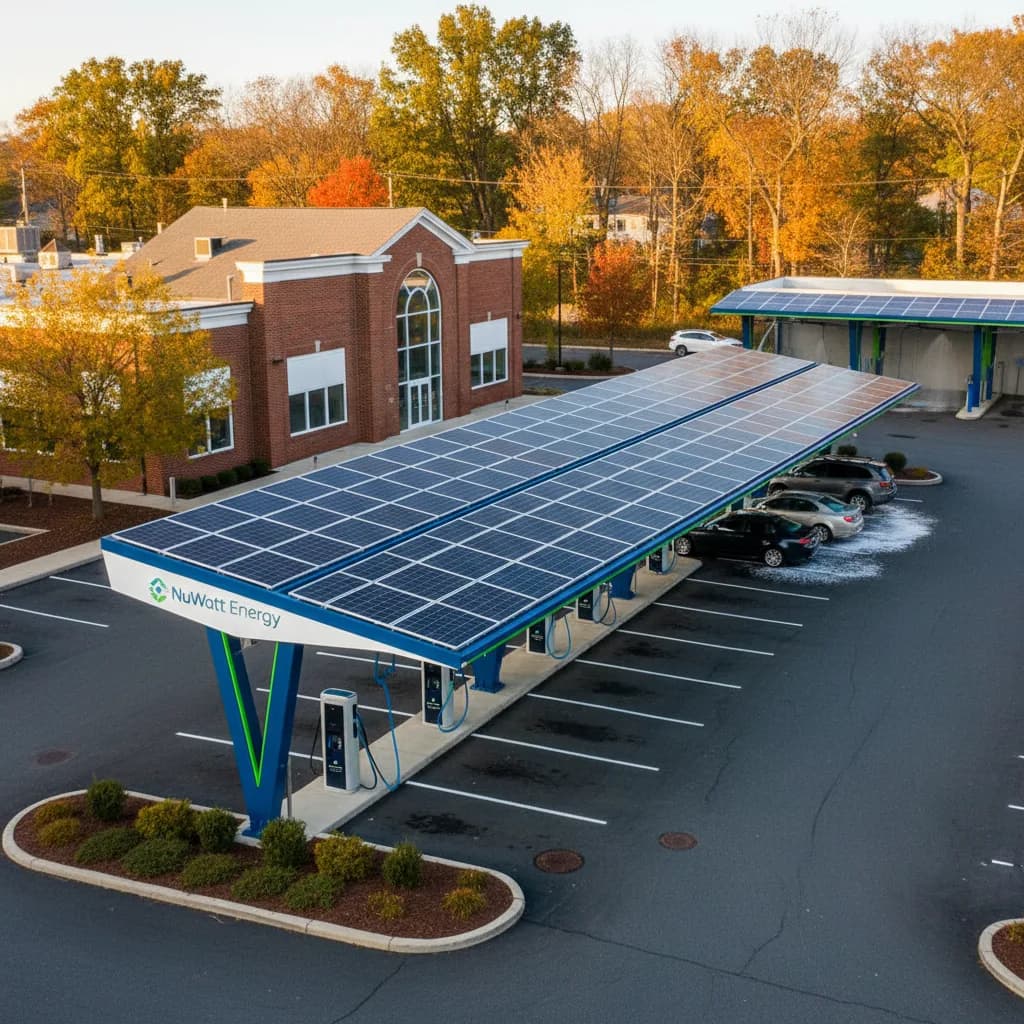
How a multi-bay CT car wash deployed 4× ChargePoint CP6000 + 2× 150 kW DCFC under a 115 kW solar canopy with battery buffering — and stacked 48E + 30C + EnergizeCT to reach a $410K net cost.
115 kW
Solar canopy
6 (4 L2 + 2 DCFC)
EV ports
$410K
Net cost
9 months
Build time
Illustrative example. This sample project shows representative numbers based on NuWatt benchmark data and 2026 CT incentive programs. Your actual project depends on site conditions and incentive availability at the time of install.
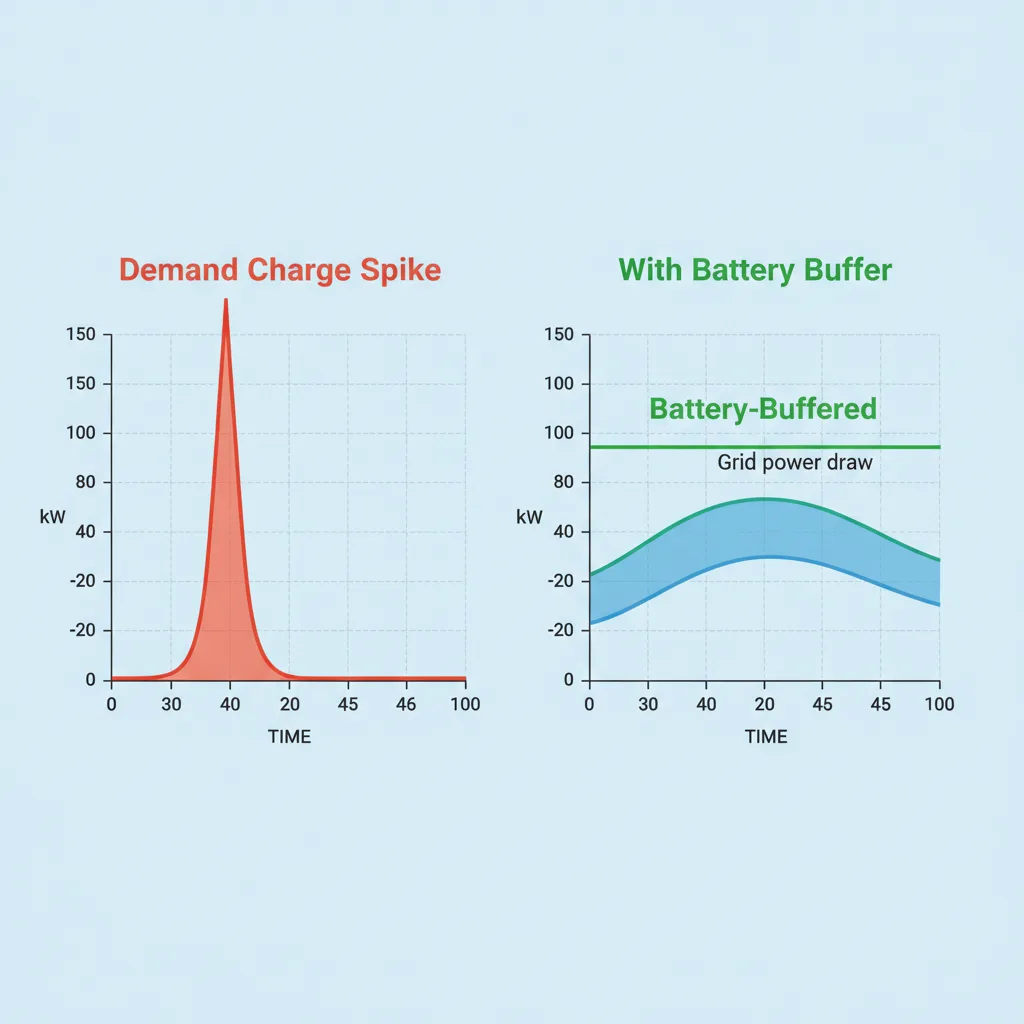
A 200 kWh / 100 kW battery sits between the grid and the DC bus, carrying most of the 150 kW DCFC peak. Grid draw stays near 30 kW, keeping the service inside the existing 480V envelope and eliminating a 12-month Eversource transformer queue.
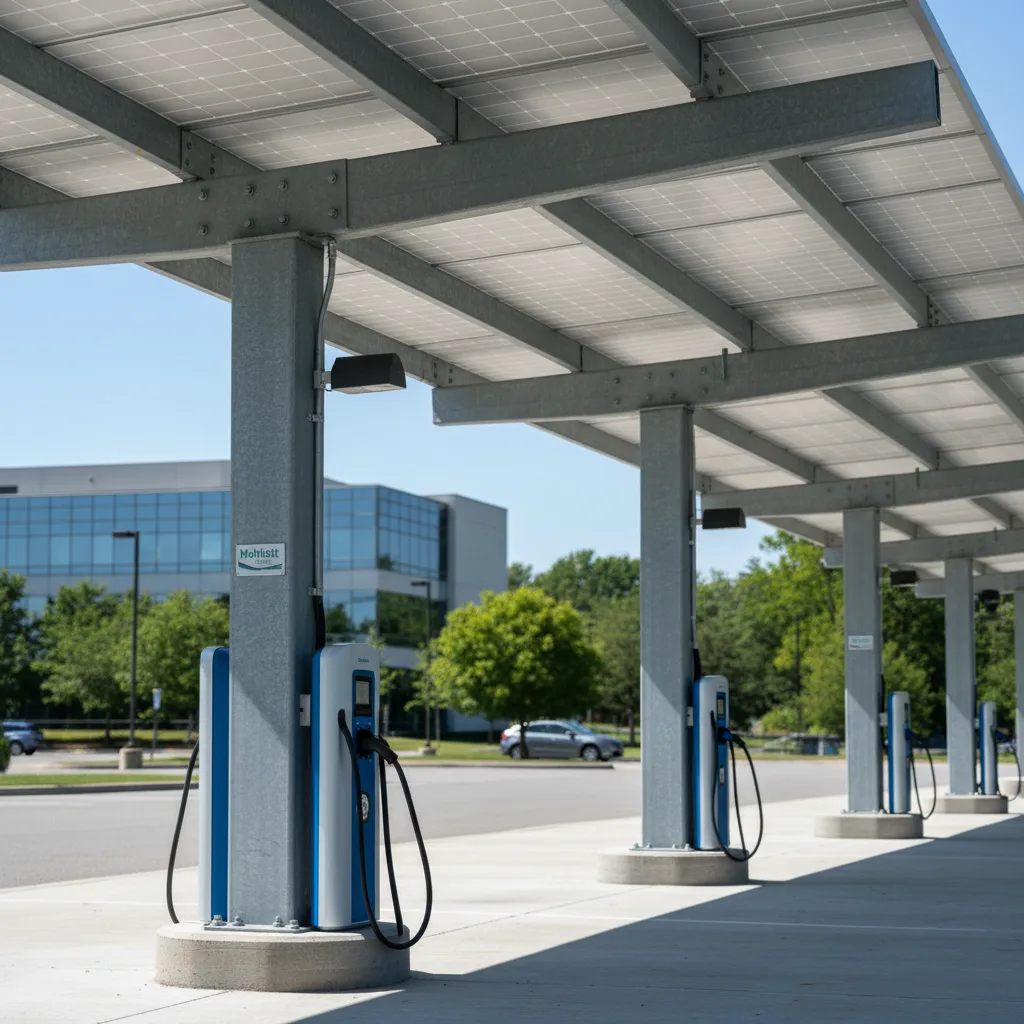
The site is a mid-Connecticut express-tunnel car wash with approximately 40 customer parking stalls and a dedicated employee lot. The operator wanted to monetize dwell time — customers already sit for 3–6 minutes during a wash cycle — without committing to a grid-service upgrade that would push commissioning into 2027.
The canopy generates, the battery buffers, and the chargers deliver. Every component is sized around one constraint — keep grid draw below the service ceiling during peak DCFC sessions.
Solar canopy
Steel-framed carport over 18 customer stalls. Bifacial modules capture reflected light off the paved lot. String inverters feed the building meter.
Battery storage
Outdoor lithium cabinet, DC-coupled to the DCFC bus. Category-comparable to ElectricFish, FreeWire, or Tesla Megapack class hardware.
DCFC pair
Tritium PKM150 or Kempower C-Series class mid-power DCFC — CCS + CHAdeMO, liquid-cooled cables, OCPP 2.0.
L2 ports
ChargePoint CP6000 at 22 kW, daisy-chained on a single 200A feeder. Customers charge during the wash + detail cycle.
How the bus ties together: The 480V 3-phase service feeds the main switchboard. From there, one feeder runs the solar inverter and the L2 bank; a separate feeder lands at the BESS cabinet, which DC-couples to the DCFC dispensers. When a DCFC session starts, the battery dispatches up to 100 kW, the solar contributes whatever it is generating, and only the residual (~30 kW) gets pulled from the Eversource transformer. The result: a 150 kW charger running off what looks like a 30 kW meter reading to the utility.
Section 48E covers the generation asset. Section 30C covered the chargers — placed in service by June 30, 2026, when that credit expired. EnergizeCT closes the gap on EVSE + make-ready. Each dollar is pinned to specific equipment and a specific form.
Gross project
$730K
Canopy + battery + chargers + make-ready, all-in. NuWatt 2026 benchmark.
− Section 48E
−$90K
30% clean electricity ITC on $300K canopy basis. Form 3468.
− Section 30C (PWA)
−$70K
30% × $232K charger basis, under the $100K per-port cap. Form 8911.
− EnergizeCT EVSE
−$120K
50% of $240K charger hardware + install. Eversource CT portal.
= Net cost
$410K
Before a dollar of demand-charge avoidance or solar offset.
One more line item: EnergizeCT also pays 100% of the $40K approved utility-side make-ready (primary cabling, meter socket rework). That is baked into the $410K net above — counted once, in the EnergizeCT bucket — not double-counted against 30C.
Eversource CT Rate 30 / G-3 medium commercial service charges roughly $13.50 per kW of monthly peak demand. Peaks are ratcheted off the highest 15-minute average, so a single hot midday DCFC session can reset the meter for the entire billing period.
Without battery buffering
With 200 kWh / 100 kW battery buffer
Annual savings
~$19,200 / year in avoided demand charges
The bundle does not rely on DCFC session revenue to work. Demand-charge avoidance and solar offset alone pay the bulk of the bill.
Demand-charge avoidance
$19,200
per year (Eversource G-3)
Solar self-gen offset
$26,400
per year on 132,000 kWh
Managed-charging revenue
$600
Jun–Sep, 6 plugs
Total annual savings
~$46,200
Pre-session revenue
Payback math
$410K net ÷ $46.2K average annual savings = roughly an 8–9 year simple payback on the full bundle, before any session revenue from DCFC customers. The chargers themselves pay back faster because the demand-charge avoidance is booked against charger operation, not against the solar canopy. Add any DCFC retail margin at $0.45–$0.55/kWh and payback compresses toward 6–7 years under moderate utilization.
Each unit is OCPP-compliant and sized around the buffered DC bus topology.
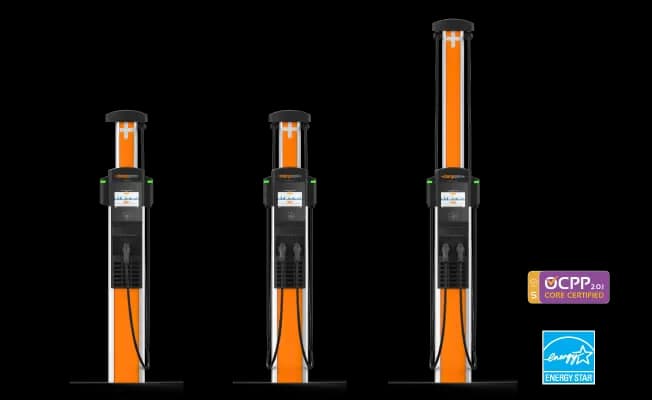
19.2 kW networked L2 (dual-port option), OCPP 2.0, daisy-chain power share
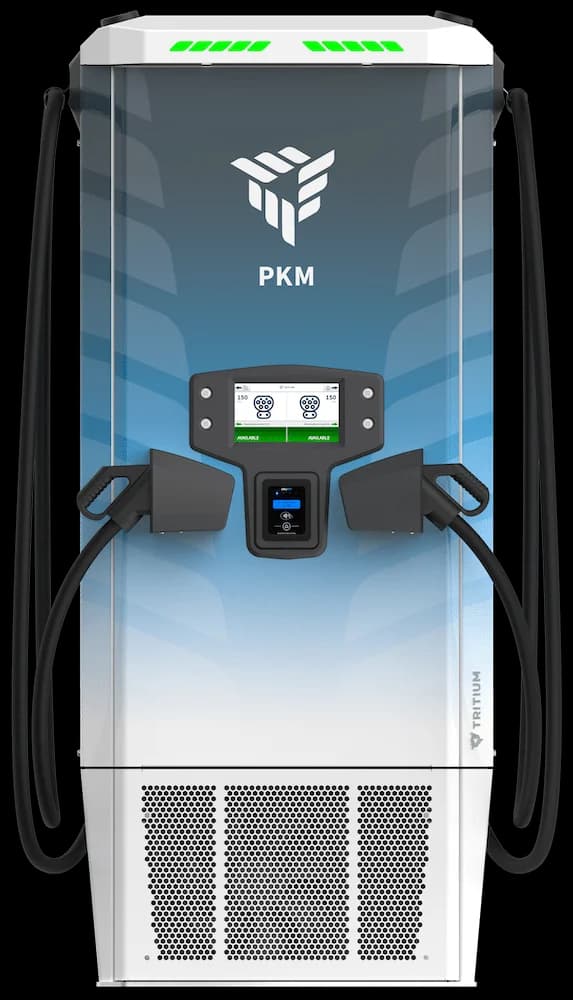
150 kW modular DCFC, CCS + CHAdeMO, liquid-cooled cable, IP65 outdoor
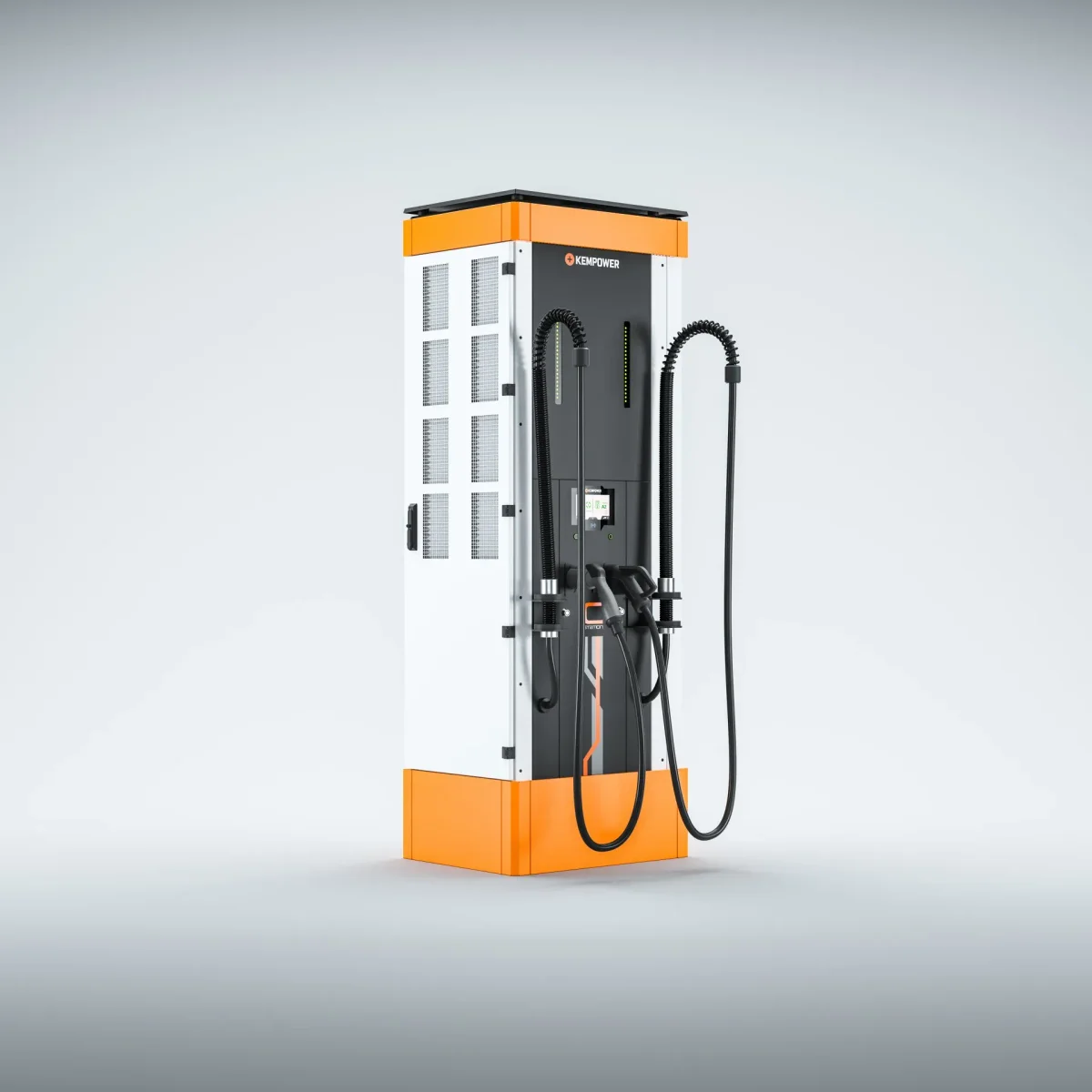
Dynamic power-sharing DCFC, 50–400 kW configurable, satellite architecture
Phases overlap where possible — EnergizeCT filing runs parallel to design, not after.
Tract check, existing 480V 3-phase capacity, structural evaluation of parking lot subgrade, canopy orientation.
Solar canopy stamped drawings, battery cabinet pad, DC bus topology, selective coordination study.
Eversource CT commercial EV portal filing, make-ready scoping, incentive agreement signed.
Municipal permit, Eversource interconnection study, witness test schedule locked.
Parking lot subgrade, footings, steel canopy structure erected over customer parking.
Panels installed, inverters and BESS energized, witness test with Eversource.
CP6000s and DCFC units on OCPP, session pricing live, EnergizeCT final payment trigger.
We will run the tract check, file the EnergizeCT application, and scope the battery sizing — before you commit to a design contract. The engineering moat is in the stack, not in the sales deck.
Scope your CT bundleThe 200 kWh / 100 kW battery sits between the grid and the DC bus. During a 150 kW DCFC session the battery carries most of the peak; grid draw stays near 30 kW. That keeps the utility service within the existing 480V 3-phase envelope, so Eversource CT does not require a new transformer or a 12-month service-planning queue.
IRS Form 8911 — Alternative Fuel Vehicle Refueling Property Credit (Section 30C)
Statutory basis for the 30% PWA-compliant federal credit on commercial EVSE.
IRS — Clean Electricity Investment Credit (Section 48E)
Post-2025 successor to 48 ITC; applies to solar canopy placed in service after 2024.
EnergizeCT — Commercial EV Charging Incentives
Co-administered by Eversource CT and United Illuminating. EVSE + make-ready rebates.
Eversource CT — Commercial Rate Schedules (Rate 30 / G-3)
Demand charges near $13.50/kW on medium commercial service drive battery-buffering ROI.
ISO-NE — Capacity and Demand Response Tags
Summer + winter peak windows used to model when battery dispatch avoids coincident demand.
NREL — Connecticut Solar Resource Data (PVWatts Benchmark)
Baseline 1,150 kWh/kW-DC/yr used for carport production estimates.
Energy Storage Association — Commercial BESS Deployment Guide
Reference for outdoor lithium cabinet sizing on 100 kW / 200 kWh battery systems.
NuWatt Engineering — CT Project Benchmark Data (2026)
Internal installed-cost dataset across solar canopy + battery + DCFC deployments.
Twenty-minute feasibility call covers tract eligibility, EnergizeCT cycle status, and a defensible net-cost target.
Last verified by NuWatt Engineering Team on 2026-04-14. Numbers are illustrative — actual project economics depend on site conditions, utility tariff at time of interconnection, and EnergizeCT cycle availability.