
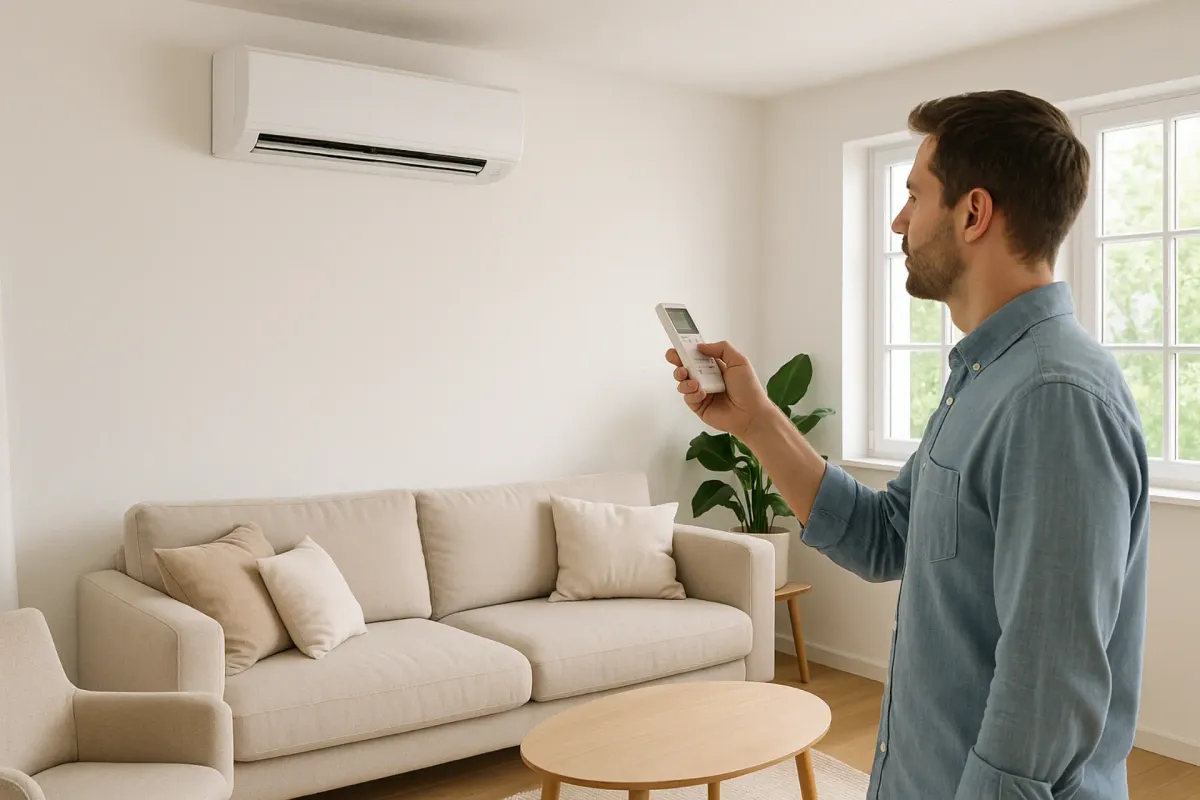

A single-zone mini-split costs $3,500–$5,500 installed. A 3-zone system runs $8,500–$13,000, while 5+ zones can reach $20,000. Compare gross planning ranges, quote scope, and current state incentives.
Home Electrification Experts — Full-Service Design to Install, 9 States
Single-Zone
$3,500–$5,500
fully installed
Multi-Zone
$8,500–$20,000
3-5+ zones
Federal 25C
Ended
after Dec. 31, 2025
State Incentives
Up to $16,000
MA income-based; rules apply
The Real Cost of Mini-Splits in 2026
Mini-split heat pumps remain one of the most cost-effective ways to heat and cool your home, but the financial landscape has shifted. The federal Section 25C tax credit is not allowed for property placed in service after December 31, 2025, according to the IRS termination guidance. State and utility incentives may still reduce eligible project costs, but the table below shows gross installed planning ranges before incentives.
| Configuration | Equipment | Labor | Total Installed |
|---|---|---|---|
| Single-zone (9K–12K BTU) | $1,500–$2,500 | $2,000–$3,000 | $3,500–$5,500 |
| 2-zone (18K–24K BTU) | $3,000–$4,500 | $3,000–$4,500 | $6,000–$9,000 |
| 3-zone (24K–36K BTU) | $4,500–$7,000 | $4,000–$6,000 | $8,500–$13,000 |
| 4-zone (36K–48K BTU) | $6,000–$9,000 | $5,000–$7,000 | $11,000–$16,000 |
| 5+ zone (48K+ BTU) | $8,000–$12,000 | $6,000–$8,000 | $14,000–$20,000 |
These are planning ranges, not quotes. A final price depends on the exact AHRI-matched equipment, design heating load, indoor-unit style, line-set length and routing, electrical capacity, condensate strategy, permits, access, and finish work. Ask every contractor to identify those items separately so you can compare proposals on the same scope instead of comparing headline totals with different exclusions.
What rebates apply to your mini-split?
Select your state and project type to see programs that may apply. Final eligibility requires equipment, utility, income, and project-scope verification.
No matching rebates found for this combination. Try selecting different products.
The cash figure includes only explicitly modeled rebates. It does not add alternative pathways together or count loans, tax treatment, recurring payments, or rebates for other equipment. Final eligibility depends on system size, project scope, income, utility, and program approval.
Get your exact rebate verification — free, 15 minutes
Equipment Cost vs Labor Cost
One of the most misunderstood aspects of mini-split pricing is the balance between equipment and labor. Many homeowners focus exclusively on the cost of the outdoor unit and indoor heads, but installation is often a large share of the total price. Here is what that work covers:
- Electrical work — A dedicated 20A or 30A circuit from your breaker panel to the outdoor unit. If your panel is full, a sub-panel may be needed ($800–$1,500 additional).
- Refrigerant line routing — Drilling through exterior walls, running copper line sets, insulating, and pressure-testing. Longer runs (over 25 feet) add $15–$25 per additional foot.
- Mounting — Indoor head mounting, outdoor unit pad or wall bracket installation, and condensate drain routing.
- Commissioning — Vacuum pump, nitrogen pressure test, refrigerant charge verification, and system startup. Proper commissioning takes 2–3 hours and is critical for system longevity.
- Permits and inspection — Most municipalities require a mechanical and/or electrical permit. Permit fees range from $75 to $350 depending on your town.
What Drives Mini-Split Pricing
Not all mini-splits are created equal. The difference between a budget installation and a premium one can be $3,000–$8,000 for the same number of zones. Here are the key factors that move the price.
BTU Size
Larger systems cost more, but not linearly. A 24K BTU outdoor unit typically costs only 30–40% more than a 9K BTU unit, not three times as much. The sweet spot for value is usually 12K BTU single-zone or 24K–36K BTU multi-zone systems.
Brand
Brand choice is the single biggest equipment cost variable. Here is how the major manufacturers compare for a typical single-zone 12K BTU wall-mount system:
Premium
Mitsubishi
Best cold-climate performance. Hyper-Heating (H2i) rated to -13°F. Industry-leading warranty. Most installer experience.
Premium
Fujitsu
Excellent cold-climate models. RLS3H rated to -15°F. Slightly lower price than Mitsubishi with comparable performance.
Mid-Premium
Daikin
World's largest HVAC manufacturer. Aurora series performs well in cold climates. Good value for quality.
Mid-Range
LG
Strong efficiency ratings. Art Cool designer units available. Less cold-climate installer experience in New England.
Mid-Range
Carrier/Bryant
Midea-manufactured. Good equipment but fewer dedicated mini-split installers. Carrier name recognition adds some premium.
Budget
MRCOOL/Cooper & Hunter
DIY-friendly models available. Lower initial cost but shorter warranty and less installer support. Not recommended for primary heating.
Efficiency Rating
Higher-efficiency units (SEER2 20+ / HSPF2 10+) can cost more upfront and may use less electricity, but the payback is not universal. Compare each matched system's cold-weather capacity and efficiency at your design temperature, then model it with your electric rate, heating load, operating schedule, and backup-fuel cost.
Installation Complexity
The biggest hidden cost driver is installation complexity. A straightforward single-zone install (outdoor unit on ground-level pad, indoor head on first-floor exterior wall, electrical panel nearby) can be done in 4–6 hours. But these factors add significant time and cost:
- Multi-story line runs — Running refrigerant lines from ground level to a second or third floor adds $500–$1,500.
- Attic or crawlspace routing — Working in tight spaces adds labor time. Expect $300–$800 extra.
- Panel upgrades — If your electrical panel is full or undersized (100A panels are common in older homes), a panel upgrade adds $1,500–$3,000.
- Concrete/masonry drilling — Brick, stone, or poured-concrete walls require specialized equipment. Add $200–$500 per penetration.
- Historic district requirements — Some towns require line-hide covers to match exterior trim colors or restrict outdoor unit placement. Add $300–$1,000 for aesthetics compliance.
2026 Mini-Split Rebates by State
State programs use different definitions of whole-home, partial-home, existing-fuel displacement, income, tonnage, and eligible equipment. The figures below were checked against the linked official program pages on September 1, 2026. Treat every amount as conditional until the program or participating contractor verifies your address, utility, equipment, installer, existing fuel, and income pathway.
Mass Save
Massachusetts
Whole-home: $2,650 per ton up to $8,500. Partial-home: $1,125 per ton up to $8,500. Income-based incentives can reach $16,000 or no-cost turnkey service. Eligibility, weatherization, sizing, and participating-contractor rules apply.
Official program detailsClean Heat RI
Rhode Island
For income-qualified households below 150% of state median income that meet weatherization, existing-fuel, equipment, and installer rules. The heat pump must displace fossil-fuel heating in the zones it serves.
Official program detailsEnergize CT
Connecticut
For installations on or after September 1, 2026, Energy Optimization pays $1,500 per ton up to $10,000 for qualifying displacement or integration of oil, gas, propane, or electric resistance. The alternative standard offer is $250 per ton up to $2,500.
Official program detailsEfficiency Maine
Maine
Whole-home ductless and other non-ducted systems receive $1,000, $2,000, or $3,000 per rebate-eligible outdoor unit based on household income. Lifetime limits and whole-home primary-heating requirements apply.
Official program detailsNHSaves
New Hampshire
Standard eligible heat-pump rebate: $250 per ton. Qualifying electric-resistance replacement installed March 23–December 31, 2026 can receive $2,000 per ton with pre-verification. Program funding, utility, product-list, and five-ton account limits apply.
Official program detailsEfficiency Vermont
Vermont
Qualifying ductless systems receive $375 or $475 based on capacity. Integrated controls add $600, while eligible household and utility bonuses vary. The equipment must be new, qualifying, and purchased through a participating distributor.
Official program detailsUtility-specific heat-pump programs
New Jersey
PSE&G full-displacement Clean Heat projects can receive the lesser of $10,000 or 50% of eligible cost. Atlantic City Electric offers up to $2,000 for qualifying cold-climate equipment; JCP&L publishes $750 for ductless mini-splits and up to $1,000 for air-source heat pumps. These utility pathways are alternatives, not amounts to add together.
Official program detailsElectric-utility equipment rebates
Pennsylvania
PPL currently publishes $225 per mini-split outdoor unit and up to $325 for air-source heat pumps. PECO customers must verify the current project-specific amount; utility territories are alternatives.
Official program detailsLocal utility heat-pump programs
Texas
Austin Energy publishes $650–$950 standalone heat-pump and mini-split tiers. CPS Energy pays $90–$310 per ton, which requires system tonnage. Oncor offers provider-administered efficiency incentives without one fixed public customer amount. These local utility programs are alternatives.
Official program detailsIncentives are limited by program funding and can change. Verify eligibility before installation and do not subtract a rebate from a proposal until the responsible program confirms the project pathway and amount.
Find Your State Rebate
See the incentive pathways that may apply to your home, then verify the amount before signing.
Hidden Costs to Watch For
The installed price your contractor quotes should be all-inclusive, but some installers quote a base price and add extras later. Here are the common add-ons you should ask about upfront:
Electrical panel upgrade
If your panel is full or 100A, expect $1,500–$3,000 for a panel upgrade or sub-panel. Ask your installer to check before quoting.
Line-hide covers
Decorative covers for exposed refrigerant lines: $300–$800 per run. Some HOAs and historic districts require them.
Condensate pump
If your indoor unit cannot gravity-drain condensate, a mini pump adds $150–$300. Common for basement or below-grade installations.
Smart thermostat / Wi-Fi adapter
Most modern mini-splits include Wi-Fi, but some models require a $100–$200 adapter for app control. Verify before purchase.
Permit and inspection fees
Municipal permits range $75–$350. Some installers include this; others pass it through as an add-on.
Extended warranty
Manufacturer warranty is typically 5–7 years on parts and compressor. Extended 10–12 year coverage adds $200–$600.
Single-Zone vs Multi-Zone Economics
One of the most important cost decisions is whether to install a single multi-zone system (one outdoor unit connected to multiple indoor heads) or multiple independent single-zone systems. The answer is not always obvious and depends on your specific situation.
Lower Upfront Cost
Multi-Zone System
Best when all zones run simultaneously. Single point of failure: if the outdoor unit fails, you lose heating and cooling in every connected room.
Better Efficiency & Redundancy
Multiple Single-Zone Systems
Each unit runs at optimal capacity for its zone. If one outdoor unit fails, the other zones keep running. Higher upfront cost but better long-term value.
Multiple single-zone systems can improve redundancy and part-load control when outdoor-unit placement allows, while one multi-zone system can reduce outdoor-unit count and upfront complexity. There is no universal payback winner: compare AHRI performance at your design temperature, minimum modulation, line lengths, service access, installed cost, and the effect of one outdoor-unit failure on the rooms it serves.
Check Heat Pump Rebate Eligibility
See which heat pump rebates and incentives apply to your home.
Check My Rebate EligibilityHow to Save on Your Mini-Split Installation
Even without federal tax credits, there are legitimate ways to reduce your mini-split cost:
Apply for state rebates BEFORE installation
Several programs require pre-approval. Installing first and applying later can disqualify you entirely. NuWatt handles all rebate paperwork.
Request quotes before peak heating or cooling demand
Shoulder-season scheduling can give you more appointment flexibility, but savings are contractor- and market-specific. Compare the same scope from multiple qualified installers.
Bundle multiple zones into one project
Installing 3 zones at once is cheaper per zone than doing them one at a time. The installer mobilizes once instead of three times.
Check income-qualified enhanced rebates
Income limits and benefits differ by program and household size. Use the official program links above instead of assuming a universal threshold.
Compare financing with the cash price
Mass Save currently advertises 0% HEAT Loan financing up to $25,000 for qualifying measures. Other states and utilities use different rates and terms; compare total repayment and eligibility.
Buy performance, design, and service — not only a logo
Compare the exact model pair, cold-weather capacity, efficiency, warranty terms, installer support, and parts availability. Brand tier alone does not determine the best system for a home.
The Bottom Line
Mini-split heat pumps in 2026 have gross planning ranges of $3,500–$5,500 for a straightforward single zone and $8,500–$20,000 for three to five or more zones in the configurations shown above. The federal Section 25C credit ended for property placed in service after 2025. State and utility incentives remain, but each pathway has its own household, utility, equipment, installer, existing-fuel, and project rules.
Compare gross installed cost first, then show every incentive as a separate conditional line. A useful proposal should identify the exact equipment, capacity at the local design temperature, included electrical and line-set work, exclusions, warranty, rebate pathway, and who is responsible for verification and filing.
Get Your Mini-Split Quote
Compare a scope-matched planning quote with state incentive pathways shown separately and verified before signing.
Frequently Asked Questions
How much does a single-zone mini-split cost installed?▼
Is it cheaper to install a mini-split yourself?▼
Which mini-split brand is best for cold climates?▼
Continue Reading
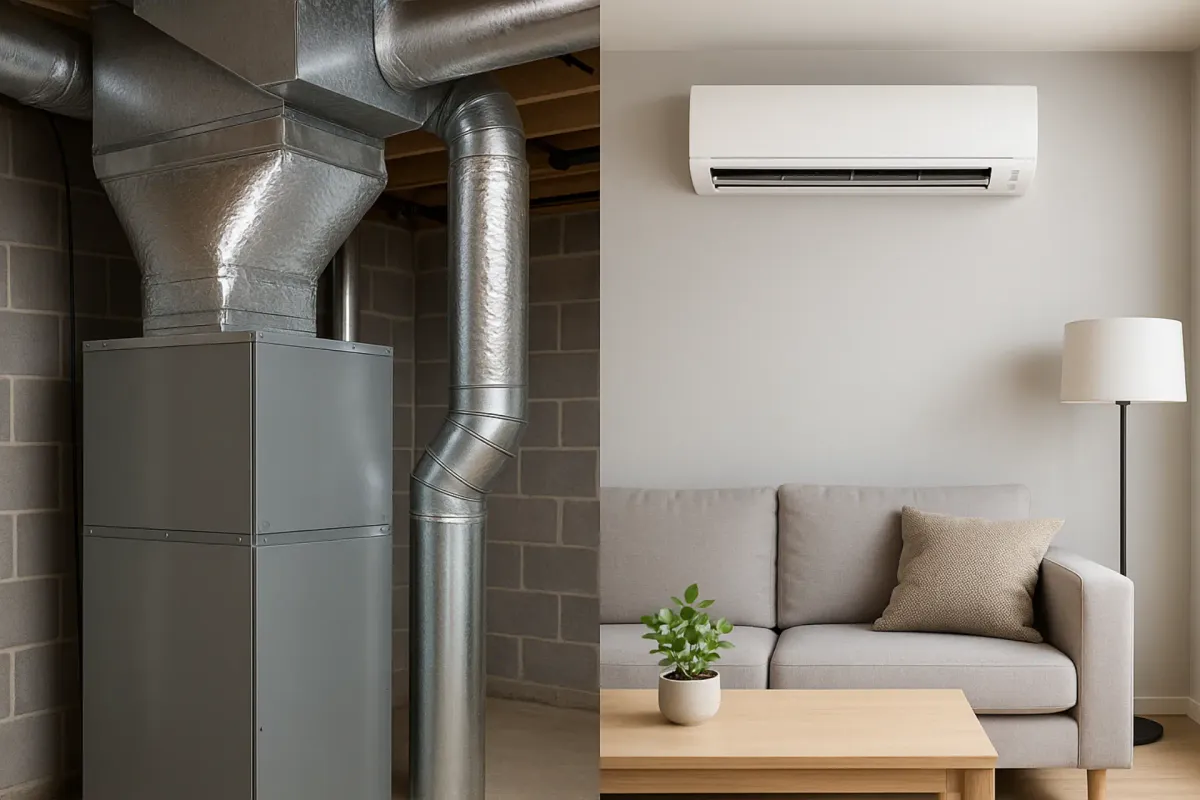
Ducted vs Ductless Heat Pumps: Manual J-Based Comparison by Home Type
Ducted heat pumps use existing ductwork and provide whole-home coverage from a single unit. Ductless mini-splits need no ducts and offer room-by-room control. The right choice depends on your home's existing infrastructure and layout.
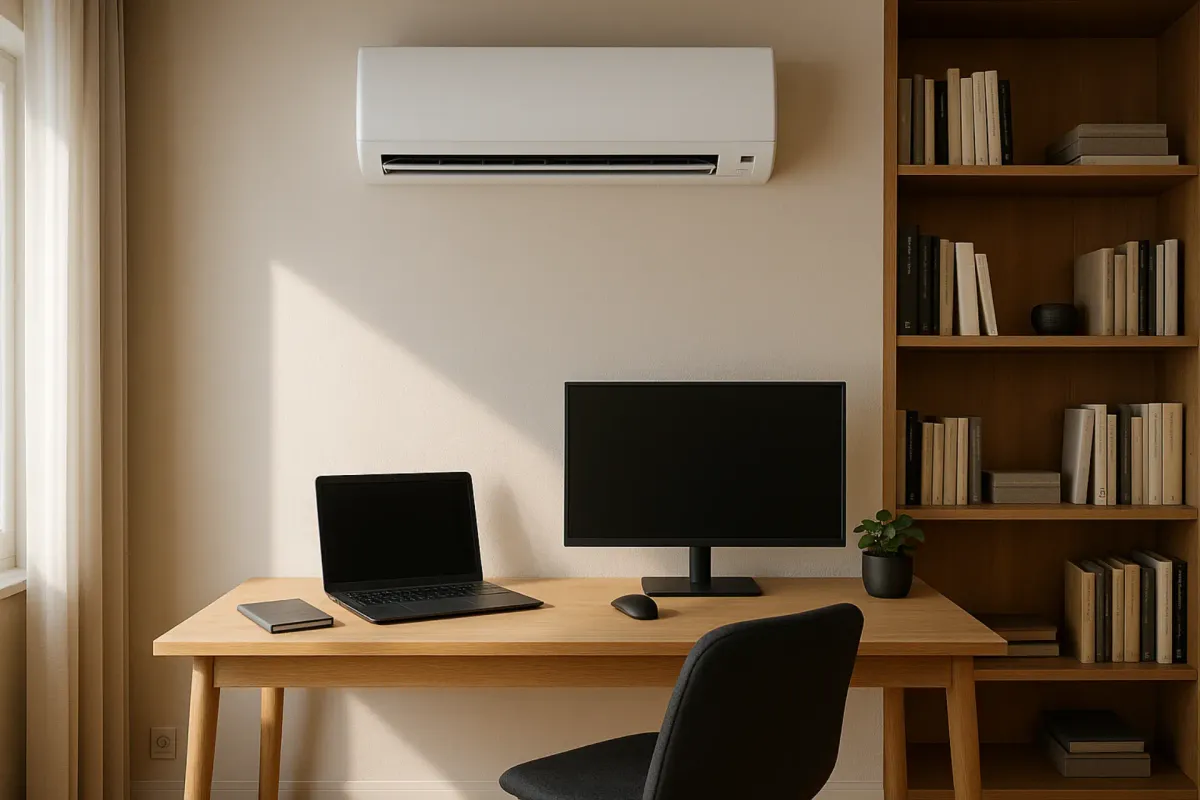
Mini-Split for One Room: Cost, Sizing & Best Units
A single-zone ductless mini-split is the fastest, most affordable way to heat and cool one room. Install takes 4–8 hours, costs $3,500–$5,500, and pays for itself in 2–4 years compared to window ACs and space heaters.
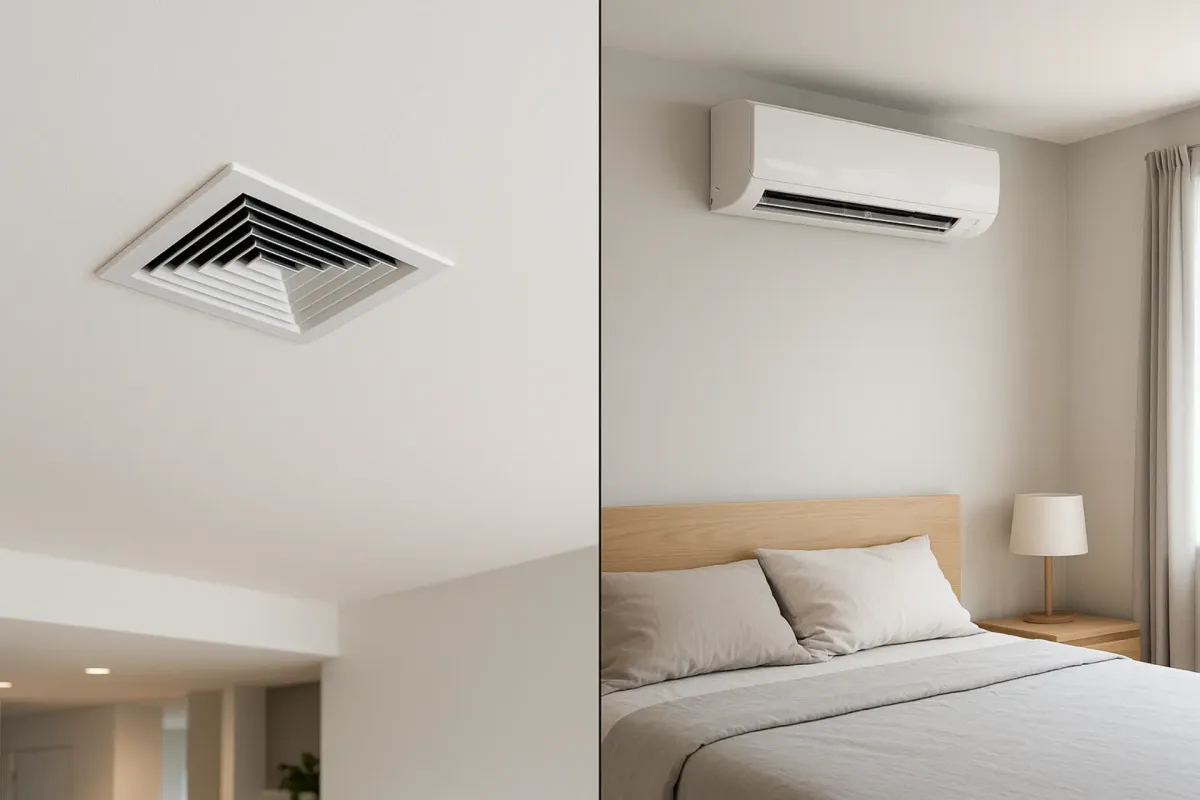
Ductless vs Central Ducted: 10-Year Cost Guide
Whole-home ductless costs $15,000–$25,000 but saves 15–25% on energy. Central ducted costs $12,000–$18,000 but loses 10–30% to duct losses. Here is how the math works over 10 years.