
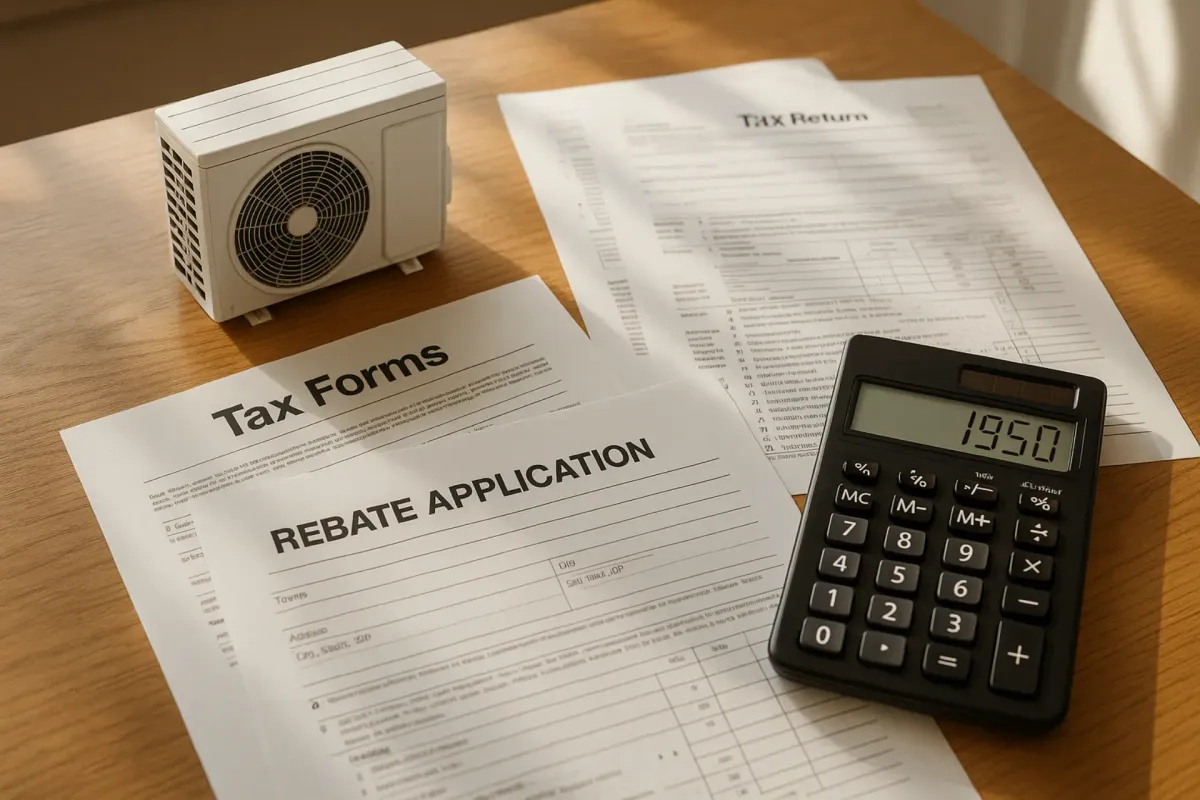

New installations and a 2025 return filed in 2026 are different. Understand the Section 25C air-source deadline, geothermal distinction, and separate state rebate rules.
Home Electrification Experts — Full-Service Design to Install, 9 States
Are there still federal heat pump tax credits in 2026?
For new 2026 installations, the federal homeowner heat pump credits have ended. Section 25C covered qualifying air-source heat pumps and heat pump water heaters placed in service through December 31, 2025; Section 25D applied to qualifying geothermal systems, not ordinary air-source heat pumps. Filing a 2025 return in 2026 is different: an eligible 2025 installation may still be claimed. State and utility rebates have separate eligibility and application rules.
Federal installation-date and filing guidance checked September 4, 2026 against the IRS Section 25C guidance and IRS Section 25D guidance. Keep the installation invoice, placed-in-service date and required equipment documentation for your tax preparer.
Federal Credit
$0
homeowner purchases
Utility Offers
Separate rules
verify before deducting
Income Tiers
Conditional
approval required
Federal Expiry
Dec 31, 2025
OBBBA repeal
State-program source directory (amounts are not reverified by the federal-tax update): Mass Save, Energize CT, Clean Heat RI, NHSaves, Efficiency Vermont, Efficiency Maine, NJ Clean Energy, PA Act 129 utilities (PECO/PPL/Duquesne/FirstEnergy), and Austin Energy/Oncor. Tax-law context: IRS guidance on the One Big Beautiful Bill Act (OBBBA) of 2025.
What Happened to the Federal Heat Pump Tax Credit
If you're shopping for a heat pump in 2026, the single biggest change you need to understand is this: the federal tax credits that once covered a significant portion of your heat pump purchase are gone. Both Section 25D (the Residential Clean Energy Credit) and Section 25C (the Energy Efficient Home Improvement Credit) expired on December 31, 2025, under the One Big Beautiful Bill Act (OBBBA).
Section 25C previously offered homeowners up to $2,000 per year for qualifying heat pump installations. Section 25D covered qualifying geothermal equipment, not the same air-source system. A qualifying 2025 installation can still be reported on a 2025 return filed in 2026. Do not deduct either expired homeowner credit from a new 2026 installation quote.
For a qualifying air-source heat pump, the historical Section 25C credit was 30% of eligible costs, capped at $2,000 for the relevant heat pump category. It was not a choice between that credit and a geothermal Section 25D credit. Federal-funded state rebate programs are separate from these tax credits; confirm whether your state is accepting applications before assuming a rebate.
Key Change for 2026
If you buy a heat pump with cash or a loan in 2026, you get $0 in federal tax credits. This applies to both 25D and 25C. State incentive programs are now the primary source of savings.
Why the Federal Credits Expired
The Inflation Reduction Act of 2022 originally extended and expanded residential clean energy tax credits through 2032. However, the One Big Beautiful Bill Act (OBBBA), signed into law in late 2025, repealed these provisions as part of a broader restructuring of the tax code. The rationale was that states had built robust incentive programs of their own, and federal subsidies were duplicative.
Whatever the political reasoning, the practical impact is clear: homeowners can no longer rely on the IRS to offset part of their heat pump investment. This makes understanding state and utility programs far more important than it was even 12 months ago. It also changes the math on when to buy — because state programs have funding caps that federal tax credits never had.
Many contractors and online resources are still advertising the federal credit. If you see a quote that includes "30% federal tax credit" or "$2,000 federal rebate," that information is outdated. Walk away from any installer who factors a dead credit into your savings estimate. It's either dishonest or a sign they aren't keeping up with the regulatory landscape.
State Incentives: Your Primary Savings Source
$14,000 System
$14,000 System
Federal homeowner tax credits, utility rebates, income-qualified assistance and financing are different instruments. A program’s largest advertised award may describe a different fuel, equipment type or income tier than yours. Do not add alternatives together or count a loan as a rebate. Confirm eligibility, reservation, installation deadline and application sequence before treating any amount as part of your budget.
Use the program directory below to reach the relevant administrator. It deliberately does not turn older maximum-award figures into current promises. The updated Pennsylvania guide separately lists dated PPL, Duquesne Light and EAP offers and identifies programs whose new amounts still need confirmation.
| State | Program | Award verification | What to ask |
|---|---|---|---|
| Massachusetts | Mass Save | Match the current offer to your utility, equipment and installation date. | Whether income assistance replaces or can combine with the standard offer. |
| Connecticut | Energize CT | Match the current offer to your utility, equipment and installation date. | Whether income assistance replaces or can combine with the standard offer. |
| Rhode Island | Clean Heat RI | Match the current offer to your utility, equipment and installation date. | Whether income assistance replaces or can combine with the standard offer. |
| New Hampshire | NHSaves | Match the current offer to your utility, equipment and installation date. | Whether income assistance replaces or can combine with the standard offer. |
| Vermont | Efficiency Vermont | Match the current offer to your utility, equipment and installation date. | Whether income assistance replaces or can combine with the standard offer. |
| Maine | Efficiency Maine | Match the current offer to your utility, equipment and installation date. | Whether income assistance replaces or can combine with the standard offer. |
| New Jersey | NJ Whole Home | Match the current offer to your utility, equipment and installation date. | Whether income assistance replaces or can combine with the standard offer. |
| Pennsylvania | PA Utility Rebate | Match the current offer to your utility, equipment and installation date. | Whether income assistance replaces or can combine with the standard offer. |
| Texas | TX Utility Rebate | Match the current offer to your utility, equipment and installation date. | Whether income assistance replaces or can combine with the standard offer. |
A percentage of installation cost is meaningful only when both the eligible project cost and the approved award are known. A rebate alone cannot establish payback: fuel use, heat-pump efficiency at winter temperatures, electricity tariff, maintenance and financing also matter. Request a gross-cost proposal and a separate incentive ledger, including items awaiting approval.
Find Your State's Rebate
Get a personalized quote with exact rebate amounts for your home.
Third-Party Ownership: Check the Technology and Contract
A lease is not automatic tax-credit eligibility
A loan or lease does not create a homeowner tax credit for an otherwise ineligible heat pump. Business energy credits have different technology, ownership and timing rules; do not assume an ordinary air-source heat pump qualifies for Section 48/48E. Compare the full financed cost and contract terms, with any owner-level incentive supported separately in writing.
If a salesperson says the equipment owner will claim a business credit, ask them to identify the eligible technology, statutory provision, ownership and placed-in-service requirements. An ordinary air-source heat pump does not become qualifying electricity-generation property simply because a third party owns it. Solar, geothermal and space-heating equipment cannot be treated as interchangeable tax categories.
Compare cash price, financed total and any lease on the same installed scope. For financing, request interest, fees, term and prepayment conditions. For a lease, request maintenance responsibility, annual escalation, transfer on sale, early termination and end-of-term ownership. An owner’s incentive is not necessarily passed through dollar for dollar to your payment.
Separate the contractor’s installation obligations from the lender’s or lessor’s promises. Your tax preparer should review any claimed tax benefit; your program administrator should verify rebates. Neither a website calculator nor a financing prequalification substitutes for those determinations.
Common Mistakes Homeowners Make in 2026
The transition away from federal credits has created a lot of confusion. Here are the most common mistakes we see homeowners making:
Assuming the federal credit still exists
If an installer quotes you a price “after the federal tax credit,” find a different installer.
Waiting for credits to come back
Do not budget a future credit until enacted rules cover your installation. Check current program funding before contracting.
Not checking state programs
Check the utility, exact equipment, installation date and required application sequence—not just the state name.
Missing income-qualified enhancements
Income-qualified assistance may have different costs, contractors and preapproval rules. It is not automatically an extra award to stack.
What You Should Do in 2026
The loss of federal credits does not mean heat pumps are a bad investment. The economics depend on your actual heating load, replacement fuel, electricity tariff and verified program eligibility. Here is a practical step-by-step plan:
Identify the utility and current program; record the offer date, equipment criteria and preapproval requirement.
Ask about income-eligible tiers and obtain eligibility confirmation before counting the assistance.
Check the actual reservation, purchase, installation and submission deadlines; programs do not all reset in January.
Get multiple quotes — ensure your installer handles rebate paperwork and does not reference dead federal credits
Compare cash, loan and lease totals; do not assume an air-source equipment lease creates a business energy credit.
Bundle with weatherization — many programs offer bonus rebates when you combine heat pump with insulation/air sealing
See our state-by-state rebates guide →
How NuWatt Helps You Navigate the New Incentive Landscape
Ask NuWatt for an installed-scope estimate showing gross cost, separately verified rebates and unresolved eligibility items. Keep your utility account details private and share them through the quote workflow, not public comments. The proposal should identify the exact equipment, who submits each application and which party bears the risk if an incentive is denied.
We serve Massachusetts, Rhode Island, Connecticut, New Hampshire, Vermont, Maine, New Jersey, Pennsylvania and Texas. An initial estimate is a starting point; the equipment match, building assessment, utility rules and written program approval establish the final scope and incentives.
Ready to Get a Heat Pump Quote?
Get a free, no-obligation quote from NuWatt Energy. We handle design, permits, and installation.
Frequently Asked Questions
Is there a federal tax credit for heat pumps in 2026?▼
What happened to the 25C energy efficiency credit?▼
Can I still get heat pump rebates?▼
Continue Reading
Can You Stack Federal Heat Pump Credits + Utility Rebates?
In 2026, there is no federal credit to stack. Your savings come from combining state program rebates with utility incentives.
Heat Pump Rebates 2026: Step-by-Step Claim Guide
Heat pump rebates range from $450 in Pennsylvania to $11,500 in Rhode Island. This guide covers the exact steps to claim your rebate in each state.
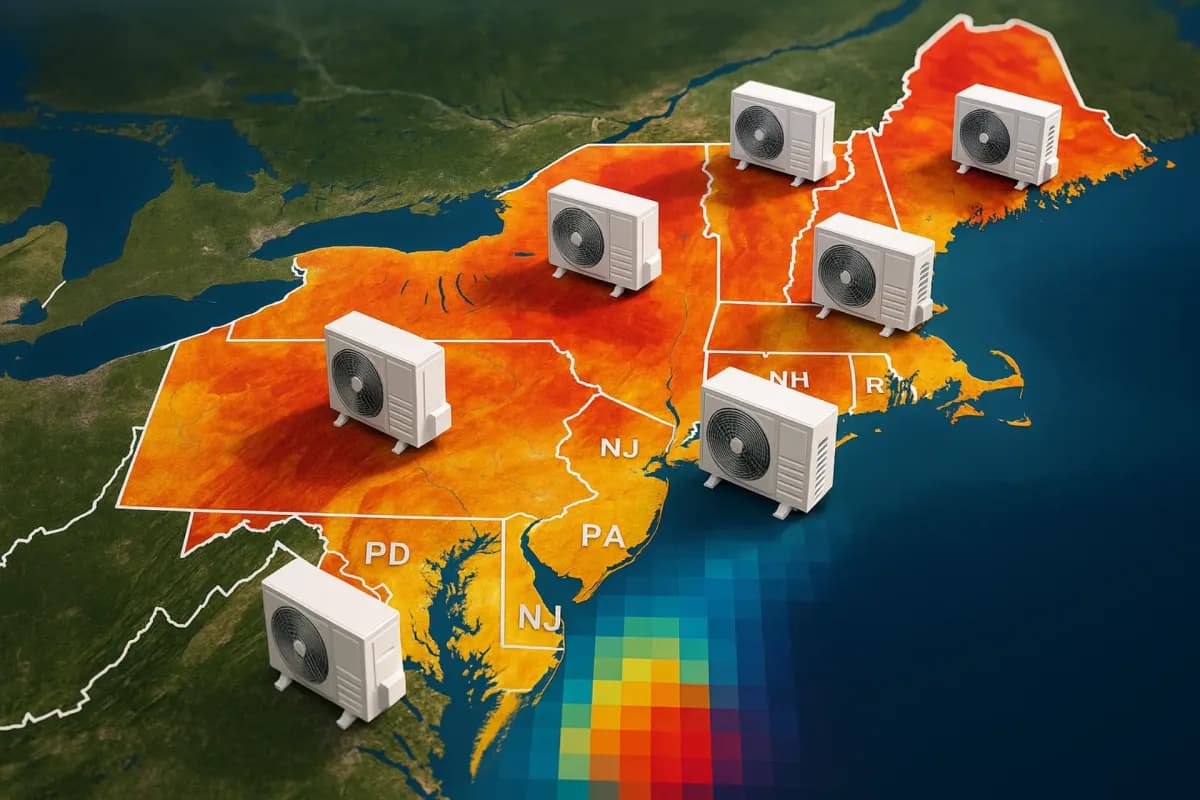
Heat Pump ROI: Cost, Incentives, and Payback by State
Heat pump payback ranges from 2 years in Rhode Island (thanks to $11,500 in rebates) to 8+ years in Pennsylvania. This state-by-state breakdown shows exact costs, incentives, and timelines.