Loading NuWatt Energy...

We use your location to provide localized solar offers and incentives.
We serve MA, NH, CT, RI, ME, VT, NJ, PA, and TX
Loading NuWatt Energy...
NuWatt designs, installs, and manages solar, battery, heat pump, and EV charger systems across 9 states. One company, one warranty, one point of contact.
Get a Free Quote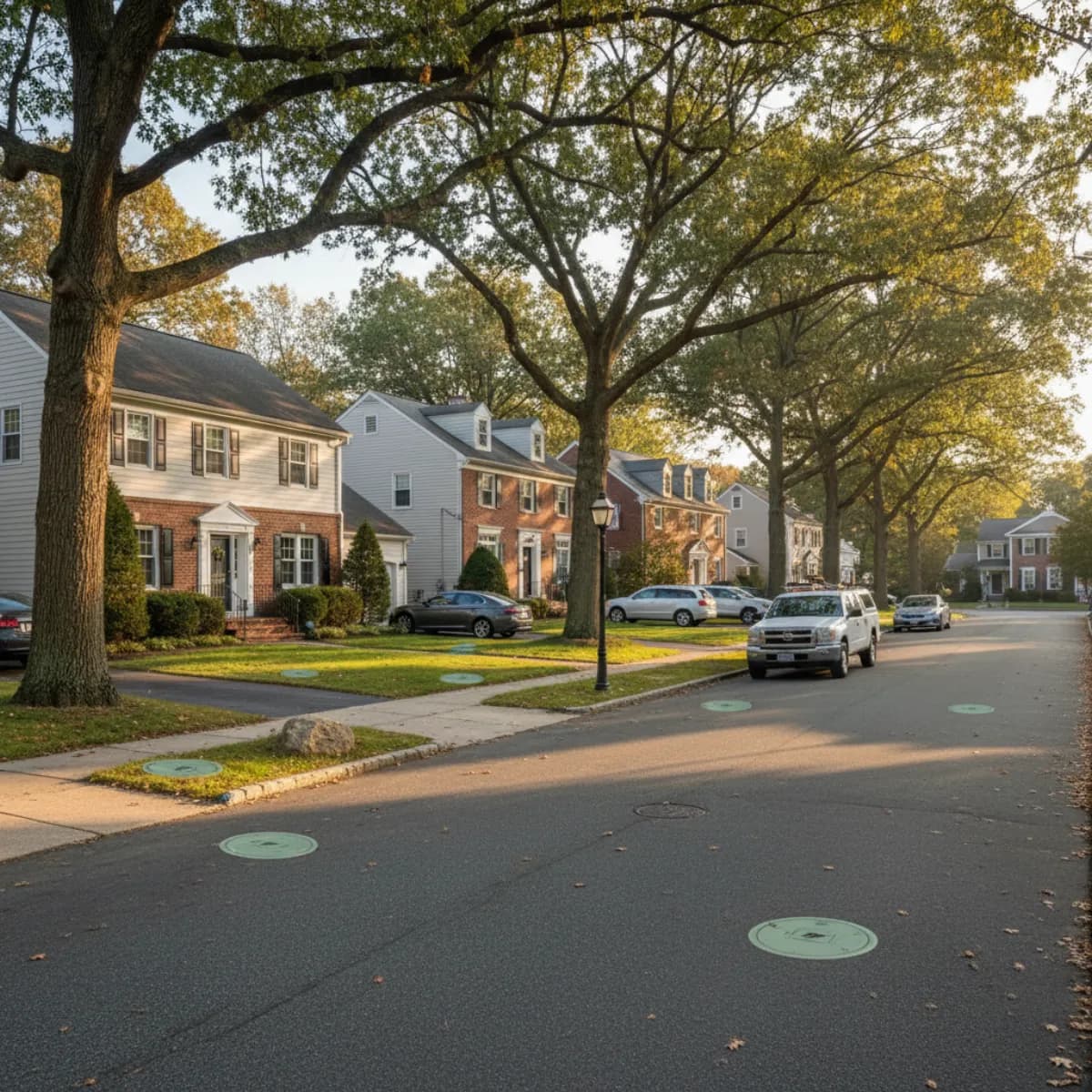
Under Chapter 239 of the Acts of 2024, Massachusetts gas utilities can now build and own shared geothermal loops and sell thermal service like a regulated utility. Eversource’s Framingham pilot is live. National Grid’s Lowell pilot was cancelled. Here’s the full 2026 picture.
Massachusetts is the first U.S. state with a utility-owned networked geothermal system in regular service: Eversource’s Framingham loop, which went live in 2024 serving about 37 buildings. A second pilot — National Grid in Lowell — was cancelled in early 2025 over cost and geology issues. A third, National Grid’s Franklin Field project with the Boston Housing Authority, is still moving forward. All three sit under the legal umbrella of Chapter 239 of the Acts of 2024, which redefined a “gas company” to allow utility-scale non-emitting thermal energy distribution. Availability for ordinary MA homeowners remains extremely limited in 2026.
It’s a district heating and cooling system that uses the earth as its source and sink, with the utility owning the shared underground loop. Think of it as a gas main — but for 50°F water instead of methane.
The utility drills a field of boreholes (or lays horizontal loops) in a shared corridor — often under a street right-of-way. Water circulates through HDPE pipe buried deep enough to sit at the stable Massachusetts ground temperature of about 50°F year-round.
A network of insulated water mains distributes that ambient-temperature water to every connected building, the way a gas main or water main connects a neighborhood. The pipe itself does not carry hot or chilled water — just the 50°F loop.
Each building has its own water-source heat pump inside. It exchanges heat with the shared loop to produce heating in winter and cooling in summer. No outdoor condenser, no well field on your lot, no boiler.
Under Chapter 239, the natural gas utility itself can build and own the shared loop and bill customers for thermal energy — the same way they own and bill for gas service today. Customers avoid the full capital cost of a private geothermal well field.
  [ Home A ]        [ Home B ]        [ School ]        [ Home C ]
      |                 |                  |                 |
   [ WSHP ]          [ WSHP ]           [ WSHP ]          [ WSHP ]
      |                 |                  |                 |
======+================+==================+=================+====   <- ambient 50°F loop (street)
                           |
[ Borehole field ] <- utility-owned vertical wells, ~500 ft deepThree utility pilots were authorized under Chapter 239. Their fates diverged sharply.
Status can shift during a pilot phase
Networked geothermal is a new regulated service. The Boston project in particular has seen schedule movement during development. Before you plan around a pilot, confirm current status directly with the sponsoring utility and with Department of Public Utilities docket filings.
Before November 2024, it was not legally clear whether a gas utility could even own a thermal energy pipe network. Chapter 239 resolved that — and set the rules every MA pilot now operates under.
Signed in November 2024, this climate and energy omnibus law amended the Massachusetts definition of a “gas company” to permit distribution of “utility-scale non-emitting thermal energy, including networked geothermal and deep geothermal energy.” That single change is what lets a gas utility (like Eversource or National Grid) legally build and own a shared ground loop and bill customers for thermal service — the same regulatory footing as natural gas service.
The Massachusetts Department of Public Utilities established guidelines for how utilities must propose, cost, meter, and rate-base networked geothermal projects. The guidelines cover pilot structure, customer protections, data reporting, and the path from demonstration project to fully approved tariffed service.
Each current pilot operates under a tailored DPU order with capped customer counts, defined study periods (Framingham is structured as a roughly two-year data-collection pilot), and specific reporting obligations so regulators can evaluate performance before broader rollout.
Nothing in Chapter 239 obligates a utility to extend networked geothermal to a particular street or town. Availability is pilot-by-pilot and utility-by-utility — so the fact that your neighbor in Framingham can connect does not mean your block in Quincy, Newton, or Springfield can.
Chapter 239 expanded the Massachusetts “gas company” definition to allow the making, selling, and distribution of utility-scale non-emitting thermal energy, including networked geothermal and deep geothermal energy. That phrase is the hinge — it is what converted district-scale geothermal from a science experiment into a regulated utility service.
For the roughly 99% of Massachusetts homeowners who are not on a pilot street today, an individual ground-source heat pump is still the only geothermal option available in 2026.
| Feature | Networked Geothermal (Utility) | Individual Ground-Source Heat Pump |
|---|---|---|
| Upfront cost to homeowner | Low — utility amortizes loop capital into a thermal service rate | High — $20,000–$50,000+ for boreholes or trenching on your own lot |
| Lot-size requirement | None — loop is in the public way | Significant — vertical boreholes need drill-rig access; horizontal needs 0.5+ acres |
| Works for rowhouses, triple-deckers, small urban lots | Yes — designed for dense neighborhoods | Often impractical — no drill access or loop area |
| Who owns the ground infrastructure | The utility (same model as a gas or water main) | The homeowner |
| Availability in 2026 | Limited — only active pilots (Framingham today; Boston next) | Statewide through private contractors |
| Per-building heat pump required | Yes — water-source heat pump inside each building | Yes — water-source or DX geothermal heat pump |
If you want geothermal in Massachusetts in 2026 and your street is not on a designated pilot, you are installing it yourself with a private contractor. See our MA geothermal heat pump guide for the individual path.
Networked geothermal is not a universal replacement for individual heat pumps. The physics, the economics, and the regulatory math favor some sites far more than others.
Triple-deckers in Dorchester, rowhouses in South Boston, small lots in Somerville and Chelsea — homes where a private geothermal well field is physically impossible benefit most from a shared utility loop.
The Boston Housing Authority’s Franklin Field partnership is the template: multifamily campuses concentrate demand, cut per-unit loop cost, and align with environmental justice funding streams.
Where utilities already need to replace aging leak-prone gas mains, a shared geothermal loop can substitute for the gas main itself — letting the utility retire a gas asset and deliver non-emitting thermal service in the same trench.
Schools, town halls, fire stations, and college campuses (as the original Framingham scope demonstrated) are ideal anchor customers — predictable load, long dwell times, and decision makers already pursuing decarbonization targets.
Neighborhoods still reliant on oil or propane — where customers have the highest heating bills and no gas service at all — are strong candidates for a first-generation networked geothermal rollout.
State policy explicitly prioritizes EJ neighborhoods for pilot expansion. If you live in a designated EJ community, monitor DPU dockets and utility integrated-resource filings for proposed next-phase networks.
The termination of the National Grid Lowell pilot is important data — not a verdict against the technology.
Section 25C (residential energy-efficient property, which previously covered geothermal heat pumps) and Section 25D(residential clean energy) both expired on December 31, 2025. There is no federal residential tax credit for a geothermal heat pump installation in 2026 — whether that unit connects to a networked geothermal loop or to boreholes in your own yard.
Section 48E (the technology-neutral commercial investment tax credit) remains active through the July 4, 2026 construction-start deadline and can apply to qualifying commercial or third-party-owned geothermal investments. Municipal and affordable-housing hosts of networked geothermal can also access direct-pay provisions for non-taxable entities.
Unless you are inside the Eversource Framingham pilot footprint or a Franklin Field resident in Dorchester, networked geothermal is not buildable at your home in 2026. Plan accordingly.
A Mass Save qualified cold-climate heat pump typically pays back faster than an individual geothermal system and is available everywhere in MA. Start there.
Vertical borehole or standing-column-well ground-source heat pumps work in most Massachusetts geology. Expect $20,000–$50,000+ installed before Mass Save rebates.
The most likely path to networked geothermal availability in your area is a future Eversource or National Grid pilot filing. These surface at the Department of Public Utilities months before shovels move.
Multifamily campuses are the sweet spot for utility networked geothermal. If your property has 50+ units and is near existing gas infrastructure that needs replacement, a utility may be willing to evaluate it as a next-phase site.
Networked geothermal is exciting — but for most Massachusetts homeowners the practical 2026 decision is still between an air-source heat pump and an individual geothermal system. NuWatt will size your load, confirm Mass Save eligibility, and compare both paths with real numbers.
Last reviewed April 2026. Networked geothermal is a new regulated service class in Massachusetts and facts on the ground change; confirm pilot status directly with Eversource, National Grid, or DPU docket filings before making site decisions.