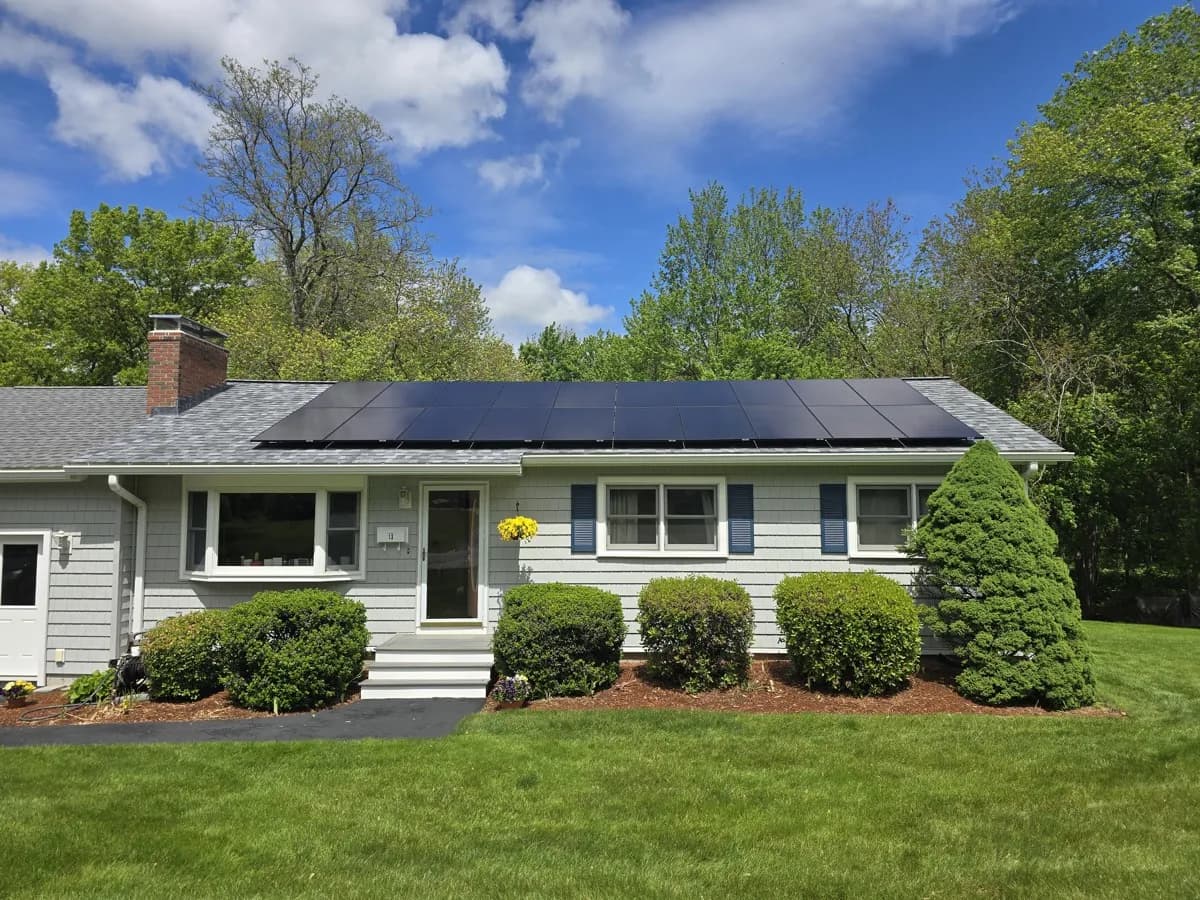
Chelmsford, MA
- System size
- 8.4 kW
- Solar panels
- 20 panels
- Panel model
- Panasonic EVPV420HK2
- Inverter
- Enphase IQ8M-72-2-US

We use your location to provide localized solar offers and incentives.
We serve MA, NH, CT, RI, ME, VT, NJ, PA, and TX
Loading NuWatt Energy...
NuWatt designs, installs, and manages solar, battery, heat pump, and EV charger systems across 9 states. One company, one warranty, one point of contact.
Get a Free QuoteSolar & battery installation for your home
Put your roof to work with NuWatt.
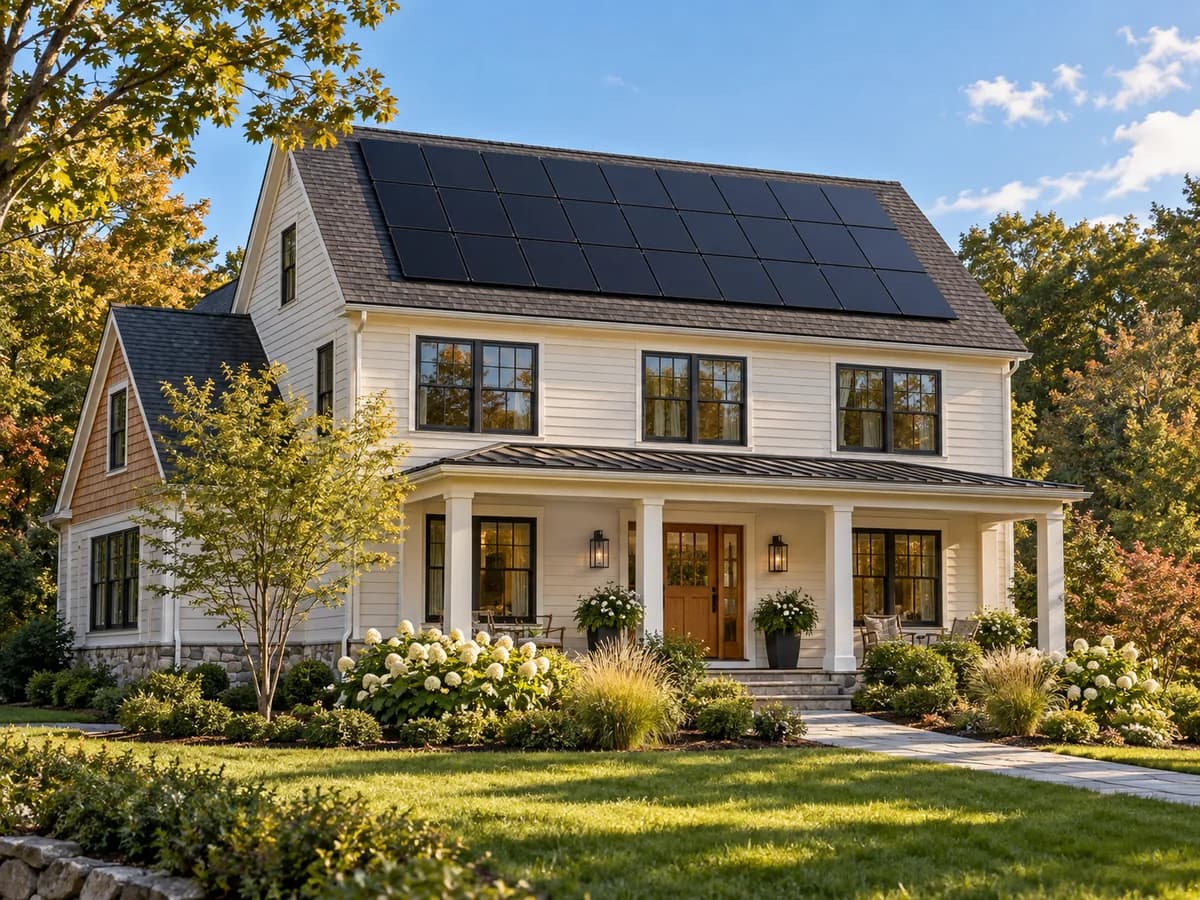
We design and install residential solar and battery systems in Massachusetts. See our local installations, explore your options, and plan a system around your home and electricity use.
Start with your address. Our team can confirm service availability and help you plan the next step.
Installed by NuWatt
A closer look at our work in Chelmsford and Weston. Explore the installation photos and equipment for each home.
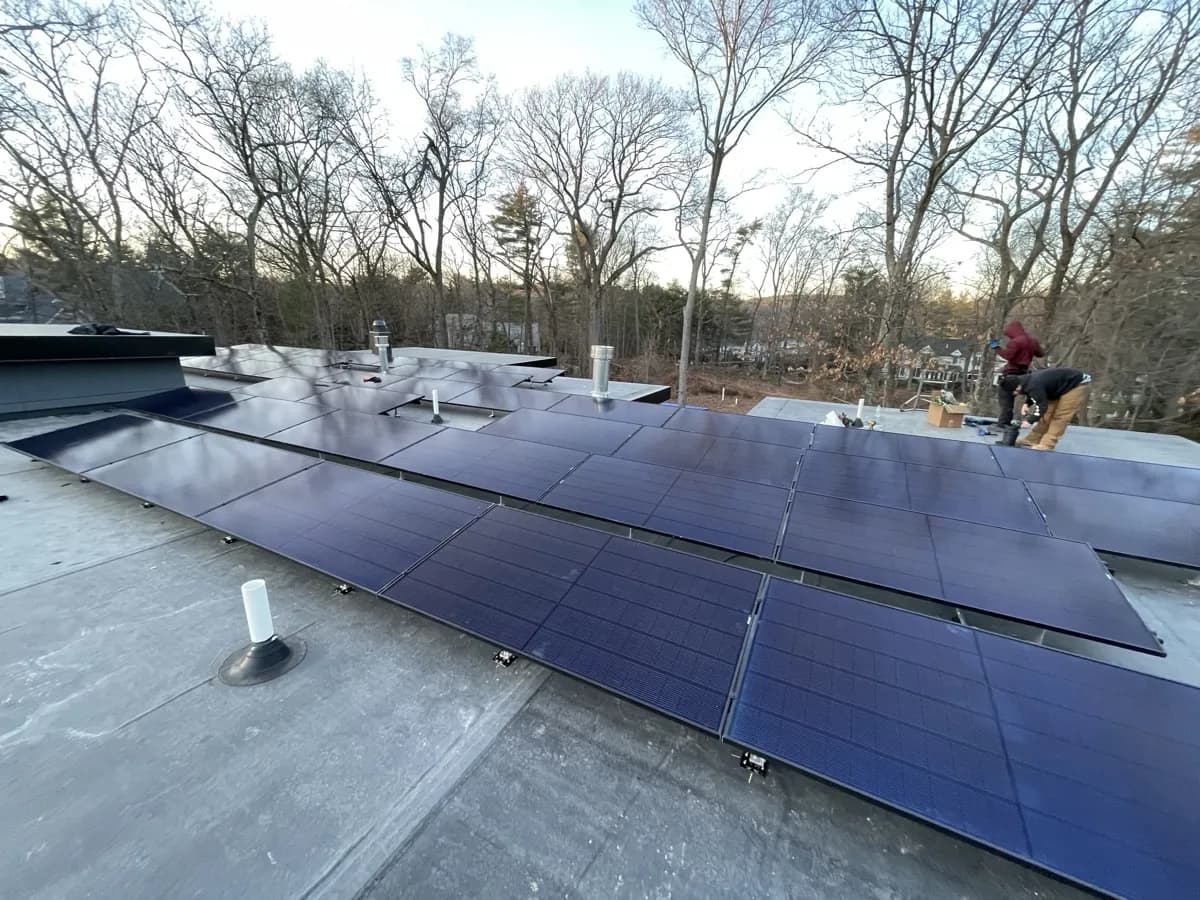
Our project collection also includes work in Brighton and Clinton. Explore NuWatt installations.
Selected customer review excerpts about installation details, project coordination and service.
“They went the extra mile to accommodate my specific requests, … avoiding surface-mounted conduit and ensuring some panels were perfectly centered on my roof.”
Kevin
Source: ConsumerAffairs
“They were on top of all the paperwork and the project finished on time”
ctaylor
Source: SolarReviews
“NuWatt Energy promptly addressed the issue, replacing the inverter just a few days after receiving the replacement from the manufacturer.”
Jeff R
Source: BBB
Bring your electricity bill, roof questions and plans for your home. These are the details to work through with our team before choosing your system.
Review the panel layout, system size, panel and inverter models, and estimated annual production. Shading, roof direction and your electricity use belong in the design discussion.
Confirm what is included in the price: design, mounting, wiring, permits and utility applications. Identify any roof repairs, electrical upgrades or other work priced separately.
If backup power matters to you, discuss the appliances and circuits you want to run. Battery capacity, usable power and the proposed backup configuration should be specified.
Compare the written equipment and installation warranties, including roof penetrations, labor, exclusions and the service contact. Coverage depends on the equipment and contract you choose.
Start with the gross installed price for your specific design. Keep optional batteries, roof repairs, electrical upgrades and financing costs separate. Incentive estimates should explain eligibility and timing; projected future savings are not an upfront discount.
Know the milestones before work begins. Your project schedule should account for the design, town requirements, utility approvals and any additional work your home needs.
Start with your address, electricity usage and goals. Share plans for an EV, heat pump or battery so the discussion reflects how you expect to use energy.
Compare the roof layout, equipment, estimated production, installation scope and payment terms. Confirm any site visit or structural and electrical work needed to finalize the design.
Your town and electric utility determine the approvals your installation needs. The project plan should identify application responsibilities and any additional property approvals.
Agree on site access, equipment locations, cable routing and the installation schedule. Roof condition, weather, equipment availability and any additional work can affect timing.
Installation and permission to operate are separate milestones. Confirm the required inspection and utility approval before operating the system in parallel with the grid.
Review how to access production monitoring, what the readings mean and whom to contact for support. Keep your equipment, contract and warranty documents together.
Solar starts with the property, not a statewide average. Share your address so we can confirm service availability. Your electricity bill identifies the utility whose interconnection and export rules apply.
Find your Massachusetts utility, or call (877) 772-6357 for help getting started.
Check the program requirements for your proposed system and utility. An incentive estimate should identify the applicable terms and approval assumptions.
Read the guide : SMART programUnderstand how exported electricity is credited. Eversource, National Grid and Unitil customers should check the applicable rules; municipal utilities have their own programs.
Read the guide : Net meteringReview ConnectedSolutions participation, eligible equipment and how dispatch may affect your battery. Compare program terms alongside your backup priorities.
Read the guide : Battery programsDiscuss any historic-district or property restrictions before finalizing the array layout. Additional review can affect the design and schedule.
Read the guide : Historic districtsCheck which state benefits apply to your ownership arrangement and property. Keep eligibility and timing separate from the system purchase price.
Read the guide : State tax benefitsPlanning insulation or a heat pump as well? Review those upgrades separately so the solar design reflects your expected electricity use.
Read the guide : Other home energy upgradesCompare actual local installations, the proposed equipment, total price and included work. Ask who is responsible for design, permits, electrical work and service, and review the relevant license details and written warranties. NuWatt project examples on this page show the equipment and system sizes installed in Chelmsford and Weston.
Your installed price depends on system size, equipment, roof layout, electrical work and whether a battery is included. Request an itemized quote for your home. Compare the gross system price before incentives, and keep financing charges and any roof or electrical upgrades visible. Our Massachusetts cost guide provides additional planning context.
NuWatt installs residential solar in Massachusetts, with published projects in communities including Chelmsford, Weston, Brighton and Clinton. Send us your property address so our team can confirm current service availability and the scope of your project.
The schedule includes design, permits, installation, inspection and utility permission to operate. Timing depends on your town, utility, equipment availability and any roof or electrical work. Ask for a project-specific schedule that distinguishes installation day from permission to operate.
Eligibility depends on your utility, system design, ownership arrangement and the program rules in effect for your project. Check SMART, net metering, battery programs and applicable tax benefits separately. A proposal should state which benefits are assumed, who receives them and which approvals are still required.
Compare system ownership, the total payments over the contract, any annual increases, maintenance responsibilities and what happens if you sell your home. Review the actual cash, loan, lease or PPA terms offered for your project; a monthly estimate alone does not show the full cost.
Your proposal identifies the panel and inverter models and any battery equipment. The Chelmsford and Weston projects shown here use Panasonic panels and Enphase microinverters; they are examples of completed work, not a promise of equipment availability for a new project. Review the manufacturer warranties and installation coverage for the equipment and contract you select.
Yes. You can explore your roof with our solar design tool, or request help from the NuWatt team through the quote form. An online planning estimate is a starting point; site conditions, equipment, scope and final pricing need to be confirmed for your installation.
Tell us about your property and what you want from solar. Our team can help you work through the design, battery options and installation quote.
Prefer to start online? Explore your roof with our solar design tool.