Loading NuWatt Energy...

We use your location to provide localized solar offers and incentives.
We serve MA, NH, CT, RI, ME, VT, NJ, PA, and TX
Loading NuWatt Energy...
NuWatt designs, installs, and manages solar, battery, heat pump, and EV charger systems across 9 states. One company, one warranty, one point of contact.
Get a Free QuoteTexas public school districts, colleges, cities, counties, and hospital districts can borrow from SECO’s revolving loan fund to finance energy retrofits — HVAC, LED lighting, rooftop solar, envelope — and repay the loan entirely from the energy savings the project generates. No general-fund outlay. No debt impact on capacity for operational spending. More than $600M funded since inception.
$600M+
Loans Funded Since 1988
$900M
Cumulative Energy Savings
450+
Loans Closed
Revolving
Self-Replenishing Fund
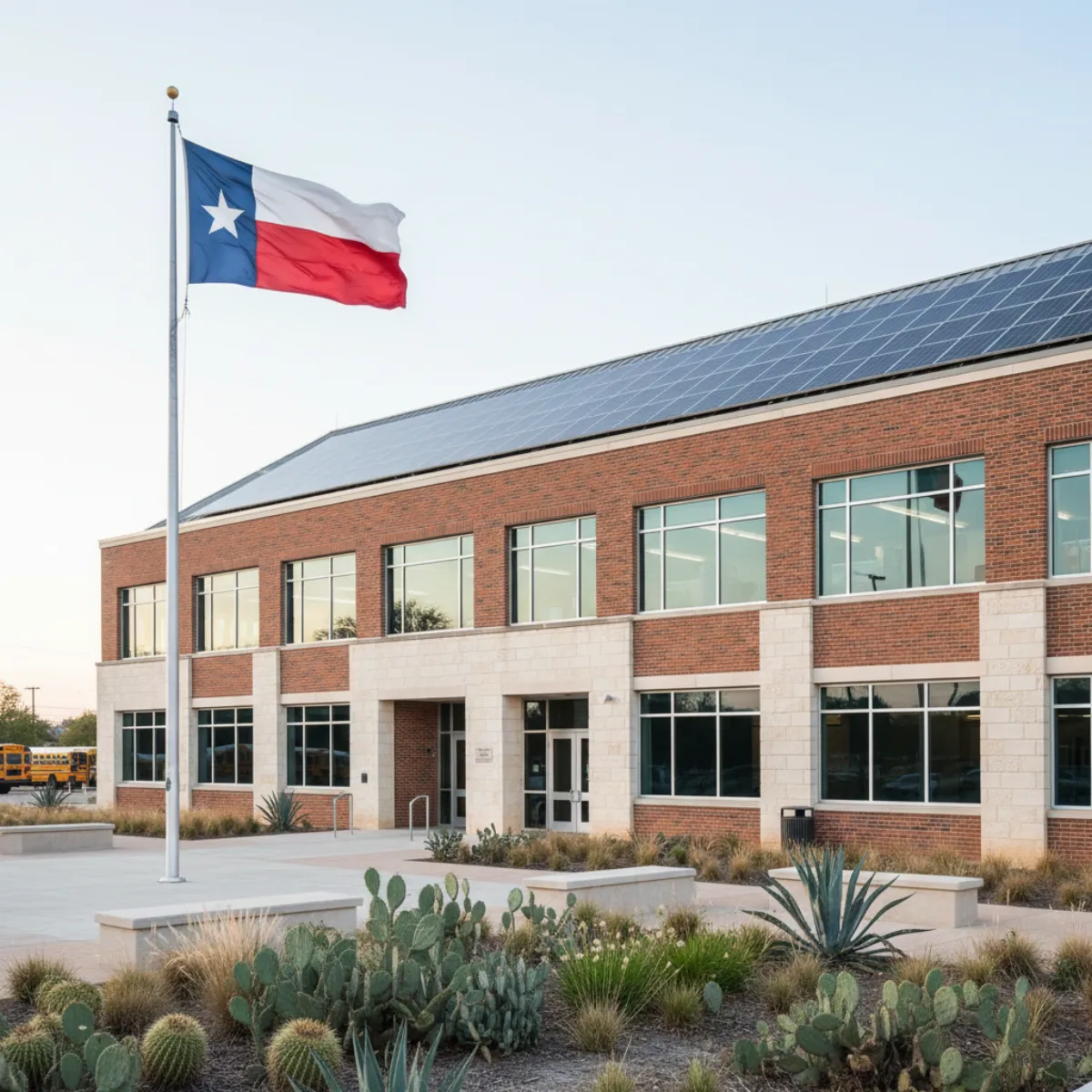
Why this matters for your CFO: LoanSTAR moves the energy-retrofit decision out of the capital-budget competition — where it competes with classrooms, patrol cars, or hospital beds — and into a self-financing operational decision. The retrofit pays for itself from day one and the net cash flow is positive over the loan term. That is a very different conversation with a school board or city council.
LoanSTAR — Loans to Save Taxes and Resources — is the State of Texas’s revolving loan program for public-sector energy retrofits. Established in 1988 and administered by the State Energy Conservation Office (SECO) at the Texas Comptroller, it has grown into one of the most successful state-level energy financing programs in the U.S.
Savings exceed loans — the net public benefit is positive.
LoanSTAR’s interest rate methodology and maximum loan amount are set annually in the Notice of Loan Fund Availability (NOFLA) published by SECO. These terms change cycle to cycle based on market conditions and fund capitalization. This page does not publish a specific rate or cap because doing so would risk staleness — request the current NOFLA from the contact below for live figures.
LoanSTAR covers the Texas public-sector universe. If your entity has a taxable property base and a governing board (school board, city council, county commissioners, hospital district board), you almost certainly qualify.
Independent school districts across Texas — from urban districts in Houston, DFW, and Austin to rural ISDs. Typical projects: HVAC modernization, LED lighting, rooftop solar on administrative buildings, building envelope improvements.
Community colleges and state universities. Campus-scale retrofits with multi-building scope are common — central plant upgrades, LED relamping across campus, rooftop PV, geothermal loop upgrades.
Municipal facilities (city halls, public safety, public works, recreation), county courthouses, jails, maintenance yards, water/wastewater plants. LoanSTAR is the dominant zero-upfront financing tool for these building classes.
Hospital taxing districts and affiliated public hospitals. High-continuous-load facilities where even modest efficiency percentage reductions translate into big dollar savings — LoanSTAR paybacks can be especially short.
Regional water districts, junior college districts, and similar taxing subdivisions. If you have a taxable property base and a governing board, you likely qualify.
The LoanSTAR model works because the loan payment is sized to be less than the realized energy savings. From the district or city’s perspective, the project is cash-flow positive from the first month.
Before the project starts, a preliminary energy assessment documents the building’s baseline energy use. This becomes the reference against which savings are measured.
NuWatt or another qualified contractor builds the retrofit — HVAC, lighting, solar, envelope, or a combination. The project is commissioned and energy-use data starts accumulating.
Monthly utility bills drop relative to baseline. The savings are deposited into a dedicated account or tracked within the district/entity’s budget.
Loan principal and interest are paid back out of the realized energy savings. Because the payments are structured to be less than the savings, the retrofit is cash-flow positive from month one.
After the loan term, 100% of the energy savings stays with the district/entity. For a 10-year loan on a 20-year-lifetime retrofit, that means 10+ years of pure savings after payoff.
A Representative TX ISD Example
Mid-sized TX school district, 8 campuses, ~$2M current annual energy spend. A district-wide LED + HVAC + rooftop-solar retrofit costs $4.8M. Projected annual savings: $620,000. LoanSTAR term: 10 years. Annual loan payment: ~$540,000.
Net annual cash flow during the loan term: +$80,000/year. After year 10: the full $620,000/yearin savings stays with the district. Over the equipment’s 20-year lifetime: ~$7M in net benefit for zero general-fund outlay.
Tax-exempt public entities cannot directly claim federal income tax credits. But there are three legitimate structuring moves that let your project capture federal value alongside LoanSTAR financing.
Since 2023, public schools, cities, counties, and hospital districts can allocate the §179D energy-efficient commercial building deduction to the A/E designer of the energy-efficient property. The district doesn’t benefit directly (no tax to offset) — but allocating the deduction to the designer can be a procurement lever in RFP negotiations.
Under IRA §6417 elective pay (a.k.a. direct pay), tax-exempt entities can receive a cash payment from Treasury equal to the §48E ITC on their owned solar/storage project. This effectively gives public entities the full federal credit value — a game-changer for school and municipal solar since 2023.
Oncor, CenterPoint, Austin Energy, CPS Energy, and others offer rebates for commercial HVAC, lighting, and solar/storage projects. These stack directly with LoanSTAR — the rebate reduces the project cost (and thus the loan amount), while the savings remain the same.
Before 2023, tax-exempt entities had to pursue solar via third-party PPA structures that gave the tax benefit to a private investor. With IRA direct pay, the school district, city, or hospital can own the system outright and receive the §48E cash payment directly from Treasury — typically 30–50% of the solar+storage basis depending on bonus eligibility. Paired with a LoanSTAR loan to fund the net cost after the direct-pay receivable, this is the cleanest financing stack for TX public solar available in 2026.
Plan on 4–8 months from initial engagement to loan closing and notice to proceed. The preliminary energy assessment (PEA) is the longest single step — start early.
A qualified energy auditor (often NuWatt or an outside ESCO) analyzes current building performance, identifies retrofit measures, calculates projected savings, and confirms the project can meet LoanSTAR’s simple-payback threshold.
Engineering design is developed to the level needed for firm pricing. Loan application assembled with PEA findings, engineering scope, detailed cost estimate, and savings methodology.
SECO technical staff review the application — savings methodology, cost reasonableness, eligibility. Questions are typically resolved with the applicant and engineer.
School board / city council / county commissioners / hospital board formally authorize the loan. Legal documents are finalized and closing is scheduled.
The entity procures the construction services under its usual public procurement rules (CSP, CMAR, design-build, etc.). NuWatt can be the construction delivery partner or support a separate delivery-method procurement.
System commissioned, baseline-relative savings verified through measurement and verification (M&V), loan repaid from realized savings per the schedule. SECO may conduct ongoing compliance reviews.
LoanSTAR wins votes because it moves the retrofit decision out of the capital-competition budget and into self-financing. Here’s how that lands with different decision-makers.
NuWatt supports Texas public-sector energy retrofits from the preliminary energy assessment through construction and commissioning. We can lead the PEA, build the engineering and savings case SECO requires, and respond to your procurement under CSP, CMAR, or design-build.
LoanSTAR NOFLA for the current cycle — request from SECO for live rate and loan-cap terms.
Last updated: April 2026
Sources: SECO LoanSTAR program page (comptroller.texas.gov/programs/seco/funding/loanstar/), 34 Texas Administrative Code §19.41–45, SECO Annual Notice of Loan Fund Availability, IRC §48E, §6417 direct pay, §179D