Loading NuWatt Energy...

We use your location to provide localized solar offers and incentives.
We serve MA, NH, CT, RI, ME, VT, NJ, PA, and TX
Loading NuWatt Energy...
NuWatt designs, installs, and manages solar, battery, heat pump, and EV charger systems across 9 states. One company, one warranty, one point of contact.
Get a Free QuoteThe TERP Rebate Grants Program (DERI) funds the replacement, repower, or retrofit of heavy-duty on-road diesel vehicles and select non-road diesel equipment in TERP-affected counties. All-electric replacements are eligible — and for the right duty cycle, they’re the highest-scoring option. The next cycle is expected to open around April 2026.
3
Project Types
Class 5–8
On-Road Coverage
7+
Eligible TX Regions
Apr ’26
Expected Reopen
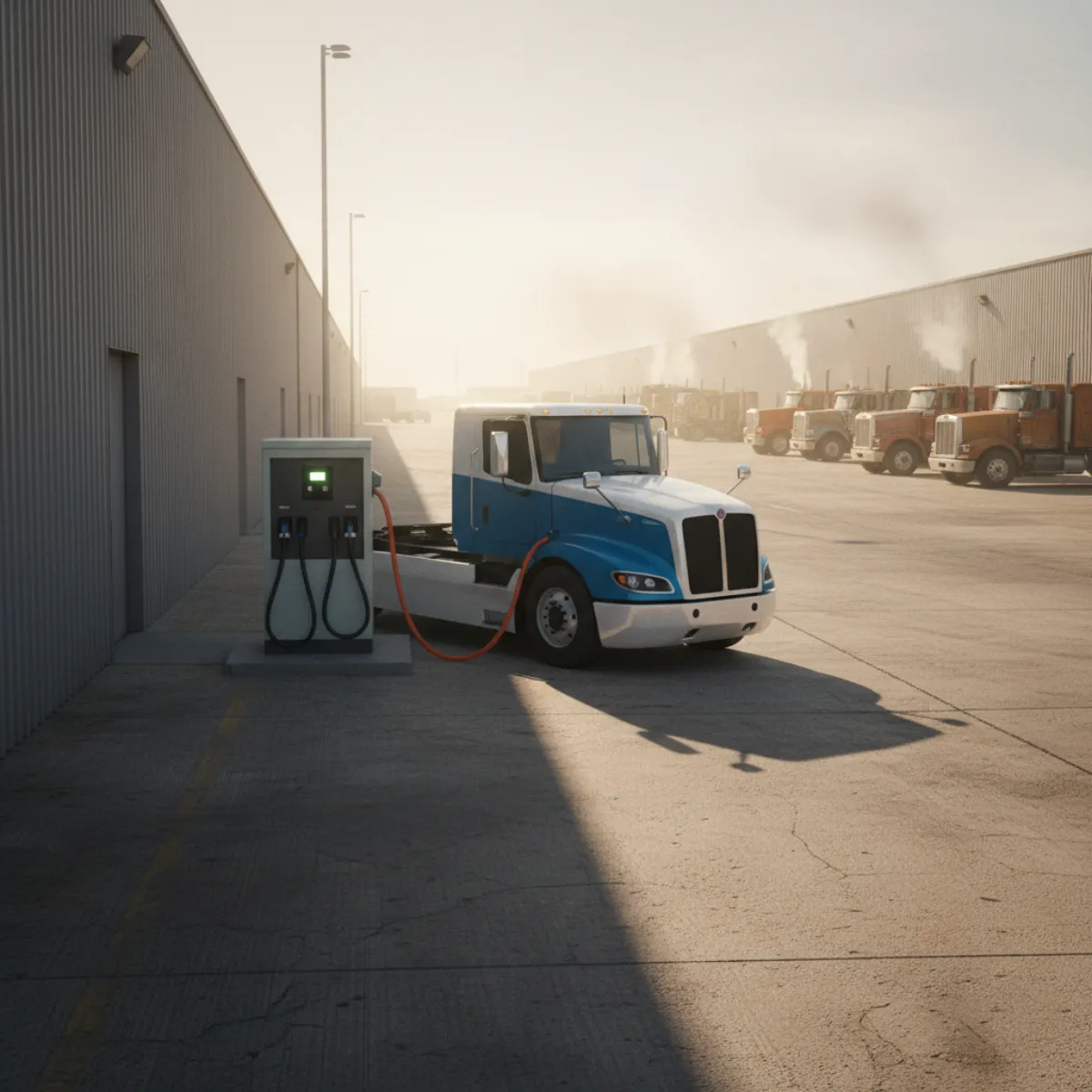
TL;DR for fleet operators: If you run heavy-duty diesel in HGB, DFW, Austin, San Antonio, El Paso, Beaumont-Port Arthur, or another TERP-eligible county, DERI Rebate Grants can reimburse a significant share of a replacement, repower, or retrofit — including an all-electric replacement. The cycle is first-come, first-served, so having your vehicle list, vendor quotes, and scrappage plan ready before the April 2026 RFGA opens matters more than any other single factor.
DERI (Diesel Emissions Reduction Incentive) is the heavy-duty vehicle and equipment subprogram within the Texas Emissions Reduction Plan (TERP). The Rebate Grants track of DERI is a streamlined, first-come, first-served program for fleets and equipment owners that want to retire older diesel units and put cleaner replacements into service — including all-electric units.
The federal incentive landscape for clean vehicles tightened in 2025. The §30D new clean vehicle credit and §25E used EV credit were repealed by the OBBBA on July 4, 2025. Federal fleet-level credits have narrowed. State-level programs like DERI are increasingly the swing incentive that decides whether a heavy-duty diesel-to-electric conversion pencils in Texas.
For fleets, DERI pairs naturally with depot charging infrastructure. The §30C EV charger credit expired June 30, 2026, so newer depot chargers rely on TCEQ infrastructure grants and utility make-ready programs instead. The §48E commercial ITC remains active — its begin-construction safe harbor closed July 4, 2026, and new starts must be placed in service by December 31, 2027 — so on-site solar and battery storage at the depot can stack underneath the fleet replacement funded by DERI.
TERP background:The Texas Emissions Reduction Plan was created in 2001 to improve air quality and help attainment with federal ozone standards. It’s funded through vehicle registration surcharges, title fees, and emissions inspection fees. DERI is the heavy-duty diesel track; NTIG is the stationary-source track; LDPLIP is the light-duty EV rebate; several infrastructure tracks fund EV charging.
DERI funds three distinct project types. Choosing the right one depends on the vehicle’s remaining service life, the fleet’s duty cycle, and the emissions reduction you can document.
Scrap an older heavy-duty diesel vehicle or piece of non-road equipment and purchase a newer, lower-emitting unit in its place. Replacement with an all-electric unit (battery-electric truck, bus, or yard goat) is eligible under current TERP priorities and typically captures the largest emissions-reduction score.
Example Eligible Projects
Remove the engine from an existing vehicle or piece of equipment and install a new, cleaner engine (typically a lower-tier engine brought up to Tier 4 Final, or a conversion to an all-electric powertrain). The chassis is retained; only the powertrain changes.
Example Eligible Projects
Install emission-control technology on an existing diesel engine — exhaust aftertreatment, idle-reduction systems, or certified retrofit devices that reduce NOx, PM, or both. Retrofit is usually the lowest-cost option but typically captures the smallest emissions reduction per project.
Example Eligible Projects
DERI does not retroactively fund units you have already purchased. The vehicle must be purchased (and the old unit scrapped, for replacements) after your application is on file per the RFGA rules for the current cycle. Read the active RFGA carefully — timing sequence matters, and the wrong order can disqualify the project.
DERI targets heavy-duty diesel — the highest per-unit emissions sources on Texas roads and job sites. Light-duty passenger vehicles are not funded here (that’s LDPLIP).
Replacement grant size and scoring generally track the magnitude of emissions reduction. A battery-electric replacement of a heavy-duty diesel zeroes out tailpipe NOx and PM on that unit, which puts it near the top of the emissions-reduction table — especially for refuse, transit, drayage, and yard tractor duty cycles.
DERI is only available where the vehicle or equipment operates a qualifying share of its usage in one of the TERP-affected counties. The list below covers the major regions — always confirm the current RFGA for the authoritative county list and the exact operating-hours / miles threshold for the cycle you’re applying under.
Nonattainment (ozone)
Brazoria, Chambers, Fort Bend, Galveston, Harris, Liberty, Montgomery, Waller
Nonattainment (ozone)
Collin, Dallas, Denton, Ellis, Hood, Johnson, Kaufman, Parker, Rockwall, Tarrant, Wise
Near-nonattainment / TERP-eligible
Bastrop, Caldwell, Hays, Travis, Williamson
Nonattainment (ozone)
Bexar, Comal, Guadalupe, Wilson
Nonattainment (historical)
El Paso
Near-nonattainment / TERP-eligible
Hardin, Jefferson, Orange
Near-nonattainment / TERP-eligible
Gregg, Harrison, Nueces, Rusk, San Patricio, Smith, Upshur, Victoria (and other counties named in the current RFGA)
Exact eligible counties and the minimum operating threshold (percent of miles or hours the unit must log in an eligible county) are published in each RFGA and can shift between cycles. For a 2026 application, the authoritative list is in the active RFGA at tceq.texas.gov/airquality/terp/rebate. Do not rely on prior-cycle county lists.
Under current TERP priorities, all-electric replacements are eligible and often produce the largest per-unit emissions reduction — which translates to the largest grant values in the replacement schedule. The duty cycles below fit electric powertrains especially well.
Short-haul, return-to-base, predictable daily miles
Pairs With
Fleet depot charging + on-site solar canopy
Why it fits: Short drayage loops pair well with depot charging and large BEV tractors. HGB and Beaumont-Port Arthur are both TERP-eligible, and the Houston region is a TERP priority for NOx reduction.
Stop-and-go urban routes, return-to-yard every night
Pairs With
Yard depot chargers + battery storage for peak shaving
Why it fits: Refuse duty cycle is nearly ideal for BEV powertrains: frequent stops recapture brake energy, low average speed, and every truck returns to the same yard to charge overnight.
Fixed routes, known layover locations, depot-based
Pairs With
Depot charging masterplan + FTA grant stacking
Why it fits: Transit buses are already a TERP-recognized replacement category. Electric transit buses are commercially available at scale, and many agencies are already on multi-year electrification roadmaps.
Low-speed yard work, continuous duty, no highway mileage
Pairs With
Fast charging integrated into yard layout
Why it fits: Yard goats run a short, repetitive duty cycle — perfect for electric powertrains. Several OEMs ship production electric terminal tractors today.
Project-based, variable locations
Pairs With
Mobile / portable charging + battery trailers
Why it fits: DERI can fund repower to Tier 4 Final or replacement to electric where a commercially available electric unit exists. Mobile charging and portable battery energy storage are increasingly practical for off-road fleets.
A fleet conversion funded by DERI typically creates a parallel infrastructure need: chargers, electrical service upgrade, and often on-site solar + battery storage at the depot. Several incentive paths can stack alongside DERI without competing for the same dollars:
§30C EV Charger Credit
Expired June 30, 2026 — no longer available for chargers placed in service after that date. Use TCEQ charging grants and utility make-ready instead.
§48E ITC
On-site solar + battery storage at the depot. The begin-construction window closed July 4, 2026; projects starting now generally must be placed in service by December 31, 2027.
TCEQ Infrastructure
TCEQ also runs separate EV charging infrastructure grant tracks that can fund public / fleet chargers.
Rebate Grants use a streamlined, first-come, first-served process. Speed and preparation matter more than in the competitive TERP tracks — funds can obligate before the RFGA deadline.
The vehicle must operate a minimum percentage of its miles (or hours, for non-road) in a TERP-affected county. HGB, DFW, Austin, San Antonio, El Paso, Beaumont-Port Arthur, and certain other counties qualify. The exact list and minimum operating thresholds are defined in each RFGA — confirm for your project before anything else.
TCEQ issues a Request for Grant Applications (RFGA) that opens each cycle. The next Rebate Grants cycle is expected to open around April 2026 (subject to change per TCEQ). Subscribe to TERP email alerts so you do not miss the open date. Rebate Grants are first-come, first-served — funds can exhaust well before the RFGA deadline.
Decide whether you are replacing the unit, repowering it, or retrofitting it. Replacement with an all-electric unit generally scores highest on emissions reduction. Repower to Tier 4 Final is the workhorse option for off-road. Retrofit is a smaller, faster path for long-tenured diesel assets still in service.
You must document the existing (older, dirtier) unit being replaced or repowered — VIN / serial number, engine model year, engine family, usage history. For replacements, the old unit is typically required to be scrapped and destroyed (not resold) — disposition paperwork is part of the grant file.
Submit the application package per the current RFGA instructions. Rebate Grants use a streamlined, first-come, first-served process — simpler than the competitive NTIG or full DERI grant cycles. Confirm the application form version, supporting documents, and delivery method (online / mail / email) that apply to the current cycle.
Purchase and place the new (or repowered / retrofitted) unit in service. Submit invoices, proof of scrappage, registration, and any required usage reporting. DERI Rebate Grants are a reimbursement program — you fund the project up front and TCEQ reimburses after the unit is in service and documentation is verified.
TERP has multiple subprograms, each with its own applicant type and project scope. Knowing which one maps to your project saves wasted effort.
| TERP Subprogram | What It Funds | Applicant | Selection |
|---|---|---|---|
| DERI Rebate Grants (this page) | Heavy-duty diesel replacement / repower / retrofit (incl. electric) | Fleets & equipment owners in TERP-affected counties | First-come, first-served |
| NTIG | Stationary-source, oil & gas, renewable-storage projects | Any legal entity (statewide) | Competitive RFGA |
| LDPLIP | New light-duty EV / PHEV / hydrogen vehicle ($2,500 grant) | Residents & businesses statewide | First-come, first-served |
| EV Infrastructure (TxVEMP / similar) | Public & workplace EV charging stations | Charging providers, property owners | Competitive RFGA |
Multiple TERP tracks can serve the same corporate decarbonization plan. A fleet may run DERI for the trucks, NTIG for on-site storage at the depot, and an EV infrastructure grant for the chargers — each with a different application and selection process.
NuWatt does not sell trucks. We design, engineer, permit, and install the depot infrastructure that turns a DERI-funded electric fleet into a working operation — chargers, electrical service upgrade, on-site solar, and battery storage.
Charger sizing matched to your duty cycle, dwell times, and energy per shift. DC fast charging, Level 2, or a mix. Sequenced / managed charging to avoid triggering expensive demand charges.
We handle the AHJ permit path and utility interconnection with Oncor, CenterPoint, AEP, TNMP, or the municipal utility — including transformer, switchgear, and metering scope for high-amp fleet charging service.
Rooftop or canopy solar, battery storage sized for peak shaving and resilience, and controls that blend fleet charging, building load, and PV generation. §48E ITC and MACRS apply to the renewable scope.
Note on grant writing:NuWatt is not a grant-writing firm. We provide the engineering scope, utility load analysis, and schedule for the depot infrastructure portion of your DERI application — the vehicle paperwork is typically handled by the fleet’s internal team or a TERP grant-writing consultant. We’re happy to recommend firms we’ve worked with alongside prior Texas fleet electrification projects.
DERI can fund the trucks. NuWatt designs and installs the depot infrastructure that makes electric fleet operations work — chargers, service upgrades, on-site solar, and battery storage. Let’s get the depot side of your DERI application priced and scoped.
DERI Rebate Grants cycle expected to open around April 2026. Rebate cycles are first-come, first-served — depot readiness is the lever you control.
Grant amounts, eligible counties, and cycle dates are set by the current TCEQ RFGA. Always confirm at tceq.texas.gov/airquality/terp/rebate before acting. NuWatt is a clean-energy installer, not a grant-writing firm; engage a qualified grant consultant and a CPA experienced with TERP awards.
Last updated: April 2026
Sources: TCEQ TERP Rebate Grants program page (tceq.texas.gov/airquality/terp/rebate), TERP program overview, IRC §48E, §30C, §168 (MACRS), OBBBA (P.L. 119-21) repeal of §30D and §25E