Loading NuWatt Energy...

We use your location to provide localized solar offers and incentives.
We serve MA, NH, CT, RI, ME, VT, NJ, PA, and TX
Loading NuWatt Energy...
NuWatt designs, installs, and manages solar, battery, heat pump, and EV charger systems across 9 states. One company, one warranty, one point of contact.
Get a Free QuoteThe federal EPA Solar for All award of $156 million to Massachusetts was terminated by the Trump Administration on August 7, 2025. The Massachusetts Attorney General’s Office is challenging the termination in court. As of April 2026, the state program components have not launched. Here is an honest account of what happened, what was planned, and what income-eligible pathways still exist right now.
$156M
Federal Award in Dispute
Aug 7, ’25
EPA Termination Notice
4
Program Components Paused
Active
MA AG Legal Challenge
This is an accountability page. We do not oversell alternative programs and we do not downplay the pause. If you were counting on Solar for All, you deserve an honest picture of where things stand.
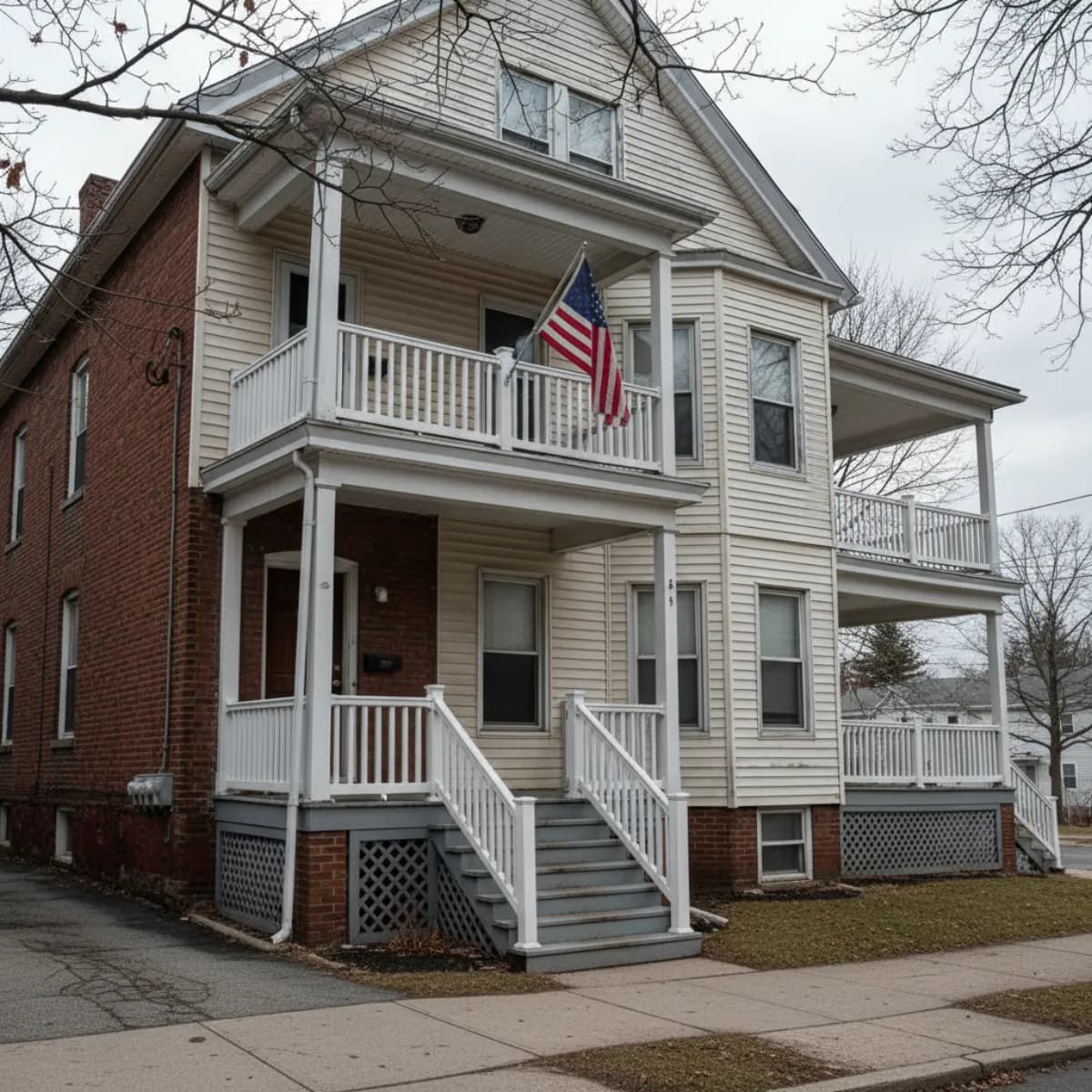
Massachusetts was awarded $156 million under the federal EPA Solar for All competition in April 2024 — one of 60 recipients nationwide. The money was intended to fund four programs serving low- and moderate-income (LMI) Massachusetts households who have historically been locked out of residential solar. In August 2025 the Trump Administration’s EPA notified DOER that the award was being terminated. The Massachusetts Attorney General’s Office is challenging the termination in federal court. As of April 2026, the program is paused and no component has publicly launched.
How the program moved from a $156 million federal award to a paused rollout in roughly 18 months. Dates reflect public announcements and legal filings.
Why the hedging matters:The legal challenges are active as of April 2026 and the record is still developing. We use language like “challenging” and “contested” deliberately — court findings, settlement terms, and any policy changes can shift the picture. Primary sources include the Massachusetts Attorney General’s Office, DOER announcements, and filings in federal court.
DOER’s Solar for All design carved the $156M into four complementary components, each targeting a distinct barrier that has historically kept income-eligible Massachusetts households out of solar. We describe each below along with an honest note on what happens if that component stays paused.
A zero-interest loan product designed to let LMI homeowners finance a rooftop solar system with no interest charges, structured so the monthly loan payment is lower than the avoided utility bill. The goal was to eliminate the upfront capital barrier and the credit-pricing penalty that LMI households typically face when shopping conventional solar loans.
Without Solar for All, LMI homeowners rely on conventional solar financing (HELOCs, solar-specific loans, dealer financing). Interest rates are risk-priced, credit score requirements filter out many households, and monthly savings are thinner or negative.
A third-party-owned lease structure designed specifically for LMI households. Because Section 25D (the federal residential solar credit) was unusable for many low-income homeowners even before it expired, a lease model lets a third party own the system, capture commercial ITC benefits, and pass savings directly through to the household via fixed monthly lease payments.
Standard solar leases exist in the market but are priced for broad consumers and rarely target LMI income bands. Without a Solar for All–specific lease, LMI households lack a product tuned to their income profile — and with §25D expired (Dec 31, 2025), the residential tax credit pathway is also closed.
A financing and technical assistance component aimed at putting solar on multifamily affordable housing — including LIHTC-financed properties, public housing, and nonprofit-owned affordable developments. The component was designed to navigate the specific complexities of affordable housing deals: split incentives between owners and tenants, restrictive lender covenants, and the stacking of state and federal affordable housing rules.
Affordable housing solar is possible through the Section 48/48E commercial ITC (projects that began construction by July 4, 2026 locked in the full credit timing; projects that start later still qualify if placed in service by December 31, 2027) plus §6417 direct-pay for tax-exempt owners, but deals often stall on gap financing. Solar for All was meant to fill that gap; without it, deals slow.
A community solar component designed to deliver subscription-based bill credits to LMI households that cannot host a rooftop system — including renters, condo residents, and homeowners with shaded or structurally unsuitable roofs. Solar for All was intended to fund LMI-dedicated community solar arrays with guaranteed LMI subscriber pools.
Massachusetts does have the SMART program LMI adder and existing community solar projects that serve LMI subscribers, but supply is constrained and waitlists are common. The Solar for All component was designed to add new LMI-dedicated capacity beyond SMART.
The money is not just a budget line — it represents a specific set of households that were supposed to be able to afford solar for the first time.
The $156M award was sized to reach a substantial share of Massachusetts’ income-eligible households over a multi-year rollout. Exact beneficiary counts depended on program mix, but the scale was comparable to a statewide pilot.
One of 60 Solar for All awards nationally. The MA share was one of the larger state allocations within the $7B national pool.
Zero-interest residential loan, lease initiative, affordable housing financing, and LMI community shared solar — all four components are on hold pending resolution.
DOER and partners spent the period from award through mid-2025 designing program rules, procurement processes, and stakeholder relationships. That design work is preserved but cannot deploy without the funding.
The Massachusetts Attorney General’s Office is challenging the EPA’s termination of the $156M Solar for All award. The case is one piece of a broader multistate effort contesting the Trump Administration’s termination of Solar for All and related Inflation Reduction Act grant programs. Litigation is ongoing, so the summary below uses hedged language where the court record is still open.
A note on this section:We describe the arguments as filed and the outcomes as possibilities. We are not predicting how a court will rule. For authoritative, up-to-date information consult the Massachusetts Attorney General’s Office press releases and DOER program status announcements.
Nothing below is a full replacement for Solar for All. Each program has real value and real gaps. We list them honestly so households and the nonprofits advising them can make informed choices about what is currently possible.
Honest framing:These programs do not collectively add up to the Solar for All experience — a zero-interest, income-tuned, end-to-end solar pathway. They are what is available while the program is paused.
Massachusetts’ Solar Massachusetts Renewable Target (SMART) program continues to include a Low-Income Property adder and a Low-Income Community Shared Solar tariff rate adder. These compensation adders raise the $/kWh value of generation for qualifying LMI projects.
Learn moreCan partially improve the economics of LMI-serving projects — particularly community solar arrays with LMI subscribers — by adding $/kWh value on top of the base SMART tariff.
SMART adders do not provide upfront capital. A household still needs to fund or finance the system (or subscribe to a community solar project that has capacity). Available LMI-dedicated capacity is limited and regularly waitlisted.
Mass Save (the utility-run statewide efficiency program) offers enhanced incentives for income-qualified households: no-cost weatherization, higher heat pump rebates, and a HEAT Loan with 0% APR financing for efficiency upgrades.
Learn moreDrives real household energy savings — especially weatherization and heat pump conversions — for the same LMI population Solar for All was meant to serve. Reduces electricity and gas burden directly.
Mass Save does not fund solar installations. The HEAT Loan covers efficiency measures (insulation, heat pumps, thermostats) — not rooftop PV. For a full solar + weatherization package, households still need a separate solar financing path.
The HEAT Loan provides 0% APR financing for up to seven years on qualified energy-efficiency upgrades. Income-eligible households get higher loan ceilings and access to enhanced rebates that can reduce principal.
Learn moreOffers a true zero-interest financing pathway similar in structure to what Solar for All’s zero-interest residential loan would have provided — but for efficiency scope.
Solar is not a HEAT Loan–eligible measure. The HEAT Loan does not replace the missing solar-specific zero-interest product. It is complementary, not a substitute.
Eversource and National Grid offer income-eligible rate options, arrearage management, and adjacent energy programs. In some cases utilities also support community solar subscription outreach targeted at income-verified households.
Learn moreCan stabilize utility bills today and help income-verified households enroll in existing community solar subscriptions where capacity exists.
Utility income-eligible programs are primarily bill-assistance and efficiency-focused. They do not fund household-level rooftop solar installation. Community solar subscriptions depend on a local project having open LMI slots.
Massachusetts recognizes designated Environmental Justice (EJ) communities under state law. Some state and philanthropic programs target EJ neighborhoods for clean energy investment, including weatherization, heat pumps, and community solar access.
Learn moreGeographic targeting can unlock additional incentives in EJ-designated neighborhoods — many of which overlap with LMI-eligible households.
EJ-designated funding is fragmented across programs and does not replace a state-scale LMI solar program. Eligibility is tied to neighborhood, not household income, so not every LMI household lives in a designated EJ community.
Tax-exempt owners — affordable housing nonprofits, housing authorities, community development corporations — can claim the commercial Section 48/48E Investment Tax Credit as a direct cash payment under §6417. Projects that began construction by July 4, 2026 locked in the full credit timing; projects that start later still qualify if placed in service by December 31, 2027.
Learn moreCreates a near-term path for affordable housing developers and nonprofit LMI-serving entities to install solar on their buildings even without Solar for All — projects that began construction by July 4, 2026 locked in the full §48E credit timing, and later starts still qualify if placed in service by December 31, 2027.
Does not help individual LMI homeowners. §48E is a commercial credit; it requires a third-party or nonprofit/housing-authority owner. And §25D — the residential credit — expired Dec 31, 2025, so individual LMI homeowners cannot substitute §25D in its place.
The federal tax landscape for solar changed at the end of 2025. Here is where things stand as of April 2026 — these facts matter for anyone trying to evaluate LMI solar options while Solar for All is paused.
Expired December 31, 2025. Homeowners — including LMI homeowners — cannot claim the 30% residential solar tax credit on systems placed in service in 2026 or later. This is a permanent change unless Congress revives it.
Active. Projects that began construction by July 4, 2026 locked in the full credit timing; projects that start later still qualify if placed in service by December 31, 2027. Supports third-party ownership, affordable housing solar, and LMI community solar arrays owned by commercial developers or nonprofits.
Lets eligible tax-exempt entities — nonprofits, public housing authorities, CDCs, municipalities — receive the §48/48E credit as a cash payment. Critical for affordable housing solar deals that otherwise could not use the credit.
With §25D expired, the residential tax-credit pathway for individual LMI homeowners is closed. The commercial §48/48E plus §6417 direct-pay pathway is still open and is the backbone of the alternatives for LMI-serving projects — but only for third-party-owned or nonprofit/housing-authority-owned systems. Projects that began construction by July 4, 2026 locked in the full credit timing; projects that start later still qualify if placed in service by December 31, 2027. A paused Solar for All plus an expired §25D means the tools available to individual LMI homeowners are narrower than they were as recently as 2024.
For LMI households, social workers, community-based organizations, and affordable housing developers trying to make decisions while Solar for All is paused.
Deeper guides to the income-eligible pathways currently available while Solar for All remains paused.
Full overview of every income-eligible solar pathway currently active in Massachusetts.
Weatherization, heat pumps, and the HEAT Loan — what is funded and how to apply.
Eversource-specific income-eligible programs, community solar, and bill assistance.
National Grid-specific income-eligible options and community solar subscription routes.
City-specific LMI solar pathways and community resources in Lawrence, MA.
City-specific LMI solar pathways and community resources in Springfield, MA.
EJ-community-targeted incentives and how designation can layer with income eligibility.
How to combine SMART LMI adders, Mass Save, §48E/§6417, and more into a working project.
As of April 2026, the program is paused — not formally ended. The federal funding award was terminated by the EPA on August 7, 2025, but the Massachusetts Attorney General’s Office is challenging the termination in court along with other affected states. The ultimate outcome depends on the litigation. The program rules and design work completed by DOER remain intact, so if funding is restored through a court ruling or alternative path, the program components could launch on a compressed timeline. We will update this page as the legal situation evolves.
Start with Mass Save income-eligible weatherization and heat pump programs — those are active, well-funded, and deliver real bill savings. Then evaluate whether you can access a community solar subscription with an LMI slot through the SMART program. If you own your home and are considering rooftop solar, request quotes from installers who work with income-eligible financing partners, understanding that the specific Solar for All zero-interest loan product is not currently available. Be cautious of any installer claiming to offer “Solar for All financing” right now — the state program has not launched.
DOER has not published a resumption timeline because the question depends on the outcome of ongoing federal litigation. Possible outcomes include: (1) a federal court ruling that the termination was unlawful, restoring the funding; (2) a settlement or revised funding arrangement; (3) a legislative or state-level substitute program; or (4) the award staying terminated. Each of those paths has a very different timeline. We hedge this intentionally — as of April 2026, no public resumption date exists.
No. Section 25D — the residential solar Investment Tax Credit — expired on December 31, 2025. Homeowners installing systems placed in service in 2026 or later cannot claim it. This is one reason Solar for All’s lease initiative was important: it used the commercial Section 48/48E credit via third-party ownership to deliver savings that a household could no longer capture directly. With §25D gone and Solar for All paused, the residential tax-credit pathway is effectively closed for income-eligible MA homeowners.
Yes, but with a tighter financial stack. Section 48/48E (the commercial ITC) remains active: projects that began construction by July 4, 2026 locked in the full credit timing, and projects that start later still qualify if they are placed in service by December 31, 2027. Tax-exempt affordable housing owners — nonprofits, public housing authorities, CDCs — can take the credit as a direct cash payment under §6417. What is missing is the Solar for All gap financing that was designed to make otherwise-stalled affordable housing solar deals pencil. Developers should still move now on projects that can close the financial gap with existing tools; with the July 4, 2026 window closed, the December 31, 2027 placed-in-service date sets the §48E timeline.
Yes, but supply is tight. Existing SMART-program community solar projects with LMI adders continue to operate and enroll subscribers. What Solar for All was supposed to do was fund additional LMI-dedicated capacity — new arrays reserved for income-eligible subscribers. With that funding paused, the LMI community-solar pipeline did not expand as planned. If you are looking for a subscription, check with Massachusetts community solar developers and LMI advocacy nonprofits about current openings, and expect waitlists.
The Trump Administration’s EPA issued termination notices to Solar for All recipients — including Massachusetts — on August 7, 2025. The administration’s publicly cited rationale focused on broad policy disagreement with the Inflation Reduction Act’s Greenhouse Gas Reduction Fund. The Massachusetts Attorney General and other state AGs have argued in their legal filings that once Congress appropriated the funds and the EPA obligated them through signed grant agreements, a subsequent administration cannot unilaterally claw them back. That legal question is what the ongoing litigation is about. We use hedged language here because the case is active and the rationales described in filings may not be the same as the final legal findings.
Because Massachusetts Solar for All never launched its installer approval process — the program was paused before that stage — there is no current “Solar for All–approved” designation in MA. NuWatt Energy is a licensed, insured Massachusetts solar installer serving income-eligible households through every currently available pathway: SMART-program projects with LMI adders, affordable housing installations under §48E/§6417, Mass Save heat pump and weatherization coordination, and third-party-ownership structures for qualifying households. If Solar for All resumes and DOER opens an installer approval process, we plan to participate.
We will walk you through every pathway that is active in Massachusetts right now — honestly — including where Solar for All would have helped and where current programs fall short. No pressure, no overselling.
NuWatt Energy is a Massachusetts-licensed solar installer. We are not an agent of DOER or the EPA. Information on this page reflects public program status as of April 2026 and is subject to change as the litigation progresses.