Loading NuWatt Energy...

We use your location to provide localized solar offers and incentives.
We serve MA, NH, CT, RI, ME, VT, NJ, PA, and TX
Loading NuWatt Energy...
NuWatt designs, installs, and manages solar, battery, heat pump, and EV charger systems across 9 states. One company, one warranty, one point of contact.
Get a Free Quote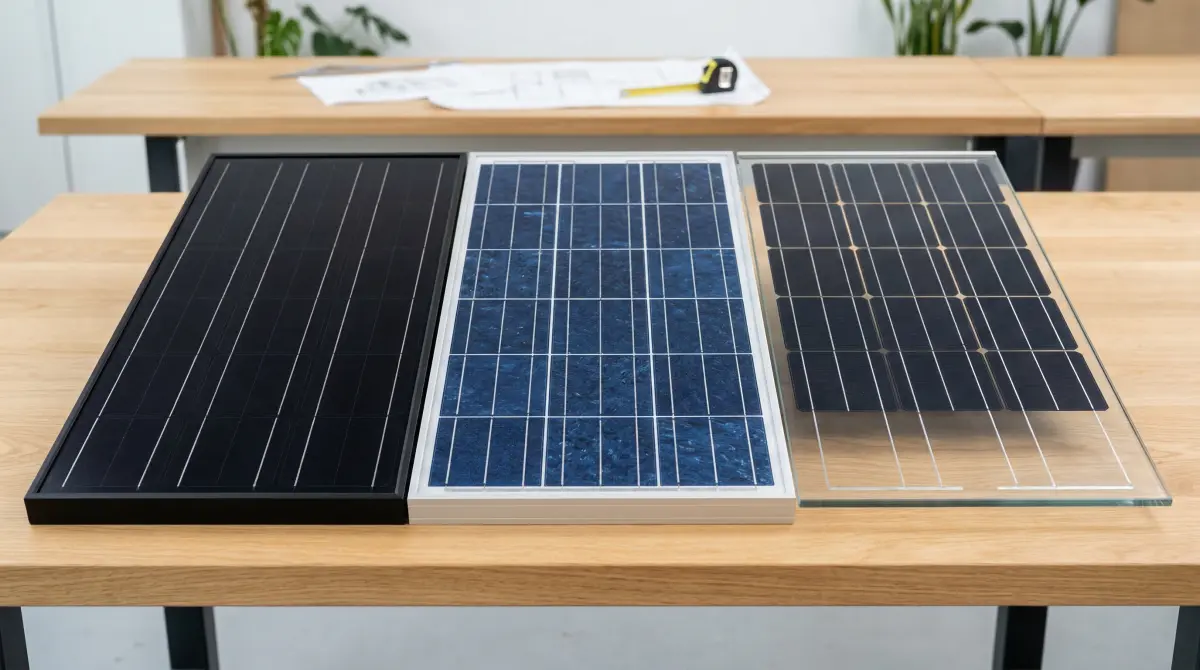
The complete guide to solar panel types in 2026. Compare efficiency, cost per watt, temperature performance, and aesthetics — plus which of NuWatt's three panel tiers is right for your home.
Quick Answer
In 2026, monocrystalline solar panels dominate with 90%+ market share, offering 20-23% efficiency in an all-black design. Polycrystalline (15-18% efficiency, blue appearance) has largely exited the residential market. Bifacial panels (20-23%+) capture light on both sides and excel in ground-mount installations. For most homeowners, the real choice is between monocrystalline PERC (best value) and monocrystalline HJT (best heat tolerance and lowest degradation). NuWatt offers three tiers: Hyundai 440W PERC (entry), Silfab 440W HJT (standard/FEOC), and REC 460W HJT (premium).
Every solar panel on the market falls into one of four categories based on the photovoltaic material used to convert sunlight into electricity. The differences in material directly affect efficiency, cost, appearance, and performance over time.
As of March 2026, the residential solar market has consolidated around monocrystalline technology. Polycrystalline panels, once the budget option, have been squeezed out by falling monocrystalline prices. Thin-film remains a niche commercial product. Bifacial panels are growing fast but primarily in ground-mount and commercial applications.
90%+ of residential market
Made from a single crystal of silicon, cut into wafers. The uniform crystal structure allows electrons to flow more efficiently, producing the highest efficiency of any silicon-based panel. The all-black aesthetic is strongly preferred by homeowners and HOAs.
Efficiency
20-23%
Cost/Watt (installed)
$2.90-3.36
Lifespan
25-30+ years
Appearance
All-black, uniform
<5% of residential market
Made from melted silicon fragments cast into blocks and sliced into wafers. The multi-crystal boundaries reduce electron flow, lowering efficiency. The distinctive blue, marbled appearance is the easiest visual identifier. Once the budget pick, now largely replaced by cheaper monocrystalline.
Efficiency
15-18%
Cost/Watt (installed)
$2.50-2.80
Lifespan
25 years
Appearance
Blue, marbled
<1% of residential market
Deposited in ultra-thin layers (cadmium telluride, CIGS, or amorphous silicon) on glass or flexible substrates. Extremely lightweight and flexible but significantly less efficient. Primarily used in large-scale commercial and utility installations where space is abundant and cost per watt matters more than space efficiency.
Efficiency
10-13%
Cost/Watt (installed)
$1.00-1.50
Lifespan
10-25 years
Appearance
Dark, flexible
~5% residential, growing fast
Built with monocrystalline cells (usually HJT) in a glass-glass configuration that captures light on both the front and rear sides. The rear side generates 5-15% additional energy from reflected ground light (albedo). Requires elevated mounting and reflective surfaces underneath.
Efficiency
20-23%+
Cost/Watt (installed)
$3.20-3.60
Lifespan
30+ years
Appearance
Glass-glass, see-through
Side-by-side comparison of all panel technologies available in 2026. Prices reflect installed cost with no federal tax credit (25D expired December 31, 2025).
Best value residential
Efficiency
20-22%
Cost/Watt
$2.90-3.10
Temp Coefficient
-0.35%/°C
Degradation
0.40-0.50%/yr
Premium / hot climates
Efficiency
21-23%
Cost/Watt
$2.97-3.36
Temp Coefficient
-0.26%/°C
Degradation
0.25-0.35%/yr
Budget (if available)
Efficiency
15-18%
Cost/Watt
$2.50-2.80
Temp Coefficient
-0.40%/°C
Degradation
0.50-0.70%/yr
Commercial flat roofs
Efficiency
10-13%
Cost/Watt
$1.00-1.50
Temp Coefficient
-0.20%/°C
Degradation
0.50-1.00%/yr
Ground mount / commercial
Efficiency
20-23%+
Cost/Watt
$3.20-3.60
Temp Coefficient
-0.26%/°C
Degradation
0.25-0.35%/yr
Note: Installed costs are for residential systems in the Northeast (MA, NH, CT, RI, ME) as of March 2026. Costs vary by state, system size, and installer. No federal tax credit is included — Section 25D expired December 31, 2025.
Since monocrystalline dominates the market, the actual technology choice most homeowners face is between PERC (Passivated Emitter and Rear Cell) and HJT(Heterojunction Technology). Both are monocrystalline — the difference is in how the silicon cell is constructed.
PERC panels add a reflective passivation layer behind the silicon cell, bouncing unabsorbed photons back through the cell for a second chance at conversion. HJT panels go further by sandwiching the crystalline silicon between two ultra-thin layers of amorphous silicon, creating a more efficient junction that handles heat better and degrades more slowly.
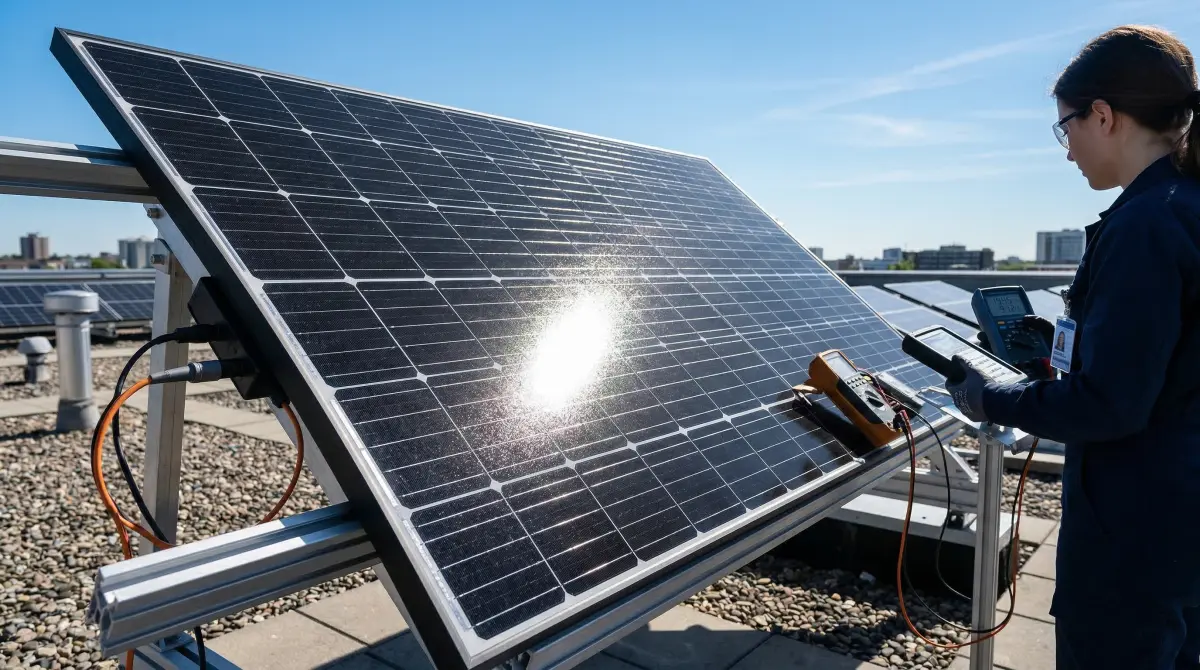
Modern monocrystalline panels feature uniform black cells with minimal gridlines for maximum efficiency and clean aesthetics.
The workhorse of the solar industry. PERC cells add a dielectric passivation layer on the rear surface, increasing efficiency by 1-2% over standard cells. Mature, proven, and cost-optimized after a decade of refinement.
The premium tier. HJT cells combine crystalline silicon with amorphous silicon layers, creating a superior junction that excels in heat tolerance, low-light performance, and long-term stability. Higher upfront cost but better lifetime economics.
Why Temperature Coefficient Matters
On a 95°F day in Texas, a rooftop solar panel can reach 150°F (65°C) — that is 40°C above the 25°C test standard. A PERC panel with -0.35%/°C coefficient loses 14% of its rated output. An HJT panel with -0.26%/°C loses only 10.4%. That 3.6% difference means HJT panels produce roughly 150-250 more kWh per year on a 10 kW system in hot climates — worth $25-50/year in electricity at Texas rates, or $625-$1,250 over 25 years.
NuWatt offers three carefully selected monocrystalline panel tiers. All are current-generation technology, all are from financially stable manufacturers, and all come with industry-leading warranties. The difference comes down to cell technology, efficiency, and your financing choice.
Cell Type
Monocrystalline PERC
Efficiency
~21.0%
Temp Coefficient
-0.34%/°C
Annual Degradation
~0.40%/yr
Warranty
25-year product / 25-year performance
Year 25 Guarantee
86.0%
Price
-$0.07/W vs standard
Best for: Maximize ROI with lowest upfront cost. Great for budget-focused homeowners in moderate climates.
Cell Type
Monocrystalline HJT
Efficiency
~21.5%
Temp Coefficient
-0.26%/°C
Annual Degradation
~0.35%/yr
Warranty
30-year product / 30-year performance
Year 25 Guarantee
90.8%
Price
Base price
Best for: Best all-around choice. Required for Propel $0-down financing. Made in USA/Canada.
Cell Type
Monocrystalline HJT
Efficiency
~22.3%
Temp Coefficient
-0.26%/°C
Annual Degradation
~0.25%/yr
Warranty
25-year product / 25-year performance
Year 25 Guarantee
92.0%
Price
+$0.19/W vs standard
Best for: Maximum lifetime energy. Lowest degradation on the market. Ideal for hot climates and limited roof space.
For many homeowners — and especially those with HOA requirements — how solar panels look matters as much as how they perform. Here is what to expect from each type.
Uniform dark cells, black backsheet, and black frames create a streamlined look that blends with dark roofing. The most HOA-friendly option. Modern panels have minimal visible gridlines and use multi-busbar technology that is nearly invisible from the ground. All three NuWatt tiers share this all-black aesthetic.
The multi-crystal structure creates a distinctive blue, shimmery pattern that is visible from the street. Silver frames and white backsheets make polycrystalline panels more noticeable on rooftops. Many HOAs have rejected polycrystalline installations due to the visible blue color, though solar access laws in many states override HOA aesthetic rules.
Thin-film panels have a smooth, featureless black appearance — no visible cells or gridlines. Some architects prefer them for building-integrated photovoltaics (BIPV) where the panel IS the roof or wall surface. Not relevant for standard residential installations.
Bifacial panels use glass on both sides instead of an opaque backsheet, making the gaps between cells visible. On ground mounts, this creates an interesting semi-transparent look. On rooftops, the appearance is similar to standard monocrystalline from the street but with a distinct look up close.
HOA tip: If your homeowners association has solar panel appearance requirements, monocrystalline all-black panels satisfy virtually every HOA covenant. Many states (including Massachusetts and Texas) have solar access laws that prevent HOAs from outright banning solar panels, but choosing all-black panels avoids the argument entirely.
Bifacial solar panels are the fastest-growing segment of the solar market, but they are not for every installation. Understanding when they make financial sense — and when they do not — can save you thousands.
The rear side of a bifacial panel captures diffuse and reflected light (albedo) from the ground surface below. The amount of bonus energy depends heavily on what is underneath: white gravel can reflect 25-30% of incident light, fresh snow 60-80%, while dark soil or asphalt shingles reflect only 5-10%.
| Ground Surface | Albedo (Reflectance) | Estimated Rear Gain | Worth It? |
|---|---|---|---|
| Fresh Snow | 60-80% | 10-15% | Excellent |
| White Gravel / Membrane | 25-30% | 8-12% | Great |
| Concrete / Light Sand | 15-25% | 5-8% | Good |
| Green Grass | 15-25% | 5-8% | Decent |
| Dry Soil / Caliche | 10-20% | 3-6% | Marginal |
| Dark Asphalt Shingles | 5-10% | 1-3% | Not worth it |
| Dark Soil / Mulch | 5-10% | 1-3% | Not worth it |
Regional note: Bifacial ground-mount systems are increasingly popular in Texas (flat terrain, abundant land, strong sun) and rural New England (snow albedo in winter). NuWatt offers bifacial options for ground-mount installations on a case-by-case basis — request a custom quote.
The right panel depends on your climate, budget, roof space, and financing plan. Here is NuWatt's recommendation for each common scenario.
The -0.26%/°C temperature coefficient means 25-35% less heat loss compared to PERC panels. On a 100°F day, HJT panels produce 3-5% more electricity. Over 25 years in Texas, this adds up to $2,000-4,000 in additional energy production.
Cold temperatures boost all panel types equally. The temperature coefficient advantage of HJT is less impactful here. Entry-tier Hyundai 440W offers the best value in northern climates where heat loss is minimal. Snow sheds quickly from all-black panels.
At 460W per panel vs 440W, you need 4.5% fewer panels for the same system size. For a 10 kW system: 22 REC panels vs 23 Hyundai/Silfab panels. On tight roofs, this one-panel difference can determine whether solar is feasible.
At $0.07/W less than Silfab, the Hyundai 440W saves $490-$700 on a typical 7-10 kW system. With no federal tax credit to offset costs, minimizing upfront spend accelerates your payback period — typically reaching breakeven 6-12 months sooner.
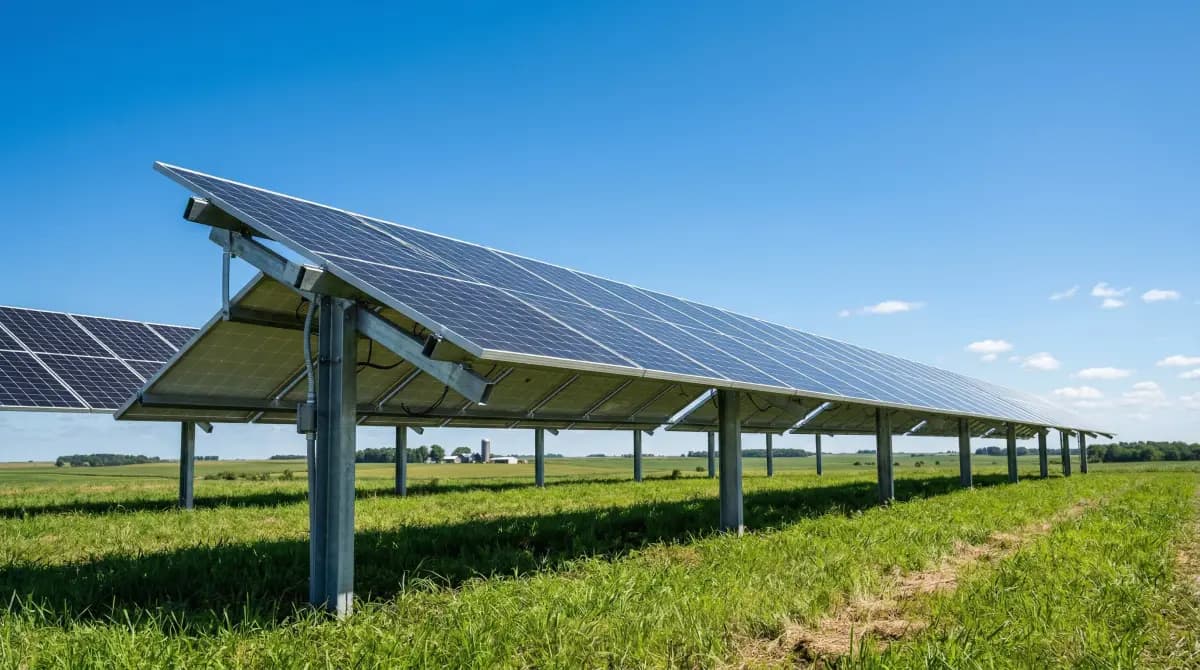
Ground mounts elevated 3-4 feet over light-colored surfaces (gravel, snow, white ground cover) let bifacial panels capture reflected light on their rear side. This adds 5-15% energy production depending on ground reflectivity — essentially free energy from the same number of panels.
Propel financing requires FEOC-compliant (Foreign Entity of Concern free) panels. The Silfab 440W is manufactured in North America and is the only NuWatt panel tier that qualifies. Available in Maine and Texas.
The Section 25D residential solar investment tax credit expired on December 31, 2025. This single change reshaped how homeowners should think about panel selection. Here is what shifted.
Without a 30% federal credit reducing your out-of-pocket cost, every dollar of the sticker price hits your bank account directly. This makes entry-tier panels (Hyundai 440W) more attractive for budget-focused buyers seeking fastest payback.
Conversely, premium panels (REC 460W) with lower degradation produce more total energy over 25-30 years. The $0.19/W premium costs ~$1,500 more upfront on an 8 kW system but produces $3,000-4,000 more electricity over the lifetime.
Propel $0-down financing requires FEOC-compliant Silfab 440W panels. For homeowners who want solar with no upfront cost (available in ME and TX), the panel choice is made for you — and it is an excellent panel.
Monocrystalline panels dominate the residential market in 2026, holding over 90% market share. They offer the best balance of efficiency (20-23%), aesthetics (all-black appearance), and long-term value. Within monocrystalline, HJT (heterojunction) panels like the Silfab 440W and REC 460W outperform traditional PERC panels in heat tolerance and degradation rates.
Monocrystalline panels use single-crystal silicon cells, achieving 20-23% efficiency with an all-black appearance. Polycrystalline panels use multi-crystal silicon, reaching only 15-18% efficiency with a distinctive blue marbled look. Monocrystalline costs $0.10-0.20 more per watt but produces 15-30% more energy per square foot, making them the clear choice for most residential installations where roof space is limited.
For rooftop installations, bifacial panels rarely justify the cost premium for homeowners. They need reflective surfaces underneath to capture light on both sides, which dark roofing materials do not provide. Bifacial panels make excellent sense for ground-mount systems over light-colored surfaces (gravel, white roofing membrane, or snow) where they can gain 5-15% additional energy from rear-side irradiance.
HJT (heterojunction technology) panels combine crystalline silicon with thin-film amorphous silicon layers. This dual structure delivers three key advantages: better temperature coefficient (-0.26%/C vs -0.35%/C for PERC), lower degradation (0.25-0.35% vs 0.40-0.50% annually), and higher bifacial gain potential. NuWatt offers two HJT options: the Silfab 440W (American-made, FEOC-compliant) and the REC 460W (premium efficiency).
As of March 2026, monocrystalline PERC panels (like Hyundai 440W) cost approximately $2.90-3.10/W installed. HJT panels (like Silfab 440W) run $2.97-3.17/W installed. Premium HJT panels (like REC 460W) cost $3.16-3.36/W installed. Polycrystalline panels, now largely discontinued in residential, would run $2.50-2.80/W but are rarely available from quality installers. These prices reflect no federal tax credit since 25D expired December 31, 2025.
Yes, and they actually perform better in cold temperatures. Solar panels have a negative temperature coefficient, meaning they produce more electricity per watt in cold weather. Monocrystalline panels perform especially well in Northeast winters. Snow slides off panels angled 15 degrees or more, and the dark surface accelerates melting. A 2025 NREL study found northern climates lose only 2-5% annual production to snow.
The temperature coefficient measures how much a panel loses efficiency as it heats up above 25 degrees Celsius (77 degrees Fahrenheit). A coefficient of -0.35%/C means the panel loses 0.35% output per degree above 25C. On a 95F day in Texas, a panel at 65C loses about 14% output with a -0.35% coefficient but only 10.4% with a -0.26% coefficient (HJT). This 3.6% difference adds up to hundreds of dollars over the system lifetime in hot climates.
Thin-film panels are generally not recommended for residential rooftops. At 10-13% efficiency, they require roughly twice the roof area to produce the same energy as monocrystalline panels. They are lighter and more flexible, making them suitable for commercial flat roofs, building-integrated applications (BIPV), or unusual surfaces. For standard residential use, monocrystalline panels are the clear winner on efficiency, aesthetics, and warranty terms.
PERC (Passivated Emitter and Rear Cell) adds a reflective rear layer to standard monocrystalline cells, boosting efficiency to 20-22%. HJT (Heterojunction Technology) sandwiches crystalline silicon between thin amorphous silicon layers, achieving 21-23% efficiency with superior temperature performance and lower degradation. HJT costs $0.07-0.26 more per watt but produces more energy over 25 years, especially in hot climates.
Among NuWatt panel offerings, the Silfab 440W leads with a 30-year product and 30-year performance warranty, guaranteeing 90.8% output at year 25. The Hyundai 440W and REC 460W both carry 25-year product and performance warranties. REC guarantees 92% output at year 25 — the highest performance guarantee in the residential market — while the Hyundai guarantees 86%.
Mixing panel types on the same roof is technically possible but generally not recommended. Different panel types have different voltage and current characteristics, which can cause production losses when connected to the same inverter string. With microinverters (like Enphase IQ8+), mixing is more feasible since each panel operates independently. However, mixing creates aesthetic inconsistency and complicates warranty claims. Choose one panel type for each installation.
With the Section 25D residential solar tax credit expired (December 31, 2025), every dollar of upfront cost matters more. This has pushed the market toward two strategies: (1) choosing entry-tier panels like Hyundai 440W to minimize upfront cost and accelerate payback, or (2) choosing premium panels like REC 460W that produce more energy over 25-30 years for better lifetime ROI. The "middle ground" Silfab 440W remains popular because it qualifies for Propel $0-down financing in eligible states.
Marcus has designed and overseen 500+ residential solar installations across the Northeast. He specializes in system sizing, panel performance analysis, and production modeling.