Loading NuWatt Energy...

We use your location to provide localized solar offers and incentives.
We serve MA, NH, CT, RI, ME, VT, NJ, PA, and TX
Loading NuWatt Energy...
NuWatt designs, installs, and manages solar, battery, heat pump, and EV charger systems across 9 states. One company, one warranty, one point of contact.
Get a Free Quote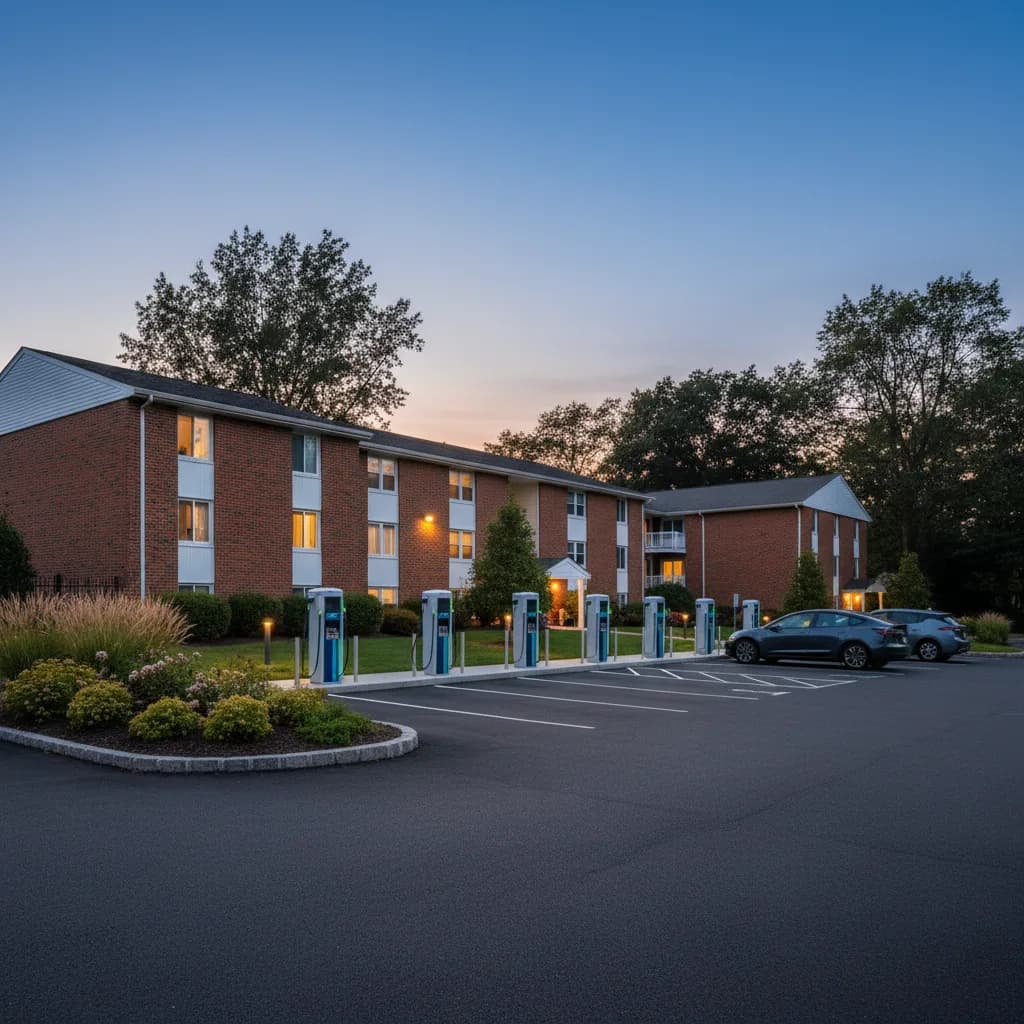
A line-by-line walk through the $166 million New Jersey utility EV program: $11,100 utility make-ready plus $6,700 per port customer make-ready, who qualifies, how to apply through evportal.pseg.com, and the 92-day window to commission chargers before the July 15, 2026 deadline.
PSE&G's EV Program is a $166M New Jersey utility make-ready rebate that pays $11,100 per site for utility-side infrastructure plus $6,700 per Level 2 port customer-side (up to 10 ports per multifamily property). Applications run through evportal.pseg.com. The program closes July 15, 2026 or when funds are exhausted — stop waiting.
Today is April 14, 2026. PSE&G closes July 15, 2026or when the $166M is depleted. A standard install needs 4–6 months. Section 30C closes June 30, 2026. Commission by June 30 and file PSE&G reimbursement through mid-July.
$11,100
Utility make-ready / site
$6,700
Per L2 port customer-side
$166M
Total BPU-approved pool
Jul 15
Cutoff or funds exhaust
Approved by the New Jersey Board of Public Utilities as part of PSE&G's Clean Energy Future filing, the EV Program is the largest single-utility EV charging incentive east of the Mississippi by dollar commitment. It is aimed at the single biggest obstacle to EV adoption in New Jersey: the cost of pulling new electrical capacity to properties that never imagined their parking lots would become filling stations. PSE&G handles the utility side end to end, and reimburses property owners for the customer-side work up to predefined ceilings per port and per site.
Transformer, service drop, meter upgrade, primary trench. PSE&G designs, permits, and owns the infrastructure. Property owner pays nothing for this work.
Reimbursement for panel, conduit, customer-side trench, pedestal, and networked L2 EVSE. Cap: 10 ports per multifamily property. Separate tiers for workplace, public, and DCFC.
PSE&G's reimbursement ceilings by site type:
| Site type | Utility-side | Customer-side | Port cap |
|---|---|---|---|
| Multifamily (apartment / condo / HOA) | $11,100 per site | $6,700 per L2 port | 10 ports/property |
| Workplace | $11,100 per site | Per-port reimbursement (workplace tier) | Site-by-site |
| Public access (retail, destination, municipal) | $11,100 per site | Higher per-port (public-access tier) | Site-by-site |
| DC fast charger (public) | Utility design + primary | DCFC tier — higher per-port ceiling | Per-station |
Tiers update periodically by BPU order. Confirm current ceilings against the PSE&G EV Portal for your specific site type before committing to a budget.
Apartments, condominiums, townhouse HOAs, mixed-use above retail. Property must have shared parking under HOA, landlord, or owner control. 5+ year commitment.
Businesses with dedicated employee parking. Networked L2 chargers operated for workforce and fleet use.
Retail, hospitality, destination parking, municipal lots, park-and-rides. Chargers must be accessible to general public with documented operating hours.
Delivery, service, and commercial fleets installing depot Level 2 charging. Back-of-house fleet usage.
501(c)(3) hospitals, public colleges, municipalities qualify for PSE&G make-ready and can also claim Section 30C via elective pay.
Can apply on behalf of owned or managed properties with 5+ year commitment and full control of parking area.
Must be in PSE&G electric service territory.PSE&G covers roughly 2.3 million electric customers across North and Central Jersey, including most of Bergen, Hudson, Essex, Union, Somerset, Middlesex, Mercer, and parts of Burlington and Camden counties. Properties in JCP&L (FirstEnergy) or Atlantic City Electric (ACE) territory apply to those utilities' separate programs, not PSE&G.
All applications flow through the PSE&G EV Portal at evportal.pseg.com. Allow 4–6 months from application submission to energized chargers on a typical multifamily project.
Register at evportal.pseg.com, associate the property service address, and confirm the PSE&G account number.
Classify site type (multifamily / workplace / public / fleet), confirm ownership, upload parking control documentation.
Licensed NJ PE or electrician-stamped plan showing charger locations, panel, trench path, ADA stalls. This is the #1 RFI source if incomplete.
Quote from a licensed NJ electrician for customer-side work plus a networked L2 charger quote from a PSE&G-approved vendor.
2–4 weeks. PSE&G may request clarifications. On approval, PSE&G issues a design letter specifying utility-side scope and customer-side reimbursement ceiling.
PSE&G schedules and performs the utility-side work (transformer, service, primary trench). 4–10 weeks depending on transformer lead time.
Property owner's electrician performs panel, conduit, customer-side trench, pedestal, and EVSE install. 2–4 weeks.
Network activation, commissioning photos, final invoices, networking data submitted through portal. Reimbursement paid within 4–8 weeks.
Application → design letter
2–4 weeks
Clean submission clears first review. RFIs add 2–4 weeks.
Utility-side design & scheduling
2–4 weeks
PSE&G engineering finalizes transformer spec, coordinates with distribution planning.
Utility-side construction
4–10 weeks
Transformer lead time is the variable. Standard transformers ~6 weeks; 500+ kVA pad-mount can stretch to 12 weeks.
Customer-side construction
2–4 weeks
Panel, sub-panel, conduit, trench, pedestal, EVSE. Runs in parallel with utility-side for mature sites.
Commissioning & reimbursement filing
2–3 weeks
Networking activation, photos, final invoices submitted through portal.
PSE&G reimbursement payment
4–8 weeks
From final submission to ACH deposit. Payment issued after invoice audit.
Section 30C, the federal Alternative Fuel Vehicle Refueling Property Credit, terminates for property placed in service after June 30, 2026. The PSE&G EV Program runs 15 days longer, through July 15, 2026. For most NJ projects, both incentives are on the table if you sequence the work correctly: commission chargers on or before June 30 (placed-in-service trigger), then complete the PSE&G reimbursement paperwork through mid-July.
PSE&G-approved hardware
All four appear on PSE&G's Approved Products List (APL) and satisfy the networked-charger + OCPP telemetry requirements for reimbursement.
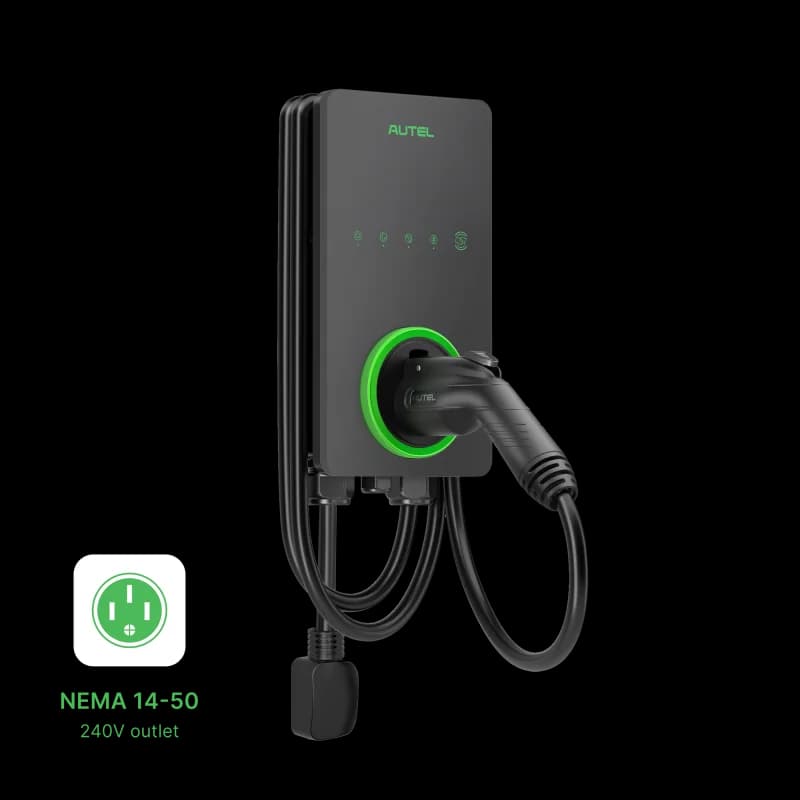
40A networked L2, OCPP 1.6J, 6-unit load balancing
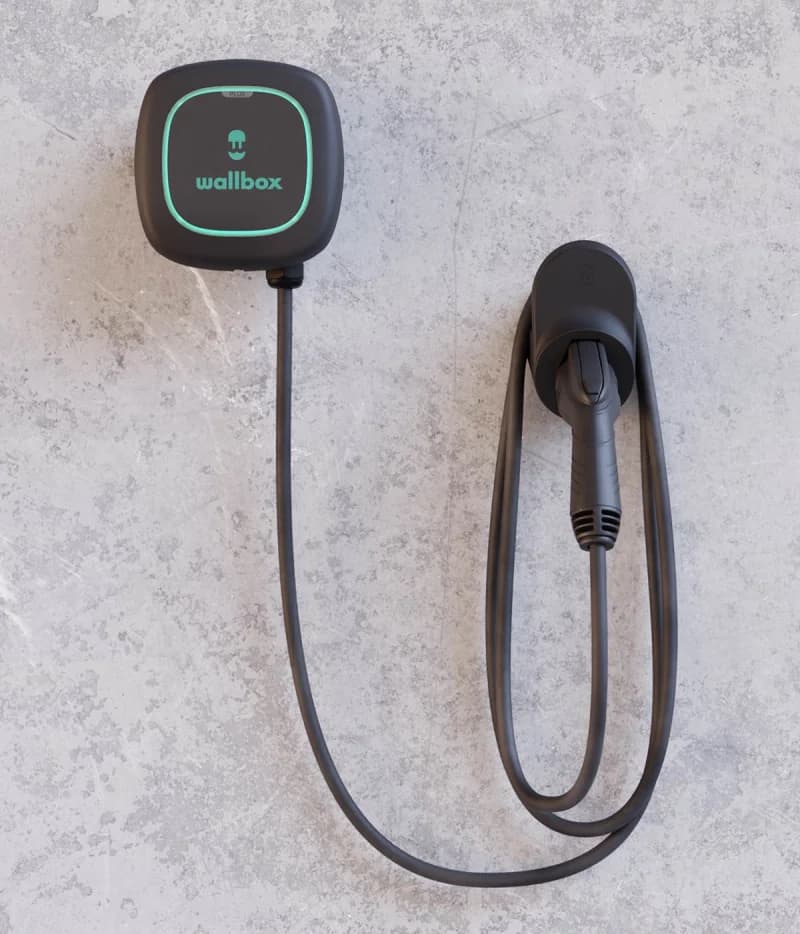
40–48A L2 with 24-port smart load sharing
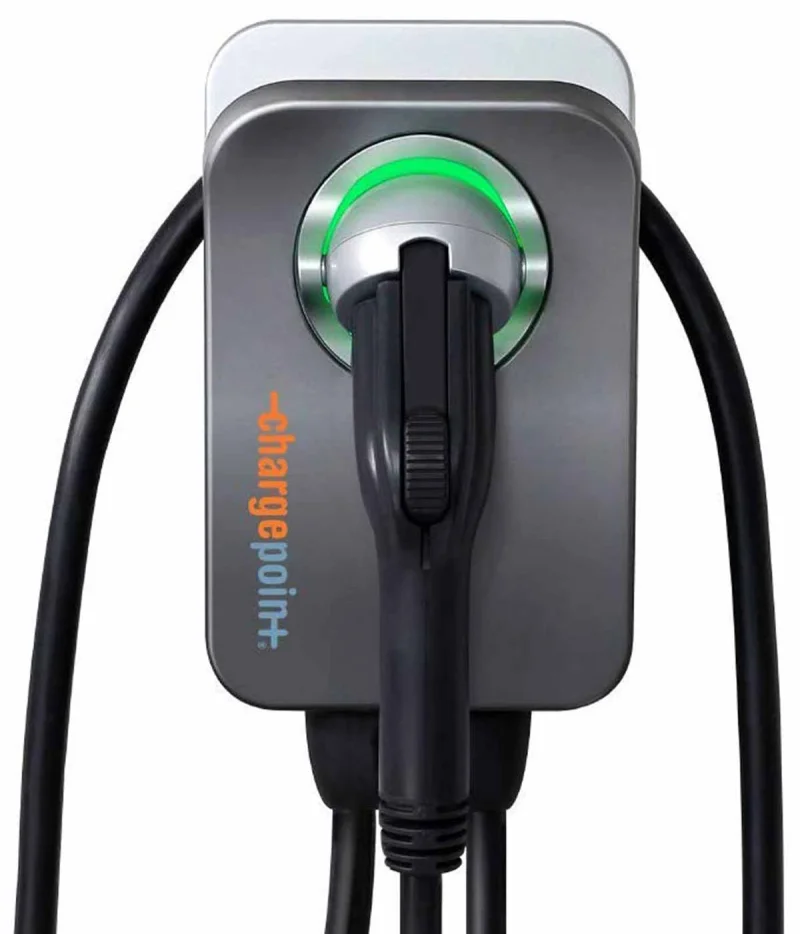
50A networked L2, OCPP, session metering & RFID
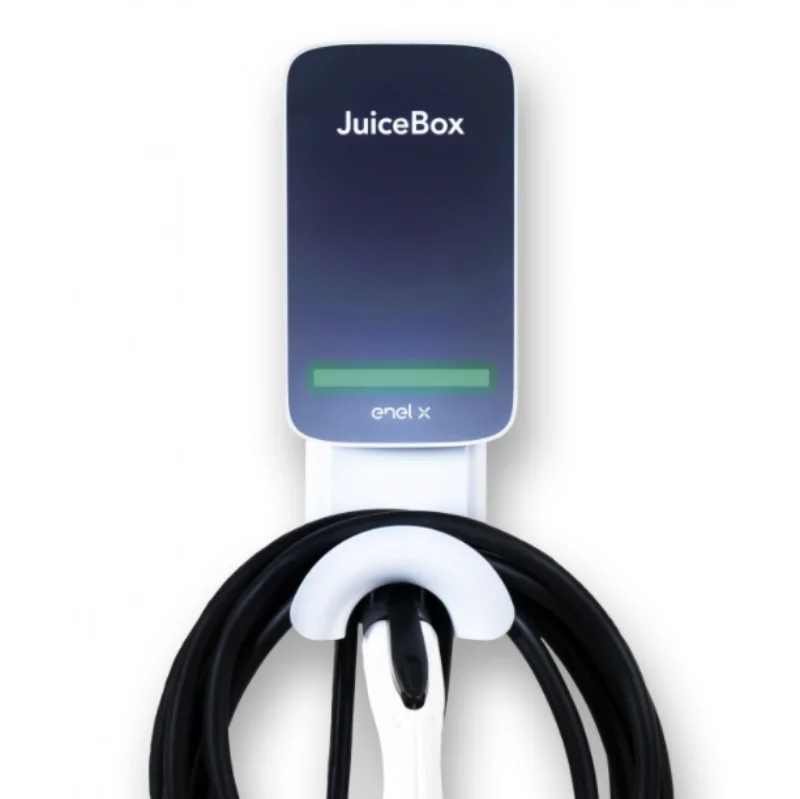
48A networked L2, WiFi + cellular, API fleet hooks
PSE&G's EV Program is a $166 million utility-sponsored rebate program approved by the New Jersey Board of Public Utilities to accelerate deployment of networked Level 2 and DC fast chargers across multifamily, workplace, public, and light-commercial sites in PSE&G's electric service territory. The program funds both utility-side make-ready (everything from the street to the property line, at $11,100 per site) and customer-side make-ready (panel, conduit, trench, equipment; $6,700 per L2 port up to 10 ports per multifamily property, with separate tiers for DCFC). Applications are filed through evportal.pseg.com and the program runs until July 15, 2026 or until the $166M budget is exhausted — whichever comes first.
PSE&G EV Portal
Application portal, Approved Products List, reimbursement forms.
PSE&G — EV Program Overview
Clean Energy Future filing, make-ready tariff structure.
NJBPU — EV & Charging Infrastructure
Board of Public Utilities EV docket and program oversight.
IRS Form 8911 — Section 30C
Federal Alternative Fuel Refueling Property Credit (ends June 30, 2026).
Last verified by NuWatt Incentive Team on 2026-04-14.
92 days to commission chargers. NuWatt files the portal submission, coordinates the PSE&G design letter, and manages customer-side construction.