Loading NuWatt Energy...

We use your location to provide localized solar offers and incentives.
We serve MA, NH, CT, RI, ME, VT, NJ, PA, and TX
Loading NuWatt Energy...
NuWatt designs, installs, and manages solar, battery, heat pump, and EV charger systems across 9 states. One company, one warranty, one point of contact.
Get a Free Quote
Connecticut commercial fleets, MUDs, and workplace operators can earn $5 to $40 per networked plug per month during the June through September peak-demand window by participating in the EnergizeCT Commercial Managed Charging program. This guide covers how utility dispatch works, OCPP 2.0 and hardware requirements, aggregator options, ISO New England grid context, and how managed-charging revenue pairs with NuWatt Charging-as-a-Service for capex-constrained fleets.
Managed EV charging is a utility program where commercial EV chargers throttle their power output during grid peak events in exchange for monthly payments. In Connecticut, EnergizeCT pays $5 to $40 per networked plug per month during June-September, delivered via Eversource and UI.
$5–$40
Per plug per month
Jun–Sep
Performance window
OCPP 2.0
Required telemetry
7.2 kW
Minimum L2 rating
June
Enroll
July
Dispatch
August
Peak
September
Payout
A 12-plug fleet depot at the midpoint earns ~$1,320/year; over a five-year program that's $6,600+ in pure grid-service revenue on top of avoided peak-demand charges.
Managed charging sounds complex but the mechanics are simple: the utility pings your charger, the charger throttles, the vehicle keeps charging slower, then the utility pays you. Here is the end-to-end flow for a Connecticut commercial fleet depot.
Grid peak event signal
During summer peak hours (typically 2 PM to 8 PM, weekdays), ISO New England dispatches demand response signals. Eversource and UI translate these into utility-level dispatch commands for enrolled sites.
Charger receives OpenADR / API message
Your networked EV chargers receive a managed-charging signal via OpenADR 2.0b or a utility API call routed through your charger network (ChargePoint, EV Connect, SWTCH, Xeal).
Chargers throttle output
Active charging sessions automatically reduce power draw (typically from 7.2 kW to 3.6 kW or lower) for the duration of the event. Vehicles keep charging, just slower.
Session completes post-peak
When the grid event ends (usually within 2 to 4 hours), charger output returns to full 7.2 kW. Overnight fleet charging is typically unaffected because peak events run during business hours.
Utility verifies and pays
Eversource or UI reconciles telemetry data monthly. Payments are issued as bill credits or direct deposits, ranging from $5 to $40 per enrolled plug per month during the June through September window.
Payments range from $5 to $40 per enrolled plug per month during the four-month summer window. The spread reflects utility dispatch frequency, site performance during events, and annual program-year calibration. Below is a worked example for a mid-sized commercial fleet depot.
Scenario
12-plug commercial light-duty fleet depot in Eversource CT territory
| Enrolled plugs | 12 |
| Performance months (June–September) | 4 |
| Low-end annual revenue ($15/plug/month) | $720 |
| High-end annual revenue ($40/plug/month) | $1,920 |
| 5-year lifetime revenue (midpoint $27.50) | $6,600 |
Midpoint assumes $27.50 per plug per month. Actual payments vary by utility dispatch frequency, customer performance (response rate to events), and program year. Payments accrue during June through September only.
The program is open to commercial customers across four segments. Fit varies based on how site charging patterns overlap with summer afternoon peak dispatch events. Overnight-heavy depot and residential charging are the strongest fits; daytime-heavy workplace and short-dwell public L2 are more variable.
Commercial light-duty fleet
Strong — depot charging profiles are predictable and easy to throttle
Sedan, crossover, and van fleets (Ford E-Transit, Chevy Silverado EV, Tesla Model 3 fleet) charging overnight at depot. Peak events run during the business day when vehicles are on the road; managed charging rarely impacts operational availability.
Multifamily / MUD
Strong — resident charging is typically overnight
Condo and apartment sites with 5+ residential EV plugs. Resident charging patterns concentrate 9 PM to 6 AM; summer afternoon peak events have minimal impact on user experience.
Workplace (employee parking)
Mixed — peak events overlap with workday charging
Workplace ports see heaviest use during business hours. Managed charging can slow employee charging during peak summer afternoons, but most commuter use cases tolerate extended sessions. Best for sites where employees arrive with 30%+ SOC.
Public L2
Variable — dwell time dictates success
Library, town hall, retail destination ports with 2-to-4 hour typical dwell time can absorb managed-charging events without user impact. Short-dwell destination charging (gas station adjacent, quick-service restaurants) is a poor fit.
Not every networked EV charger qualifies for managed charging — the charger must support dynamic real-time power limiting in response to utility dispatch signals. Confirm these five criteria with your chosen hardware and network vendor before applying.
OCPP 2.0.1 (or OCPP 1.6J with managed-charging profile)
Open Charge Point Protocol 2.0.1 is the preferred telemetry standard; OCPP 1.6J with the managed-charging profile is accepted for legacy installs. Proprietary protocols do not qualify.
Networked with two-way communication
Charger must maintain a persistent cellular, Wi-Fi, or Ethernet connection to a charging network (ChargePoint, EV Connect, SWTCH, Xeal, EVPassport, or equivalent). Dumb chargers are ineligible.
Dispatchable throttling
The charger and its network must support real-time power limiting in response to utility dispatch signals. Chargers that only schedule off-peak via fixed tariffs do not qualify — throttling must be dynamic.
Minimum 7.2 kW rated output
Managed charging programs assume Level 2 chargers rated at 7.2 kW or higher. 3.6 kW L1 chargers are typically excluded because there is no headroom to throttle.
Monthly session reporting
Charger network must export charging session telemetry (start time, end time, kWh delivered, peak kW) to the utility for program verification. Most major networks support this out of the box; verify with your chosen platform.
Four common models for capturing managed-charging revenue. The right choice depends on portfolio size, internal operations capacity, and whether you want to own the charging asset.
Direct utility enrollment
Model: Customer enrolls each site directly with Eversource CT or UI via EnergizeCT portal
Pros: Highest share of incentive payment goes to customer; fewer intermediaries
Cons: Customer handles all telemetry export, compliance, and annual re-enrollment
Charger network aggregation (ChargePoint, EV Connect)
Model: Charger network handles dispatch routing and telemetry; customer receives share of incentive
Pros: Turnkey — customer does not handle utility compliance directly
Cons: Network takes a share of incentive (typically 20 to 40 percent); customer has less direct control
Specialty managed-charging aggregator (WeaveGrid, ev.energy, Emovis)
Model: Aggregator sits between charger network and utility; bundles multiple sites for larger dispatch packages
Pros: Access to deeper programs (including wholesale DR markets) beyond basic EnergizeCT
Cons: Multiple contracts; customer share is further reduced; typically only worthwhile for 20+ port portfolios
NuWatt Charging-as-a-Service (CaaS)
Model: NuWatt owns or co-operates the charging asset; customer pays per-kWh or per-session; managed charging revenue flows to the asset owner
Pros: Zero customer capital; NuWatt handles all utility compliance; customer gets simple flat-rate charging
Cons: Customer does not directly capture managed-charging revenue; appropriate for capex-constrained sites
OCPP-compatible hardware
All three support OCPP 2.0.1 (or 1.6J with managed-charging profile) and dispatchable throttling — the two hard requirements for EnergizeCT managed-charging payments.
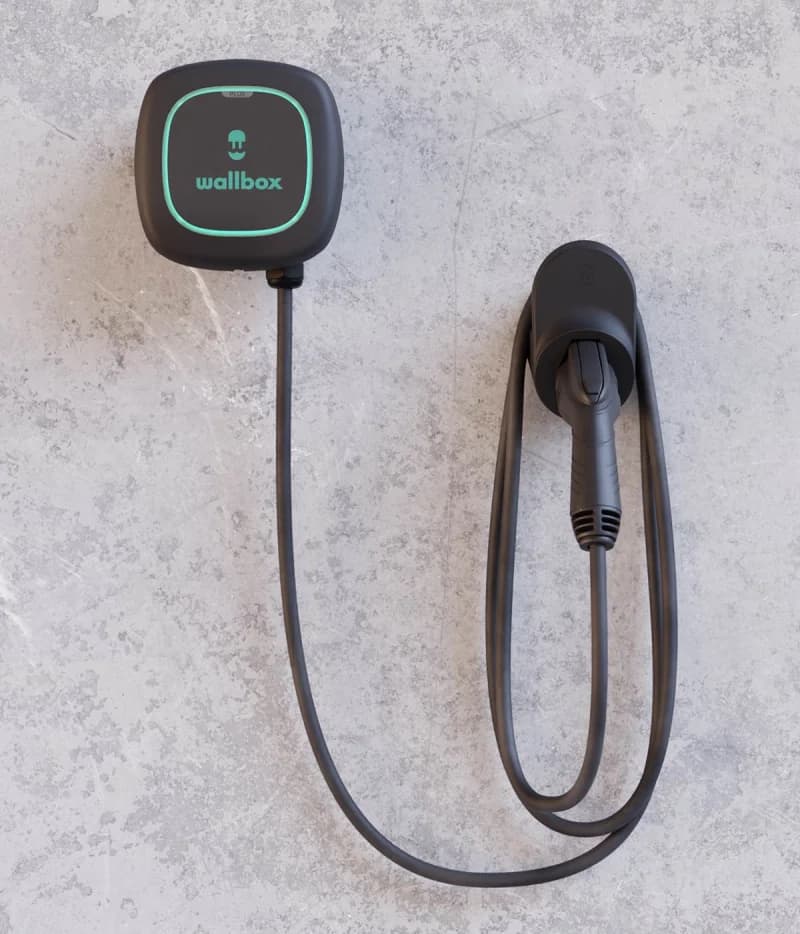
40–48A L2 with dispatchable throttling, 24-port smart load sharing
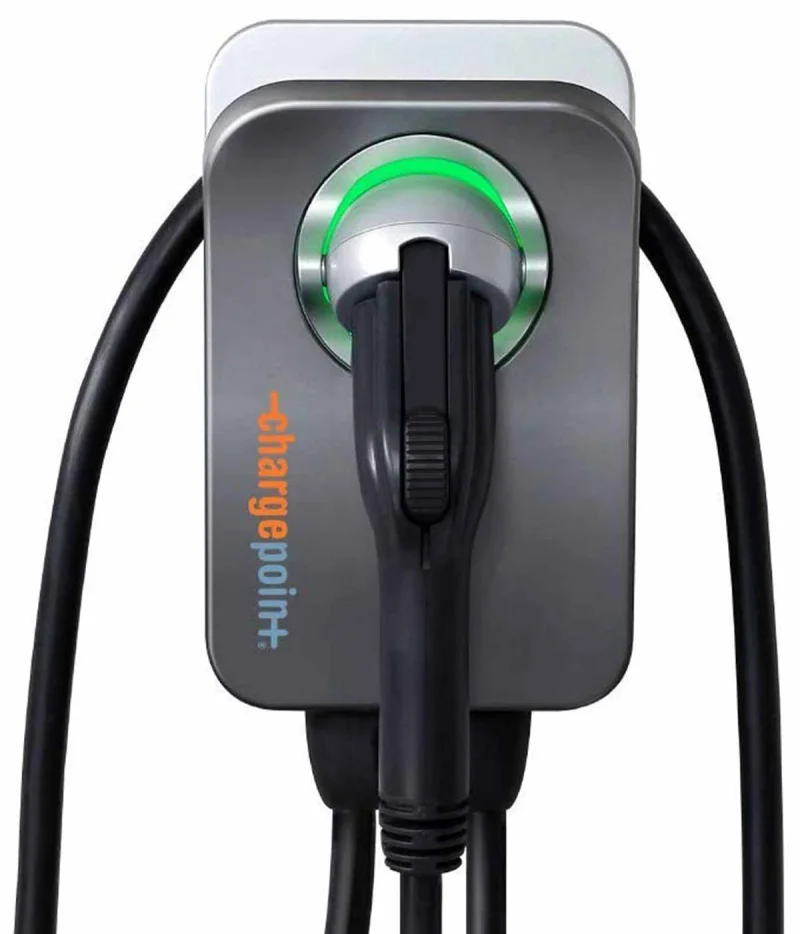
50A networked L2, OCPP, ChargePoint Station Groups managed charging
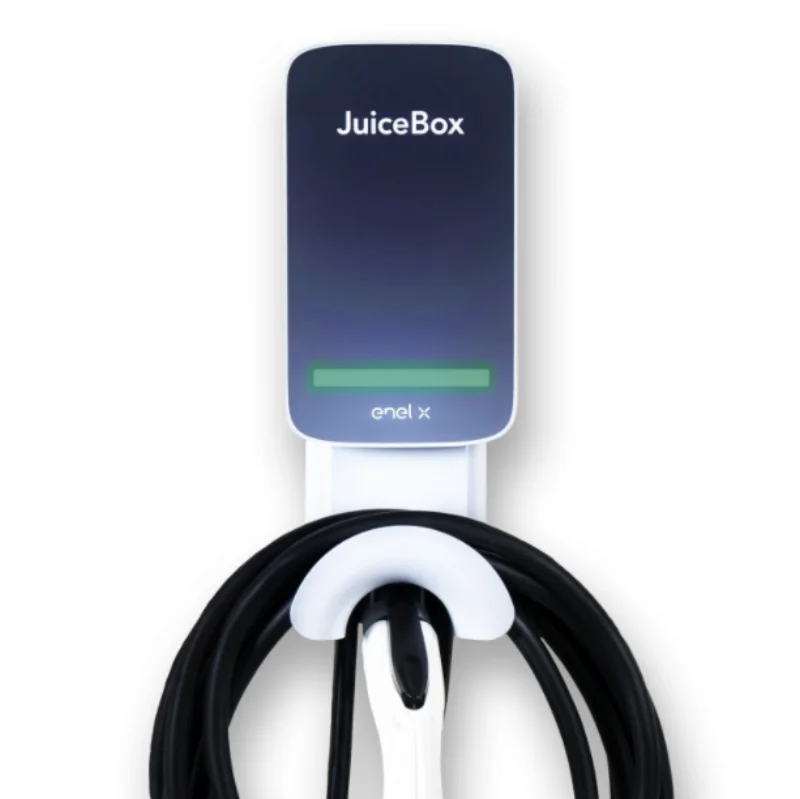
48A networked L2, OCPP 1.6J with smart-charging profile, cellular
Managed EV charging is a grid-services program where commercial EV chargers dynamically reduce their power output in response to utility dispatch signals during high-demand hours. The charger network receives an OpenADR or API signal, throttles active charging sessions (typically from 7.2 kW to 3.6 kW), then returns to full output after the event ends. Vehicles still charge — just slower for 2 to 4 hours during rare peak events. Utilities pay customers for participating because reducing EV load during peaks defers expensive grid infrastructure upgrades.
EnergizeCT — EV Charging Programs
Statewide managed-charging program portal.
ISO New England
Regional grid operator and demand-response markets.
Open Charge Alliance
OCPP 2.0.1 specification authority.
Eversource CT Business
Commercial EV enrollment and managed charging.
United Illuminating
Business EV managed charging (Avangrid).
PURA Docket 17-12-03RE04
CT EV Charging Program authorizing docket.
Last verified by NuWatt Incentive Team on 2026-04-14. Managed charging program per-plug payment rates are re-calibrated annually by Eversource CT and UI with PURA oversight. Confirm the current year’s tariff before modeling lifetime revenue.
NuWatt handles hardware selection, OCPP compliance, EnergizeCT enrollment, and ongoing dispatch response so your fleet captures managed-charging revenue without operational disruption.